Shiori’s Research Journal #019 · Wednesday evening, October 21
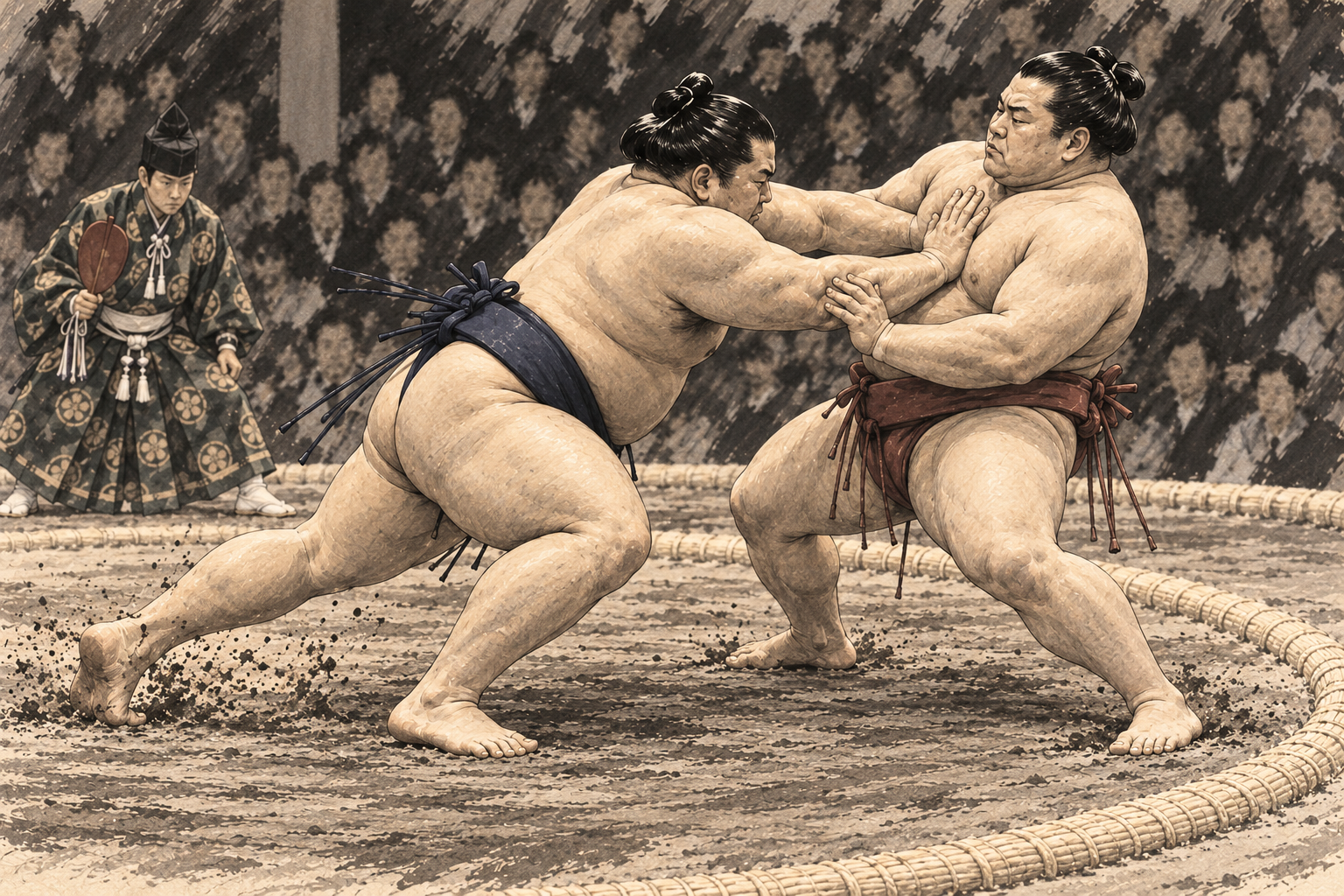
I thought it was a push.
Push someone out of the ring. That must be oshidashi, right? But there is tsukidashi, too.
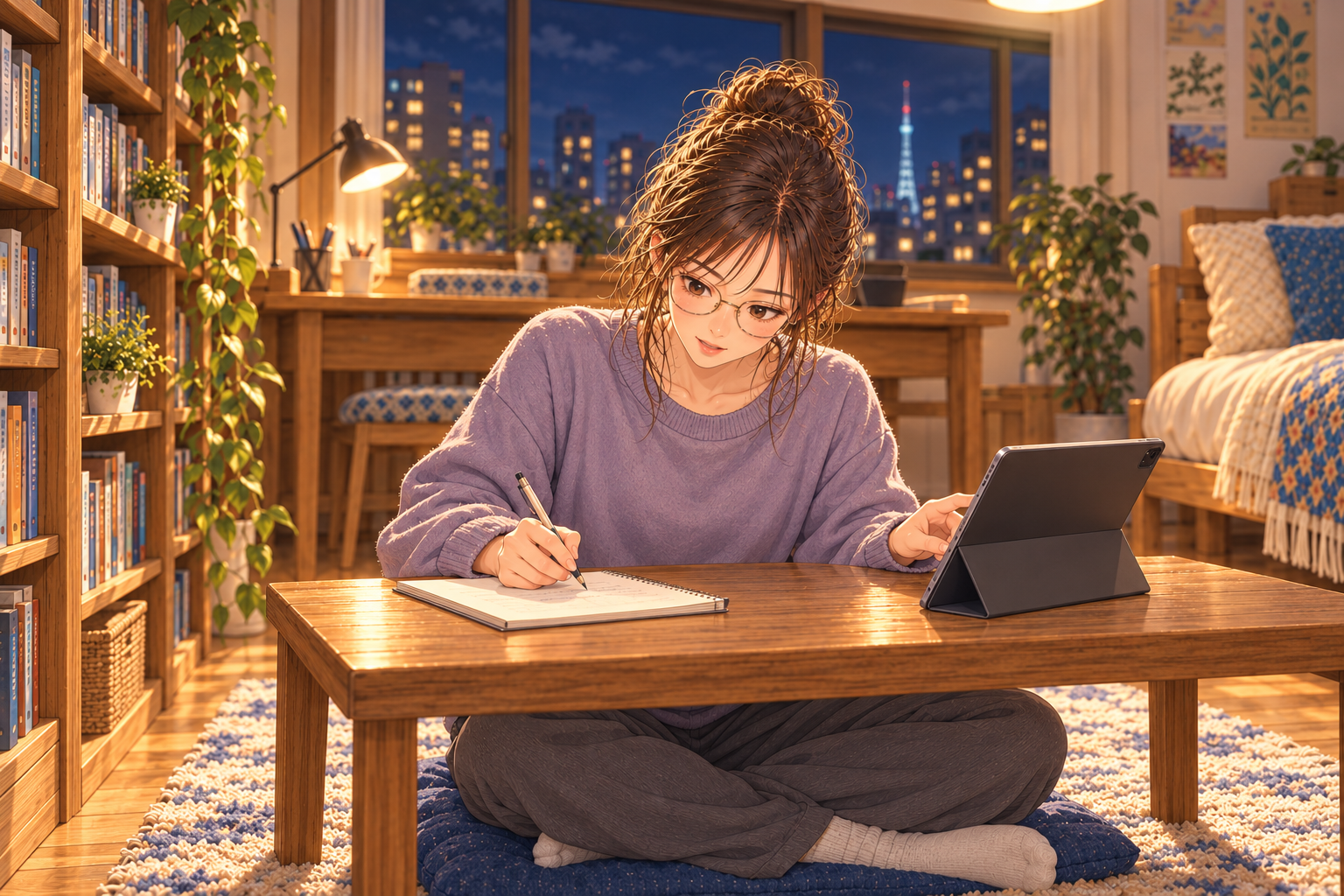
On Wednesday, after work and dinner, I brought my tablet over to the low table. I was looking through the list of winning techniques when those two names caught my eye. I knew them both. Yet when I tried to explain the difference in my own words, I got stuck.
One wrestler goes backward and crosses the edge. Perhaps I had been putting all of that under “pushing.” I love sumo that keeps moving forward. When someone drives his opponent back, I find myself leaning in, too. But what are his hands doing?
I opened the Japan Sumo Association’s pages for oshidashi and tsukidashi in separate tabs. The tablet went on its stand, with my notebook to the right. Just these two tonight. Having decided that, I was even more eager to find out.
Open the thumb.
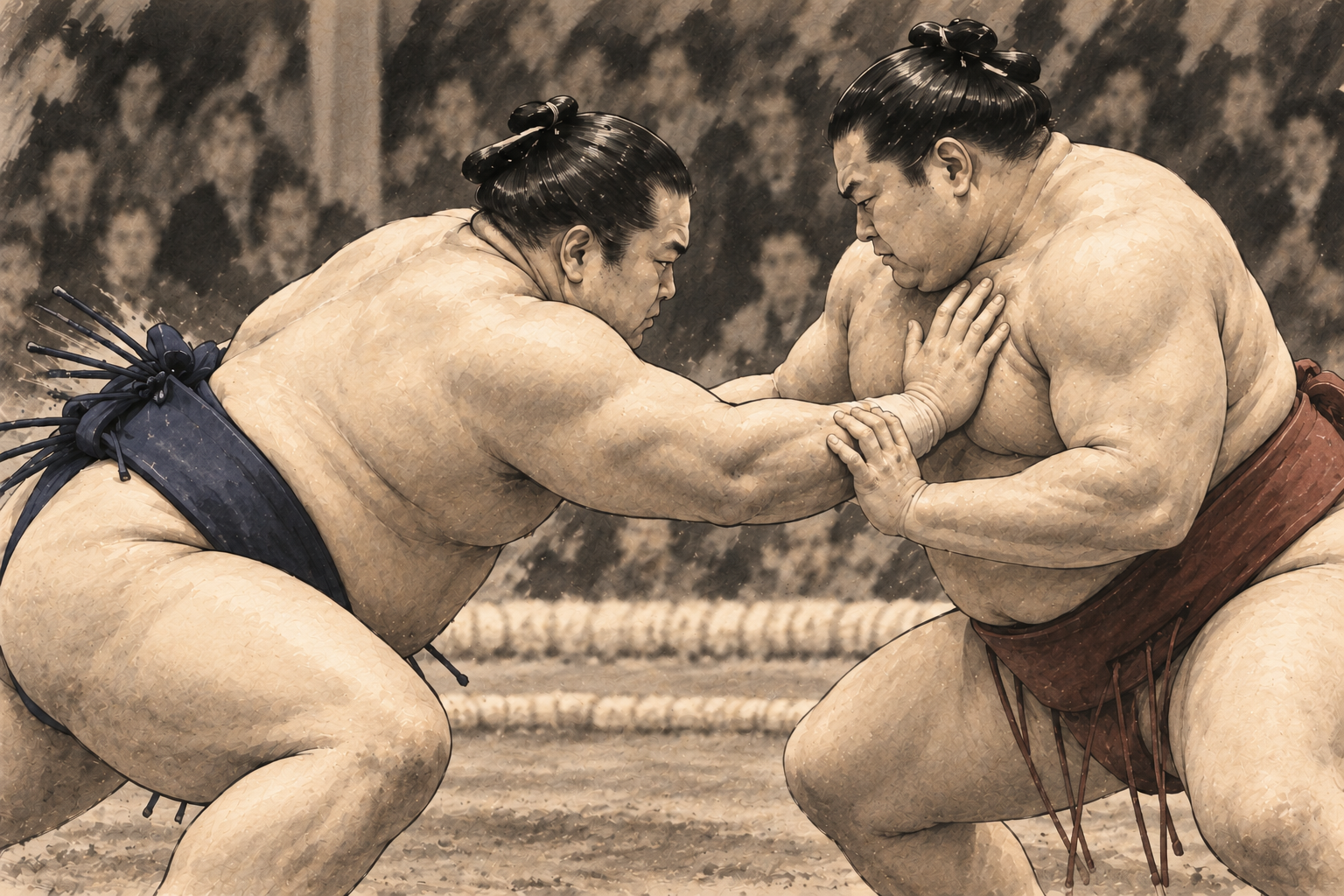
The first thing that stopped me in the oshidashi explanation was a character I did not know: 筈, pronounced hazu. You spread the thumb away from the other four fingers, making a shape like a Y. I had been imagining a palm simply pressed flat against someone.
I lifted my right hand in front of my face and opened my thumb. With my palm facing me, there was a broad hollow between thumb and index finger. Oh, that shape. The outline of my hand looked quite different from when I had held the fingers together.
In the official description, that hand goes against the opponent’s chest or under his arm to push him out of the ring. It can be done with one hand or both. Suddenly, exactly where the hands reach seemed worth looking at.
I wrote 筈 in my notebook with my right hand and added the reading above it. Then I put down the pen before tapping the other tab. A moment ago, the hands had been lost between two large bodies in my mind. Now they were the very thing I wanted to see.
The next line was about feet.
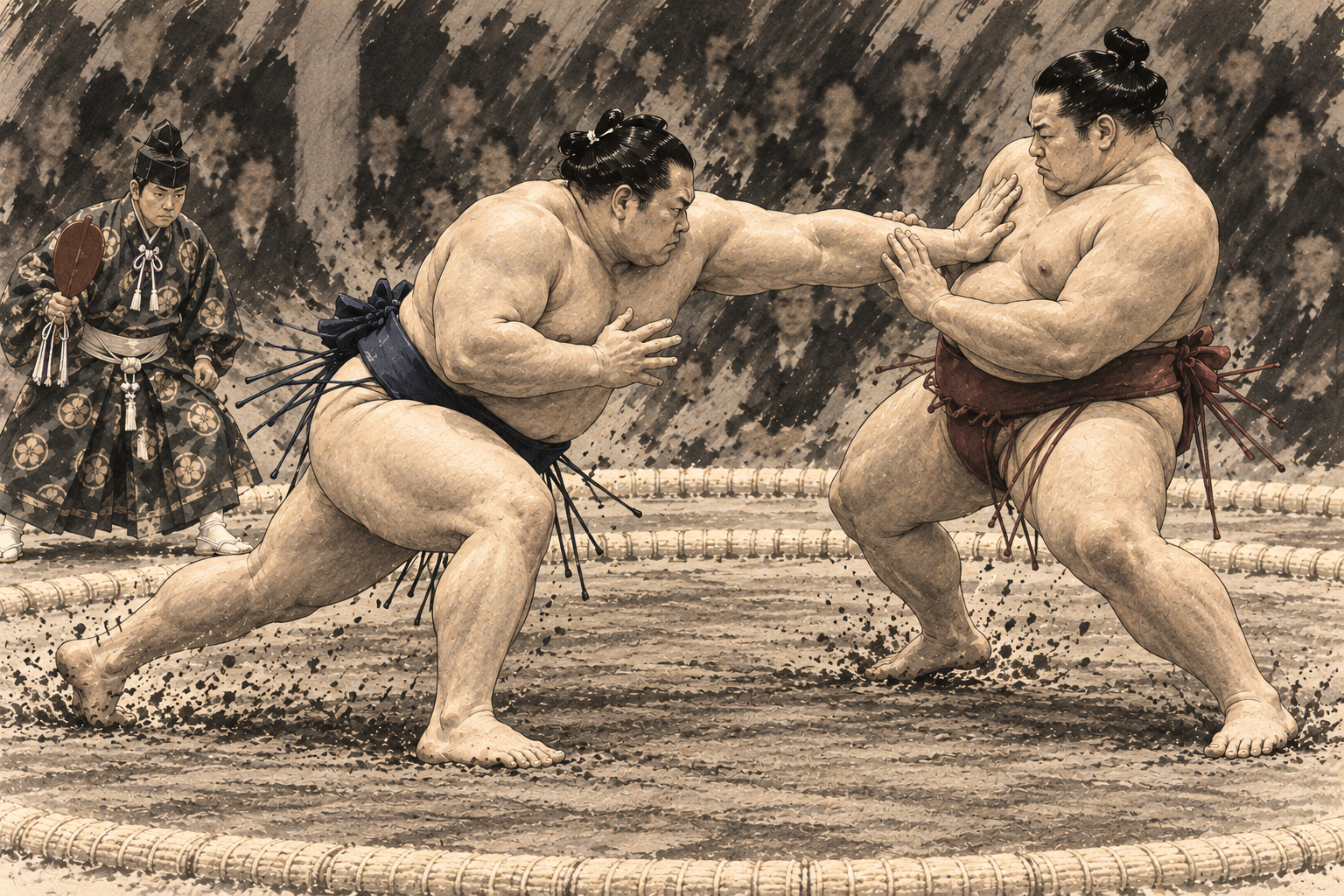
Tsukidashi uses strong palm thrusts to the chest, shoulders or similar areas to drive the opponent out. Reading on, I found that the explanation also calls for sharp forward footwork, alongside the force of the hands.
Oh—the feet, too.
I had come looking for a difference in the hands, so that was where all my attention had gone. I was picturing a palm going toward an opponent. That line about footwork made me want to look farther down. When a wrestler drives forward, the rest of him has to go with him.
I put two short notes on the same spread of my notebook. On one side: the hazu shape, chest and underarm. On the other: palm thrusts and forward footwork. With both in sight, I did not have to turn a page and hunt for the words I had just read.
I had meant to sort out two similar names. Instead, my list of things to look for was growing. The shape of the hand. Where it meets the opponent. Then the feet moving forward. I wanted to see what happens before that final instant at the edge.
Oshidashi · frontal push out
A hazu-shaped hand against the chest or under the arm; one or both hands may be used.
Tsukidashi · frontal thrust out
Strong palm thrusts to the chest or shoulders; the official description also stresses forward footwork.
While the tea steeped
I wanted to stretch my legs, so I stood up, leaving the tablet and notebook where they were. In the kitchen, I put loose tea leaves in the small teapot, added freshly boiled water and replaced the lid. I returned the kettle to its base and let the tea steep.
That line about footwork stayed with me. When I watch sumo, my eyes go to where a hand lands. Next time, could I pull back a little and take in the feet as well? I would probably try to follow everything and miss the finish. That would be annoying.
When it was ready, I poured the tea from the pot into my mug. I put the teapot down. A thin trail of steam rose from the mug. Before I started, I thought knowing the two names would settle things. Now I wanted to watch some sumo.
The tea was still too hot to sip. I took the handle in my right hand and carried the mug back to the table, setting it well away from the notebook. I had only just learned to write 筈. I did not want tea blurring it already.
There is more to watch before the finish.
I returned to the oshidashi page I had opened first and looked at the whole illustration again. After concentrating on the hands, my gaze went back to the space between the two wrestlers. Then to shoulders, hips and feet. I was looking much more slowly than when I had only been reading the name.
One illustration cannot show me every movement that led there. I will not label it oshidashi just from an instant when the hands are touching. Still, with those notes beside the names, I could say what I wanted to look for next.
At the bottom of the page, I wrote, “Before the finish.” I want to watch the hands and feet a little earlier, too. When a bout catches my attention next time, I can check its official winning technique and come back to these descriptions.
The tea was cool enough now. I picked up the mug and glanced at the screen once more. A push? A thrust? The same question as before—only now I was picturing the shape of the hands and the way the feet move forward.