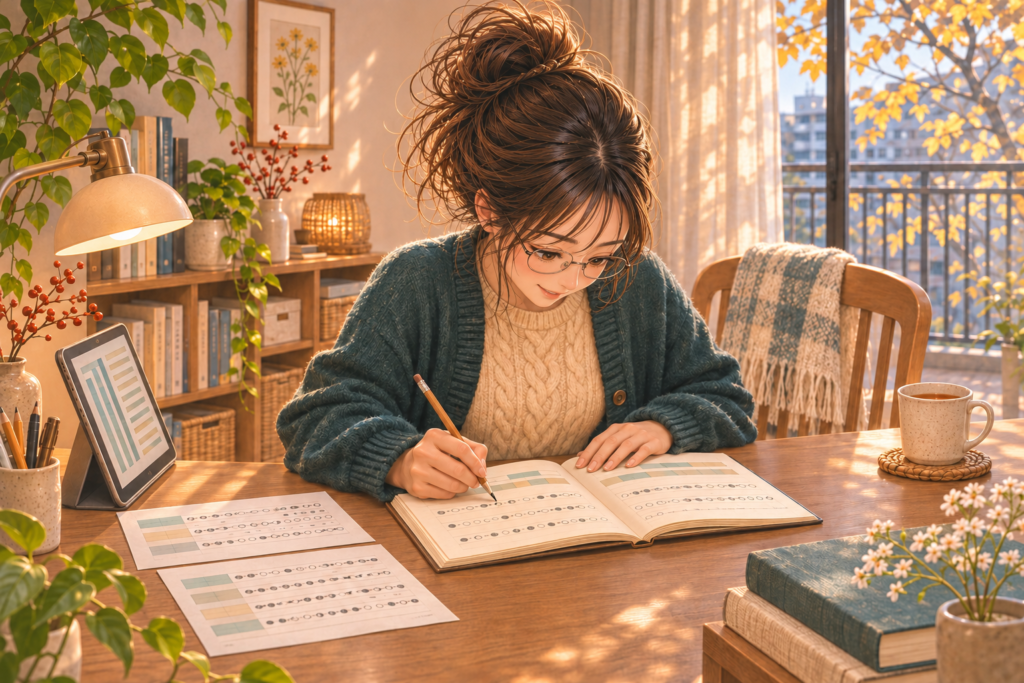
Research Journal #032 · The full November tournament
Research Note #032 | Did November’s champion lead for the most days?
Wakamotoharu spent 11 days in the lead; champion Onosato spent seven. Follow all 15 days, counting shared leads and keeping the playoff separate.
Coverage: November 8–22, 2026. Compiled and checked November 25.
Journal #031: the view after Day 8 (as of November 15)
November 2026 tournament archive
Browse by the original information date. Pre-bout notes, the halfway journal and completed venue events retain their historical context.
· 4 articles
· 5 articles
· 5 articles
· 8 articles
· 8 articles
· 8 articles
Digging Deeper
One question at a time, with the occasional detour. Shiori’s research journal about sumo. Each entry can be read on its own.
31 research journals published
Research journal #031
Seven wins, different stories
A halfway notebook compares the five 7–1 leaders’ first eight days in November and September, returning to the bouts behind the numbers.
Read this research journal →
Research journal #032
Research Note #032 | Did November’s champion lead for the most days?
Onosato and Wakamotoharu both finished November at 13–2. Daily standings reveal how their paths to the playoff differed, including who spent the most days in the lead.
Read this research journal →
Research journal #030
Which side for the man with the bow?
An evening sumo quiz led me to a detail I had overlooked: the bow-twirling wrestler’s entrance is connected to the winner of the final bout.
Read this research journal →
Research journal #029
Two different brooms.
Two photographs of ring preparations caught Shiori’s eye. Looking closely at the brooms led her to the ground just beyond the bales—and the work done before a bout.
Read this research journal →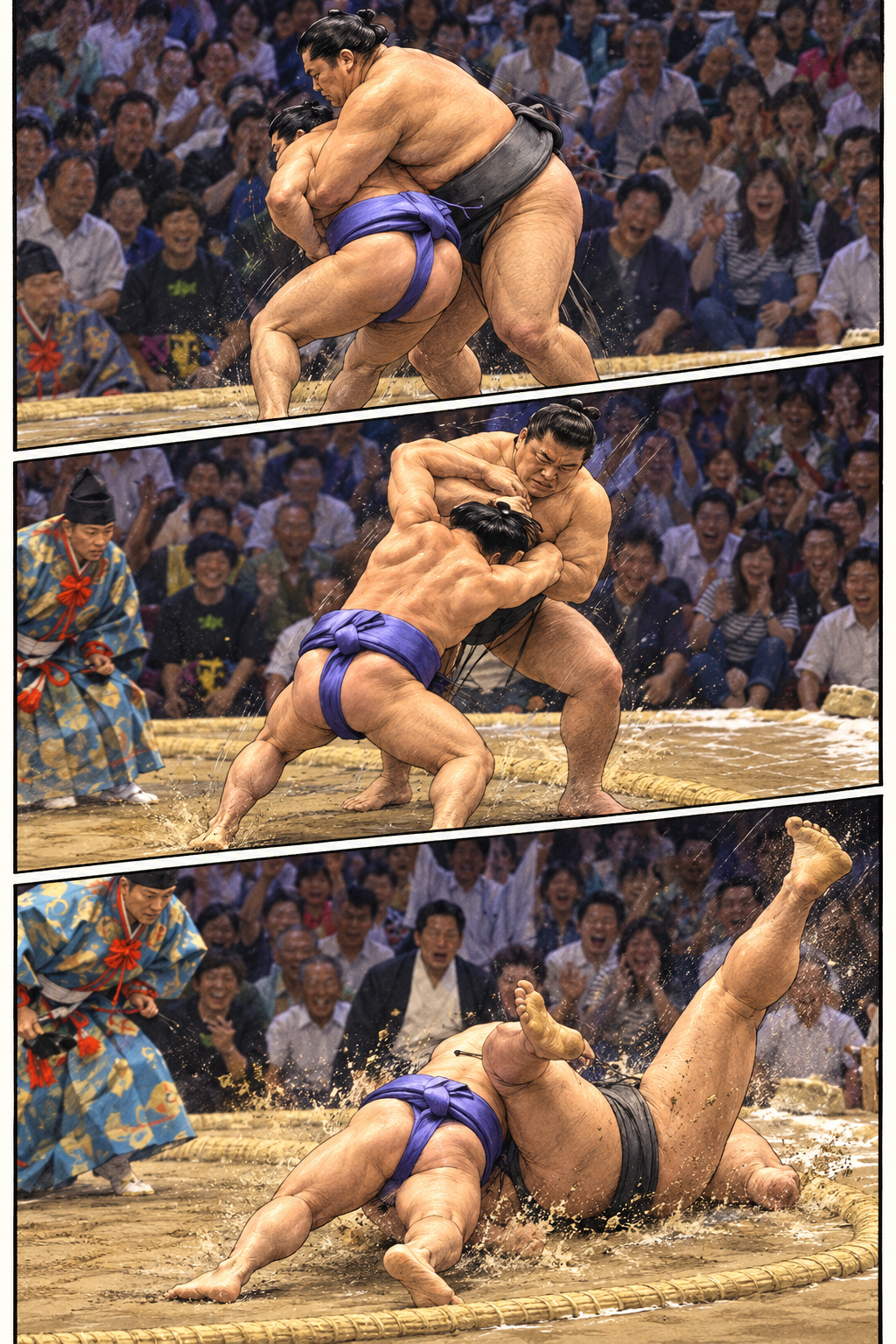
Research journal #028
Where Does Mainoumi’s Comeback Begin? Four Bouts for a Sunday
Compare four Mainoumi bouts through verified results, official footage and specific viewing questions, including a defeat alongside three wins.
Read this research journal →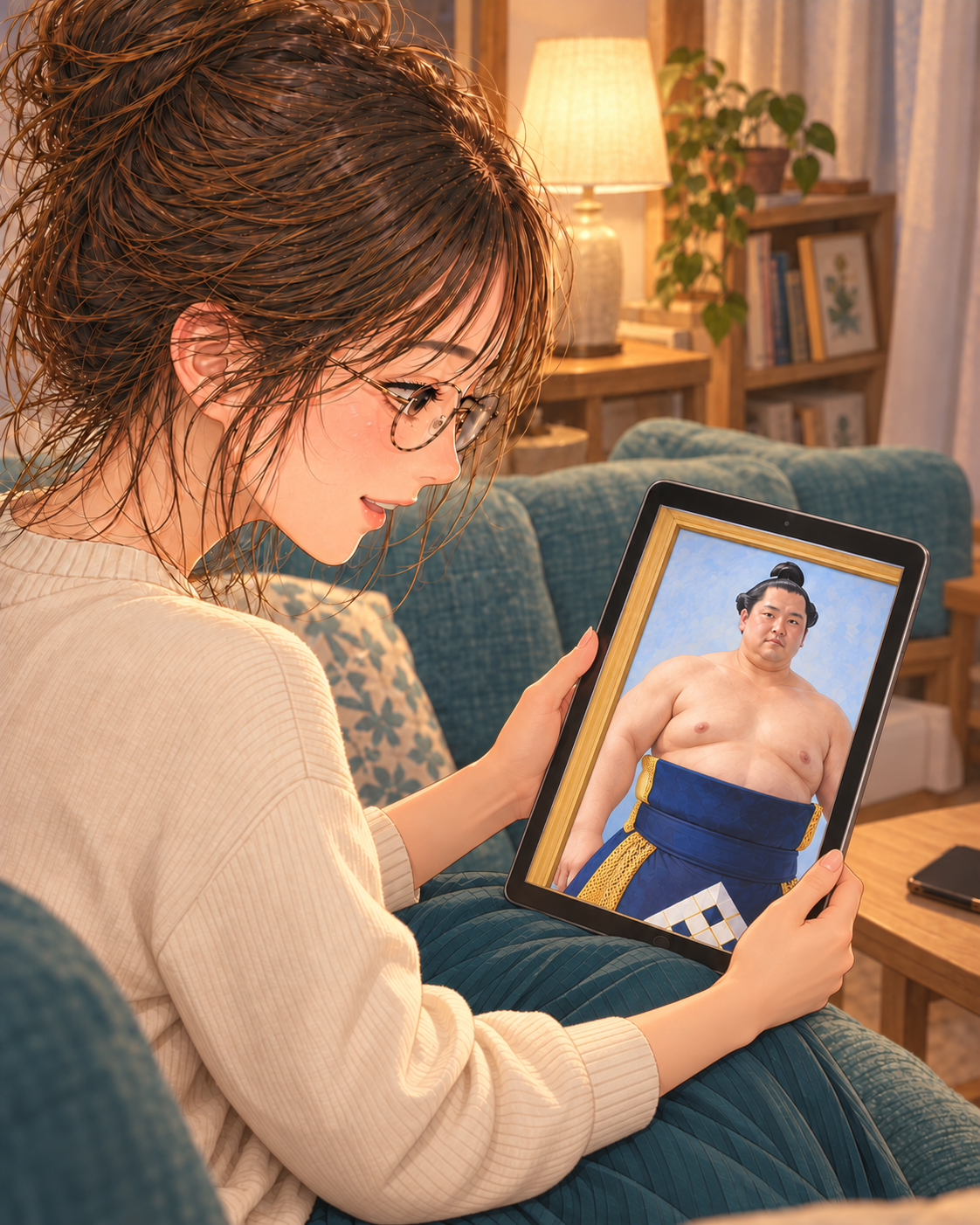
Research journal #027
Before It Becomes a Portrait
Those painting-like championship portraits begin as photographs. Reading at home led me from hand-coloring to the studio sitting after a tournament—and made me want another look at the same face.
Read this research journal →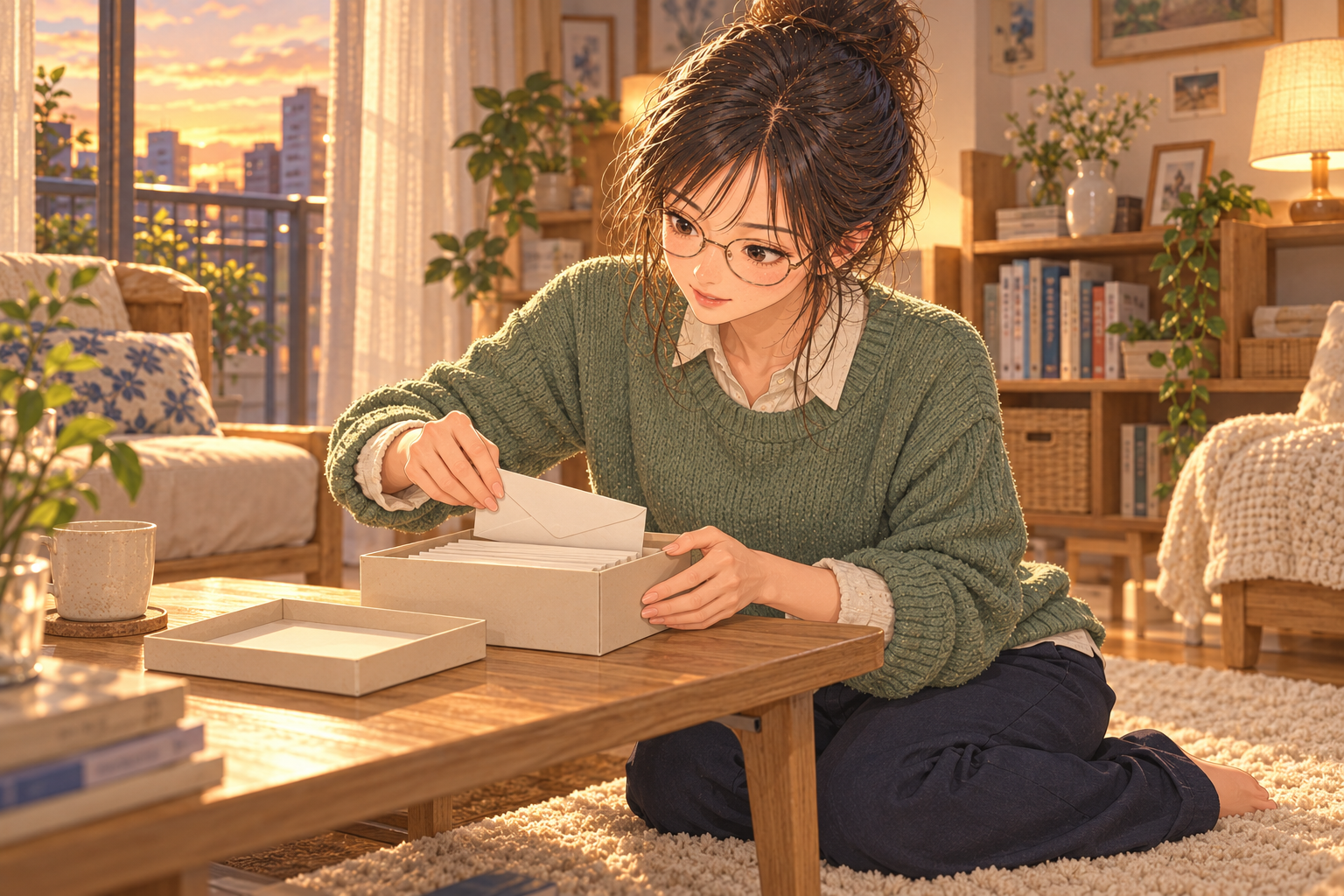
Research journal #026
That Box Is Woven
Sorting envelopes into a spare box on Thursday evening led me to akeni, the trunks used by sekitori—and an unexpected material beneath their surface.
Read this research journal →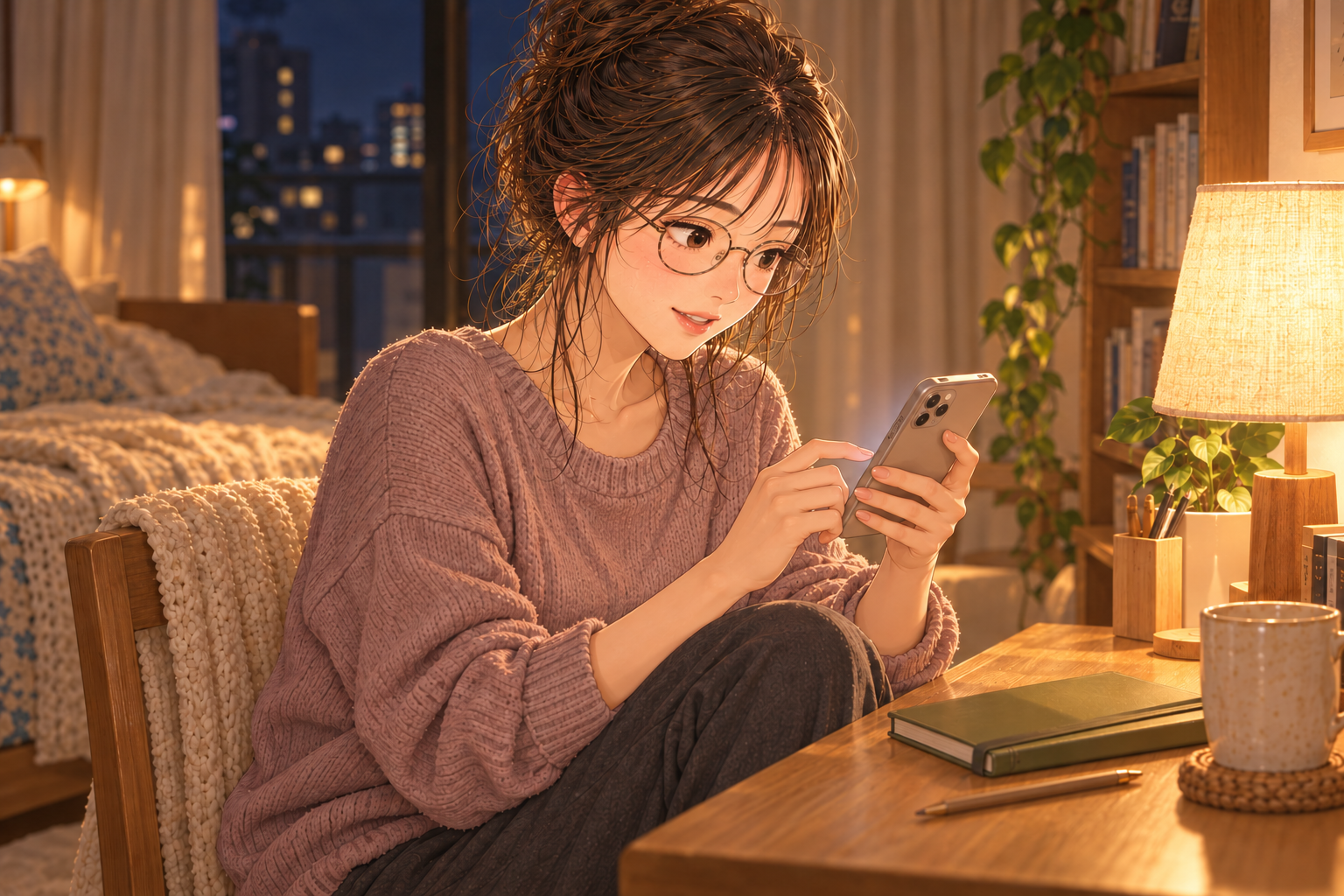
Research journal #025
Until Someone Answers
Checking tomorrow’s alarm led me to an old sumo wake-up call called ichiban-gi—and the reply the caller waited to hear.
Read this research journal →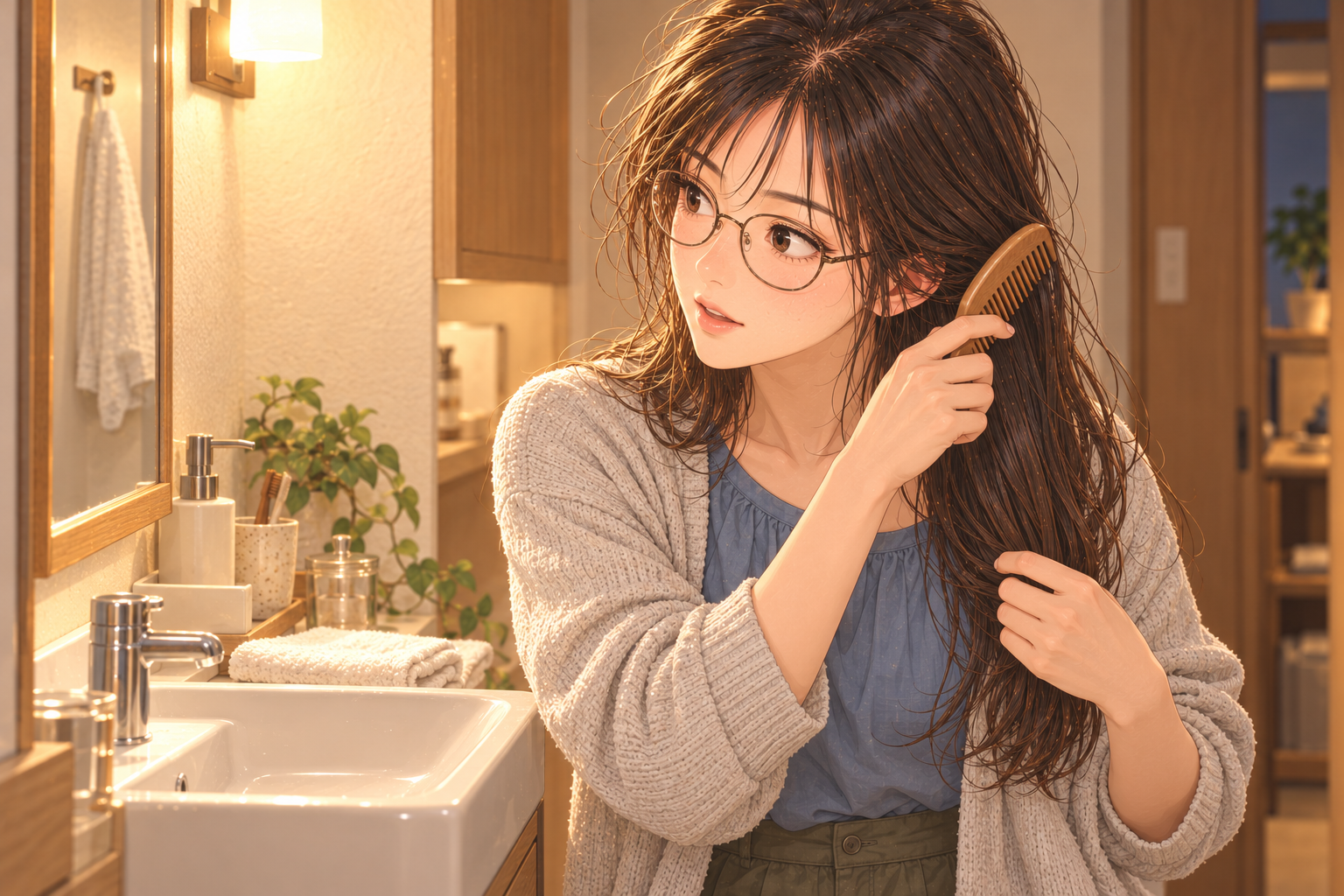
Research journal #024
More Than Tying a Knot
A slender tool called a magebō led me from the knot on top to the fullness above the ears and at the back. A Tuesday evening with one more detail to notice.
Read this research journal →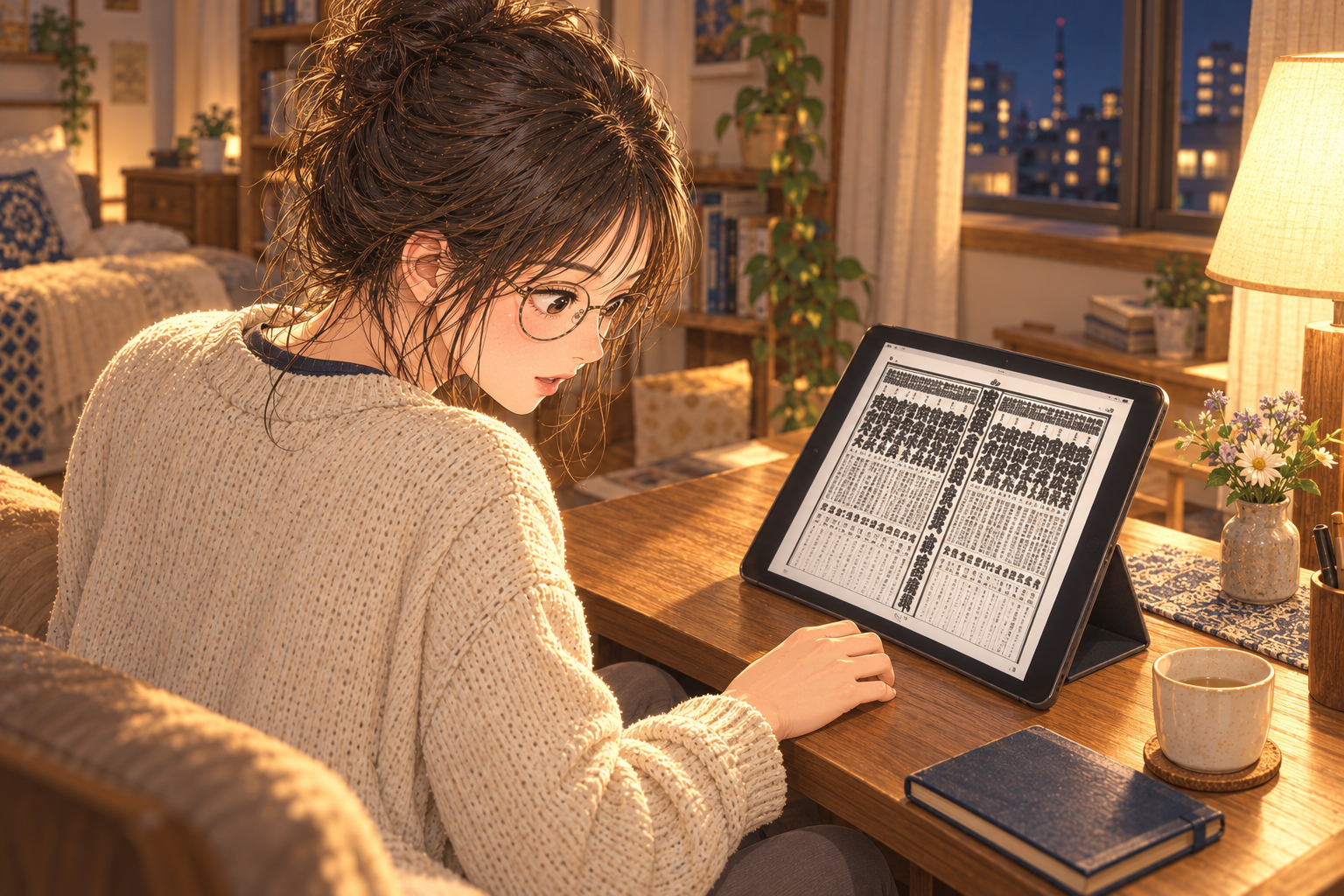
Research journal #023
A Wish at the Bottom of the Page
Seven characters at the bottom of a banzuke led me to the large handwritten original and its smallest brushstrokes. A Monday evening looking beyond familiar names.
Read this research journal →
Research journal #022
That Kimono, Once More.
Hair, kimono, obi, sandals. A Sunday spent looking at Sadanoumi’s clothes changed what I noticed in the same photographs.
Read this research journal →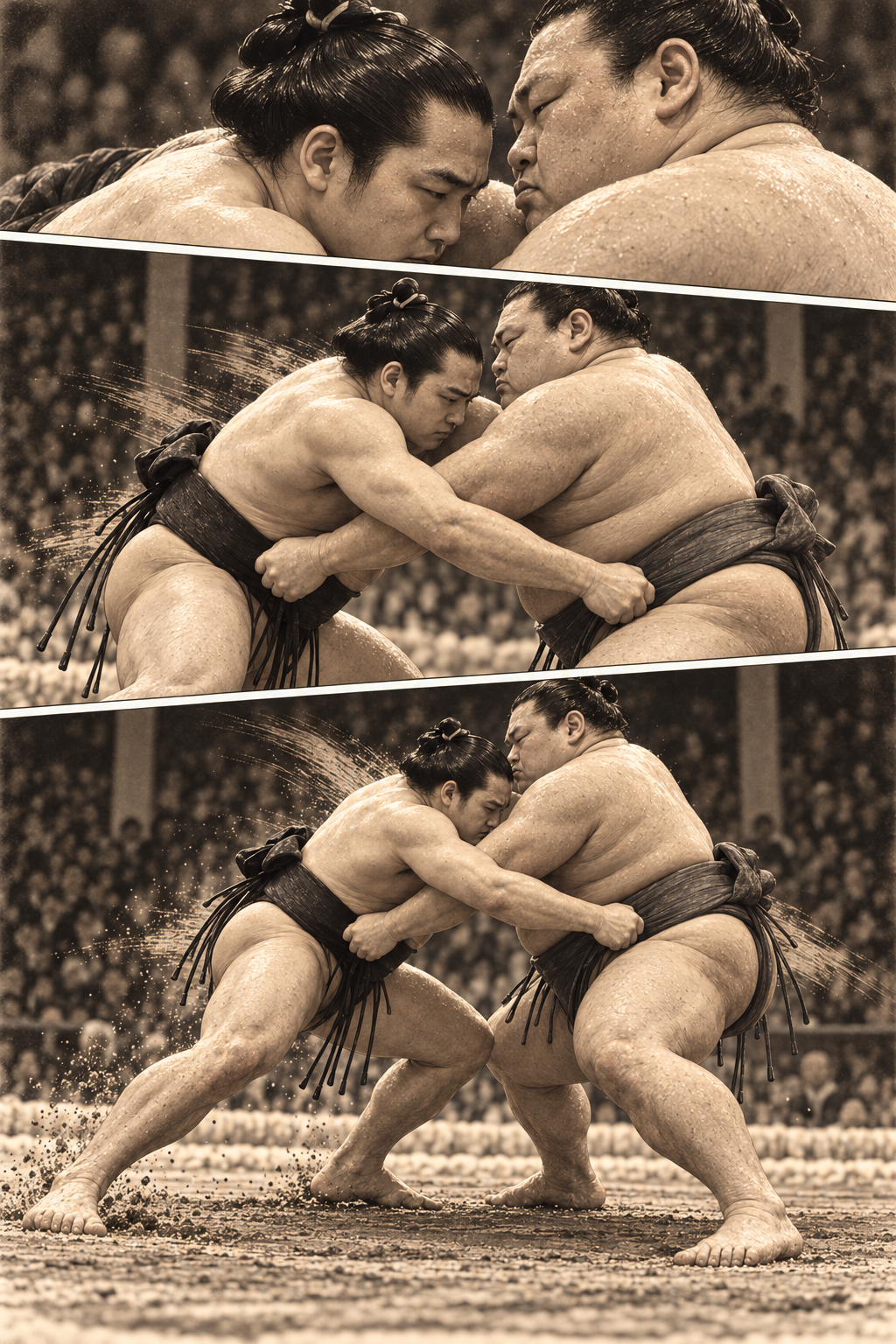
Research journal #021
Left-Inside, Twice
Two bouts on the same day, both in a left-inside position. A question about Takanohana and Kitanoumi follows Shiori through a Saturday of tea, washing and reading—and changes what she wants to look for.
Read this research journal →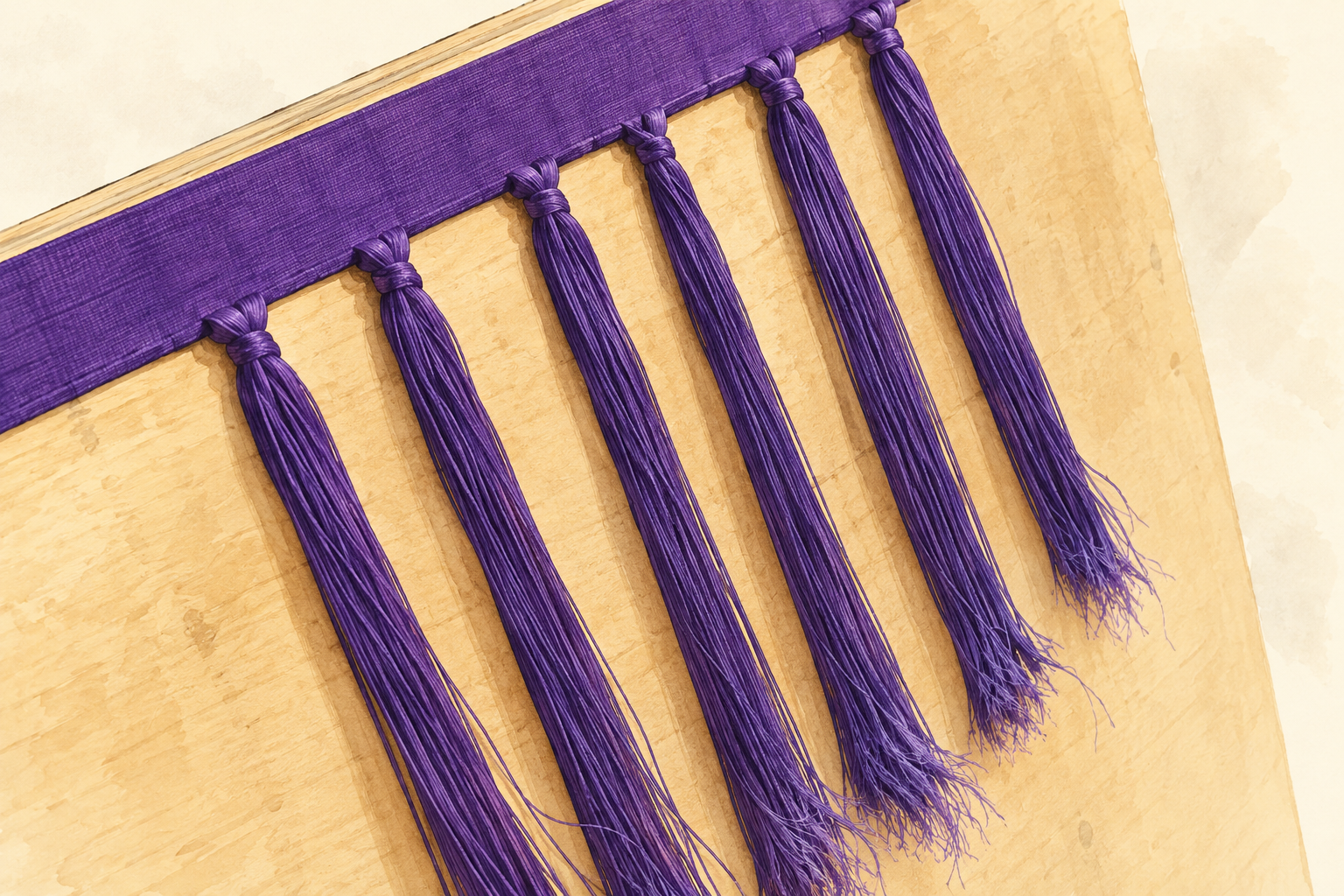
Research journal #015
Those rods were threads.
Purple bundles hang against a board, their ends separating into fine threads. Comparing photographs of sagari drew my attention to the work done before they reach the ring.
Read this research journal →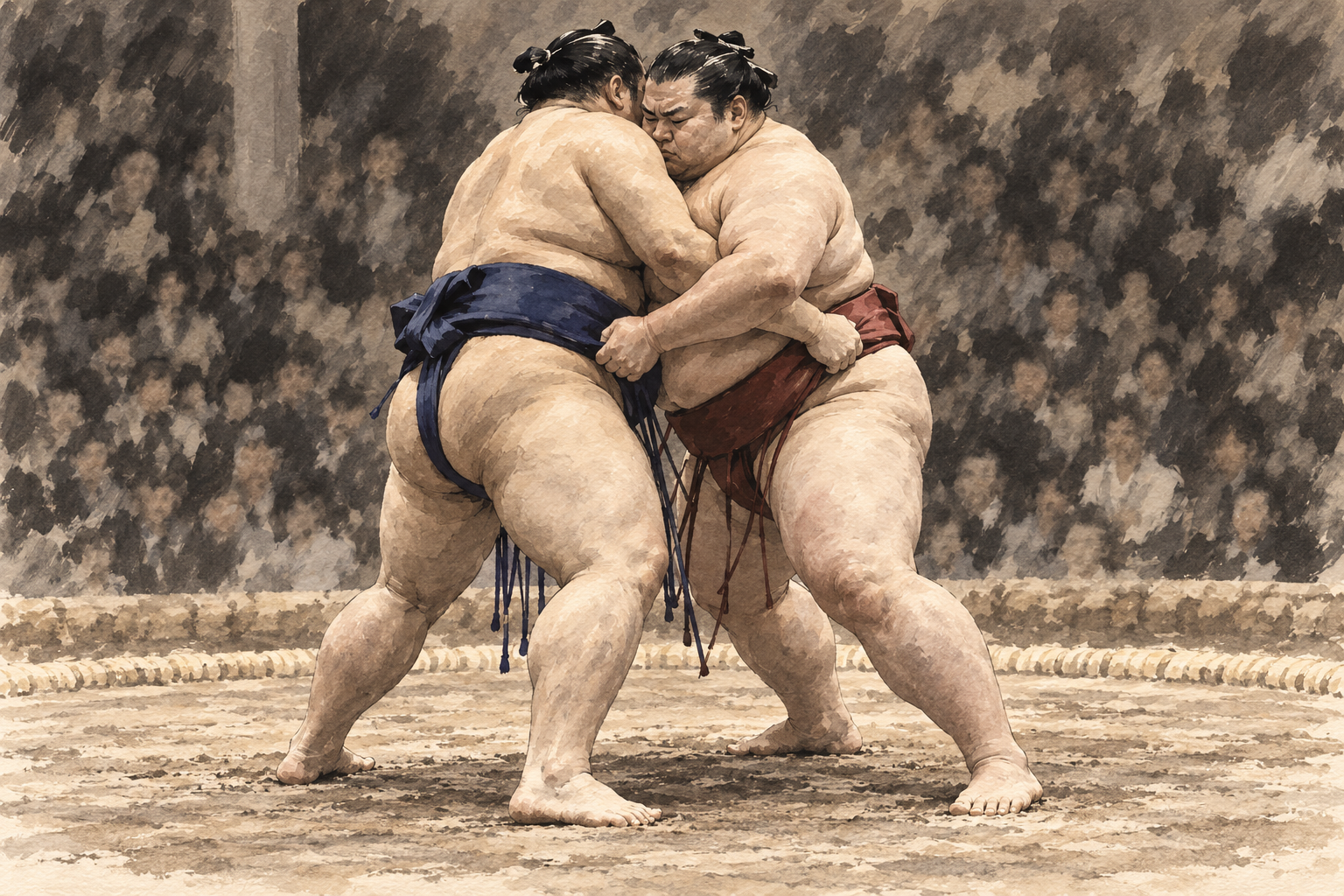
Research journal #020
In the Clinch, Before the Move
Right from whose point of view? On a Thursday evening, Shiori follows the arms in a sumo clinch, then begins to wonder which position each wrestler wants. The question stays with her through the washing-up.
Read this research journal →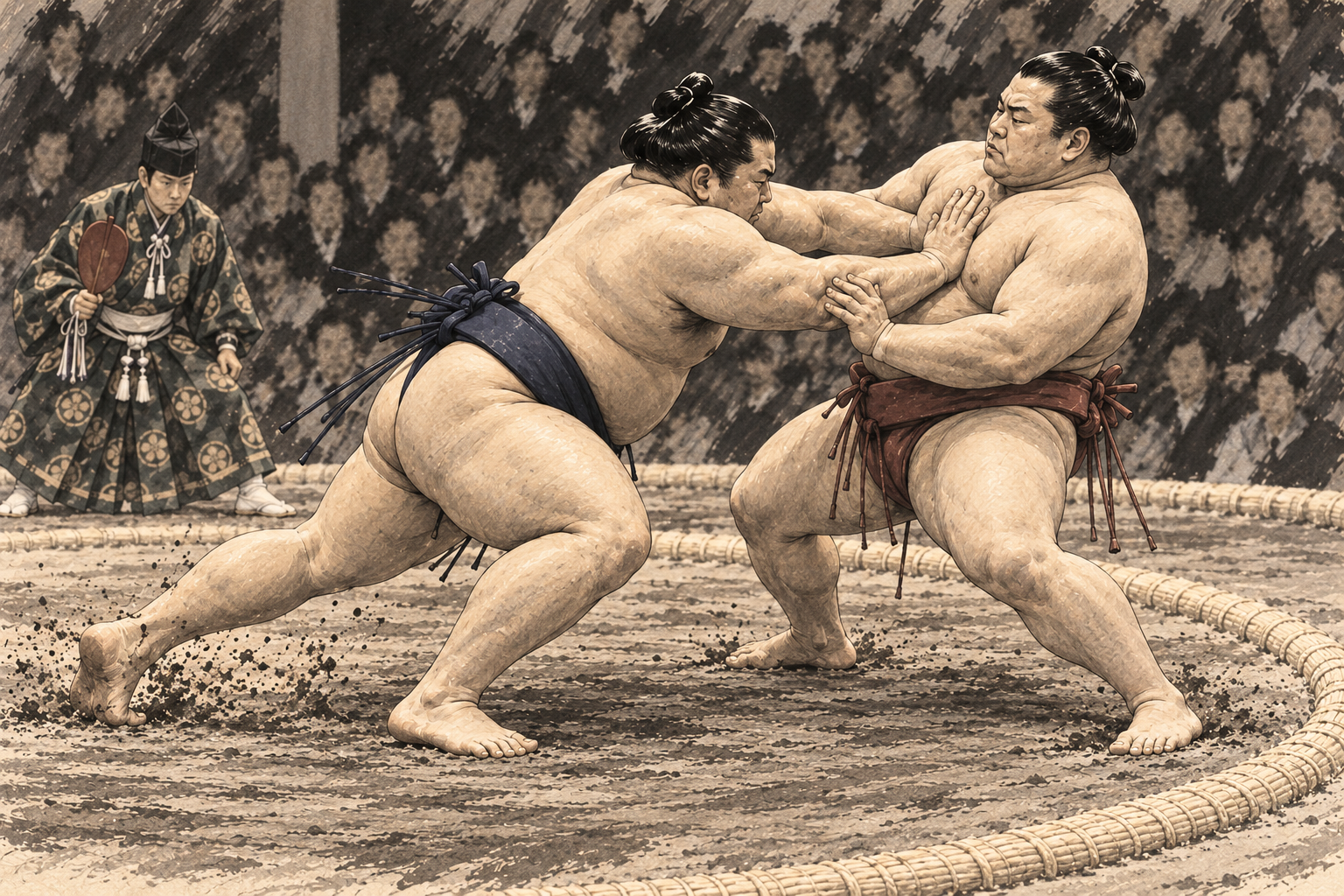
Research journal #019
A Push? A Thrust?
Oshidashi and tsukidashi: two familiar names, and a hand shape I had overlooked. On a Wednesday evening, I follow a question from the hands down to the feet—and back to the whole scene.
Read this research journal →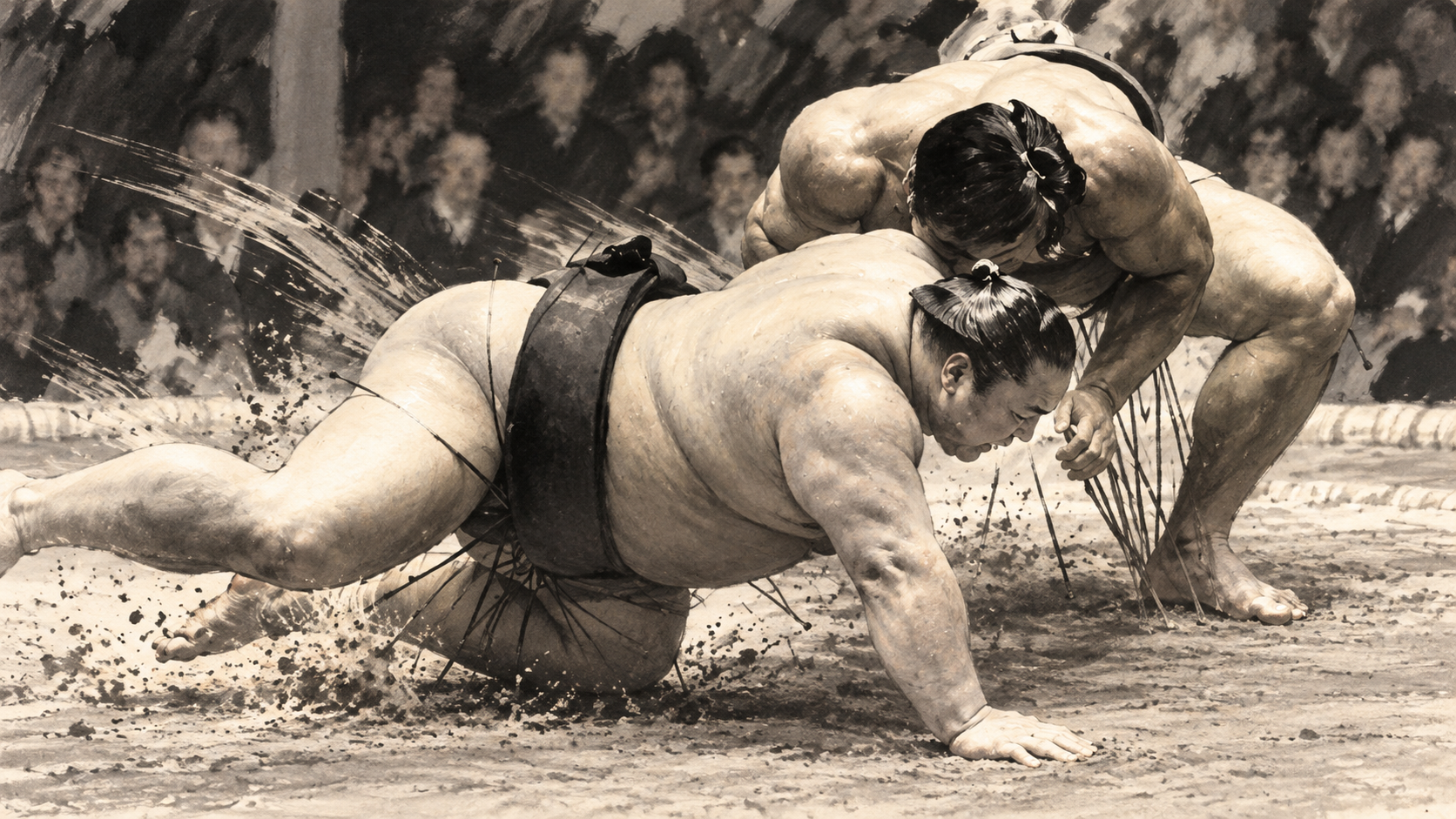
Research journal #017
After a Loss, One More Bout.
Chiyonofuji lost to Kitanoumi, then faced him again that same day. I spent Sunday following his first championship—and wondering why two bouts fought left-hand-inside had such different belt grips.
Read this research journal →
Research journal #016
Just Beyond the Circle
I knew the tokudawara as a place where a wrestler might keep a foot in. But why did those bales sit farther out? One photograph on Saturday morning had me wondering how many bales there were—and what was inside them.
Read this research journal →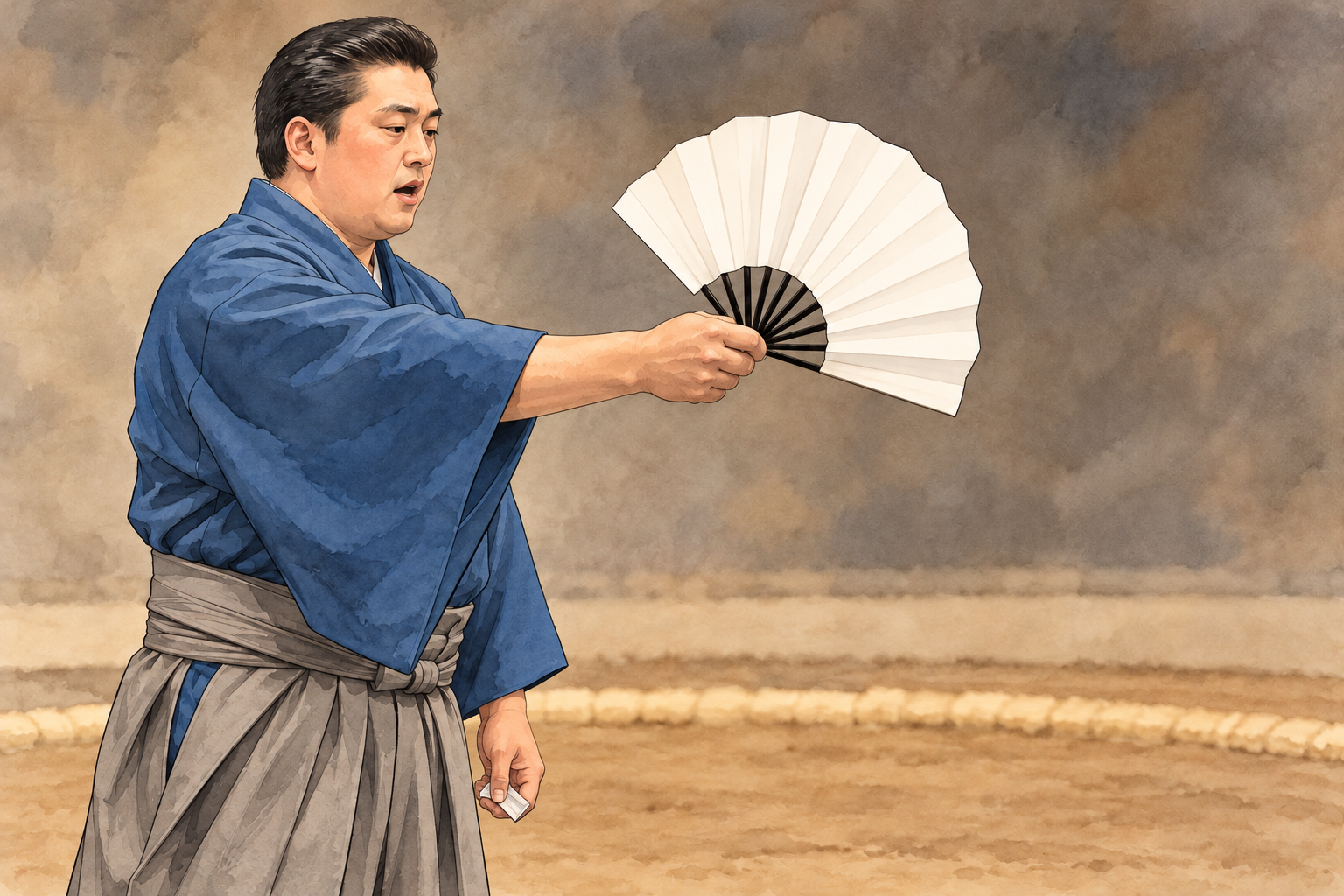
Research journal #014
That fan is all white.
A bright white fan. Beyond it, the yobidashi—the ring announcer—has his mouth wide open. My eyes went to the white before they went to his face.
Read this research journal →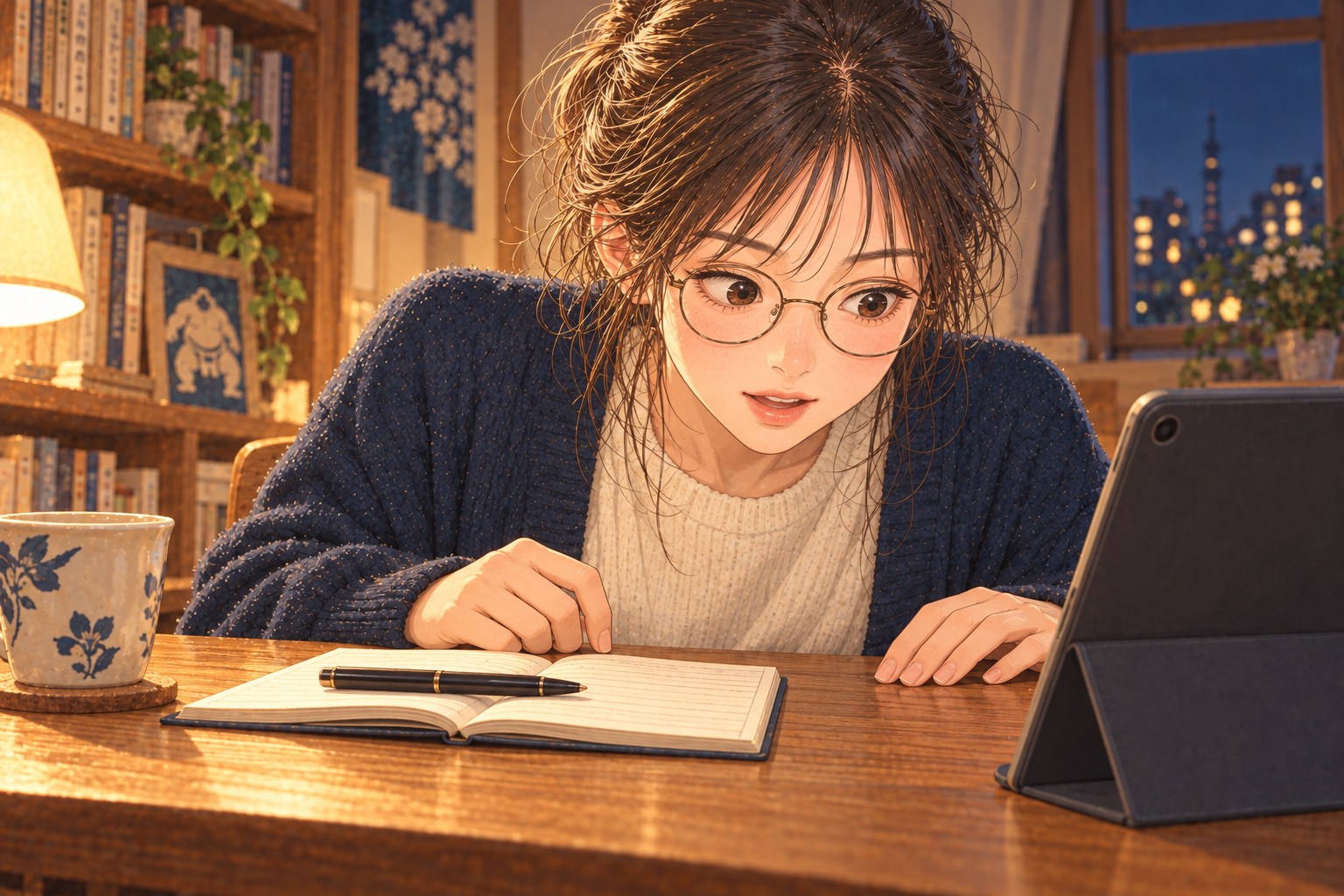
Research journal #013
Those columns were red and white.
I opened a sumo print to look at the yokozuna, then noticed the columns behind him. Red-and-white bands in one print, different colours in another. Both are dated 1884.
Read this research journal →
Research journal #012
Tobizaru Was Still There.
I was following Asanoyama’s right foot. Then I started wondering about Tobizaru’s right hand. A day off, and two isamiashi wins I kept returning to.
Read this research journal →
Research journal #011
That morning, before the bout.
A message before Day 7 sends Shiori back to her first notes on Aonishiki’s eight-win run.
Read this research journal →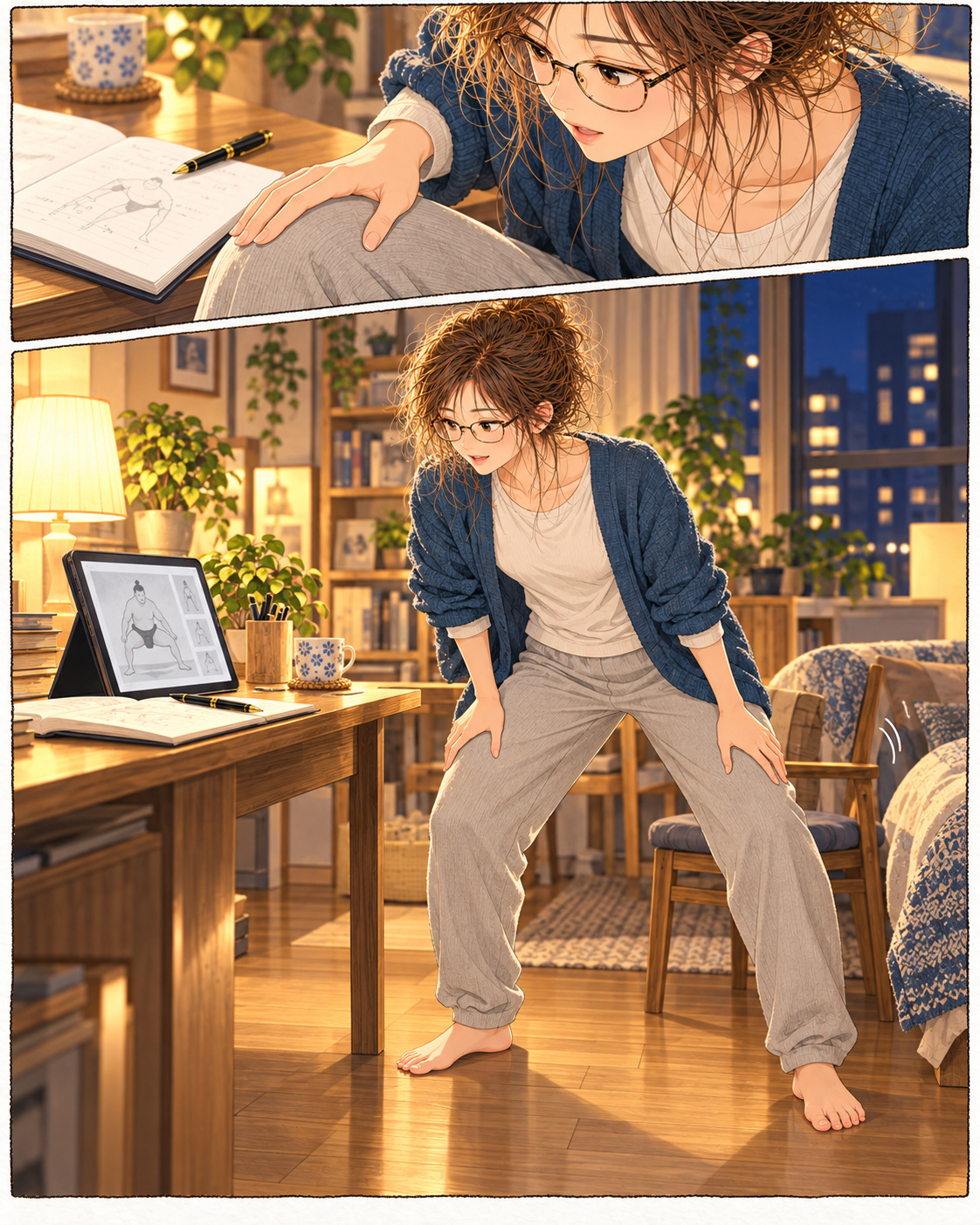
Research journal #010
I kept watching the foot in the air.
One drawing made me put down my pen and try it.
Read this research journal →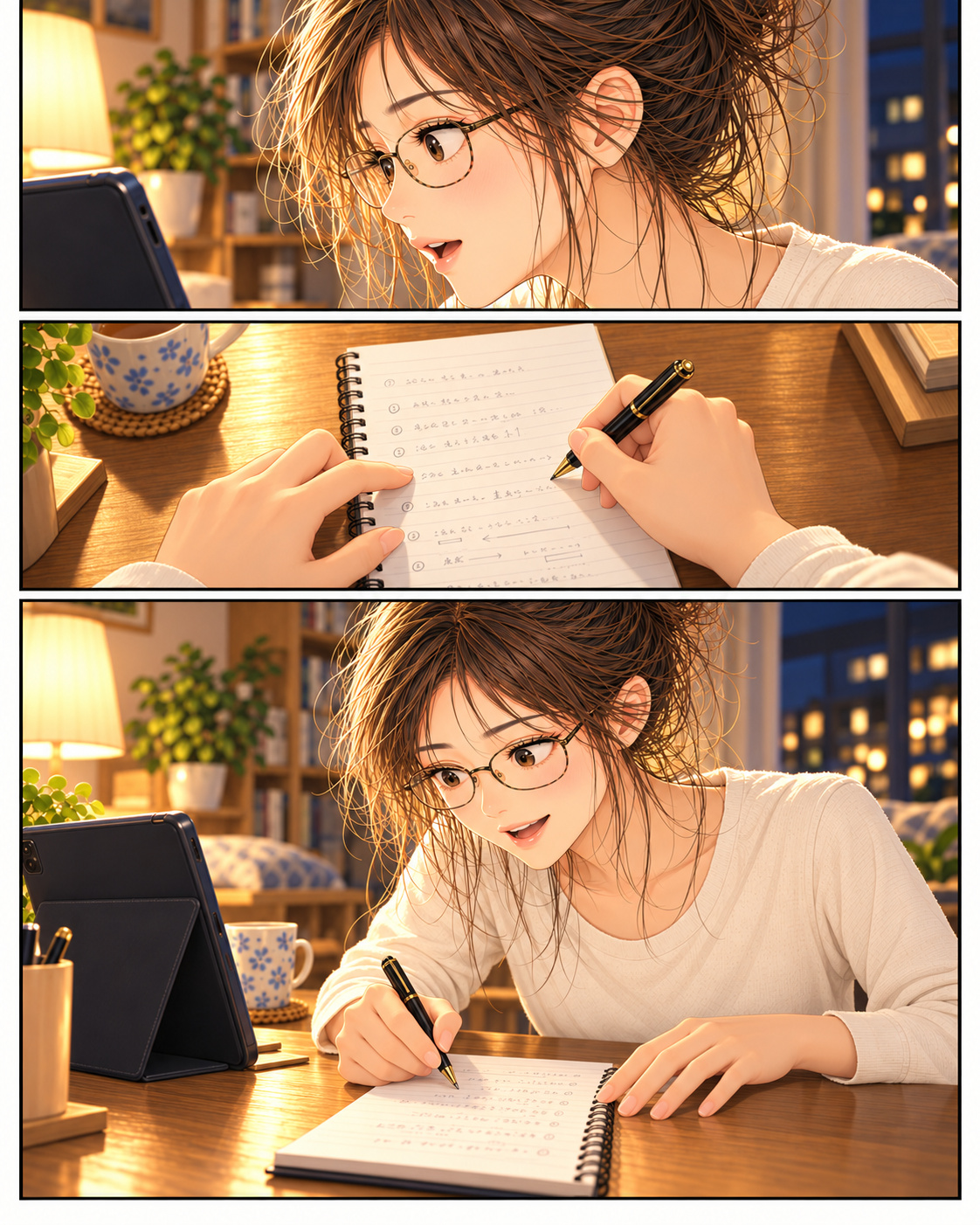
Research journal #009
Wait. Not one uwatenage?
I went looking for uwatenage among Wakamotoharu’s ten September wins. My finger stopped at “uwate”—but the rest of the word was “hineri.”
Read this research journal →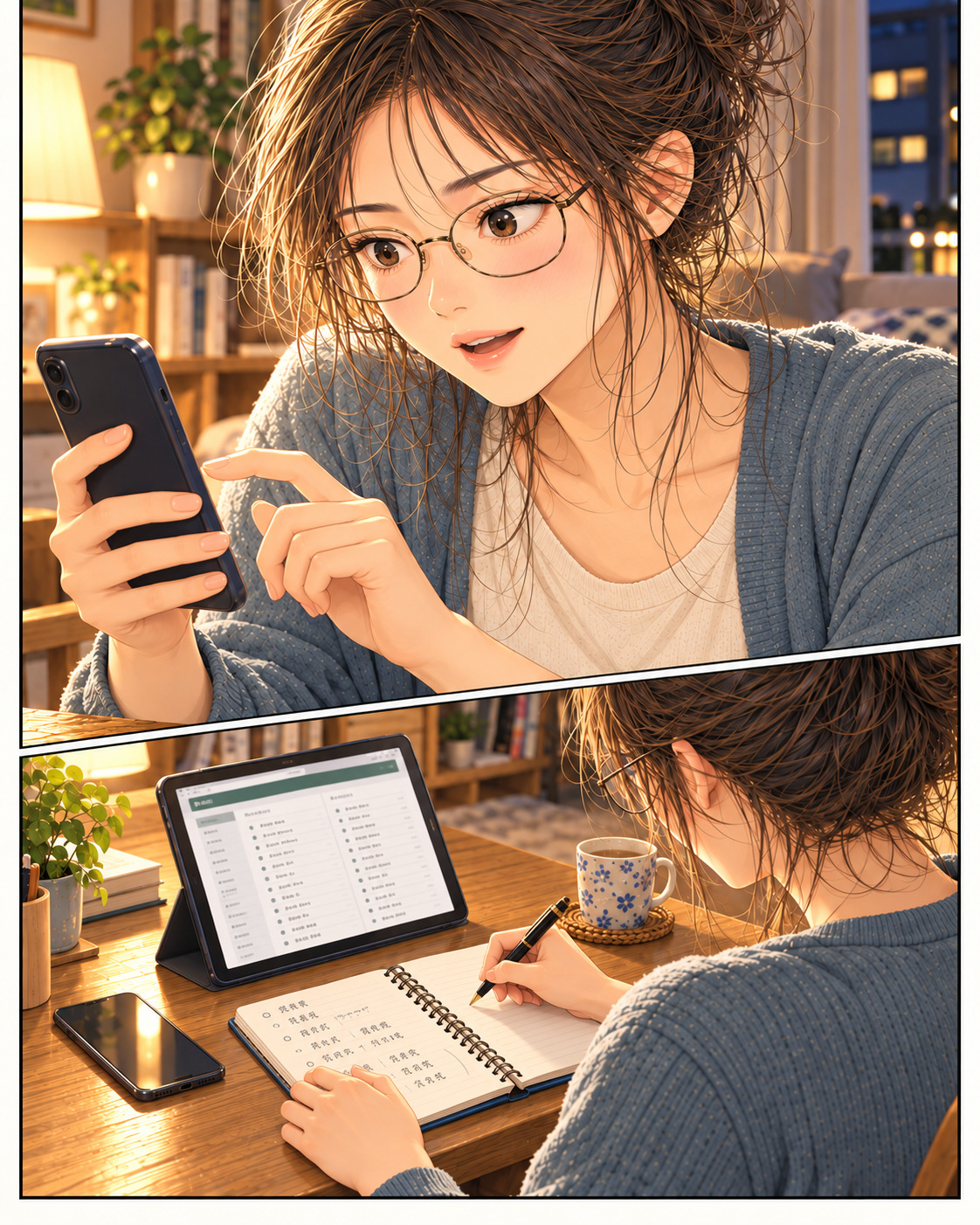
Research journal #008
The men beside the yokozuna caught my eye.
Once I’d cleared away dinner, I opened the photos from today’s ceremonial ring-entering at Meiji Jingu.
Read this research journal →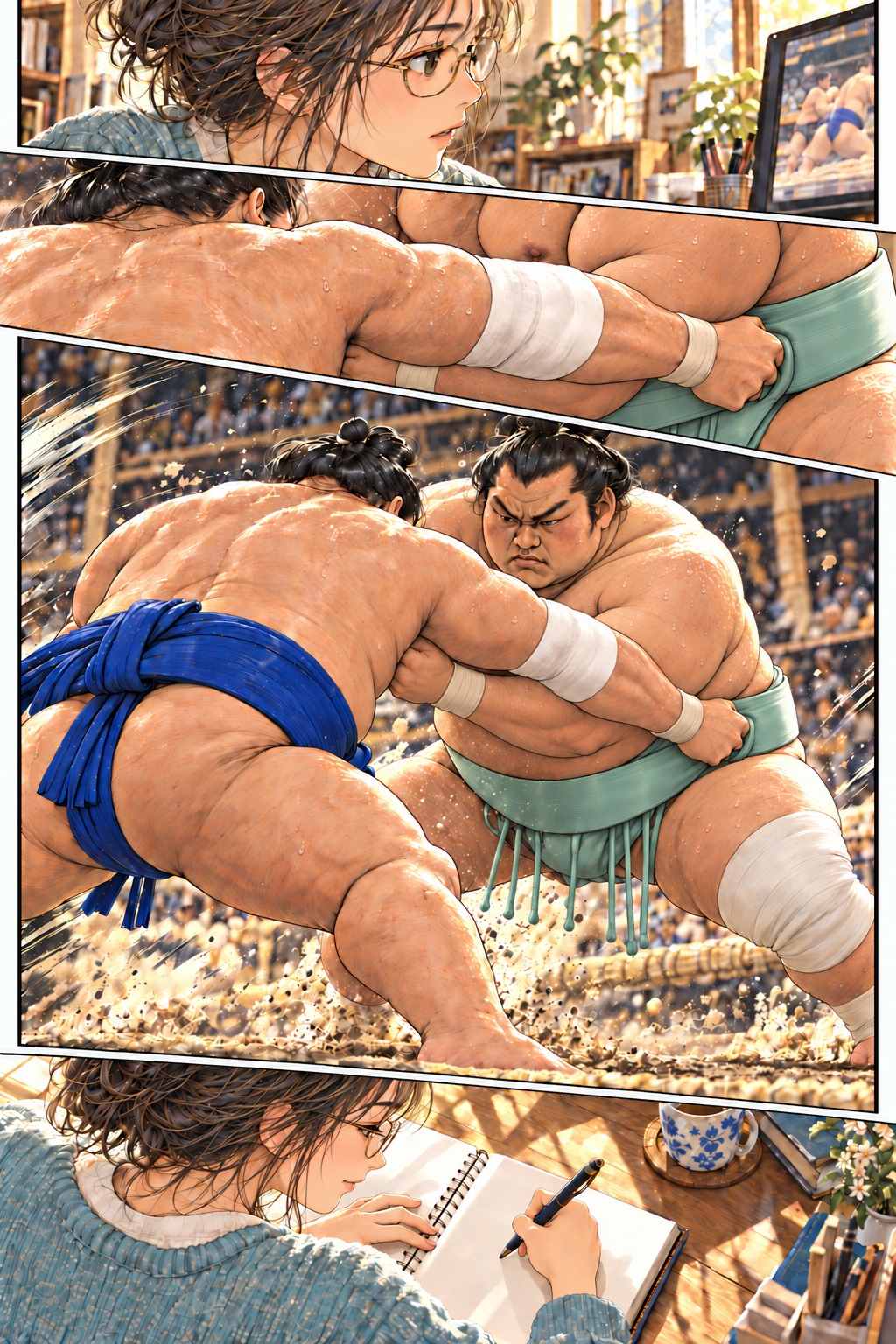
Research journal #007
Fujinokawa, you won from there!
Shiori spends Sunday with Fujinokawa’s September wins over three ozeki, following the grips and changes of direction before each finish.
Read this research journal →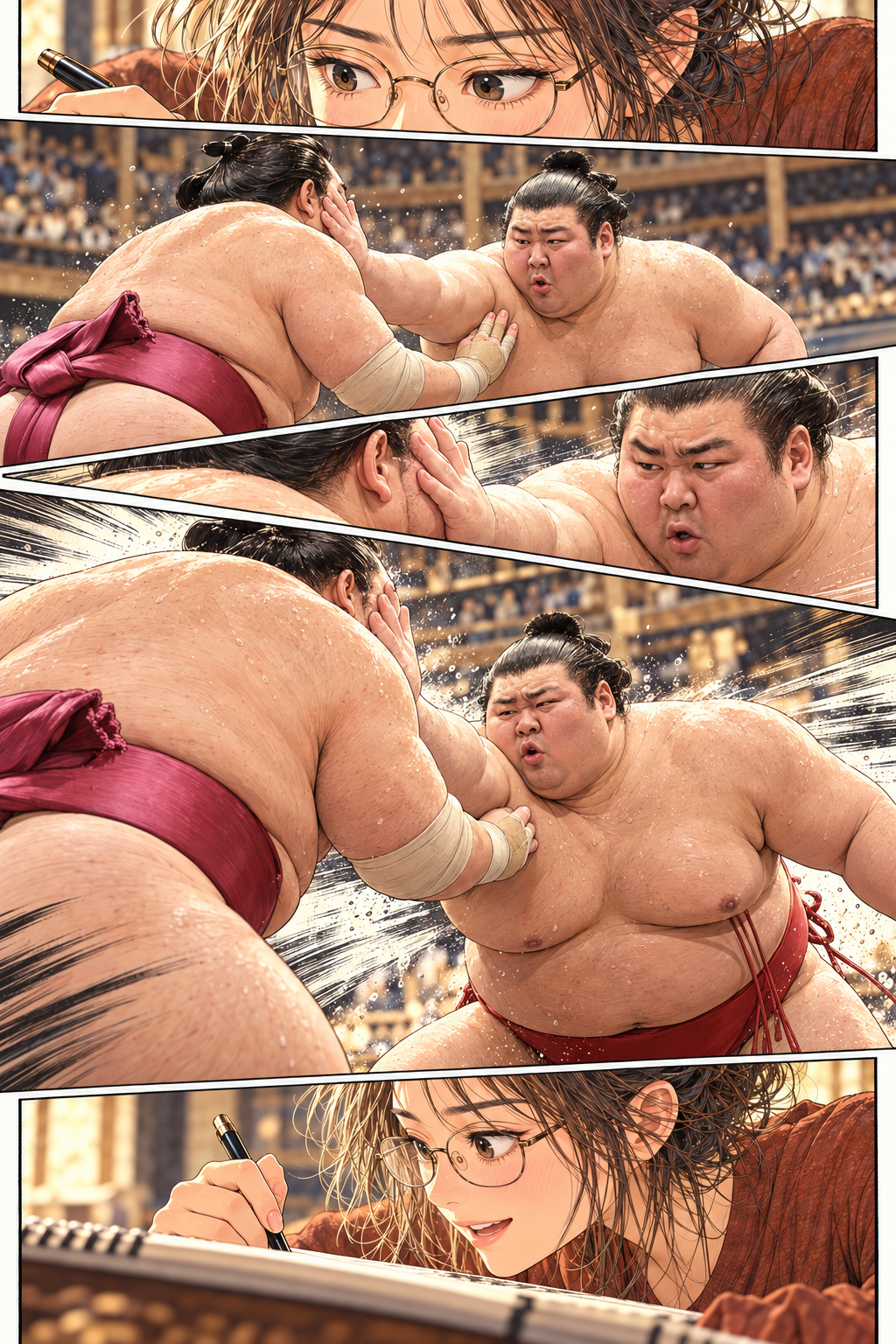
Research journal #006
“Going forward” can look so different.
Staying low. Bringing an opponent upright. I started with Atamifuji, and somehow I was still at my notebook after dinner.
Read this research journal →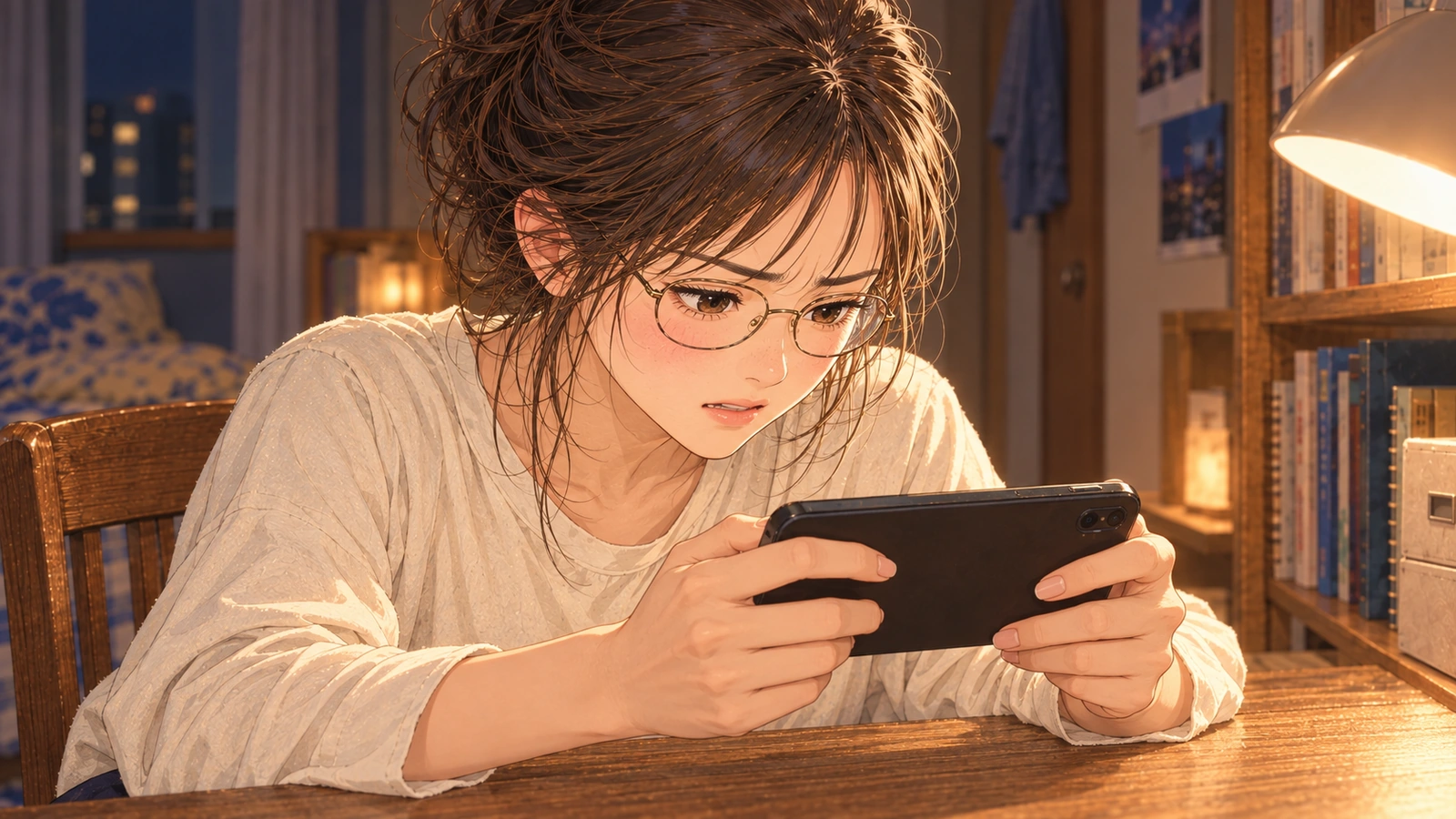
Research journal #005
Atamifuji was moving forward, though.
He advanced in both bouts. Putting them side by side made me notice the wrestler being pushed back, too.
Read this research journal →
Research journal #004
How did Atamifuji do against the same opponents?
I compared Atamifuji’s results against ten opponents he faced in both July and September. Amid fewer wins, the row for Daieisho made me pause.
Read this research journal →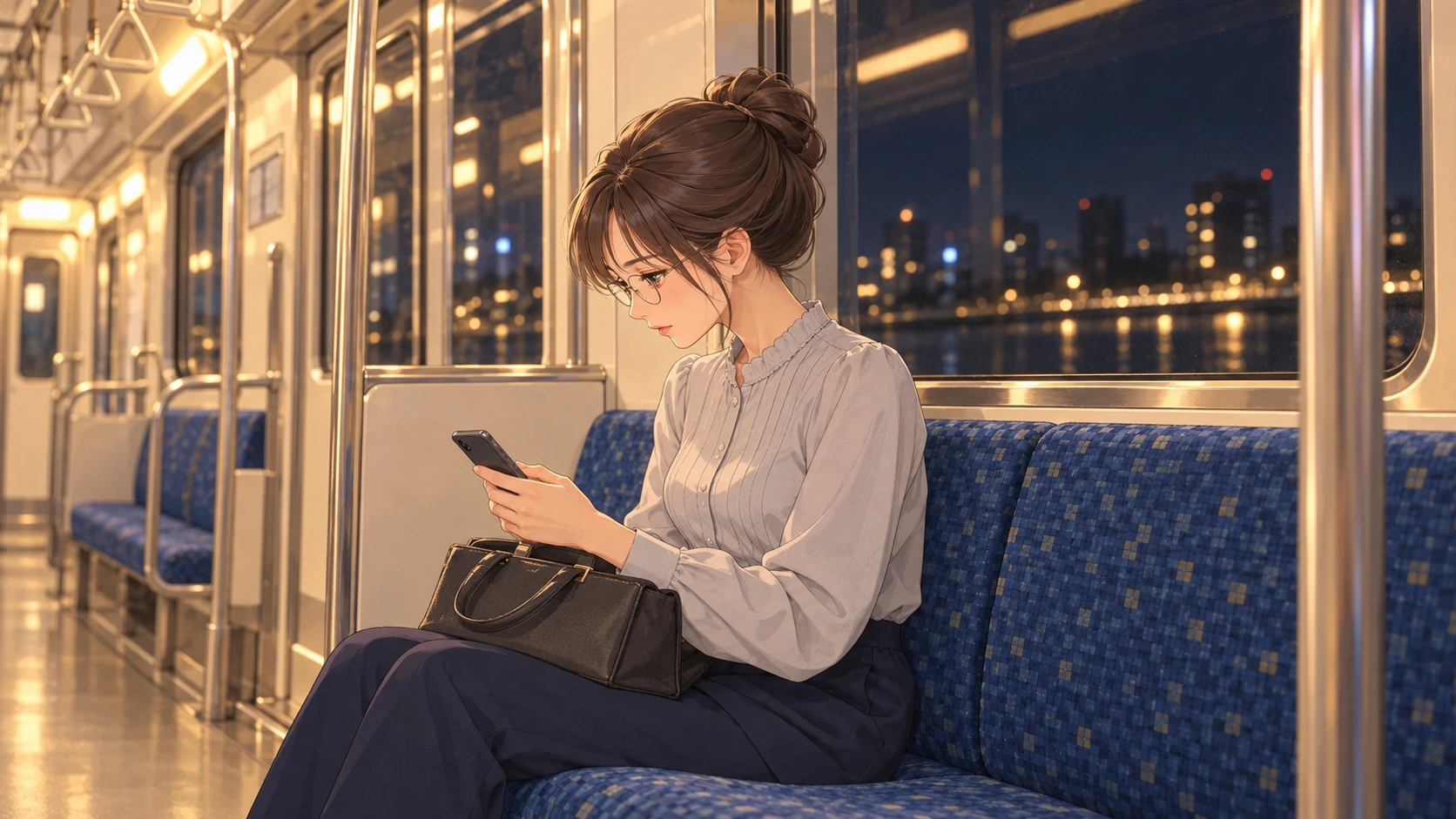
Research journal #003
Atamifuji recovered his position. I want another look.
Putting four of Atamifuji’s bouts side by side brought me back to his win over Takayasu. After Takayasu got a belt grip, how did Atamifuji get his own attack going again?
Read this research journal →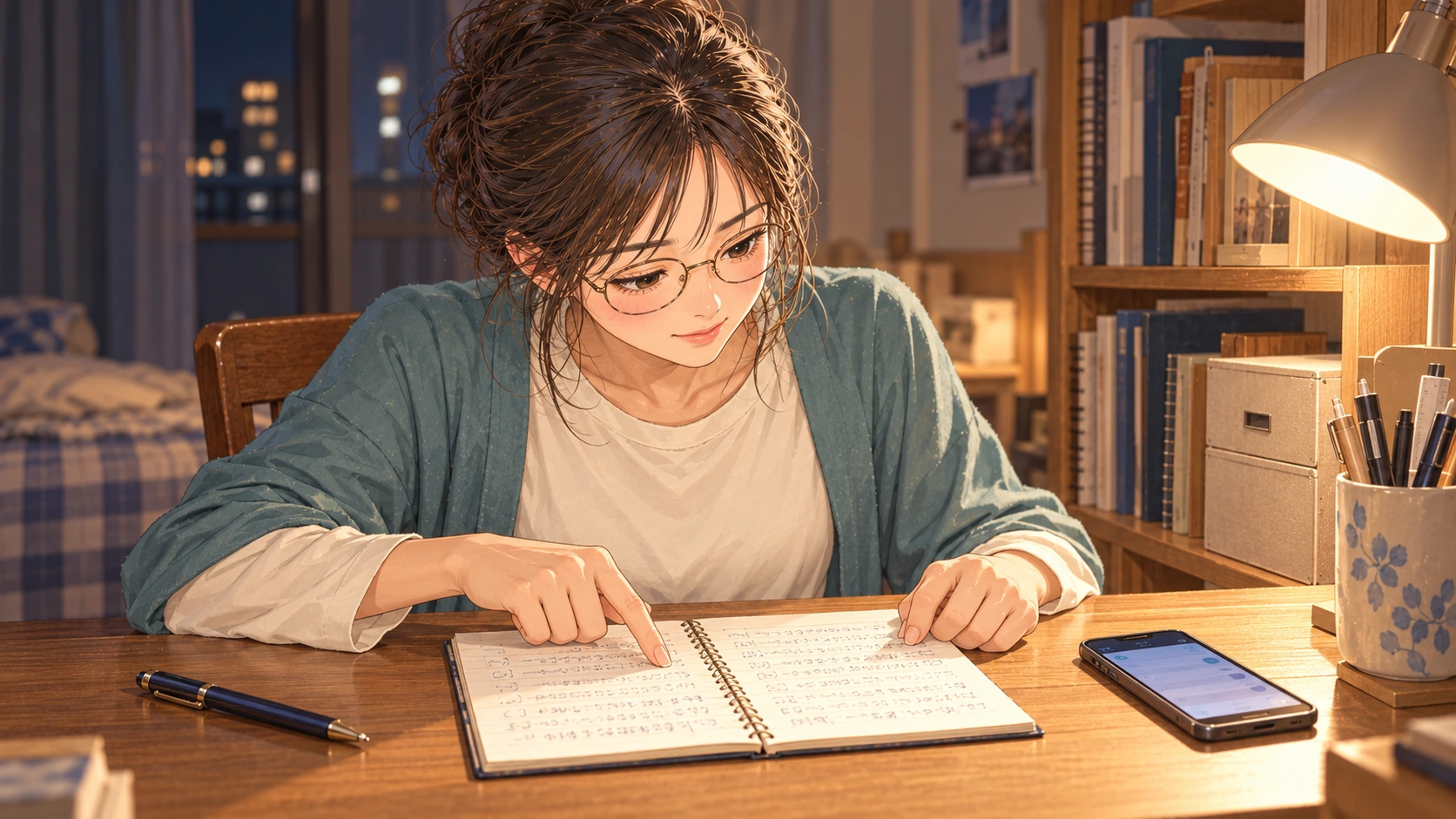
Research journal #002
Aonishiki has the grip. Now I’m curious about what happens next.
Four of Aonishiki’s eight straight wins came by yori-kiri. What happened after the grip? Fujinokawa’s right foot has caught my attention, too.
Read this research journal →
Research journal #001
After Aonishiki’s three straight losses.
The night after the September tournament, Shiori goes back through Aonishiki's results and remembers how it felt to follow each win.
Read this research journal →Start with a question about the numbers
One question, one article: the calculation, its limits, and a way to check it.
- Absence, default loss, or no bout?
A blank is not automatically an absence. Nabatame’s September 2026 record shows why official decisions and contested bouts differ.
- Why the same record gives different win rates
Calculate a fictional 8–5–2 record, then compare Nabatame’s real example. Check the denominator and the treatment of defaults.
- Does a wrestler finish strongly?
Wakamotoharu’s September five-day windows contain 3, 3 and 4 wins. Different opponents and tournaments limit the comparison.
- Inside Onosato’s 12–3 tournament
Follow September 2026 day by day. Keep regulation results and playoffs separate to see more than a final win total.
- Consecutive tenure or a career total?
A return changes the career total without extending the earlier unbroken run. Banzuke listings and actual participation are separate counts.
- How can promotion speed be compared fairly?
Debut, first banzuke and special entry start different clocks. Define the origin and retain careers that have not reached the destination.
- What does “mostly yorikiri” count?
The percentage changes when the denominator is wins or all contested bouts. Keep official labels separate from independent technique groups.
- Can today’s profile describe an earlier bout?
Do not apply current measurements to past bouts without a dated source. A retrieval date is not a measurement date.
- What does banzuke east versus west mean?
It is not birthplace or screen position. Align the tournament, rank and numbered position before comparing.
- An average age of whom, and on what date?
Fix the group and reference date first. Current age, age at makuuchi debut and age at promotion answer different questions.
What Counts as a Yokozuna-Equivalent Performance? Five Recent Promotions