SUMO ARCHAEOLOGY CLUB
Research Journal #009
Wait. Not one uwatenage?
Yesterday, Wakamotoharu won the All Japan Rikishi Championship for the first time. On his 33rd birthday, too!
He beat Ura in the final with uwatenage, an overarm throw. After the birthday congratulations, that “uwatenage” stayed with me. How many had he won with in September?
Tonight, I copied just his winning bouts into my notebook.

Oh. None?
He finished September with ten wins and five losses. Not one of those ten wins was decided by uwatenage.
My finger stopped at “uwate” on Day 11. But the rest of the word was “hineri.” That was his win over Tobizaru. I’d better keep that separate.
Five circles around yorikiri.
Yorikiri, a force-out with a belt grip, came up most often. Shodai, Asahakuryu, Oho, Toshinofuji and Takerufuji. Once I’d put the opponents’ names beside them, there were five. Exactly half!
His Day 4 win over Shishi was yoritaoshi, a frontal crush-out. Count that alongside the five yorikiri, and that makes six wins finished with those two yori techniques.
The techniques behind ten wins
Wakamotoharu · September 2026
A full bar represents ten bouts. Winning bouts only.
But now I wanted to look at the other four, too.
Fujiseiun on Day 10 and Hiradoumi on Day 13: hatakikomi, a slap-down. Between them came uwatehineri against Tobizaru and oshidashi, a push-out, against Ichiyamamoto. Even just his six straight wins from Day 9 included four different finishing techniques.
Yorikiri, hatakikomi, uwatehineri, oshidashi, hatakikomi, yorikiri.
Six wins in a row, but the same technique wasn’t simply repeating down the page.
I’d started out looking for yesterday’s throw. Now I couldn’t leave this six-day stretch alone.
Just the days he won.
Wakamotoharu’s ten September wins. Pale green marks his six straight wins from Day 9.
| Day | Opponent | Technique |
|---|---|---|
| 1 | Shodai | Yorikiri |
| 3 | Asahakuryu | Yorikiri |
| 4 | Shishi | Yoritaoshi |
| 6 | Oho | Yorikiri |
| 9 | Toshinofuji | Yorikiri |
| 10 | Fujiseiun | Hatakikomi |
| 11 | Tobizaru | Uwatehineri |
| 12 | Ichiyamamoto | Oshidashi |
| 13 | Hiradoumi | Hatakikomi |
| 14 | Takerufuji | Yorikiri |
The same beginning. A different ending.
Back to that uwatehineri for a moment.
Taking hold of the belt from outside the opponent’s arm gives an uwate, or overarm, grip. With uwatenage, that grip is used to throw; with uwatehineri, the opponent is twisted down towards the side of the overarm grip. The Association puts uwatenage in its throwing category and uwatehineri in its twisting category. The second half of the name really does matter.
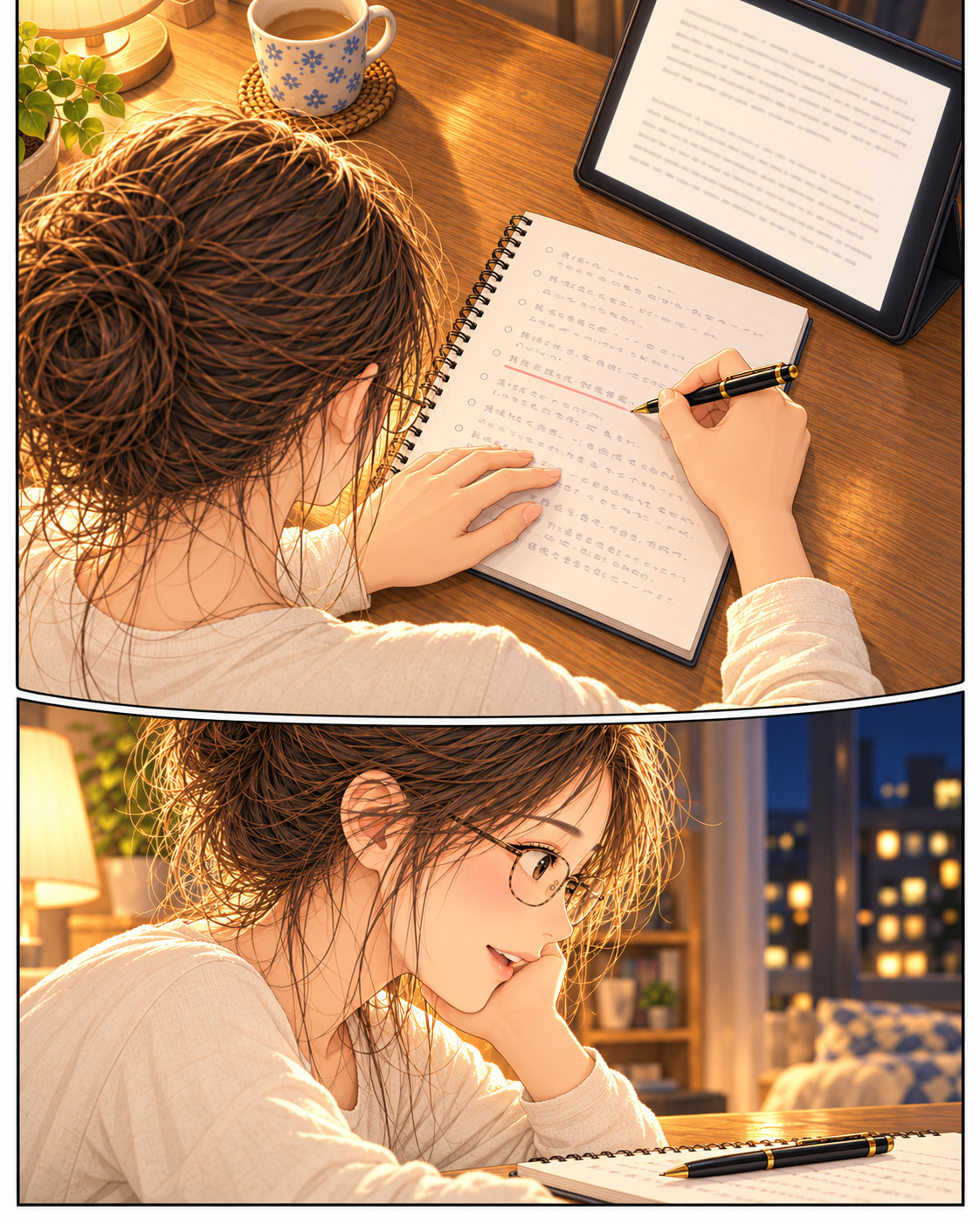
I underlined “uwatehineri” in my notebook. If I lumped them together, I’d lose the very difference that caught my attention tonight.
And those five yorikiri couldn’t all have unfolded in exactly the same way, either. Did he try a throw before forcing someone out? This table doesn’t tell me. A technique missing from the result column isn’t the same as a technique never attempted during the bouts.
I wrote “No September wins finished with uwatenage” in my notebook. Whether he tried a throw along the way is a separate question.
On Day 5 in September, Ura won with sotogake, an outside leg trip. In yesterday’s final, Wakamotoharu won with uwatenage.
Writing those two results side by side made me happy about yesterday’s championship all over again.
Congratulations, Wakamotoharu. I got curious about how you won, too—and here I am, still at my notebook!