SUMO, ONE QUESTION AT A TIME
I kept watching the foot in the air.
One drawing made me put down my pen and try it.
After work on Wednesday, I was on the sofa catching up on the tour news. In Ebina, Takayasu had kept doing shiko for more than twenty minutes after the group practice ended.
More than twenty minutes of shiko.
I wondered what he was paying attention to. When I watch that familiar leg lift and stamp, my eyes always follow the foot going up.
At my desk, I opened the Japan Sumo Association’s guide to basic movements on my tablet and took out my notebook. First, the shiko drawings.
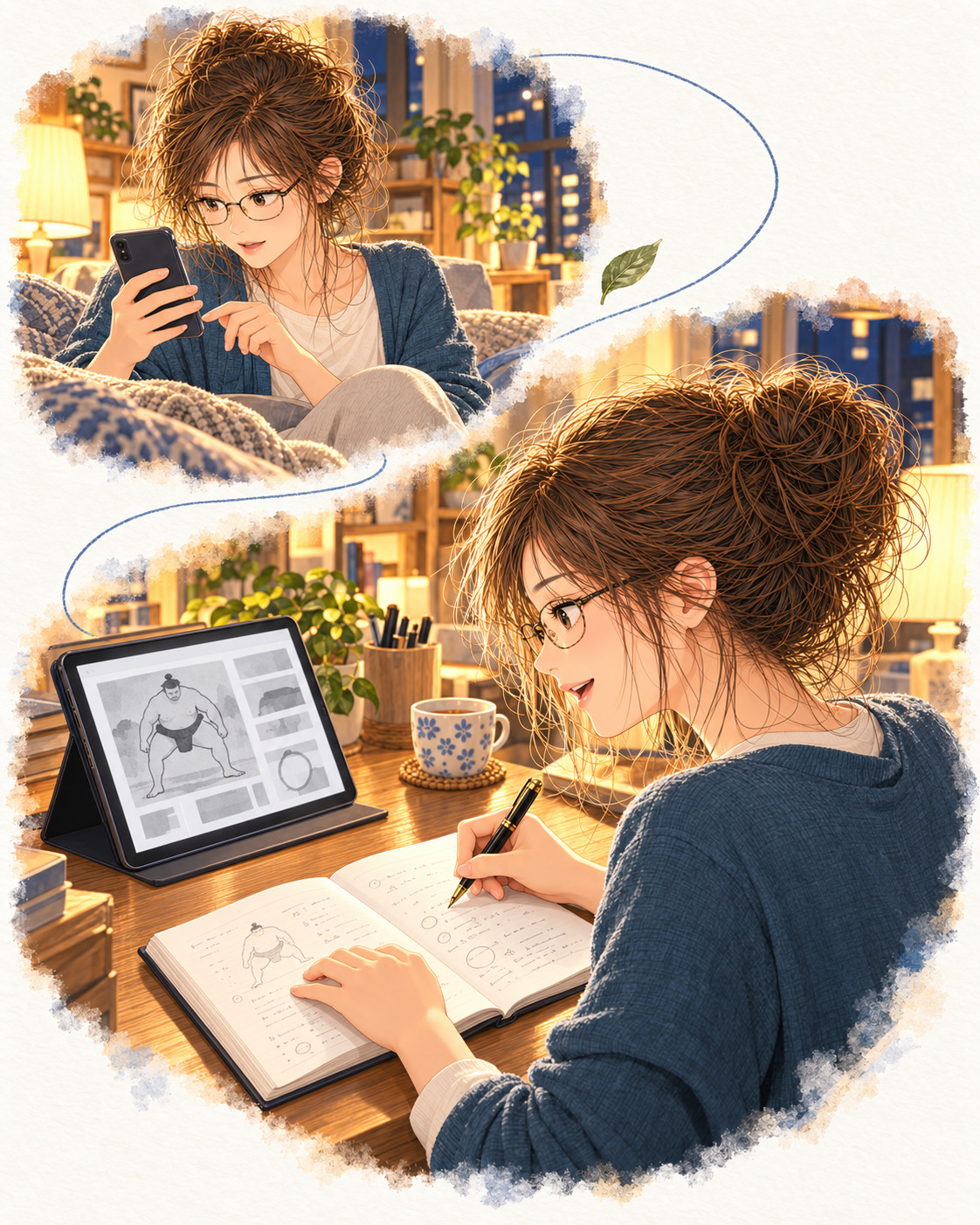
The hand is only resting there?
I noticed the hand on the raised thigh. In the right-leg sequence, the guide says the right hand rests lightly and slides along the thigh. It isn’t pulling the leg up.
I put down my pen and rested my right hand on my own thigh. Like this…? I looked from the drawing to my hand and back again.
Sitting down wasn’t helping me make sense of the legs. All right. Just a quick try standing up.
I pushed the chair back and stood beside the desk with my feet a little apart. Keeping both feet on the floor, I shifted gently from one side to the other.
Oh. I can feel myself settling onto this foot.
A glance at the tablet, then down at my feet. I stopped short of lifting a leg like the figure in the guide. Hardly a proper shiko! But now I couldn’t stop noticing the left leg I’d barely looked at before.
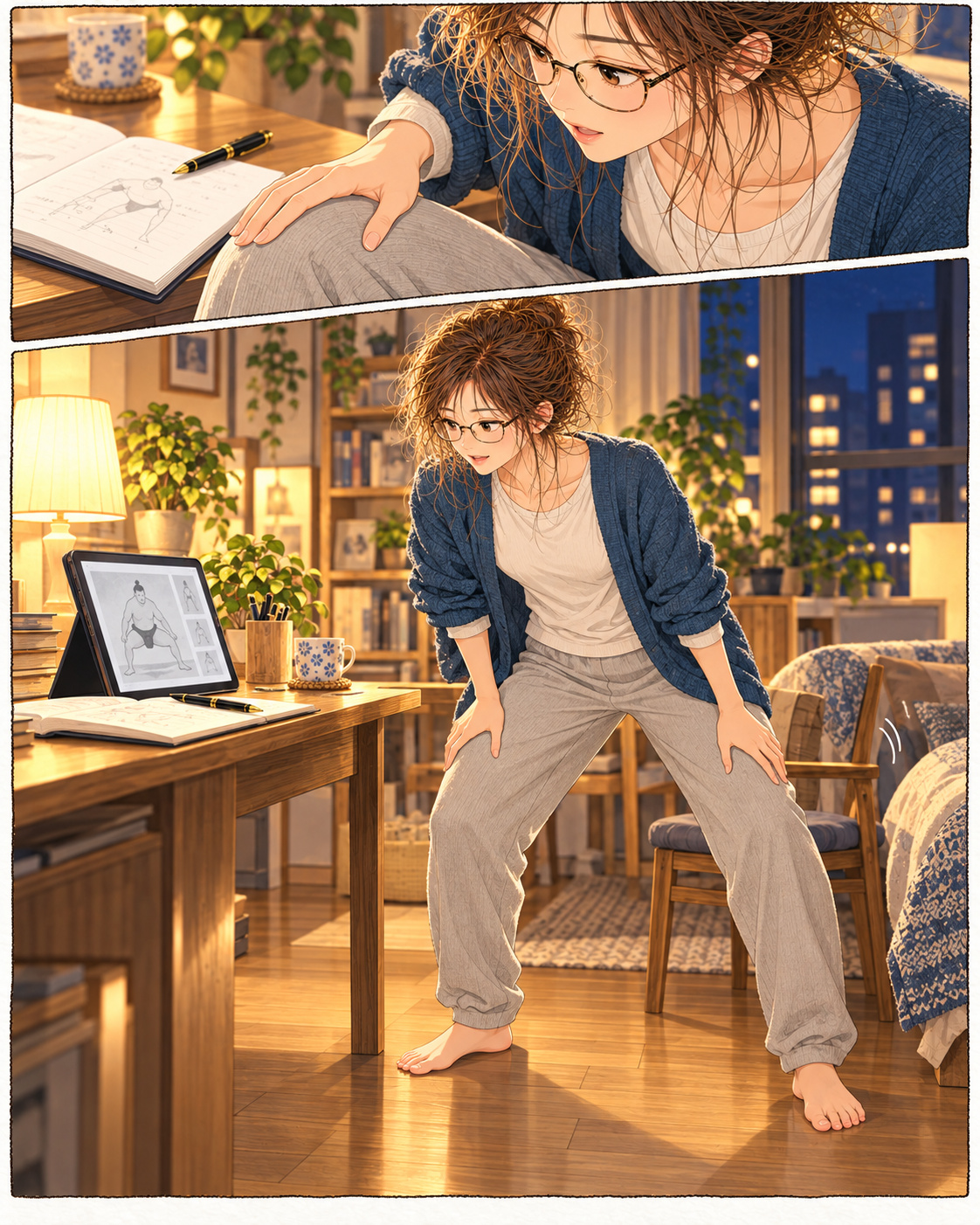
This side moves before the foot rises!
Back in my chair, I returned to the earlier drawing. To raise the right leg, the weight first shifts left. The supporting left knee then straightens as the right leg rises.
Ah, that was the bit I’d been skipping. My eyes were already off following the raised foot.
I wrote ‘supporting left knee’ in my notebook. A drawing of the right leg going up, and my biggest note is about the left knee. That made me smile.
The resting hand, the thigh beneath it, the foot still on the ground. I traced through the drawing again, thinking about the little movement I’d just tried.
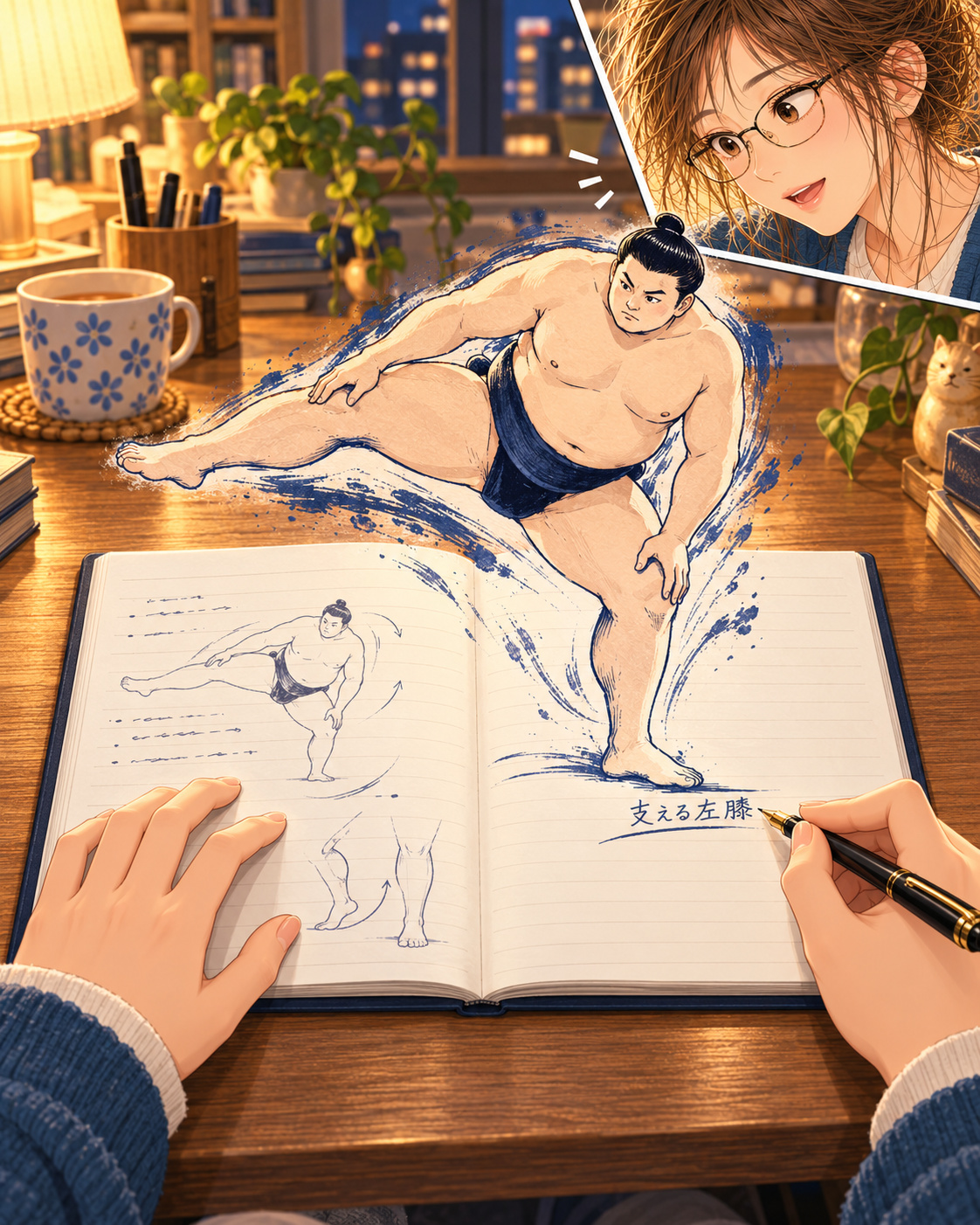
And it doesn’t end when the foot comes down.
I followed the next drawings too. The raised foot comes down toes first, then the body returns to the low stance on both feet. If I stop watching at the landing, I miss that return as well.
I’d only tried a tiny movement, but the same drawing looked different now. What had Takayasu been focusing on through those twenty minutes?
Next time I watch, I don’t want to miss the supporting knee. I still want to follow the lifted foot too, though. My eyes are going to be busy.
Before closing the notebook, I added one more reminder: ‘Watch after the landing, too.’ All those new things to notice, and I haven’t even left the shiko pages.
One thing to notice next time.
Three clues from Shiori’s notebook for the next time you watch shiko. Choose one that caught your attention, and add a note of your own if you like.
The resting hand
In the right-leg sequence, the right hand rests lightly and slides along the thigh. It is not pulling the leg up.
The supporting knee
Before the right leg rises, the weight shifts left. The supporting left knee then straightens as the right leg goes up.
After the landing
The raised foot comes down toes first, then the body returns to the low stance on both feet. Keep watching beyond the landing.
Copy a clue you want to remember into your own notes.
These clues summarize research journal #010, whose movement notes follow the Japan Sumo Association’s Basic Sumo Movements guide.