Among the tools for dressing a wrestler’s hair, I found a slender rod. It wasn’t a comb.
On Tuesday evening, I let my hair down and combed it in front of the bathroom mirror. I looked straight ahead, then turned a little to the side. I couldn’t see the back very well, so I finished by feeling it with my fingers.
A sekitori’s ōichō topknot has such a neat shape at the back, too. Does that fullness simply appear when the hair is gathered and tied?

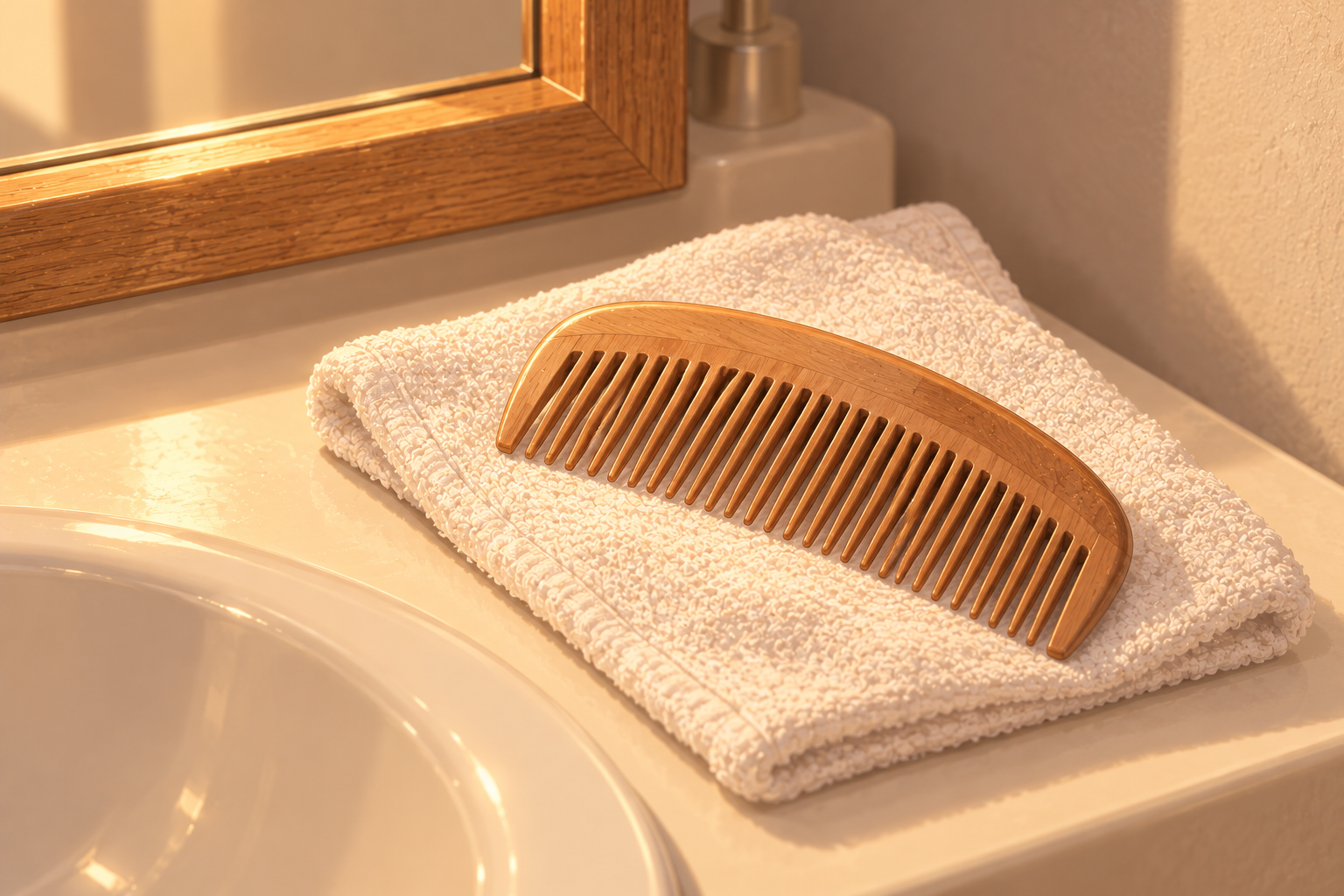
I laid my comb on a white cloth and loosely tied my hair up again. Before going to my desk, I took one more look in the mirror. Mine was a little different on each side. Oh well. Good enough for tonight.
A rod beside the combs
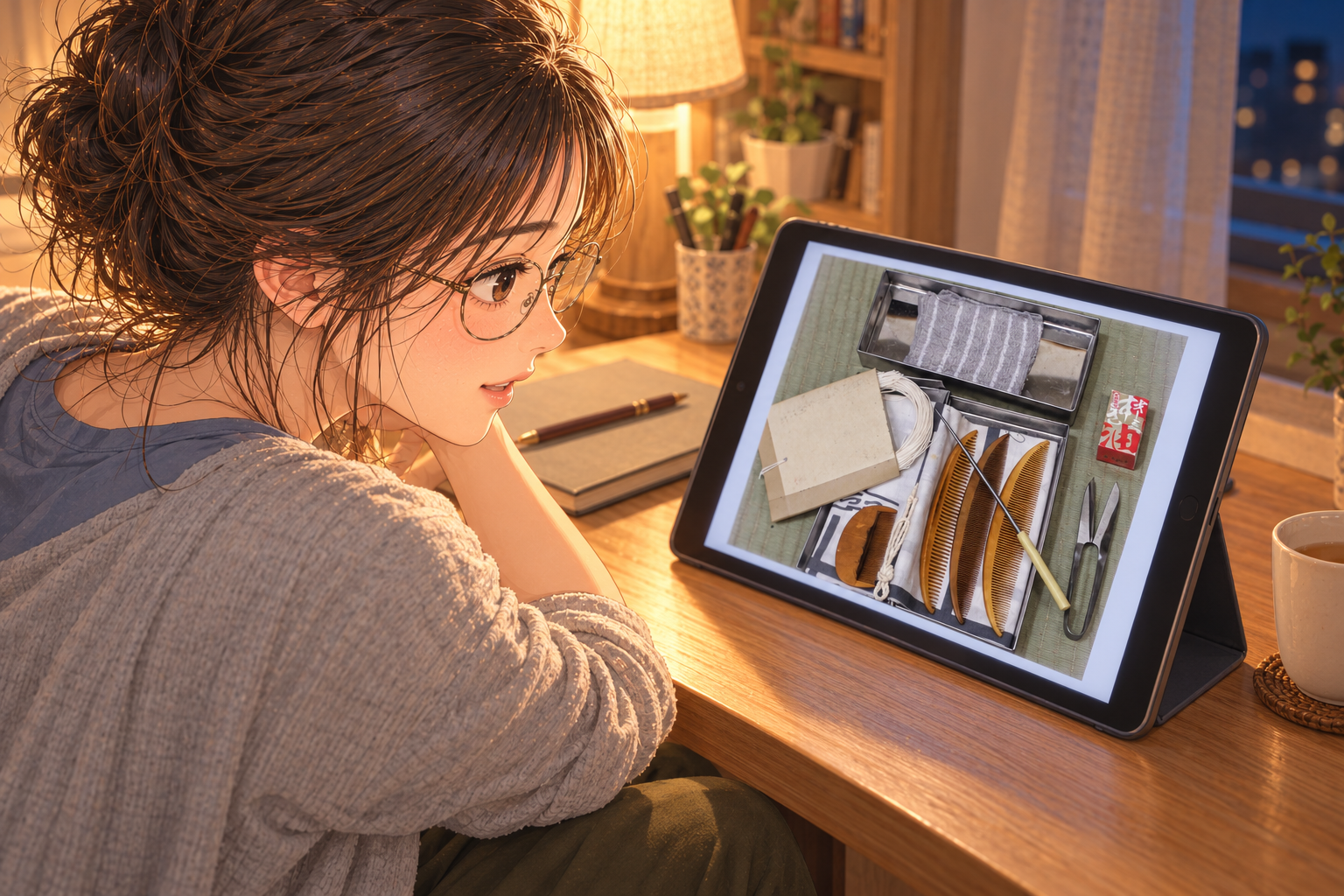
At my desk, I searched the Japan Sumo Association’s explanations and found a photograph of a tokoyama’s hairdressing tools. Several combs lay together, with a slender rod running diagonally across them. Unlike the combs, it had no teeth. What was it for?
It is called a magebō, a steel rod used to give the ōichō its fullness. The explanation says it shapes the hair above both ears and at the back so that it projects outward. As I read, the fingers that had been checking my own hair moved to the spot above my ear.[1]
Oh. There was more to it than tying the hair at the top.
When I pictured an ōichō, I thought mostly of the part spreading out on top of the head. Someone was shaping what lay below it, too.
Another look from behind
Another Association page had a photograph of an ōichō from behind. First, my eyes went to the knot on top. Then I looked lower and noticed the rounded outline of the hair spreading to either side. I would have passed over that if I had only looked at the middle.[2]
I returned to the photograph of the tools. A slender rod; a full, rounded shape seen from behind. At first, I hadn’t connected the two pictures at all. Now they felt like a glimpse of the work and its result.
The photographs don’t tell me that these particular tools were used for this particular hairstyle. But the words “giving it fullness” had finally given me somewhere to look.
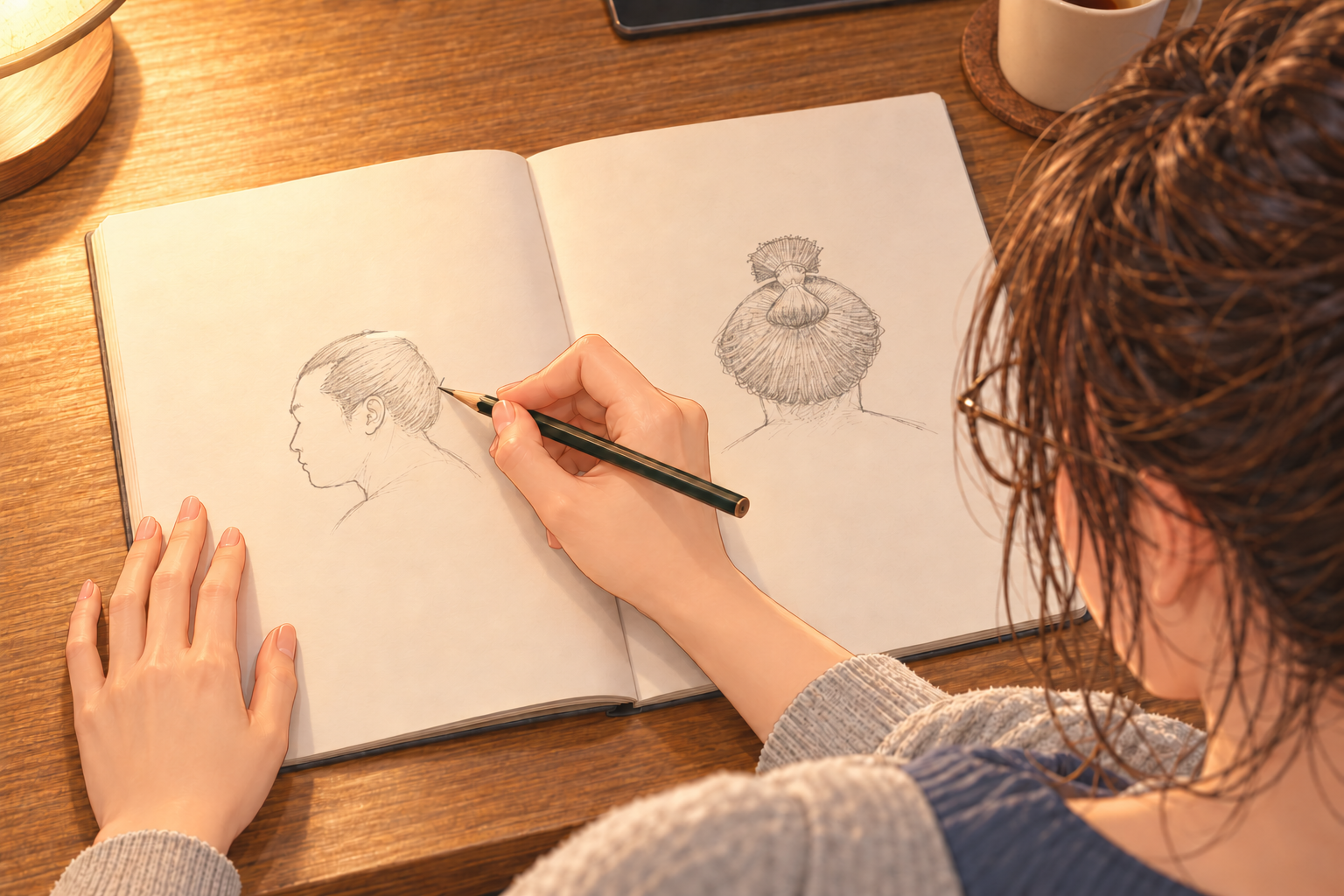
In my notebook, I tried drawing a little side view and a back view, as well as the top. They weren’t very good drawings. I added one small mark above the ear: a reminder of where to look next.
The tool gets shaped, too
At the end of the magebō explanation, there was one more detail. The Association’s March 2025 article says that these tools are not sold ready-made: tokoyama make their own by adapting tatami needles.[1]
Before shaping the hair, they also put work into the tool.
I had moved my comb back and forth and then settled for “good enough for tonight.” I looked at the rod once more before closing my notebook.
Next time I see a sekitori in profile, I want to notice the hair above his ear. When he turns away, I’ll let my eyes travel from the knot on top to the outline below it. I thought I had been looking at the whole ōichō. There was still more to see.
One more thing to enjoy before the bout even begins.

Shiori