Shiori’s Research Notes #017
Chiyonofuji lost to Kitanoumi, then faced him again that same day. I spent Sunday following his first championship—and wondering why two bouts fought left-hand-inside had such different belt grips.
He had just lost. Now another bout!
Chiyonofuji won his first championship in a playoff against Kitanoumi. But Kitanoumi had won their scheduled bout just before it.
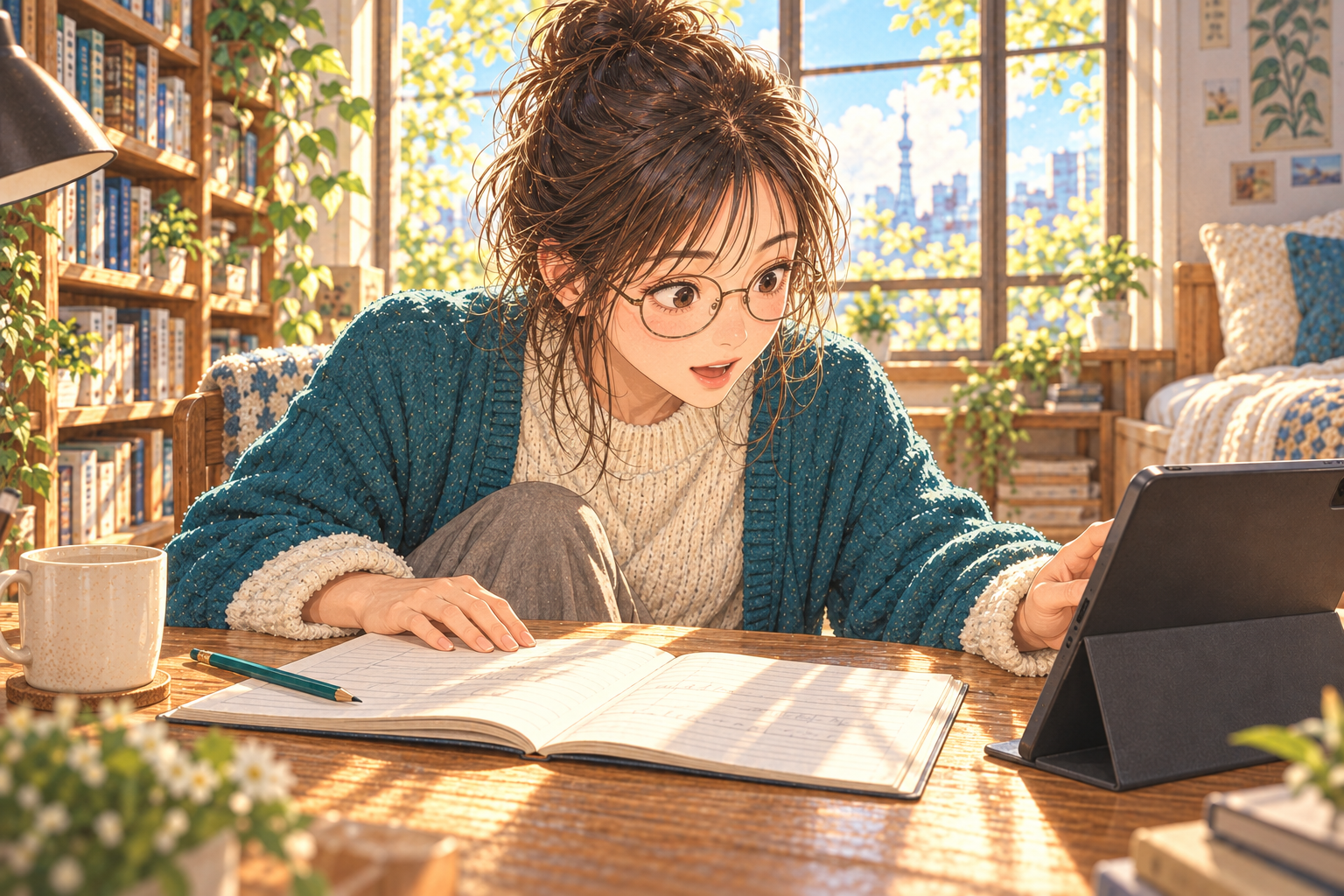
The man who had just beaten him, again on the very same day! It was Sunday morning, and I was already getting nervous. Win the next one, and the first championship was his. But he had just lost. I knew the result, and still couldn’t quite settle down.
It was 25 January 1981, the final day of the New Year tournament. After their scheduled bout, both men were at fourteen wins and one loss. Chiyonofuji was still a sekiwake; Kitanoumi was a yokozuna. I tend to picture Chiyonofuji as a yokozuna straight away, so I wrote “sekiwake” in my notebook.
Kitanoumi won by tsuridashi: lifting his opponent bodily out of the ring. Oh, that is strong. I had set out to learn about a first championship, and already I couldn’t leave the bout before it alone.
Then Chiyonofuji won the playoff by uwatedashinage, a pulling overarm throw. The same day, the same opponent, and such different endings. What had changed?
Light from the window was reflecting on the screen, so I adjusted the stand a little. It was my day off. I pulled the notebook closer and wrote down both names for each bout.
I want to see Kitanoumi’s hands, too.
Kitanoumi falling forward at the end of the playoff, with Chiyonofuji behind him. Their bodies were so close. He had thrown someone that big from there.
While looking for Chiyonofuji’s hand, I noticed Kitanoumi’s hand against the clay. Now I kept looking at that instead. This was the man who had just won by lifting his opponent out.
Both bouts were hidari-yotsu, with the left arm inside. Finding that out only made me more curious. The same position, yet one ended in a lift-out and the other in a pulling overarm throw. Had something already been different when they gripped each other?
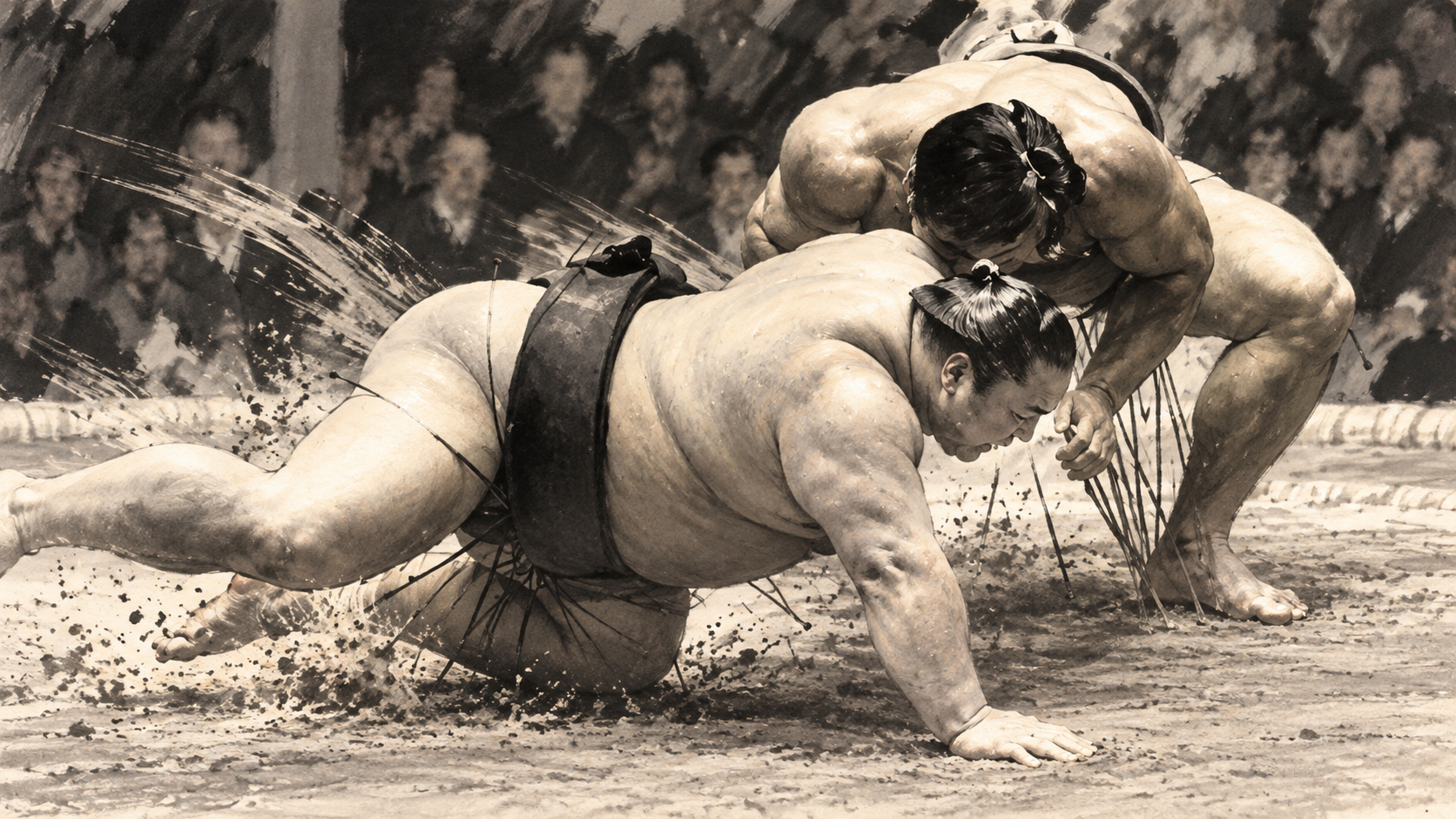
Scheduled bout on the left, playoff on the right. I put the winners and the techniques side by side first. Tsuridashi lifts an opponent out; uwatedashinage draws him forward and off balance. The word “throw” had made me imagine a much bigger, sweeping movement.
Back at the photograph of the finish, I wanted to look at their heads and hips as well as their hands. First Chiyonofuji, then Kitanoumi. I had thought I might simply admire the winning throw. This was going to take a little longer.
Tea, and still thinking about that grip.
Hunger finally made me look at the clock. It was already lunchtime. I put down the pencil and went to the kitchen, leaving the tablet on the desk as well.
After lunch, I washed the dishes and made some hojicha in a teapot. As I poured it into my mug, the roasted scent made me take a deep breath.
While it cooled, I checked the shopping note on the fridge. Eggs, milk. I’d have to go out for those later. And then “left-hand-inside in both bouts” came back into my head.
If the position was the same, were the belt grips the same as well? I had been treating them as one thing. But were they?
I held the mug in both hands and took a sip. I was drinking my tea, but those two were still grappling in my head. Once I had finished, I took two sheets of paper from a drawer. That afternoon, I would give each bout its own sheet and put them beside each other.
Oh—he hadn’t got the right outside grip!
I spread the two sheets across the low table. On the scheduled-bout sheet, I wrote that Kitanoumi had both belt grips. On the playoff sheet, he had the left inside grip but couldn’t reach the right outside one. Chiyonofuji had his head pressed in low.
Oh! He hadn’t been holding the belt with both hands after all.
As soon as I wrote “hidari-yotsu,” I had assumed the belt holds were the same too. But having an arm on the inside and actually getting hold of the belt aren’t the same thing. I underlined “right outside grip” on the playoff sheet.
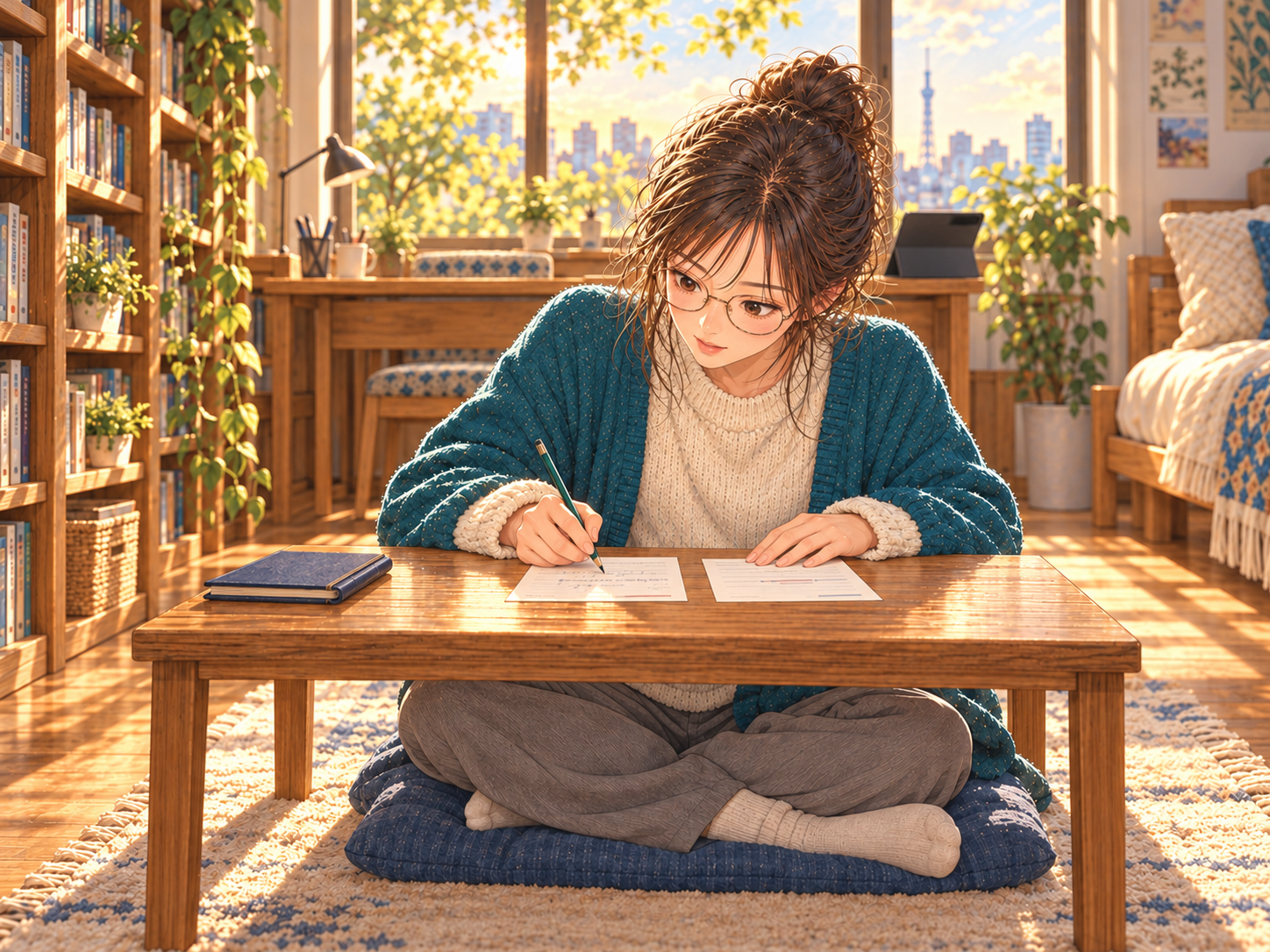
Kitanoumi had lifted him out with both grips in the scheduled bout. In the playoff, that right outside grip was out of reach, and Chiyonofuji was pressing his head in low. All this had happened before the finishing techniques I wrote down that morning. I brought the sheets closer and checked what each man’s hands had been doing.
Years later, Kitanoumi recalled being pulled up by the belt, his body lifted, and coming down onto his right knee. Kitanoumi himself lifted off the ground… Chiyonofuji looked small beside him, but he was beginning to feel bigger and bigger to me.
I went back to the desk for another look at the finish photograph. Earlier, I had been looking for the throwing hand. Now I kept looking at Kitanoumi’s body as well. Knowing how he described losing his balance gave me more things I wanted to look at.
I couldn’t say I understood everything that had decided the bout. Still, I was glad I hadn’t stopped at “the same left-hand-inside position.” A grip secured, another out of reach. Thinking that far made the same position suddenly seem much more difficult—and much more interesting.
I took the sheets back to the low table and added to my notes. I had written “right outside grip” in such a hurry that it was much larger than everything around it. At least I wouldn’t miss that bit when I came back to it.
There was still another bout to wrestle.
Before going out, I wanted to know what Chiyonofuji himself had said about it. Speaking later in life about playoffs after losing a scheduled bout, he described seeing another opportunity to wrestle.
Of course. There was still another bout to wrestle.
All morning, I had been stuck on “but he had just lost.” He was looking at the chance to wrestle again. There’s strength in that, too. I had started with the bout that won his first championship, and now I wanted to know more about how he thought when he competed.
Time to go shopping. I stacked the two sheets, left the tablet on the desk and slipped the tote over my shoulder. The air outside was a little chilly. After sitting for so long, it felt good to walk.
I went through the park on the way home. Another bout. Remembering what he had said gave me a little lift. That morning, I had been nervous despite knowing the result. Now I was walking along thinking how good it would be to have another chance to wrestle.
At home, the eggs and milk went into the fridge first. I wanted to get straight back to the desk, but I did at least manage that. I emptied the tote and spread out the two sheets again. I really had been thinking about these two all day.
I’m keeping both bouts.
After dinner, I turned on the desk lamp. I put the results from that morning beside the notes about the grips I had added in the afternoon.
Kitanoumi takes both grips and wins by tsuridashi. Chiyonofuji loses that bout, then wins the playoff by uwatedashinage for his first championship. What had been two lines that morning now had all sorts of notes around it.
Kitanoumi’s right outside grip being out of reach. Chiyonofuji pressing his head in low. And Kitanoumi describing his body being lifted. I wanted to know more about the playoff than when all I knew was the winning throw at the end.
But I no longer wanted to reduce the scheduled bout to “he lost once before winning the title,” either. Kitanoumi had both grips in that first bout. That was why the missing right outside grip in the next one made me stop. I was keeping that sheet in the notebook as well.

I had set out to learn about Chiyonofuji’s first championship, and ended up thinking about the sumo Kitanoumi had won with, too. This is the trouble with following a wrestler you like: you start wanting to know about his opponent as well. There really aren’t enough hours.
I closed the notebook and pushed back my chair. But before clearing the desk… one more look at the photograph. Chiyonofuji, then Kitanoumi. I still wanted to look at both.
Sources for the bouts and techniques
The account of the two bouts and their belt grips follows Yasuo Fujii’s description. The recollection of being lifted comes from Kitanoumi’s later account. The finish photograph and general technique explanations do not establish the exact intervening footwork. Chiyonofuji’s view of having another chance to wrestle comes from a later interview, not a record of what he said while waiting for the playoff on 25 January 1981. The linked sources are in Japanese.
- Yasuo Fujii’s account of the scheduled bout and playoff (Number Web, 4 April 2025)
- The playoff finish photograph (Kyodo, published by Number Web)
- Kitanoumi’s recollection (Nikkan Sports, reporting from 25 July 1995, republished 31 July 2016)
- Interview with Kokonoe-oyakata, formerly Chiyonofuji (Sasakawa Sports Foundation, Voice of Legends)
- Japan Sumo Association: tsuridashi
- Japan Sumo Association: uwatedashinage
- Japan Sumo Association: public introduction to the January 1981 tournament