Those championship portraits begin as photographs.
The other evening, after coming home from work and changing, I settled in to browse some sumo material. I kept thinking about the painting-like colors of the large portraits at the Kokugikan. The outlines looked photographic, yet the colors felt like a painting. I enlarged the image on my tablet, wanting to look more closely.
The explanation said that the older portraits were made by coloring black-and-white photographs by hand.[1] Color added on top of a photograph. I went straight back to the image for another look. There was a small pleasure in seeing it again now that I knew.
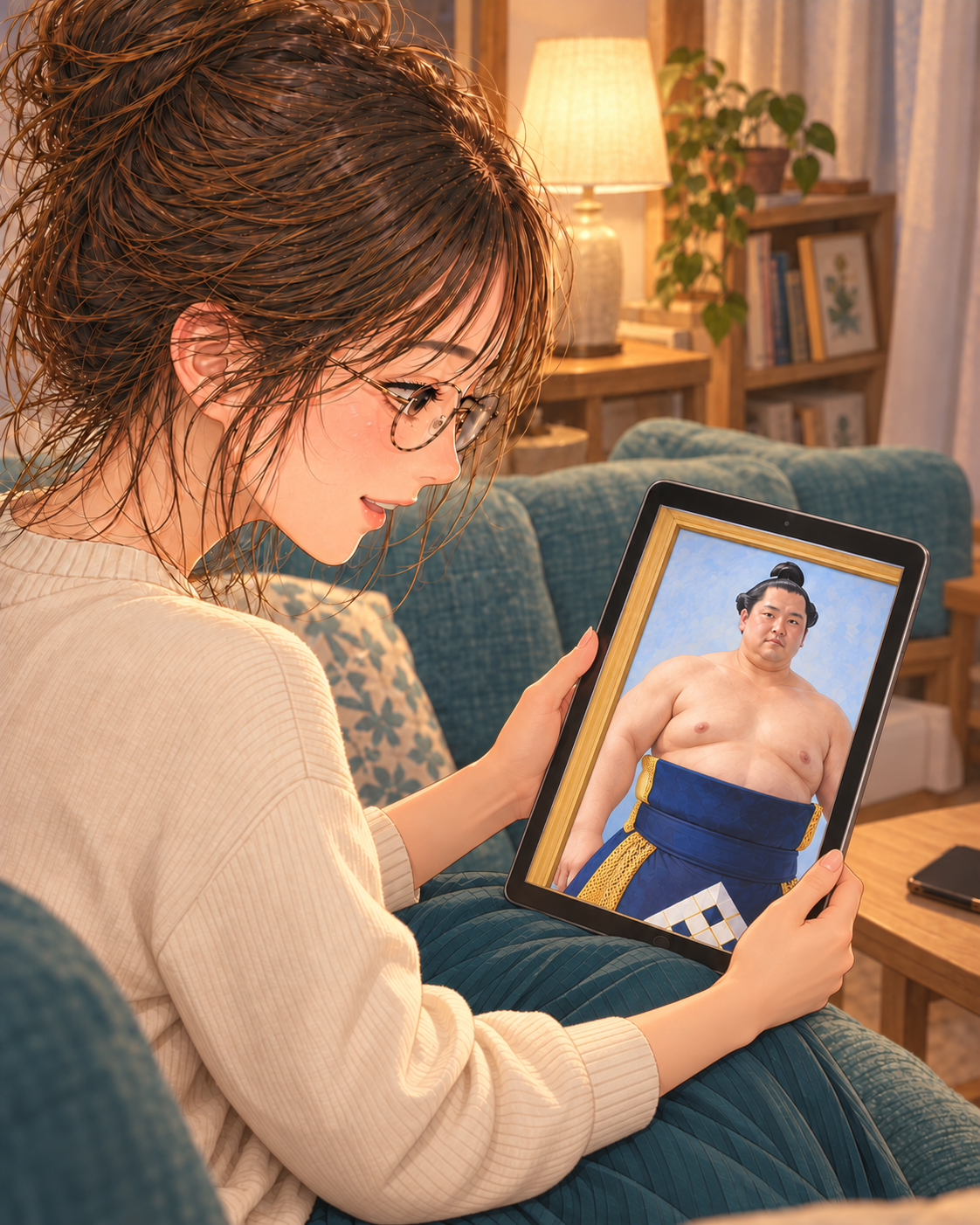
Knowing makes me look again
Since January 2014, color photographs have been digitally processed to resemble the earlier coloring. The Japan Sumo Association’s explanation also describes this change in the way the portraits are made.[1]
Looking at a present-day portrait, I thought about the hands that used to add the color. I had opened the page to find out whether it was a painting or a photograph. Now I wanted to know how that particular look had been carried forward.
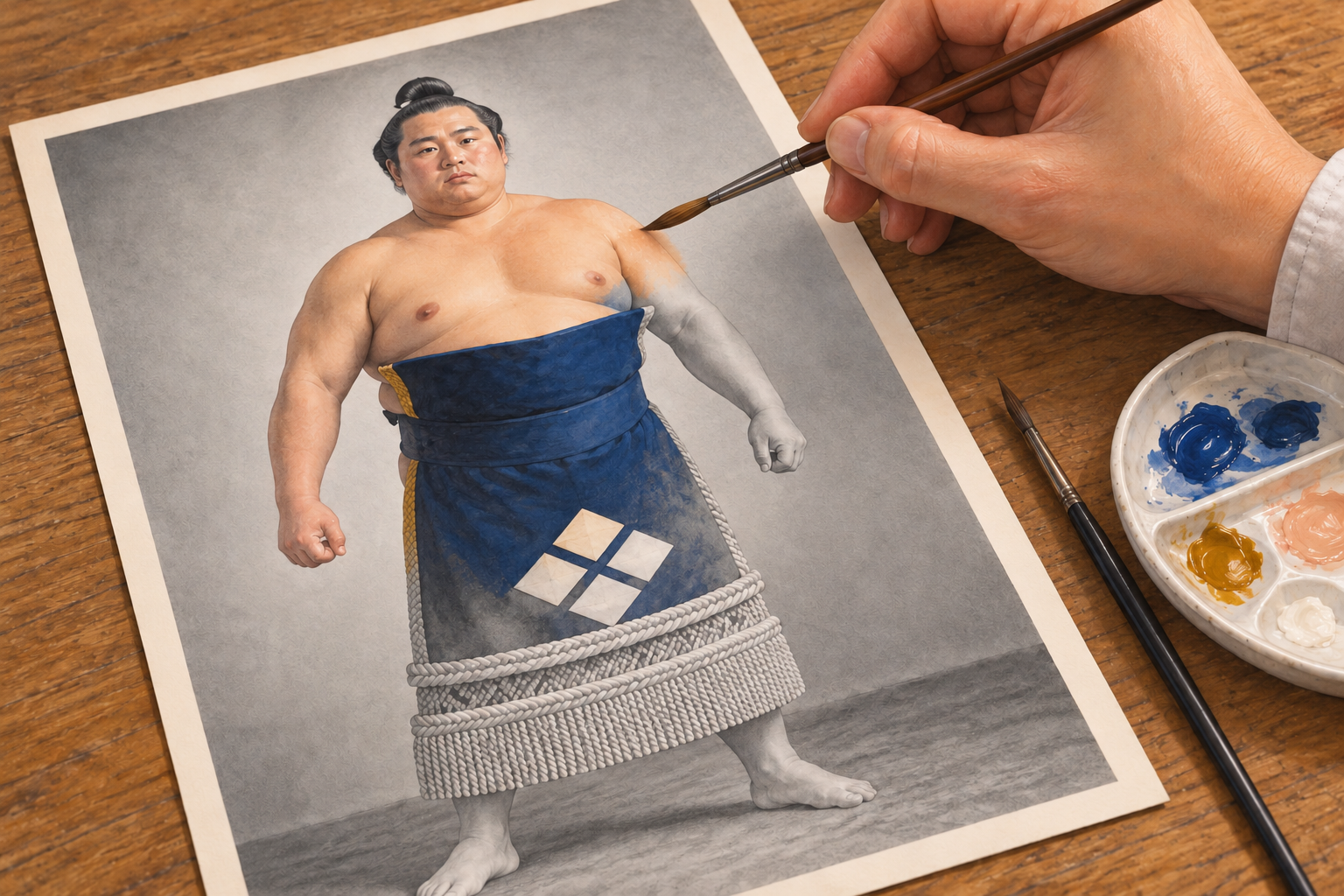
A sitting after the fifteen days
Then I found something else. The Mainichi guide to its miniature championship portraits explains that photography takes place at a Tokyo studio after each tournament. The champion’s views are considered when choosing the image.[2]
So it isn’t simply an enlarged photograph of the instant they won. After the fifteen days, there is a day for the camera—and time spent choosing the photograph.
Which expression did they choose? Back on the tablet, the face I had been studying for its colors looked a little different to me. I don’t know what was said at the sitting, but knowing that the wrestler has a say in the selection made me want to linger.
Mainichi Shimbun presents the portraits to makuuchi champions. Thirty-two hang near the Kokugikan ceiling, with older ones making way for new ones.[3] Each has its own stretch of time between the end of a tournament and becoming a portrait.
If I tell someone about these portraits, I don’t think I’ll stop at “They start as photographs.” I’ll probably want to tell them about the sitting and the choice of image, too.
Next time, I’ll read the wrestler’s name and the tournament, then take my time with the face. For now, I stayed with the image a little longer before closing the tablet.
Shiori