At the bottom of the banzuke, I found seven characters that were nobody’s name.
It was Monday evening. Dinner was cleared away, and I was looking at a photograph of sumo’s ranking sheet in the Association’s explanatory pages. I usually find a wrestler’s name I know, then look above and below it. This time, as I moved down the image, something at the lower-left edge caught my eye.
千穐万歳大々叶
Senshū banzai daidai kanō. I checked the reading in the Japan Sumo Association’s explanation. The phrase expresses a wish for full houses far into the future. A very long future—thousands upon thousands of years.[1]
I had been following results and rankings across this sheet. The people welcoming the audience had put a wish here, too. I looked again at the final character, 叶.
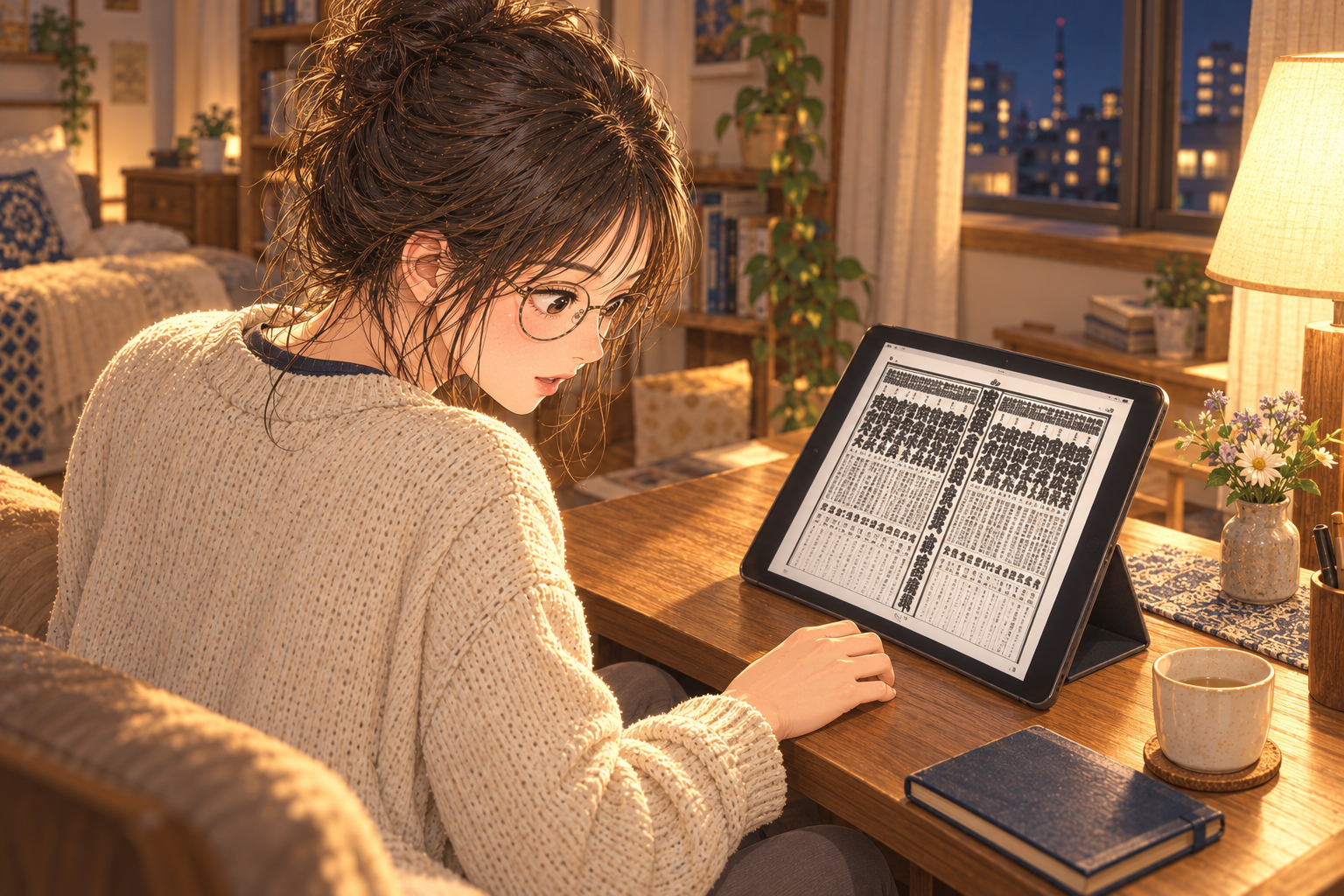
A size I couldn’t see on a screen
How large was the paper when all those tiny characters were first written?
On the Association’s website, I found a photograph of two sheets side by side. On the left was the handwritten original, the motogaki; on the right, the printed banzuke. Looking at one image at a time, each filling my screen, I had missed the difference.[2]
The original measures 110 centimetres high by 80 wide. The printed sheet is described as 58 by 44 centimetres. It starts with a sheet more than a metre tall. I glanced at the notebook on my desk to get a sense of it, but that wasn’t much help. It was far too small.[3]
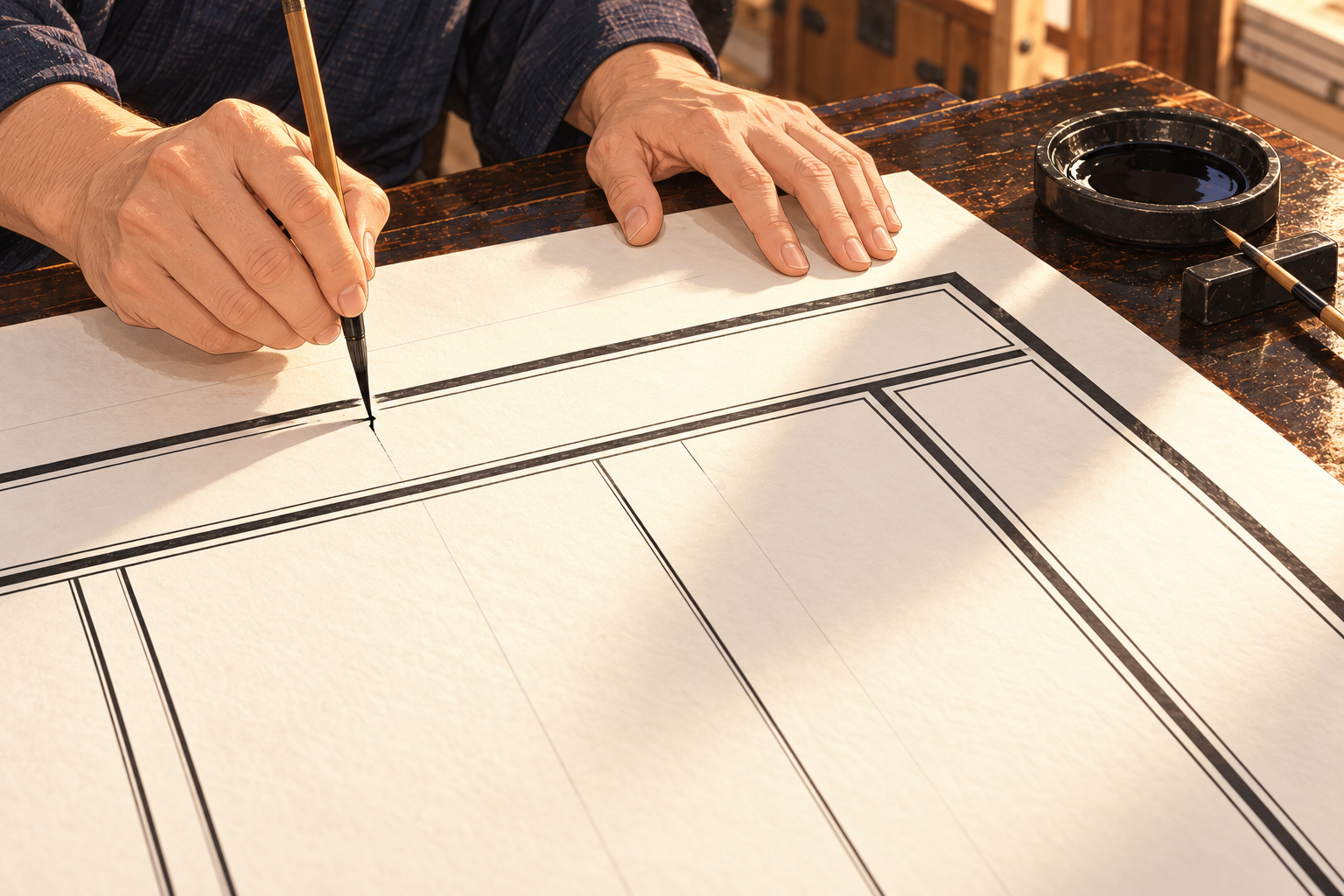
A gyōji writes a new original by hand for each tournament, on Kent paper. Following the black frame in the photograph, I began thinking about the brush having to reach every little space inside it.[4]
Making it bold isn’t enough
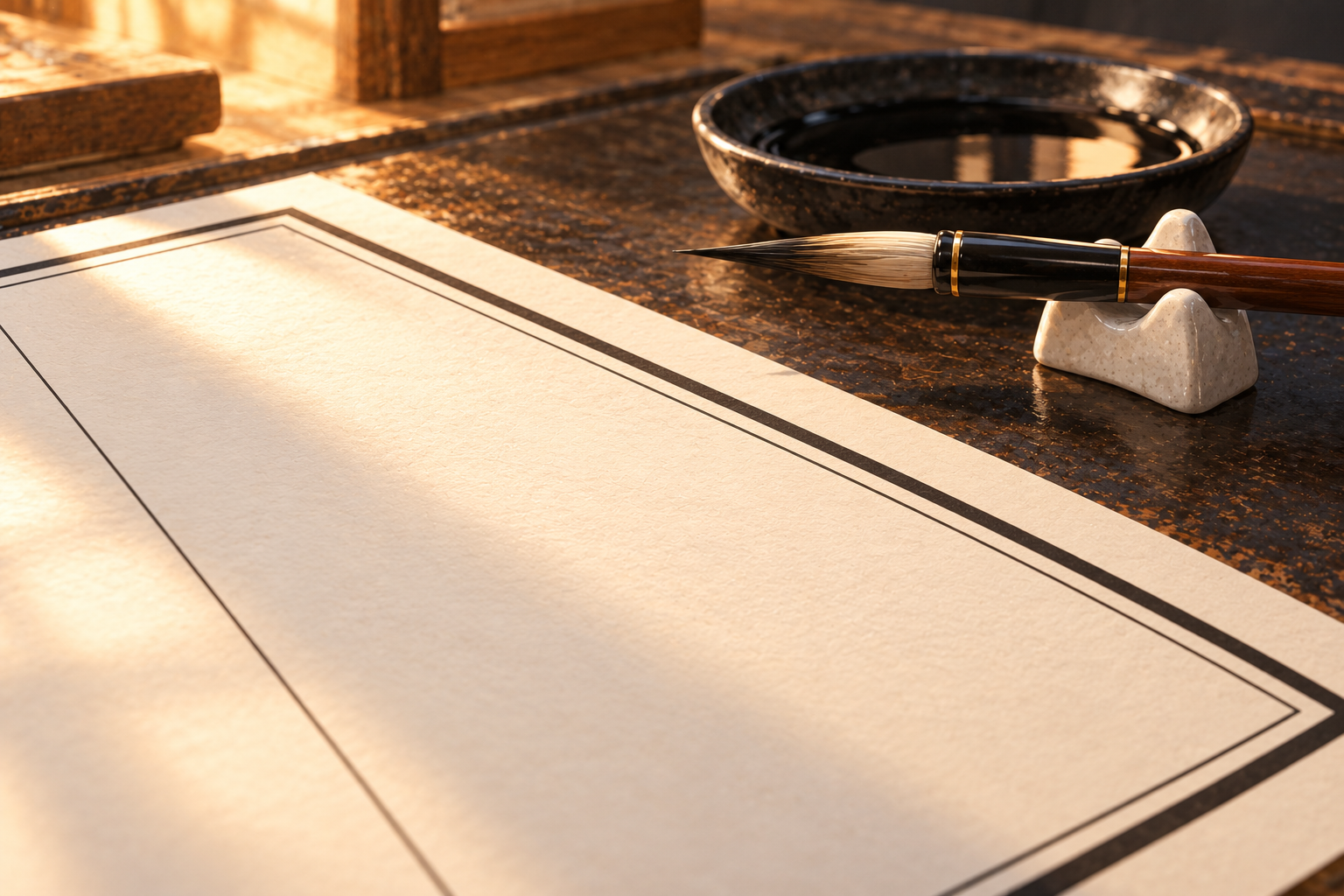
I went on to read an interview with gyōji Kimura Yōnosuke about writing the banzuke. One photograph showed the preparation: a black frame on white paper, before the names were added. It looked so different from the finished sheet.
What stayed with me was his account of learning to write small. After becoming used to bold lettering, he had to practise fine lettering. It still had to retain the character of sumo script. Simply making a large letter smaller would not do.[5]
Another photograph showed him demonstrating letters at the size used on the original. The tip of the brush was so fine against the small characters. On a finished banzuke, I had seen a row. Here, I wanted to follow each stroke.
I took a sip of tea and finished what was left, then took the cup to the kitchen. As I washed it and dried it, I was still thinking about that tiny brush tip.

Between the black strokes
With the cup put away, I opened the photographs again. The black seemed stronger against the white paper now.
Sumo lettering is also called Negishi-ryū, one of the Edo lettering styles. That familiar-looking script had a name and a history of its own.[6]
The interview also explained the good wish behind the densely written, bold characters: that the venue should be just as full. The welcome was there in the shape of the lettering, as well as in the phrase at the bottom.[5]
The letters also vary in size according to where they belong on the sheet. I didn’t want to explain everything as a lucky symbol. I compared the large lettering with the fine rows continuing beneath it.
Earlier, I had followed the black. Now the little spaces of white between the strokes caught my attention, too. Adding ink in one place seemed as though it might change the look of the neighbouring character. I couldn’t know all the writer’s decisions just by looking. But I found myself zooming in more slowly.
Beyond the name I came to find
At last, I zoomed out until the whole sheet fitted on the screen.
From the large wrestler names at the top, I let my eyes move down. The banzuke also includes gyōji, yobidashi and other people who support sumo. Knowing that, I paused in places I had passed over when I was only looking for wrestlers.[4]
I copied the seven characters into my notebook, with the reading beside them. I kept looking from the screen to the page and back. My writing was ordinary handwriting, but when I reached the final 叶, the phrase felt like something I could read for myself at last.
I closed the tablet and added one line about what had caught my attention tonight.
Finding a familiar wrestler’s name is still what I love about opening a banzuke. Tonight, that pleasure simply carried me all the way to the bottom of the page.
May plenty of people come. Someone had put that wish on this sheet, and here I was, spending my evening looking at it. That made me quietly happy.

Shiori