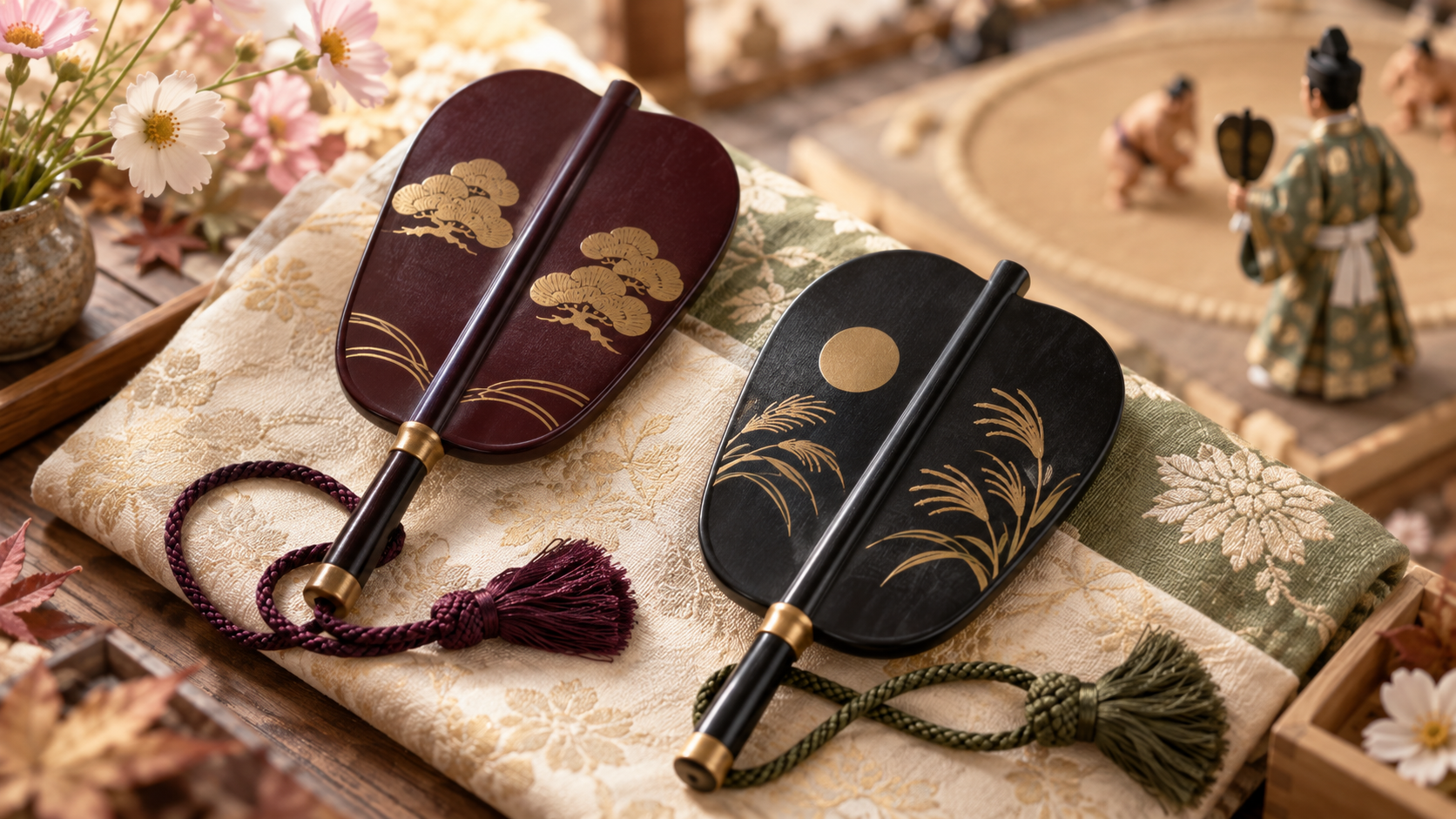
In the Japan Sumo Association directory checked on 4 September 2026, every listed gyoji professional name begins with Kimura or Shikimori, while real names occupy a separate field. Association explainers published in 2024 and 2025 describe inherited career names and a difference in gunbai posture; this article treats those as dated historical explanations, not proof of an exceptionless current rule. Identify a person through the current directory, not gesture alone.
For years, it is possible to see only “the referee” between the two wrestlers. Then the official directory presents a page full of Kimura and Shikimori names, each beside a different real name, grade and stable. A small question—why only these two surnames?—opens into succession, gesture and individual careers. You do not have to learn the whole genealogy. One hand position in one bout is enough to make the person in the centre visible.
The directory separates professional and real names
The Japan Sumo Association’s current gyoji directory has separate fields for the gyoji name and the person’s real name. It also lists the professional grade and stable affiliation. That layout is the first guardrail: “Kimura” or “Shikimori” is part of the referee’s professional name, not proof of their legal surname.
It is also not safe to infer a stable from the professional surname. Current Kimura and Shikimori gyoji are affiliated with a range of stables. Use the directory’s stable field for a particular person instead of constructing a family tree from the first word of the name.
English broadcasts may say “the gyoji,” display only a romanised name, or focus on the wrestlers. The directory supplies the missing layers. The same official page can tell you how the Japanese name is read, which level the referee holds and where he is affiliated at the time of checking.
Watch the back of the hand during the introductions
Japan Sumo Association Sumo Quiz No. 901, published on 27 June 2024, explained that during formal naming a Kimura holds the gunbai with the back of the holding hand facing up, *in no kamae*, while a Shikimori holds it facing down, *yo no kamae*. That dated explainer does not by itself establish an exceptionless 2026 rule for every person and moment.
This is easier to try than memorising dozens of names, but the timing matters. Look while the gyoji is poised and calling the shikona before the bout, not while he is circling two fast-moving bodies. Find the hand holding the wooden war fan and ask one question: is its back facing up or down?
The gesture identifies the Kimura or Shikimori line, not the individual person. Use a bout sheet, broadcast identification or the official directory to finish the identification. A grip alone cannot tell you a full name, grade or stable.
A gyoji name can change during a career
An official Association feature calls certain established names *shusse-mei*: names associated with advancement and handed down through the profession. A gyoji may take the name of a predecessor or another name with a recognised history as his experience and grade develop. Kimura Shonosuke and Shikimori Inosuke, the famous names used at the top of the gyoji hierarchy, are the clearest examples.
This does not mean every referee follows one automatic renaming chart. The same Association feature highlighted a senior gyoji who had kept the name he used upon entry. The safe rule is therefore modest: names can be inherited and changed, but the history of an individual name must be checked person by person.
That is why an old article may use a different gyoji name from the current directory even when it describes the same person. Check the publication date before declaring one source mistaken. A former name can be historically correct while no longer being current.
Shikimori Inosuke shows how a professional line is built
The Association’s historical explainer on Shikimori Inosuke traces the Shikimori line to the eighteenth century and describes Inosuke as the leading name inherited within it. Precise holder numbers and current occupants change, so this article does not freeze an ordinal or personal identity into an evergreen paragraph. The live directory should always settle who holds a senior name now.
What remains stable is the larger idea: the name can be bigger than one working life. A person develops a distinct voice, movement and judgement while carrying syllables heard in earlier eras. Tradition here is not a claim that every detail has been unchanged. It is a practice of placing an individual career inside a line of professional names.
The Association’s FY2025 activity report adds another useful distinction. Gyoji rankings are, in principle, decided by the board after the September tournament for the following year. The professional name, the grade and the colour of the costume are connected topics, but they are not interchangeable. Our costume guide explains the rank colours; our gunbai guide focuses on judgement and movement at the edge.
Learn one person, not a list
In your next bout, wait for the introductions and use the 2024 explainer as a viewing clue: back of the hand up suggests Kimura; back down suggests Shikimori. Camera angle, obstruction or mirrored video can defeat that observation, so confirm the displayed name in the current official directory. If the hand is not clear, leave the line unidentified.
The next time the same voice appears, you may recognise it before you read the caption. The referee is no longer an interchangeable figure who points to the winner. He is a person with a current grade and stable, performing a gesture associated with one professional line and perhaps carrying a name inherited from someone before him.
That is how affection quietly spreads in sumo. A favourite wrestler teaches you to watch the feet. A close finish makes you follow the gunbai. The hand behind that gunbai leads to a gyoji’s name—and suddenly there is one more person whose entrance you are waiting to see.
Sources
- Japan Sumo Association, gyoji directory (checked 3 September 2026)
- Japan Sumo Association, Sumo Quiz No. 901 (published 27 June 2024; checked 3 September 2026)
- Japan Sumo Association, Sumo Quiz No. 1417 (published 25 November 2025; checked 3 September 2026)
- Japan Sumo Association, Sumo Quiz No. 1113 (published 25 January 2025; checked 3 September 2026)
- Japan Sumo Association, FY2025 activity report (checked 3 September 2026)
Source links used for verification
Each link was used for the corresponding claim in this article; inclusion is not a blanket endorsement of the whole page.
Article verified:
- Japan Sumo Association gyoji directoryPrimary source (as checked for this article)
- Japan Sumo Association Sumo Quiz No. 901 on Kimura and Shikimori gunbai gripsHistorical primary source (record from that period)
- Japan Sumo Association Sumo Quiz No. 1417 on inherited career namesHistorical primary source (record from that period)
- Japan Sumo Association Sumo Quiz No. 1113 on the Shikimori Inosuke nameHistorical primary source (record from that period)
- Japan Sumo Association FY2025 activity reportPrimary source (as checked for this article)