Do not let the ticket price become a reason to remain from the first bout to the last. If chronic pain or fatigue affects prolonged sitting, decide four things first: floor or chair sitting, the programme window that matters, when to change position, and the route home. The official Kokugikan information we reviewed does not confirm a general rest area, a place to lie down or a safe comfort duration for any seat. Ask about essential accommodations and follow personal medical advice.
Pain and fatigue may not be visible, and the same person’s capacity can change from one day to another. This is not a condition-by-condition prescription. It is a way to make “enough for today” part of the plan.
Choose by movement, not only proximity
What is verified: Kokugikan masu seating uses floor cushions, and the official page describes a typical box as 1.3 metres square. Chair seating is on the second floor. The page does not publish whether 1.3 metres is inner-clear or outer, or give chair width or row pitch.
The individual decision starts here: if lowering yourself, flexing the knees or standing while putting shoes back on is difficult, begin the comparison with a chair rather than the closer view. This is not a diagnosis or an official fit test.
A chair is not a universal comfort guarantee. The official information we found does not give seat width, row pitch or a promised number of easy aisle exits. Before buying, identify the movement you must avoid and the position you need to change. Ask the organiser if an ordinary seat may not meet that requirement.
Build the visit around one programme anchor
The official schedule contains several divisions, ring entrances and the bow ceremony, but running times can move with the bouts. Pick one anchor: the makuuchi ring entrance, one wrestler’s contest or the final ceremony.
Place generous time on either side. If you plan to arrive later, recheck the current admission information and that day’s running order. If you leave early, include the walk and train journey in the energy calculation. The end of a bout is not the end of the physical trip.
Change position before the limit when possible
The September notice asks spectators not to move during a bout. When health and safety permit, use the interval after a contest to adjust position or ask for assistance. It is not a demand to remain seated through a dangerous change in condition.
What the conflicting pages do not settle: the September masu FAQ says a portable floor chair may not be used when it obstructs the spectator behind, while the Association’s general prohibited-items page lists floor chairs and other objects that change a seat’s specification. Tamariseki have a separate explicit ban on bringing chairs or cushions. Do not treat the conditional masu FAQ as automatic permission. If an assistive item is essential, describe it and its dimensions to the organiser and obtain a current answer before purchase.
Do not depend on an imagined rest facility
On arrival, ask where you can request a seated break and where staff can be found. This guide does not promise a bed, power outlet, refrigeration, first-aid room or medication storage. Carry and use medication according to its professional instructions and confirm any venue issue in advance.
September permits one re-entry. A plan that repeatedly leaves and returns will not fit that rule. Include a simple journey home if the visitor’s capacity drops; going home is not a forfeited ticket.
Share only three things with a companion
- The difference between the usual condition and a change that ends the visit
- The movement for which help is wanted, and the movement the visitor wants to do independently
- A short stop signal
This is clearer than requiring a companion to guess throughout the day. For a solo visit, keep the seat, exit, route home and emergency contact easy to retrieve.
Depth is not measured in hours
On a shorter day, carry home one change rather than a bout count. During shikiri, watch whether a wrestler’s feet return to precisely the same marks or move a little forward each time. Three repetitions can reveal a quiet negotiation over distance. “I saw those three” is a complete memory even when the full programme was not possible.
Define a personal green, amber and red
Green means the body can use its usual posture and still has capacity for conversation and travel. Amber is an individually chosen early sign involving position change, medication, restroom, sound or temperature load. Red means stop treating the visit as the priority and follow the person’s medical or emergency plan. These colours and triggers are neither arena rules nor clinical advice; they are an editorial note the person creates from familiar experience and professional guidance.
Before purchase, check chair or floor posture, aisle movement, visit window, travel and cancellation terms. The night before, prepare medication, any applicable drink or carry-in rule, adjustable clothing and route home. After entry, locate the seat, restroom, exit and staffed point. Change position while green, communicate at amber and leave without waiting to prove red. A solo visitor needs an accessible contact and return plan; a companion also needs the person’s preferred way of being touched or supported.
If the choice still is not safe: seat-specific comfort duration, a place to lie down and rest-room vacancy remain unconfirmed. If an expected facility is absent, or weather and the return crowd add load, ask staff rather than inventing another facility and shorten the stay or go home. Include that choice at purchase time so cost never becomes a reason to endure until red.
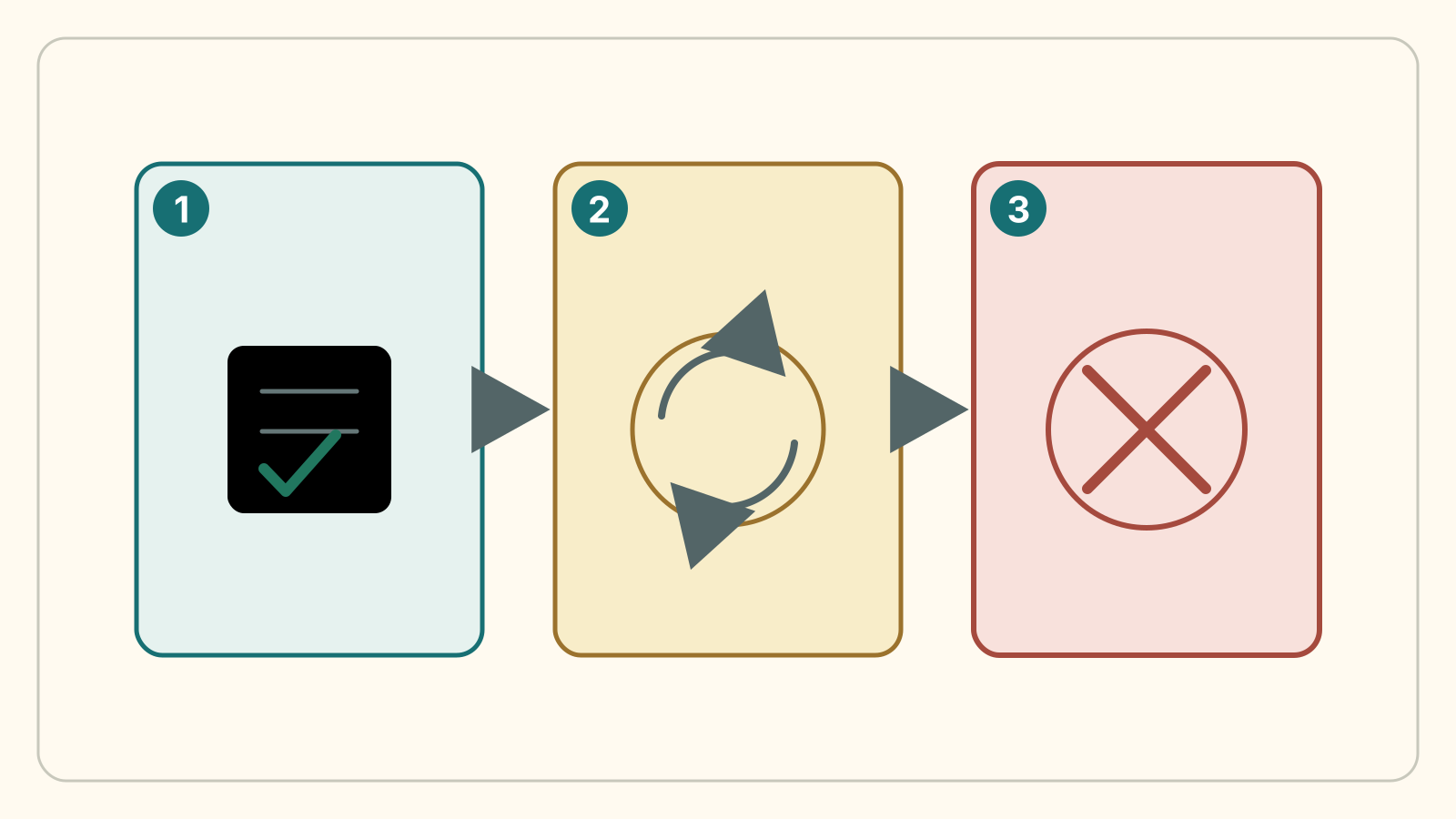
Detailed description of this diagram
Three cards run left to right. Card 1 has a pale blue-green field, one plan and a check for continuing only within the individual's pre-defined range. Card 2 uses amber, circular arrows and multiple candidates for adjusting position, shortening the programme or using a verified break option. Card 3 uses pale red, a stop symbol and an outward sequence arrow for ending the visit, or following the individual's medical emergency plan when needed. The colours and numerals are not a universal pain scale, diagnosis or triage. No safe duration, medication, posture, seat, rest room, first-aid capability, symptom relief or safe journey home is promised.
Graphic: SUMO ARCHAEOLOGY CLUB · Figure source 1 · Figure source 2 · Figure source 3 · Figure source 4
Sources
- Japan Sumo Association, September 2026 Tokyo seating information and general spectator requests, checked September 3, 2026, for masu and chair formats and the two floor-chair statements that must be read together.
- Japan Sumo Association, September 2026 Tokyo spectator notice, checked September 3, 2026, for movement, tamariseki and re-entry rules.
- Japan Sumo Association, Tokyo tournament ring schedule, checked September 3, 2026, as a programme-planning source.
- No general rest facility or medical suitability claim is made because it was not established by the official material reviewed.
Source links used for verification
Each link was used for the corresponding claim in this article; inclusion is not a blanket endorsement of the whole page.
Article verified:
- Japan Sumo Association September 2026 Tokyo seating informationPrimary source (conflicting details noted)
- Japan Sumo Association spectator requests and prohibited itemsPrimary source (conflicting details noted)
- Japan Sumo Association September 2026 Tokyo spectator noticePrimary source (as checked for this article)
- Japan Sumo Association Tokyo ring schedule (URL and tournament wording conflict)Primary source (conflicting details noted)