Home from work and changed into comfortable clothes, I settled onto a cushion beside my bed. With a little time to myself in my small apartment, I was reading the Japan Sumo Association’s quizzes on my phone. Tonight, a question about the bow-twirling ceremony made me pause.
Which side does the wrestler performing the ceremony enter the ring from?
I love watching that long bow sweep through the air. Ask me about the entrance, though, and I suddenly feel much less certain. Perhaps my attention has been starting at the moment the bow begins to move.
The question explained that the performer watches the final bout seated on the mukō-jōmen side, opposite the ring’s main front. [1]Would he simply step up from there? Before checking the answer, I tried to picture his route around the dohyo.

The final bout decides the side
If the East wrestler wins the final bout, the performer enters from the east. If the West wrestler wins, he enters from the west. He comes from the winning side. [1]
“Oh. The result carries through to that, too.”
I leaned a little closer to my phone. I think I have tended to draw a small mental line after the final result: the day’s bouts are over, and then the ceremony begins. I had not realised that the winner also determines where its performer steps onto the ring.
The ceremony, called yumitori-shiki, expresses the joy of victory on the winning wrestler’s behalf. It is usually performed by a wrestler ranked in makushita or below. [2]Representing the winner, entering from his side. Reading those explanations together made the east-or-west answer settle neatly into place.
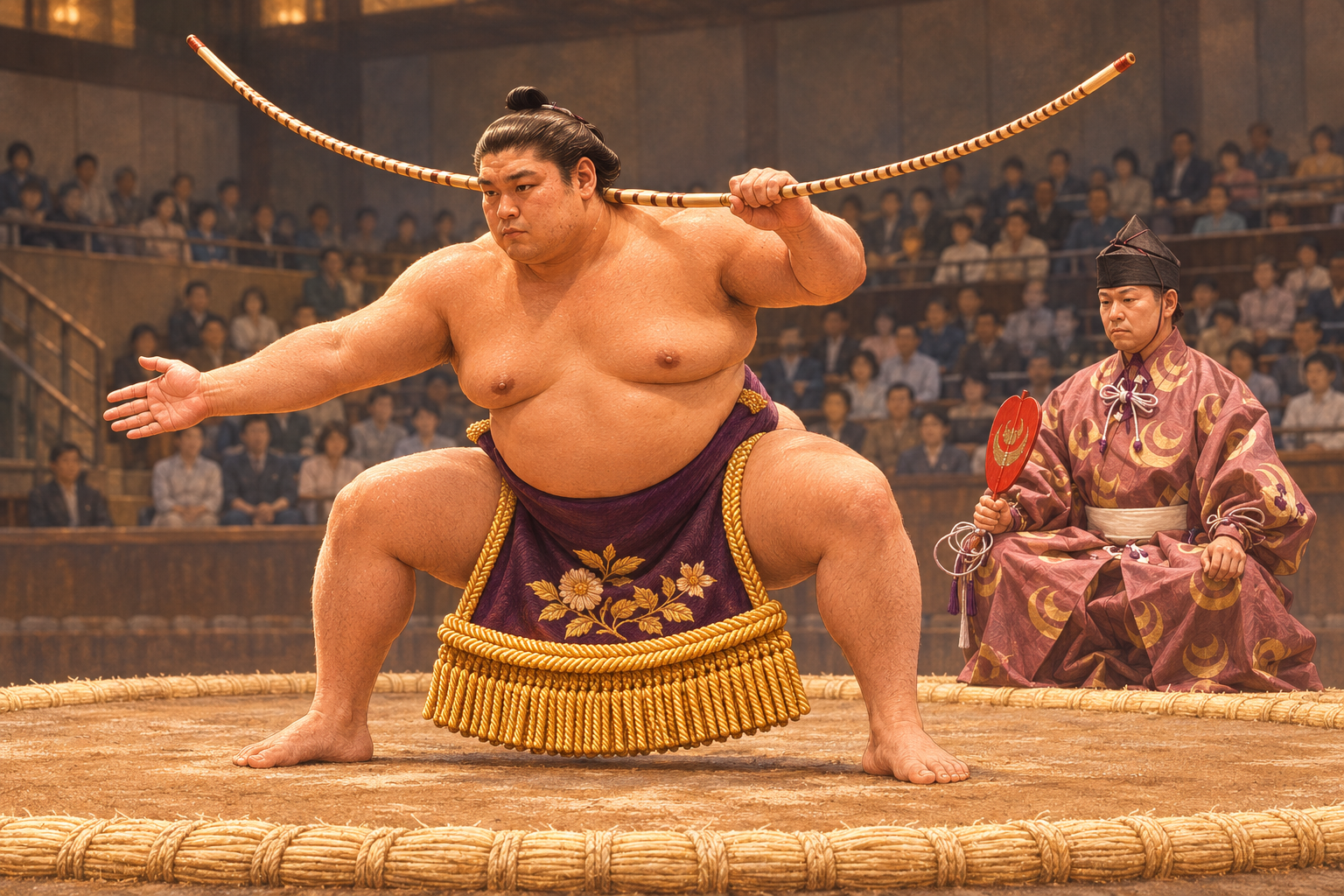
The sweep of the bow so easily catches my eye. Now that I know whose victory the dance celebrates, the bout just before it comes to mind too. If a wrestler I was cheering for had won, I think I would enjoy the ceremony a little more than usual.
Then I reached the part about the foot
The other quiz described what happens if the bow is dropped. Because he represents the winner, the performer must not put his hands on the ring. He places the dropped bow on the top of his foot, flicks it up, and catches it in his hands. [2]
That bow. With the top of his foot.
It was only a short explanation, but I stopped scrolling again, trying to picture the movement. The broad sweeps are absorbing enough; even recovering a dropped bow has a prescribed action. Now I was curious about both the performer’s hands and his feet.
I lowered my phone to my lap and returned to the first question. I had been so interested in the moving bow; now I wanted to watch the performer’s route before the ceremony as well. One question answered, and somehow I had so much more I wanted to see.