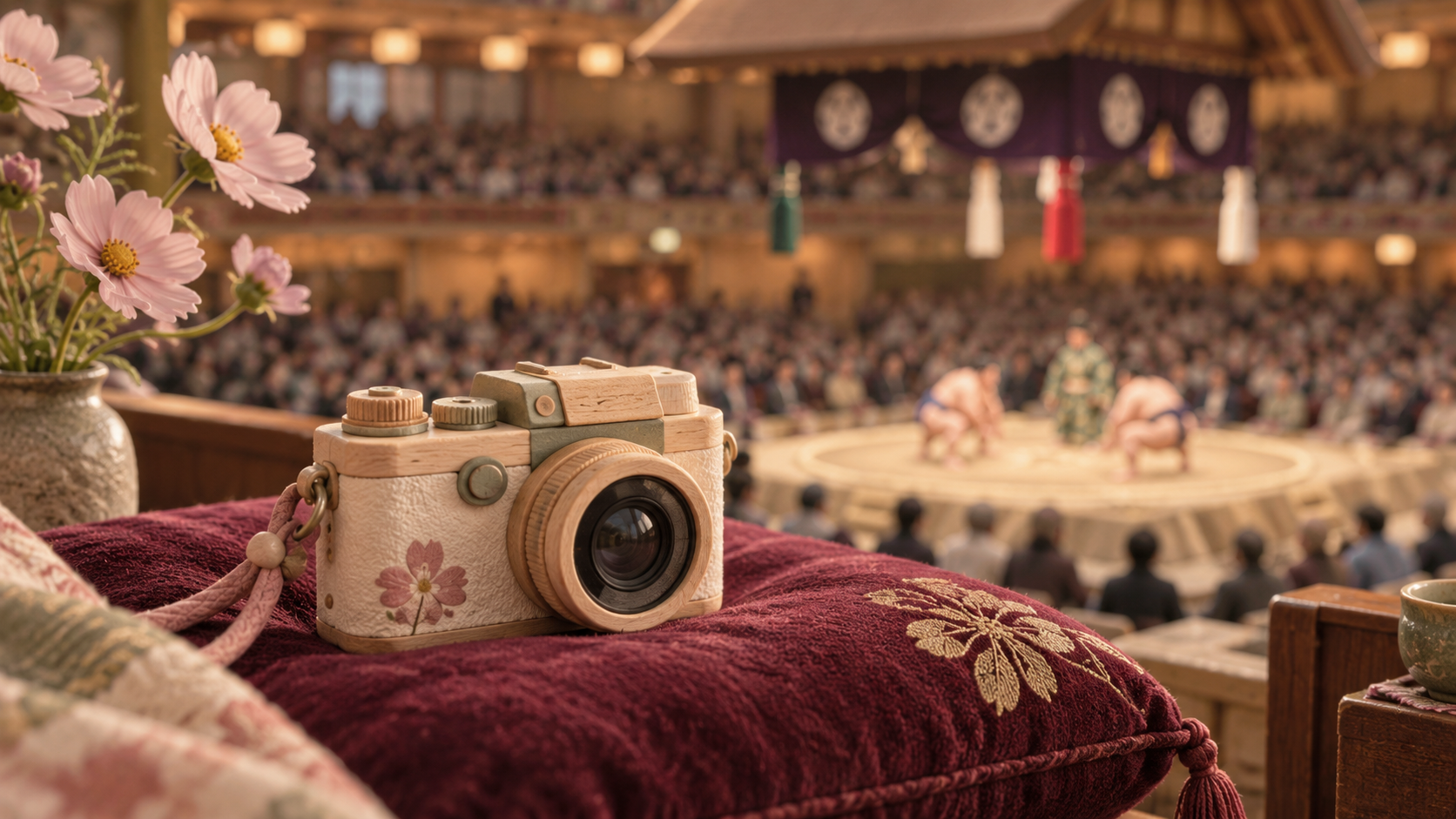
Before taking a photo, check the event guidance, your seat type and the view of people around you. Stay in your assigned place and avoid disruptive flash or blocking anyone’s view. Photography in tamari seating requires the organiser’s permission. Ask staff before using equipment or a method you are unsure about.
Sumo is full of moments that make a hand reach for a camera: ceremonial aprons arriving in a slow river of colour, salt briefly turning into weather, or a wrestler bowing after a bout that lasted less time than it took to focus. The aim is not to make visitors afraid of taking a picture. It is to keep the picture from costing someone else the moment itself.
Check your event and seat first
Read the event name and seating category on your ticket, then open that organiser’s spectator guidance. Check camera equipment, video and streaming separately. Rules from an earlier visit do not settle what applies today; follow the notices and staff instructions at your event.
Once you have checked where photography is allowed, check the flash setting before pressing the shutter. Keep the camera low enough that the people behind you can still see, and leave space for those beside you.
Flash and “just one step into the aisle” are not small details
The spectator contract prohibits using flash or another beam in a way that blocks vision or interferes with the competition. It also prohibits occupying a seat other than the one on the ticket and watching from aisles, stairs, entrances, exits or evacuation routes.
Even where photography is allowed, stay within your own space and keep your camera, lens and elbows clear of neighbouring spectators. Standing up or moving into a passage for a better angle can obstruct both the view and the route through the arena.
Tamari seating has a specific restriction
Tamari seats are the floor-level seats closest to the ring. The Association’s detailed rules expressly prohibit photography there without the organiser’s permission. The same section also imposes distinctive conditions on phone use, food, drink and movement because a wrestler or official may fall from the dohyo.
Do not treat another spectator’s behaviour as proof of permission. If you hold a tamari ticket, read the current notice and ask the attendant before setting up a phone or camera. “It worked at another basho” is not a rule.
Photographing and publishing are separate questions
Being allowed to press a shutter does not automatically settle whether an image may be sold, used in advertising or published in a way that harms someone’s image rights. Video and live streaming introduce still more questions. Check the latest official instruction, the people visible in the frame and the purpose of the upload before sharing. This article is not legal clearance for later use.
From an upper chair seat, you may not capture a wrestler’s expression, but you can see the whole arena turn towards the ring. Take a few photographs where permitted, then lower the device for one complete bout. You may remember as much from watching as from the pictures you bring home.
Sources checked
Checked October 8, 2026. These sources cover standing spectator and seating rules. Also check the guidance for the event you will attend.
- Japan Sumo Association: spectator contract — Article 8: disruptive lighting and use of unassigned seats or passages.
- Japan Sumo Association: detailed ticket and spectator rules — Tamari photography and seating conditions.