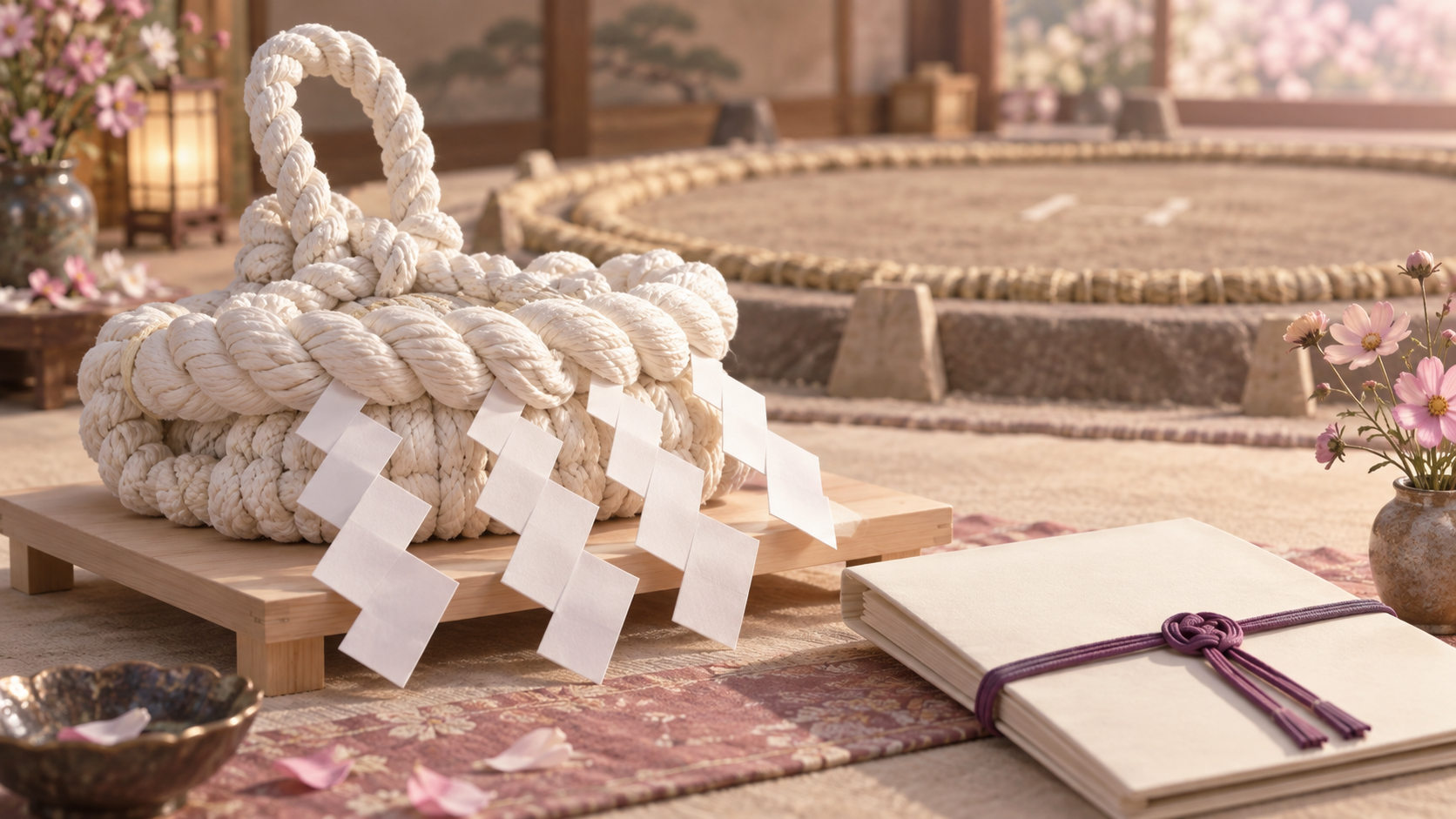
Yokozuna promotion is not an automatic calculation from wins. The Japan Sumo Association explains that the Yokozuna Deliberation Council recommends a wrestler considered outstanding in both dignity and strength. In principle, the candidate has won two consecutive championships while ranked ozeki, or has achieved an equivalent record. Because “equivalent” is not published as a simple fan points formula, wait for the formal recommendation and official ranking rather than announcing promotion yourself.
Late in a tournament, numbers invite certainty. An English-language headline may say “one win from yokozuna,” a fan spreadsheet may assign points to a runner-up result, and the distinction between a plausible case and a completed promotion vanishes. You can enjoy the chase without pretending the future banzuke has already been printed.
The official explanation starts with an ozeki
Japan Sumo Association Quiz No. 1081 says that the Yokozuna Deliberation Council recommends a wrestler fit to be yokozuna whose dignity and strength are outstanding. It identifies, in principle, an ozeki who wins two consecutive championships or produces an equivalent record.
The rank context is important for readers used to sports with open playoff ladders. A top-division championship is a major achievement at any rank, but the Association’s yokozuna explanation specifically frames the promotion candidate as an ozeki. Read the current banzuke and the results together.
Two consecutive championships are the clearest landmark
Two straight championships at ozeki provide the most legible route in the official wording. The first championship therefore changes the meaning of the next tournament. Every daily result may contribute to a possible promotion case.
It does not mean the wrestler became a yokozuna after the first title. Nor should a running score in the second tournament be reported as a final appointment. Keep the stages separate: daily result, confirmed championship, official council process, and the published rank.
“Equivalent” is not a universal points calculator
The phrase most likely to produce confident online arguments is “an equivalent record.” The official explainer does not turn it into a single number of wins or a public points table. A fan can compare historical promotions, but should not present a self-made formula as the Association’s rule.
A careful comparison records the candidate’s rank, tournament results, championship type, era and other relevant context. It also labels the difference between “supporters are discussing a case,” “the council is considering or recommending it,” and “the Association has formally placed the wrestler on the new banzuke.” Those are not interchangeable statuses.
“Dignity” is not permission for spectators to police personality
International coverage sometimes treats the word *hinkaku*, commonly rendered as dignity, as an invitation to grade a wrestler’s facial expressions, private life or cultural conformity. That is not our job. Unverified rumours and personal preference should not be disguised as official promotion evidence.
An article can responsibly state the Association’s published standard, the recorded results and the formal steps that have been announced. Before the relevant bodies act, it should not declare that a wrestler has “passed” or “failed” a character examination.
Watch one choice, not an imagined future rank
Promotion pressure can compress a bout into a green or red box on a prediction chart. For the next candidate’s bout, watch one choice immediately after the tachiai. Does the ozeki drive straight ahead, seek a belt grip, or first deny the opponent’s favourite position? The table of wins is made from those specific decisions against specific opponents.
If a recommendation follows, compare the old and new official banzuke and watch the name move. That documented transition is more satisfying than winning an argument a week early. We may offer clearly disclosed book or research links for readers who want historical cases, but the free explanation remains complete and compensation never changes the criteria or recommendation order.
Sources
- Japan Sumo Association, Quiz No. 1081 on yokozuna promotion criteria, current banzuke and wrestler search (checked 3 September 2026).
Source links used for verification
Each link was used for the corresponding claim in this article; inclusion is not a blanket endorsement of the whole page.
Article verified:
- Japan Sumo Association Quiz No.1081: yokozuna promotion criteriaHistorical primary source (record from that period)
- Japan Sumo Association current banzukePrimary source (as checked for this article)
- Japan Sumo Association wrestler searchPrimary source (as checked for this article)