In an explainer published on 25 May 2025, the Japan Sumo Association defines a sekitori as a wrestler in makuuchi or juryo and calls wrestlers in makushita and below trainees. Every juryo wrestler is therefore included. Use that dated explainer for the category, but recheck the current banzuke and current rules before stating today’s headcount or entitlements.
An international visitor can easily mistake juryo for a reserve league and assume that only the top division is fully professional. Arrive in time for the juryo ring-entering ceremony, however, and you will see ceremonial aprons, announced names and fifteen-day stories already under way. Understanding the boundary makes the earlier afternoon feel entirely different.
Makuuchi plus juryo equals the sekitori ranks
The Association’s 25 May 2025 explainer defines sekitori as makuuchi and juryo wrestlers and gives the capacities at publication as 42 and 28, respectively—70 ranked positions. A current headcount must also be checked against the current official banzuke.
That figure describes ranked positions, not the number who will compete on a particular day. Injuries and withdrawals can reduce a day’s active field, so do not use 70 as a promise that 70 wrestlers will appear.
Below juryo come makushita, sandanme, jonidan and jonokuchi. Their wrestlers are still professionals within the Association, but the official status used for them is wrestler trainee rather than sekitori. Calling them “amateurs” would be wrong.
What changes on promotion to juryo?
An Association explainer identifies several major changes at this border:
- a wrestler moves from seven bouts spread across a tournament to a bout on each of the fifteen days;
- he begins receiving a monthly salary;
- lower-ranked wrestlers serve as attendants;
- he wears the oicho topknot for official tournament appearances and joins the juryo ring-entering ceremony.
The competitive change alone is substantial. Seven bouts allow rest days between appearances; juryo demands a new opponent and a new result every day. Promotion is not merely a number moving upward on paper. It is entry into a different fifteen-day life.
Why is juryo also called jumaime?
The formal division name is jumaime, literally “tenth sheet” or “tenth position,” while juryo is the familiar name used in rankings and broadcasts. The Association notes that the formal term still appears in settings such as printed bout sheets and the division championship presentation.
A common origin story links the word juryo to a historical payment of ten ryo. The Association explicitly describes that derivation as uncertain. It is a charming trail to follow, not a settled fact to repeat without the caveat.
Makushita’s upper ranks carry visible tension
A strong tournament near the top of makushita can put juryo promotion within reach, but a winning record is not a universal automatic ticket. Available places and the records around the boundary also matter in banzuke deliberations. We therefore do not announce an individual’s promotion before the official ranking decision.
That uncertainty is part of the drama. A makushita bout can lead toward a salary, a daily tournament schedule, an oicho and a place in the ring-entering ceremony—or leave the wrestler attempting the same border again.
Choose one wrestler in the juryo ring entrance
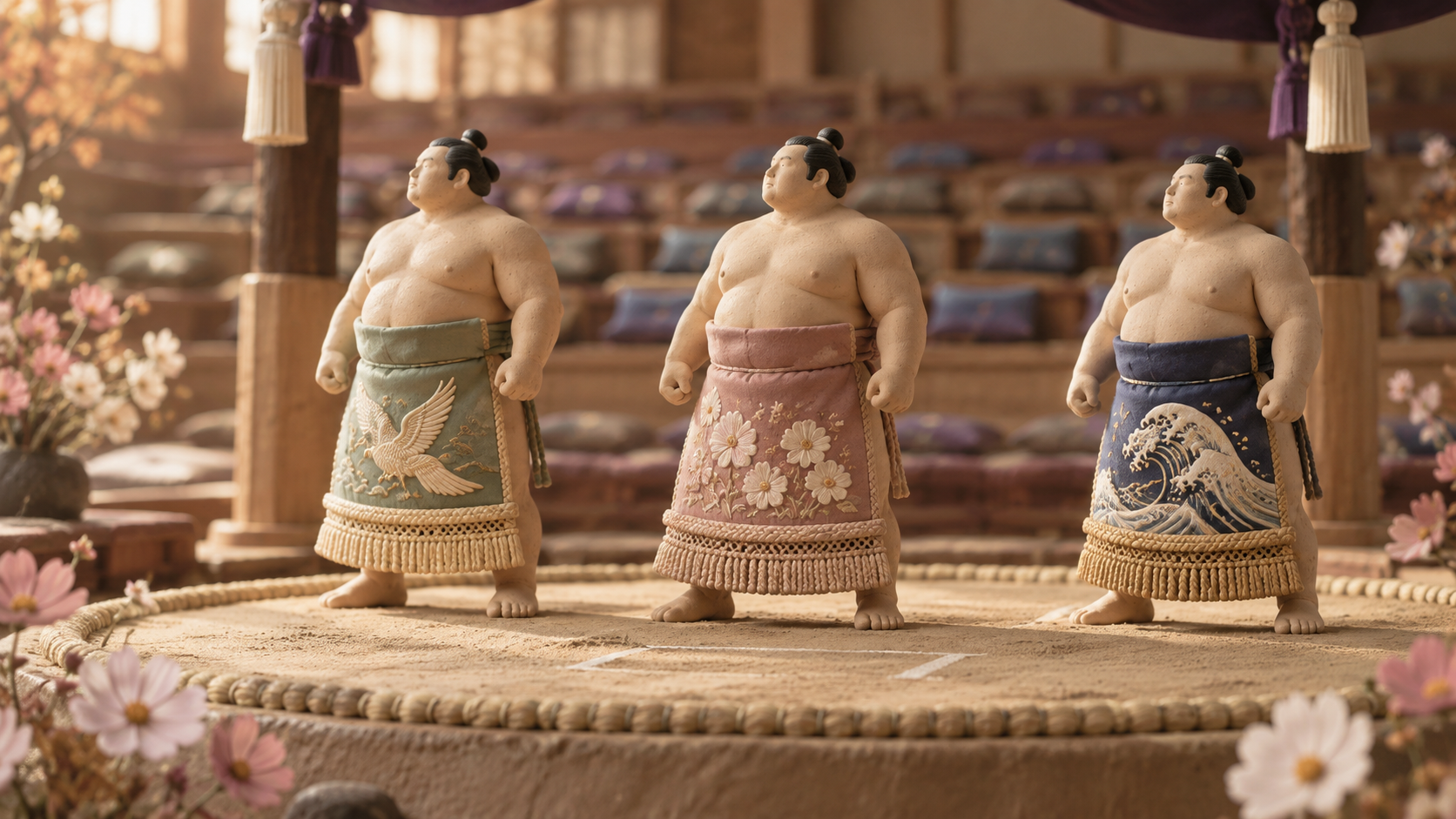
For a first visit, do not wait outside until the makuuchi stars arrive. Watch the juryo dohyo-iri and choose one kesho-mawashi design that catches your eye. Learn only whether its wearer is newly promoted, returning from makuuchi or defending a long-held juryo place.
The line of ceremonial aprons then stops being a lower item on the timetable. It becomes a row of people who have crossed sumo’s sharpest internal border, some only just. That is why knowing one Japanese word—sekitori—can make an entire part of the day come alive.
Official Procedure Comes Before the Label
A rank or status does not change instantly because of one result or an audience label. First the bouts and tournament conclude, then the applicable compilation and announcement occur, and the official banzuke confirms the status. This procedure explains the current system; it does not predict the next promotion or demotion.
Sources
- Japan Sumo Association, Sumo Quiz No. 1233 (published 25 May 2025; checked 2 September 2026)
- Japan Sumo Association, Sumo Quiz No. 17 (published 25 January 2022; checked 2 September 2026)
- Japan Sumo Association, Sumo Quiz No. 27 (published 4 February 2022; checked 2 September 2026)
Source links used for verification
Each link was used for the corresponding claim in this article; inclusion is not a blanket endorsement of the whole page.
Article verified:
- Japan Sumo Association Sumo Quiz No. 1233Historical primary source (record from that period)
- Japan Sumo Association Sumo Quiz No. 17Historical primary source (record from that period)
- Japan Sumo Association Sumo Quiz No. 27Historical primary source (record from that period)