On a sumo banzuke, East is placed above West when the wrestlers have the same rank and rank number. Read the larger rank first, then the number, and use East or West as the final distinction. “East” does not leap over a higher named rank, predict the next bout’s winner or describe where a wrestler was born. Think of it as the first of two addresses on the same line.
The single letter E or W in an English listing can look like an arena direction. On the printed Japanese banzuke, the two sides can feel like decoration around the central calligraphy. In fact, they carry a small but real ranking difference.
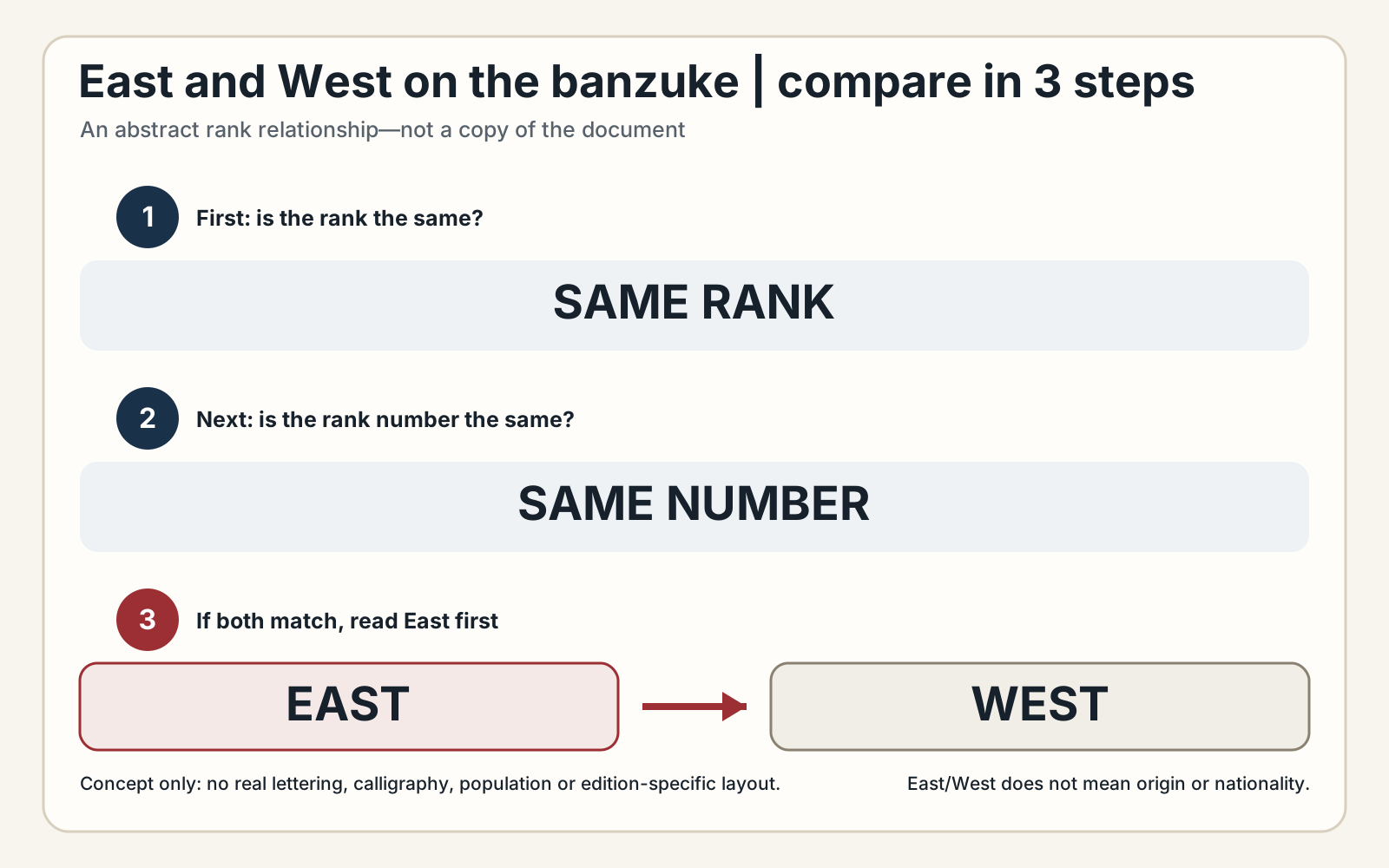
Detailed description of this diagram
Step one compares rank, step two compares rank number, and only when both match does step three place East before West. The schematic represents that relationship alone and does not copy actual calligraphy, names, population or edition-specific layout.
Graphic: SUMO ARCHAEOLOGY CLUB · Figure source 1 · Figure source 2 · Figure source 3
Read rank, number, then side
Japan Sumo Association Quiz No. 609 says that the East wrestler is ranked above the West wrestler when the banzuke position is otherwise the same. A newcomer can apply the convention in three steps:
- Read the named rank first: yokozuna, ozeki, sekiwake, komusubi or maegashira in the top division.
- Where the rank has a number, compare that number next.
- When both rank and number match, place East just above West.
East Maegashira 2 therefore stands above West Maegashira 2. But “East” by itself is not a master key. West Komusubi remains above East Maegashira 1 because the named rank is considered before the side.
This ordering prevents a common beginner’s mistake: scanning every E before reading the rank beside it. East and West are the fine adjustment at the end, not the first division of the entire list.
A dated example from September 2026
The official September 2026 banzuke lists Atamifuji as East Sekiwake and Fujinokawa as West Sekiwake. Both carry the same named rank, so Atamifuji’s East position comes first on that banzuke.
That is a snapshot for one tournament, not a permanent verdict on the two wrestlers. The next ranking can move after the tournament’s results are assessed. Nor does the East label guarantee that Atamifuji would defeat Fujinokawa in a bout. A banzuke records position before competition; the dohyo decides the day’s result.
This difference turns the convention from trivia into a way to follow change. Find one East–West pair now, then find the same two names on the next banzuke. A tiny positional distinction becomes a record of what fifteen days did.
Why is East the higher side?
Japan Sumo Association Quiz No. 947 offers a historical explanation. It says that the emperor was traditionally seated facing south and that senior officials occupied the eastern position. From that arrangement, East came before West among otherwise equal positions. The Association also connects the idea to the *kamite* and *shimote* language of kabuki: from the audience, the higher side is on the right.
It is best to present that as the Association’s explanation of the convention. It is not a claim that people, supporters or regions in eastern Japan are superior. The striking part is more modest: one character on a modern ranking sheet preserves a memory of court orientation and stage vocabulary.
Do not mix banzuke sides with arena directions
East and West also appear in venue maps and descriptions of the dohyo. There they help a visitor find a seat or understand an arena direction. On the banzuke they distinguish ranked positions. Ask which context you are reading before transferring a rule from one to the other.
You do not need to memorise that an East-ranked wrestler will always occupy one physical side in every situation. For ranking purposes, keep the lesson narrow and reliable: at the same rank and number, East is listed higher.
One thing to do next: find a single pair
The next time you open a banzuke, resist the urge to decode the entire page. Choose one matching rank and number, find its East and West names, and confirm that East comes first. After the tournament, return to those names on the newly published list.
The distinction is small enough to overlook. Once noticed, it helps the banzuke stop looking like a static ladder. It becomes a map rewritten after every tournament, with even its left and right carrying history.
Sources
- Japan Sumo Association, Quiz No. 609 on East and West positions (checked 2 September 2026)
- Japan Sumo Association, Quiz No. 947 on the historical explanation for East ranking higher (checked 2 September 2026)
- Japan Sumo Association, September 2026 banzuke (checked 2 September 2026)
Source links used for verification
Each link was used for the corresponding claim in this article; inclusion is not a blanket endorsement of the whole page.
Article verified:
- Japan Sumo Association Quiz No. 609: East and West on the banzukeHistorical primary source (record from that period)
- Japan Sumo Association Quiz No. 947: historical explanation for East ranking higherHistorical primary source (record from that period)
- Japan Sumo Association September 2026 banzukePrimary source (as checked for this article)