September 2026 archive: The prices and shop hours below record the guidance checked on 2 September 2026. When checked on 28 September 2026, the linked official page had changed to the November tournament and said its souvenir information was not yet available. These September details remain here as a record of that tournament. For a future visit, check the official guidance for that tournament.
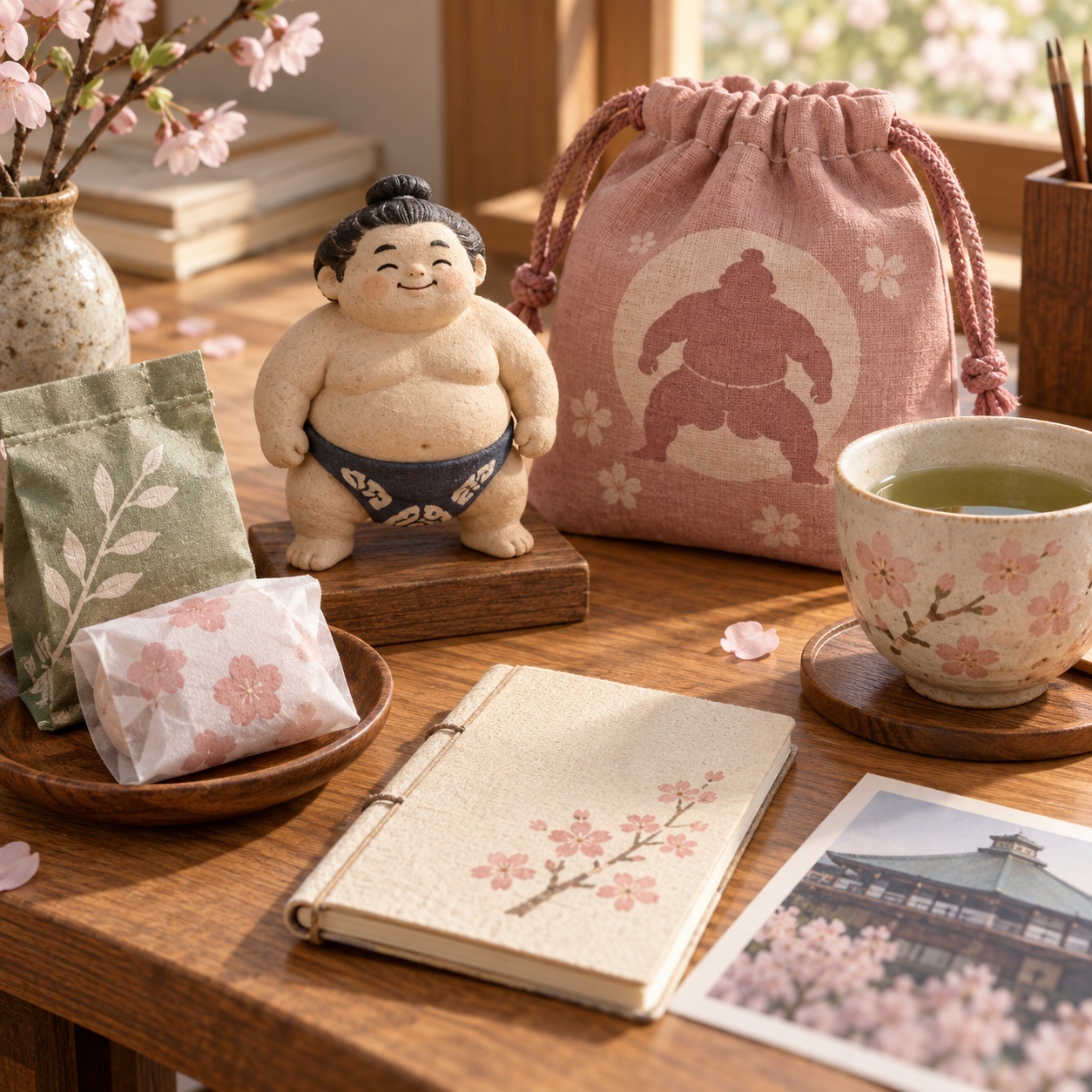
You do not need a favourite wrestler before entering the Kokugikan shop. A simple first-visit order is: choose something that records the day, such as a banzuke or sell-out envelope; consider an easy gift such as tea, coffee or sweets; and look at wrestler-specific goods only after someone has caught your attention in the arena. The official Oyakatashop Sumōru is scheduled to operate on all 15 days of September 2026.
Visitors can feel that they ought to know every face before buying anything. In fact, the shop can work in the other direction. A word such as yobidashi on an embroidered handkerchief, or the two styles of yokozuna ring entrance on tea packaging, can create the question that sends you back to the dohyo.
Official September shop hours
The Association lists Shop 1 on the west side of the first floor from 11:00 a.m. to 5:00 p.m. and Shop 2 on the front side of the second floor from noon to 5:00 p.m. Both are scheduled throughout the tournament. On the final day, closing is around 3:30 p.m.; on other days, last entry is 4:50 p.m. Hours may change, and individual items can sell out.
If one product matters to you, visit early. If you are still deciding, watch some lower-division or juryo sumo first. A name seen in a bout means more than the same name encountered cold on a towel.
Start with an object that records the day
The September banzuke is listed as a two-sheet set for ¥110. You do not have to read the dense calligraphy at once. At home, mark the one wrestler you learned that day. A sheet that began as a forest of unfamiliar names now contains one person you saw compete.
On a sell-out day, a small ōiri envelope is scheduled for ¥100. Sales begin at 4:00 p.m. on Days 1–14 and 3:30 p.m. on the final day, subject to the day’s conditions. It is physically modest, but it records a particular fact: you were part of a full Kokugikan.
Easy gifts when the recipient does not follow sumo
The September page lists coffee bags at ¥660, teas themed around the Unryu and Shiranui yokozuna entrance styles at ¥1,620, a 2027 desk calendar and a sumo planner. Food and drink can be easier for colleagues or relatives who do not recognise wrestler names. Check ingredients, allergies, best-before dates and baggage restrictions yourself before buying.
For something permanent but not wrestler-specific, the official range also reaches beyond the athletes: kimarite stickers, keyrings based on the arena or yokozuna, and embroidery featuring gyoji, yobidashi and tokoyama. Those are the referee, announcer and specialist hairdresser. A souvenir can therefore introduce one of the people who make a bout possible without appearing as its two competitors.
Choose wrestler goods after one small connection
Perhaps a ceremonial apron stood out, a wrestler’s hometown matched yours, or the courtesy of his final bow made you look up his name. That is enough. A towel or card chosen after that moment becomes a reminder of something you observed, not a purchase based only on fame.
If nobody catches your attention, buy nothing. A photograph, a marked programme or checking tomorrow’s result can preserve the visit just as well. This guide links only to official sales channels; it does not recommend high-priced resale, and commission cannot determine its order of suggestions.
A shop shelf can reveal how many people live inside “sumo”
The most interesting detail may be the range of jobs and objects represented: referees, announcers, hairdressers, travelling trunks, techniques and arena rituals. Two wrestlers occupy the ring, but a much larger world holds that moment together.
Choose one object that makes you ask a question. If you leave wondering why there are two yokozuna entrance styles, or how long it takes a tokoyama to master the oicho topknot, the souvenir has already led you beyond shopping.
Sources
- Japan Sumo Association, September 2026 souvenir guide (checked 2 September 2026)
Source links used for verification
Each link was used for the corresponding claim in this article; inclusion is not a blanket endorsement of the whole page.
Article verified:
- Japan Sumo Association souvenir guide (September version checked 2 September 2026; page updates for later tournaments)Primary source (as checked for this article)