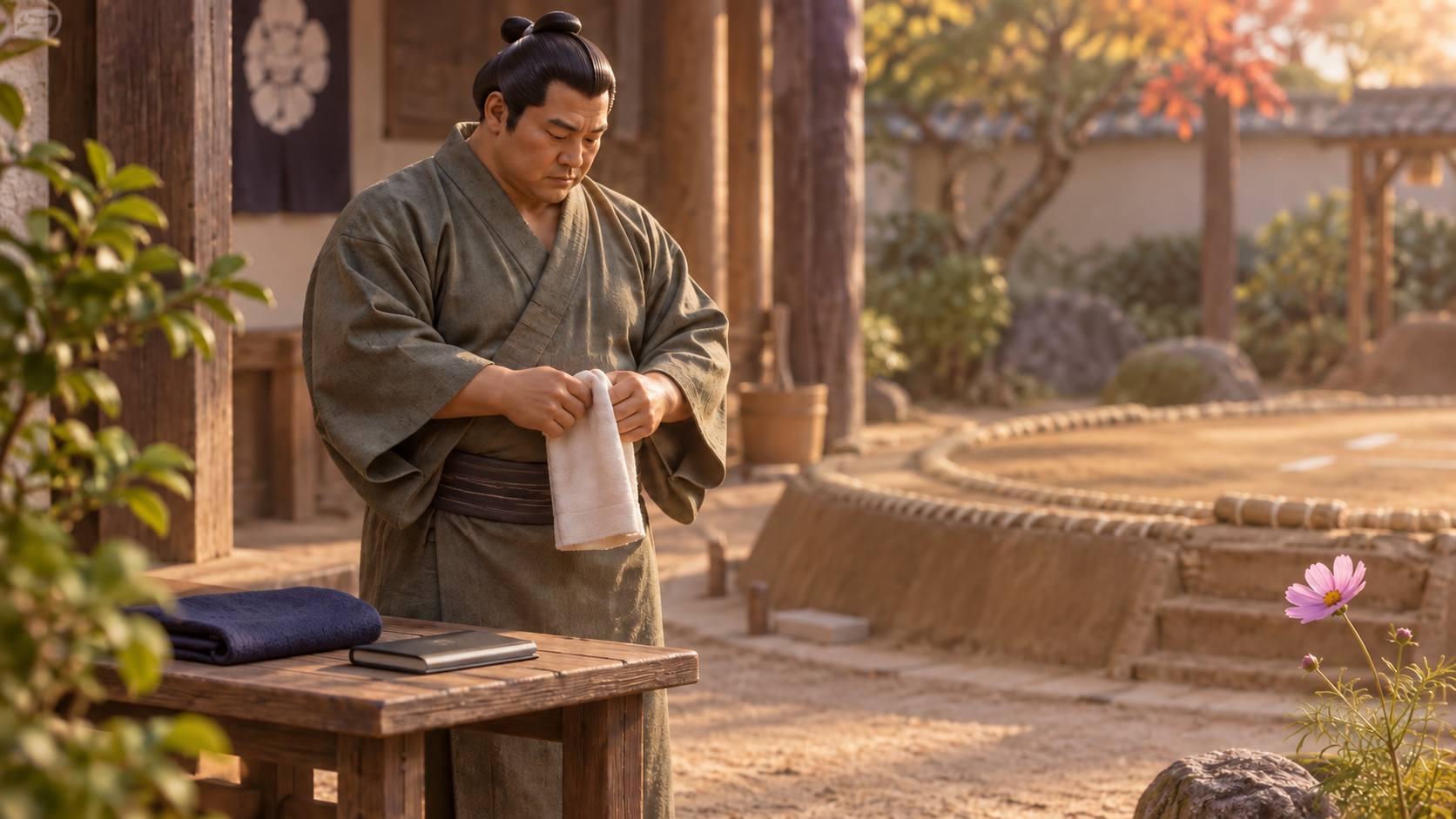
When following a veteran, do not automatically explain a loss with age or a win with experience. Verify the birth date and debut through the official profile, the current position through the banzuke, and each opponent and result through the daily record. Observe preparation, the first chosen shape and one change from yesterday. Retirement and physical condition require an authoritative statement, not fan inference.
Age and service are facts; decline is an interpretation
A long-serving wrestler comes with many numbers: age, first tournament and highest rank among them. The official profile can support those facts. It cannot by itself prove “too old,” “winning through experience alone,” or a retirement date. Make the factual column once before the tournament, then watch each day under the same modest rules.
If you remember famous older bouts, avoid grading the current tournament as a reproduction of them. Record today’s rank and opponent. Leave “in his prime he would have” outside the observation field because a counterfactual cannot be checked in this bout.
Four lines each day
- Opponent and official outcome: shikona, rank position, result and kimarite
- Preparation: one visible detail in the approach or shikiri
- Opening shape: advanced, received, reached for a belt or another plain description
- Difference: whether the wrestler returned to yesterday’s entrance or changed one choice
A losing sequence is not a diagnosis of decline. A winning sequence does not confirm complete restoration or guarantee another record. If you follow a veteran below juryo, remember that lower-division wrestlers generally have seven bouts rather than one on every day. Check the official schedule so a day without a bout is not misrecorded as a loss or absence.
Repetition is evidence too
You do not need a new technique every day. The wrestler may take salt in the same rhythm, seek the same side of the belt and return to the same opening after a loss. Or he may alter only the first hand for a particular opponent. Both are small, observable notes. Neither requires you to invent an inner thought.
Following a veteran makes me notice the precision inside the phrase “came back to the ring today.” That should not become a sentimental story in which a fan speaks for the wrestler’s hardship or future. Put fifteen lines together and discover what changed and what did not. One repeated choice can become a more respectful reason to want to see the wrestler next tournament.
Review after day fifteen
Beside the official record, preserve the most repeated preparation, one opening adjusted for an opponent and one question for the next appearance. Wait for an authorised announcement before writing retirement, continued participation, health status or a future rank as fact.
Sources
- Japan Sumo Association, wrestler search, banzuke, and daily bouts and results, checked September 3, 2026. They are used separately for career facts, current position and official daily outcomes.
Source links used for verification
Each link was used for the corresponding claim in this article; inclusion is not a blanket endorsement of the whole page.
Article verified:
- Japan Sumo Association wrestler searchPrimary source (as checked for this article)
- Japan Sumo Association banzukePrimary source (as checked for this article)
- Japan Sumo Association daily bouts and resultsPrimary source (as checked for this article)