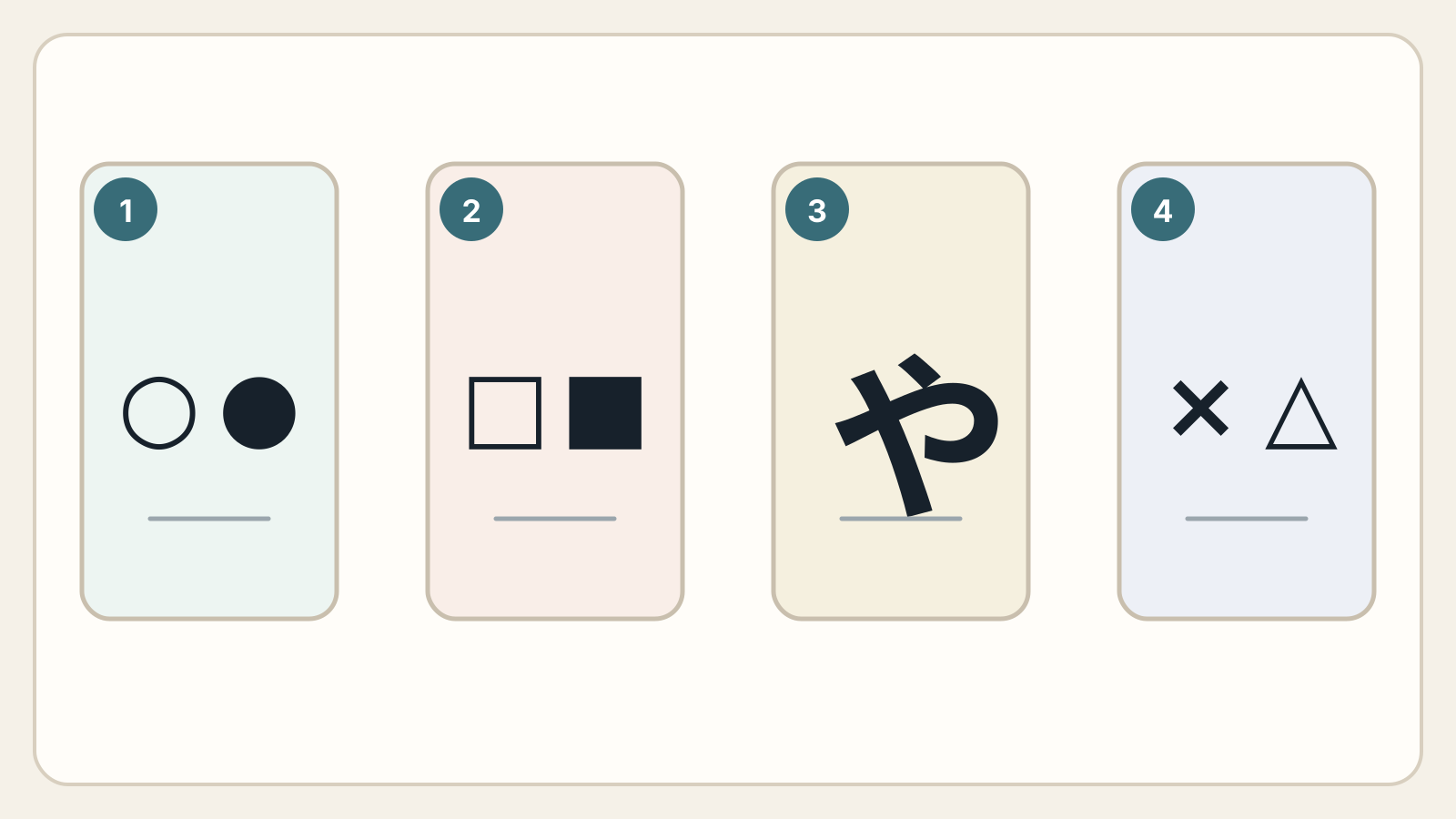
In the Japan Sumo Association’s official *hoshitori*, ○ means a win and ● a loss. A white square, □, marks a win by default; a black square, ■, marks a loss by default. The character や means a rest or no scheduled bout, × is a draw, and △ is an injury draw. Start by following one wrestler’s row from left to right: a 15-day tournament will become a sequence of days rather than a single win–loss total.
The banzuke is the map printed before a tournament; the hoshitori is a log filled in as the tournament unfolds. English-language fans often call it a results table or score chart. Most cells contain white or black circles, but the occasional square or Japanese character records something that “8–7” alone cannot tell you.
Detailed description of this diagram
Four cards group the exact published marks. Card one contains an open and filled circle, card two an open and filled square, card three the Japanese character ya, and card four a cross and triangle. Card numbers and colours are this site's organisation, not official table styling. Only the current official legend meanings are encoded. No real wrestler, tournament, day or result row is reproduced, and the visual does not promise identical glyph shape or colour on every device or future interface.
Graphic: SUMO ARCHAEOLOGY CLUB · Figure source 1 · Figure source 2
Read ○ and ● from left to right
The Association’s legend defines ○ as a win and ● as a loss. Results are arranged by tournament day beside each wrestler, so reading across one row shows where a winning or losing streak developed.
Makuuchi and juryo wrestlers normally compete on all 15 days. A majority of wins produces a *kachi-koshi*, or winning record. Do not jump straight to the decisive eighth white circle. Notice whether the earlier wins came in a cluster, alternated with losses or arrived after a difficult start. The symbols give a small tournament its own shape.
□ and ■ record fusen results
The white square □ means *fusensho*, a win by default, and the black square ■ means *fusenpai*, a loss by default. These results occur when a scheduled match cannot proceed because one side does not appear. The different shapes preserve the fact that no ordinary contest produced that result.
The symbol does not reveal a medical diagnosis or justify a judgement about either wrestler. A white square says that this official result was a fusensho; it does not say the winner “had it easy.” A black square does not by itself explain why the wrestler could not appear. For that, consult confirmed Association information rather than social-media speculation.
や is not a black-star loss
In the official legend, や means rest or no bout. This is especially important below juryo, where wrestlers normally have seven contests rather than competing daily. Their rows therefore contain ordinary no-bout days.
The same mark may appear during an absence, so や alone cannot tell you the cause. Combine the wrestler’s division, the daily torikumi and official kyujo information. A hoshitori symbol is a verified clue, not permission to fill the surrounding story with guesses.
× is a draw and △ an injury draw
The × symbol denotes a draw; △ denotes an injury draw, traditionally called *itamiwake*. You are unlikely to encounter either frequently in a current top-division table, but both remain in the Association’s official legend. They matter when you read historical records or a detailed score sheet.
You do not need to master the full history of those outcomes before enjoying the table. Simply recognising that sumo’s record system contains official possibilities beyond win and loss prevents an old symbol from looking like broken text.
Do not confuse three different tables
The banzuke tells you a wrestler’s rank and east–west side for the tournament. The torikumi tells you today’s pairing. The hoshitori accumulates daily results. The same shikona appears in all three, but each document answers a different question.
Ask the question first: “Who does he face today?” requires the torikumi; “What is his rank?” requires the banzuke; “How has his tournament gone?” requires the hoshitori. That small distinction makes the Association’s data far less intimidating.
One small discovery after the next bout
The day after a wrestler interests you, open the official hoshitori and find the one symbol added to his row. Compare it with the mark immediately before it.
If you see □, ■ or や, resist inventing the missing action. Return to the legend and the official bout list. Once you can read those tiny shapes accurately, the table stops being a sterile total. It remembers which days a wrestler stood on the dohyo, which scheduled contest did not happen, and where the 15-day story briefly left a different kind of mark.
The Display May Vary
The official symbols have defined readings, but a tournament, day or display medium may show blank or in-progress cells differently. Not every symbol is visible every time. Do not fill an unfamiliar cell from imagination; compare it with the official result for the same tournament and day.
Sources
- Japan Sumo Association hoshitori legend and quiz No.1060 (verified 3 September 2026).
Source links used for verification
Each link was used for the corresponding claim in this article; inclusion is not a blanket endorsement of the whole page.
Article verified:
- Japan Sumo Association hoshitori results table and legendPrimary source (as checked for this article)
- Japan Sumo Association quiz No.1060: result symbolsHistorical primary source (record from that period)