Sumo referees do not all wear an identical uniform. A gyoji’s rank appears in the colors of the tassel on his gunbai and the cords on his formal robe. His feet give another clue: lower-division gyoji are barefoot, juryo-ranked officials may wear white tabi socks, and sanyaku-ranked officials and the two senior tate-gyoji may wear sandals. On your next bout, forget the whole chart and look at the referee’s feet once. Bare skin, white socks or sandals is enough to open the door.
The gyoji can look like a timeless figure placed between two wrestlers: tall hat, elaborate robe, commanding voice and war-fan-shaped gunbai. Watch several divisions, however, and small changes begin to appear. The referee has a ranking ladder too, and parts of that ladder are sewn into what he wears.
Detailed description of this diagram
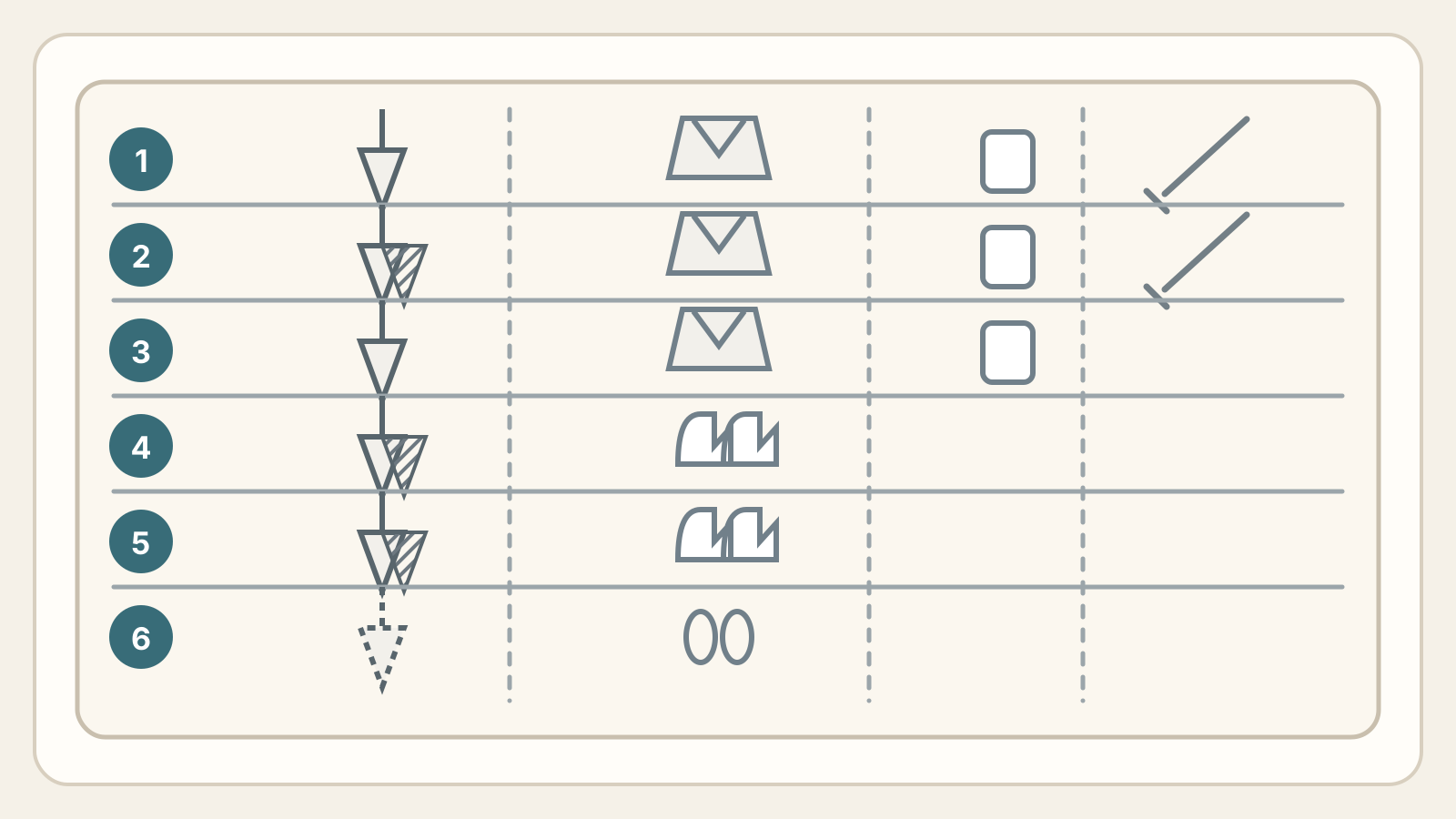
Six horizontal rows are numbered 1 to 6 from top. A plain tassel token means a named single-colour category, a divided pattern means a named pair, and a dashed option in row 6 means black or blue; none of the grey tones is an official colour. The middle column uses two contact dots for barefoot in row 6, abstract white-tabi tokens in rows 5 and 4, and abstract sandal tokens in rows 3 to 1. A small box in rows 3 to 1 means inro permission; a short diagonal bar in rows 2 and 1 means the tate-gyoji short sword. No hitatare, gunbai tassel, kikutoji, tabi, sandal, inro, sword, human body, wearing position, material, RGB value, dye or screen rendering is reproduced.
Graphic: SUMO ARCHAEOLOGY CLUB · Figure source 1 · Figure source 2 · Figure source 3
The color code is repeated across the outfit
The Japan Sumo Association says the prescribed rank colors appear on the gunbai tassel, the decorative kikutoji knots on the hitatare robe, and cords around the chest, sleeves and hem. The moving tassel is usually the easiest part to find from a distant seat.
- Kimura Shonosuke, the senior tate-gyoji: solid purple
- Shikimori Inosuke, the other tate-gyoji: purple and white
- Sanyaku-ranked gyoji: vermilion
- Makuuchi-ranked gyoji: red and white
- Juryo-ranked gyoji, formally called jumaime: blue and white
- Makushita-ranked and lower gyoji: black or blue
The official photographs sometimes make “blue” appear greenish, and screens can shift color further. Do not identify a person from a pixel alone. Use the day’s bout order and the Association’s current gyoji directory when a precise name matters.
The feet provide the simplest first clue
Gyoji in makushita and the lower divisions officiate barefoot. Promotion to juryo rank permits white tabi. Sandals on the dohyo are permitted from sanyaku rank upward.
This is a ladder rather than three isolated costumes. White tabi alone does not prove the gyoji is sanyaku-ranked; juryo- and makuuchi-ranked officials also wear them. Sandals narrow the field to sanyaku or tate-gyoji. The visual progression is memorable: direct contact with the clay, then white socks, then sandals.
I find that detail more affecting than memorizing six colors. Promotion changes not only a title on an official list but the way a referee’s feet meet the ring.
What are the objects at the waist?
According to the Association, a sanyaku-ranked gyoji may wear an inro at the rear of his right hip. A tate-gyoji adds a short sword at the front of the left hip while retaining the inro on the right. You may encounter dramatic traditional explanations for the sword. This guide does not turn those stories into fact; it sticks to what the official sources establish about the outfit.
A side camera angle may reveal these small objects. There is no need to hunt for them while the wrestlers are charging. The shikiri preparation and the bow after a bout give you calmer moments to move your attention from tassel to feet to waist.
Rank belongs to the referee as well as the wrestlers
The Association’s directory lists each gyoji’s professional name, stable affiliation and grade, including tate-gyoji, sanyaku and makuuchi ranks. The colors are not personal styling. They make that career hierarchy visible.
Yobidashi also appear around the dohyo, but the sources cited here establish the gyoji grade and outfit rules only. Do not extend them into a yobidashi dress code or identify either profession from clothing alone.
One thing to watch next
As the gyoji raises his gunbai, follow the tassel for a second. If color is hard to judge, drop your eyes to the ring: bare feet, tabi or sandals? Then return to the wrestlers before the tachiai.
The current directory establishes a grade, but this guide does not reconstruct each gyoji’s full career route without an individual record. Once that becomes visible, “the referee” turns into one particular professional trying to maintain a clear view while two enormous bodies collide. Even his careful sidestep starts to feel worth watching.
Sources
- Japan Sumo Association, Grand Sumo Quiz Nos. 1218, 1364 and 319; current gyoji directory; July 2026 history booklet, “The World of Gyoji” (accessed September 2, 2026)
Source links used for verification
Each link was used for the corresponding claim in this article; inclusion is not a blanket endorsement of the whole page.
Article verified:
- Japan Sumo Association Grand Sumo Quiz No.1218: gyoji attire and rank colorsPrimary source (as checked for this article)
- Japan Sumo Association Grand Sumo Quiz No.1364: inro and short swordPrimary source (as checked for this article)
- Japan Sumo Association Grand Sumo Quiz No.319: tabi and sandalsHistorical primary source (record from that period)
- Japan Sumo Association: current gyoji directoryPrimary source (as checked for this article)
- Japan Sumo Association July 2026 history booklet: The World of GyojiPrimary source (as checked for this article)