Use the map to prepare the question; use current staff direction for the route.
Ryogoku Kokugikan has men’s and women’s toilets, accessible multipurpose restrooms and baby-changing symbols on its official seating map. The linked PDF is labelled for the May 2026 tournament, however, so do not treat every marked location as a guaranteed September 2026 route. Ask an attendant for the nearest current option after entering.
“There are toilets” is not quite enough information for a long sumo day. A visitor in a first-floor masu box, someone using a wheelchair, and a family on the second floor may all need different routes.
The safest guide therefore separates three things: what the official map proves exists, what the current 2026 seating page confirms, and what still needs a same-day check.
Facilities shown on the official map
The map legend identifies:
- men’s and women’s restrooms;
- accessible multipurpose restrooms;
- baby-changing stations;
- lifts, escalators and stairs;
- coin lockers and a stroller-parking area.
The first-floor plan shows restroom symbols in several east and west locations, including accessible restroom symbols. The second-floor plan also marks men’s and women’s restrooms and baby-changing stations.
This is useful primary evidence, but the event edition matters. The PDF itself says May 2026. It can confirm that these facility types were officially mapped earlier that year, not that every doorway, route and opening condition will be identical on September 13, 2026.
Why the date mismatch matters
The Association’s current Tokyo seating page explicitly says that its information is for the September 2026 tournament. It explains viewing directions, masu seats, chair seats and wheelchair seating. The floor-plan link on that current page still opens the older labelled PDF.
We therefore record the evidence in separate blocks:
- 2026 seat types and viewing directions: CURRENT_PRIMARY;
- facility types and locations mapped for May 2026: HISTORICAL_PRIMARY;
- exact accessible route and restroom availability on your 2026 visit: confirm on arrival.
An official link can still point to a document from another edition. Treating the whole page as one undated fact would hide that conflict.
The best first question after entry
Once your ticket has been checked, ask an attendant:
“Which restroom is nearest to my seat, and what is the next option if it is busy?”
If you need an accessible multipurpose restroom, a step-free path or a lift, say that at the same time. The current wheelchair-seat guide says the wheelchair user sits in front with the companion behind, and the route differs from an ordinary masu-box route. An attendant working that day’s layout is a better source for temporary barriers or controlled doors than the May tournament diagram from the same year.
Also remember a landmark for your return: floor, shomen or mukojomen side, and east or west. In a circular arena, “I came from the toilet” is not a very distinctive memory.
Planning around bouts without inventing a perfect time
Crowds often move between programme segments, but the Association does not publish a minute-by-minute restroom queue forecast. We cannot promise that a particular break will be quiet.
Go before the need becomes urgent. If one wrestler matters to you, check the running order and plan to return several bouts before his match. Sumo bouts are short, and “I will leave after just one more” has a remarkable ability to repeat itself.
The small pleasure here is that preparation gives attention back to the ring. Once you know the route, you can stop scanning the concourse in your head and start noticing the next shikiri.
Families and baby-changing facilities
The official map includes baby-changing symbols on both floors and a stroller-parking symbol on the first floor.
It does not currently establish an all-day nursing room for every general-admission visitor in September 2026. A nursing-room reference attached to a special family photo package cannot safely be expanded into a general venue promise.
Ask on arrival where the baby-changing station is operating that day and whether any nursing space is available. Plan feeding and supplies without assuming an unconfirmed room.
Five-minute checklist
- Note whether your seat is a first-floor masu box or a second-floor chair.
- Save the side: shomen, mukojomen, east or west.
- Tell staff immediately if you need a step-free route or accessible restroom.
- Ask for the current baby-changing or stroller-parking location if travelling with a child.
- Move with enough time to return before the bout you most want to see.
- Use the May map as orientation, not a guarantee of the September layout.
One clear route can remove a disproportionate amount of anxiety. Confirm it at the beginning, then let the day’s parade of names, salt and sudden movement take over.
Make the second option match the actual need
“Nearest” means different things for a general toilet, accessible room, ostomate equipment, baby changing, assisted space or menstrual-product change. Name the required function, barriers, companion involvement, belongings and return landmark. A symbol on the official map does not establish internal dimensions or every individual feature.
After entry, first show the seat reference and ask for the nearest suitable room and one backup. Next verify the floor and live signs. Back at the seat, share the landmark and meeting method with companions. A child, cane or wheelchair user, person in pain or urgent need may require a different time, so this site does not manufacture a universally quiet interval from the programme. Urgency outranks waiting for the end of a bout.
If the route is closed, crowded, unsuitable or lost, do not try an unconfirmed door because it looks closer. Tell staff the required function. If the backup also fails, consider exit or going home after checking the current re-entry conditions. This does not infer that an alternative must exist; it prevents endurance from becoming the only plan.
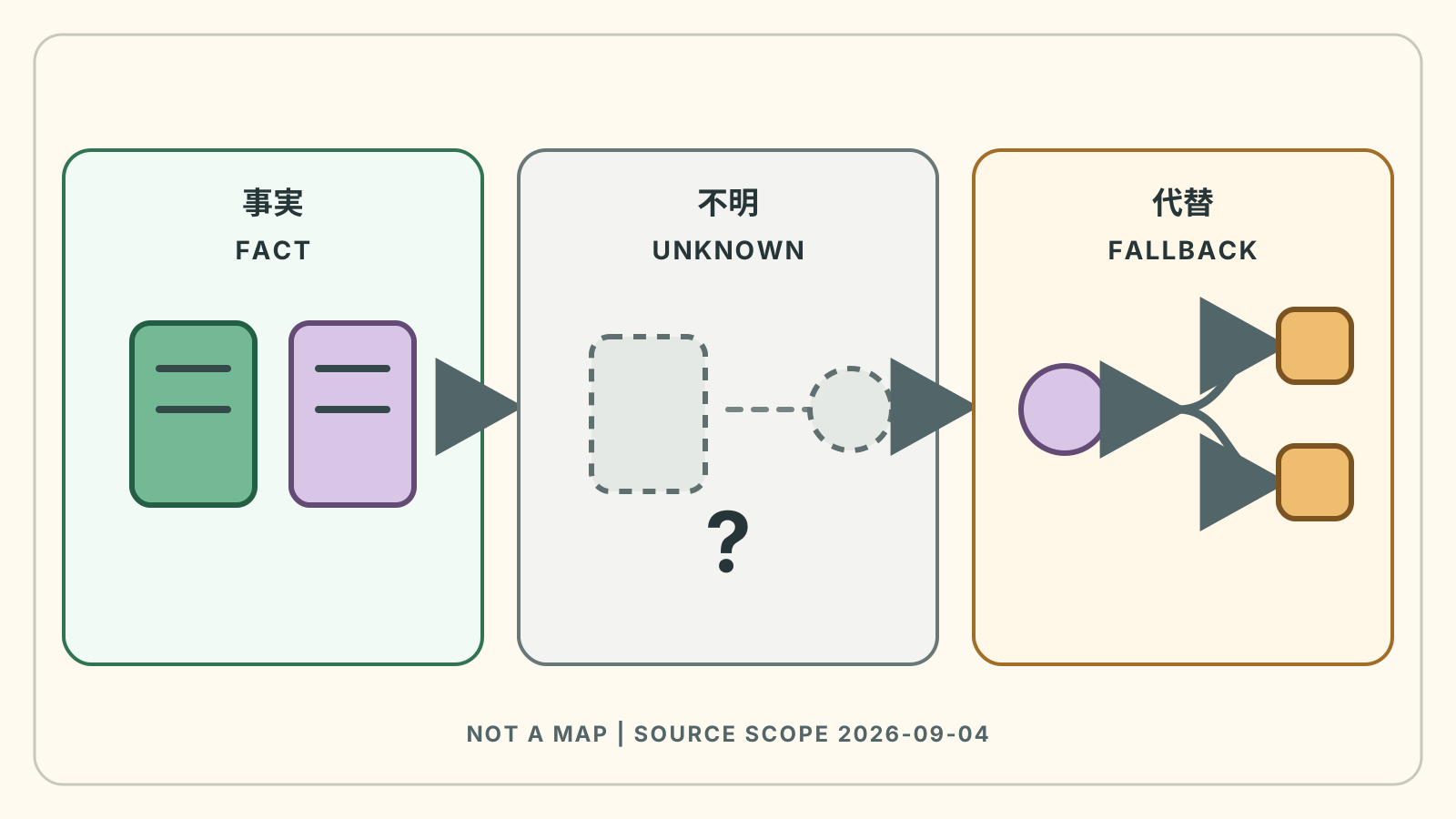
Detailed description of this diagram
The FACT card shows two generic document tokens with short lines only to require comparison of current seat information and a separate plan's edition and purpose; it copies no map or symbol. UNKNOWN breaks the link from a possibly different-edition document to current location, opening, suitability and queue. FALLBACK branches from a staff-information token to first and second choices matched to the actual restroom, mobility or family need. No floor, room, path, distance, lift, gender access, wait, equipment or re-entry is depicted.
Graphic: SUMO ARCHAEOLOGY CLUB · Figure source 1 · Figure source 2
Evidence limits and event-day fallback
Confirmed fact: The official-linked Kokugikan map is labelled for May 2026 and shows symbols for toilets, accessible rooms, baby changing and vertical circulation. It does not guarantee every September route/opening.
What remains unknown: Usable entrance/door from the seat, step-free route, internal dimensions, ostomate/adult-change features, companion use, queue, temporary control and nursing space require live confirmation.
Reasoned inference: Using the map to prepare a seat/function/backup question is likely safer than following the nearest old-edition symbol as an answer. Confidence is high; suitability is not guaranteed.
Editorial suggestion: Immediately after entry, share floor, front/rear, east/west and a return landmark. This avoids universalising toileting, childcare, medical or support needs; it is not an official route.
Fallback: If closed, crowded, unsuitable or lost, do not take an unconfirmed door because it looks near. Tell staff the function; if the backup also fails, consider leaving after checking current re-entry.
Sources
- Japan Sumo Association, September 2026 Tokyo tournament seating guide, checked September 2, 2026.
- Japan Sumo Association, Ryogoku Kokugikan seating map, labelled May 2026. Used only for mapped facility types and earlier-event locations; rechecked September 3, 2026.
- Japan Sumo Association seat-view information; exact current routes remain a day-of check.
Source links used for verification
Each link was used for the corresponding claim in this article; inclusion is not a blanket endorsement of the whole page.
Article verified:
- September 2026 Tokyo tournament seating guidePrimary source (as checked for this article)
- Ryogoku Kokugikan seating map labelled May 2026Historical primary source (record from that period)
- Ryogoku Kokugikan seat viewPrimary source (conflicting details noted)