Plan for change, not for a promised arena temperature.
If heat or air conditioning can change your condition quickly, do not build the day around a review saying that Kokugikan is “cold” or “comfortable.” Check the forecast, carry one removable light layer, decide how you will obtain a drink after entry, identify where to ask for a break, and allow yourself to leave early. We found no current official figure for the arena’s fixed temperature or the feel of a particular seat.
This is not another general outfit guide. It is a stopping plan for someone whose comfort may change over a long seated day, or for a companion who needs to notice that change. Personal medical instructions take priority over this article.
Treat the walk outside and the seat inside as two environments
The route from Ryogoku Station can be hot or wet while a long indoor stay may feel entirely different. A seat near a busy passage need not feel like one elsewhere in the building. Clothing, health and time spent sitting also affect thermal comfort.
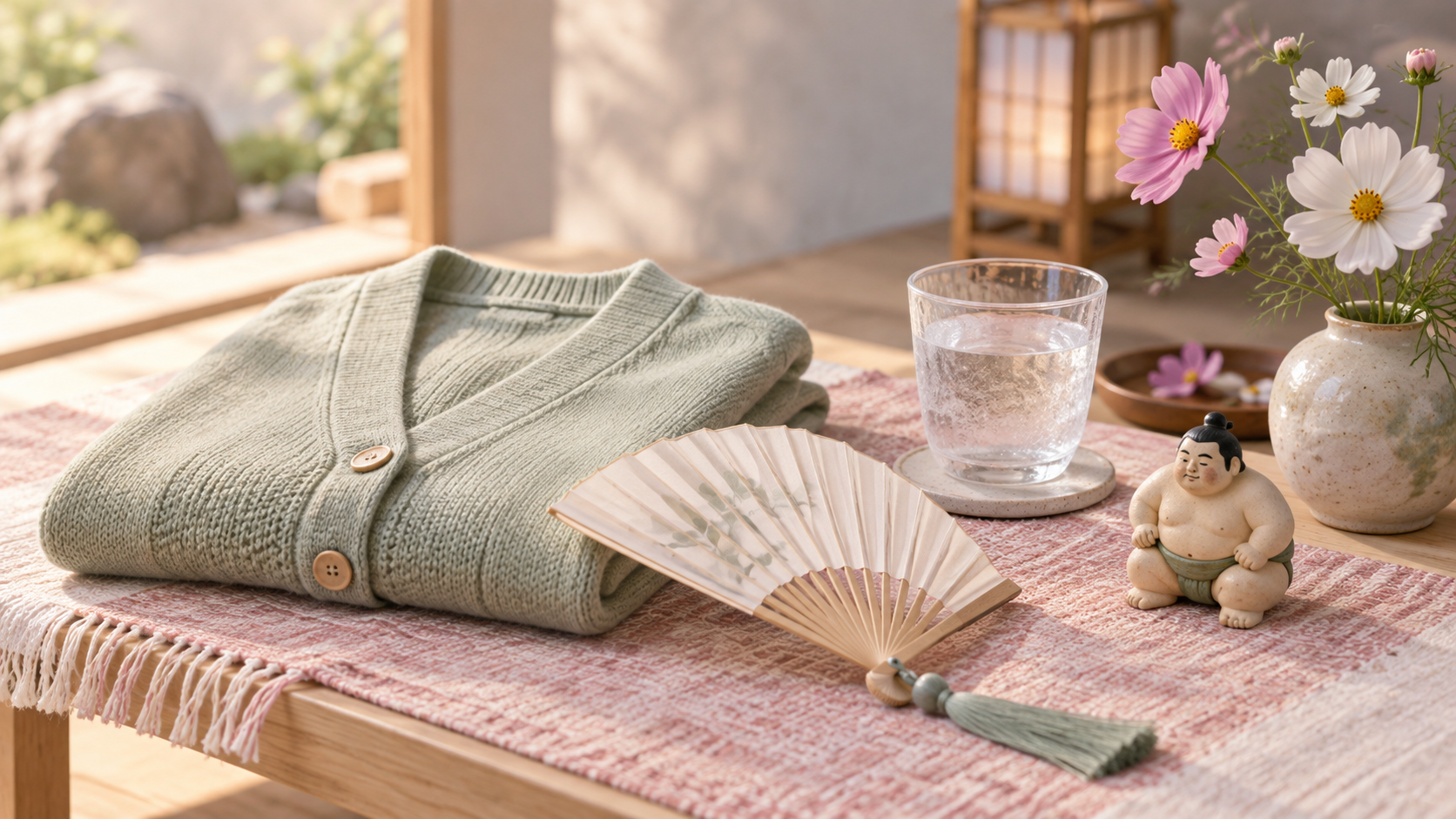
Because the Association does not publish a seat-by-seat temperature promise, “the air conditioning is strong” should remain an individual report, not a venue fact. Check the official weather forecast the night before and again before departure. Use shade and a hat outside, then a removable shirt, cardigan or wrap inside. One garment does not have to solve every part of the journey.
Make a drink plan that respects the event rule
The September 2026 spectator notice asks visitors to refrain from bringing food and drink. It says arena shops plan to sell drinks. We therefore do not offer a blanket instruction to bring an outside bottle. Find the sales point and accepted payment method early, rather than waiting until thirst is urgent or a queue is long.
If a disability or medical condition requires a particular drink, quantity or schedule, do not guess whether the general rule has an exception. Ask the organiser before the visit and describe the exact item and need. Japan’s Ministry of Health recommends drinking regularly even before thirst, but also says that people receiving medical instructions about fluid intake should follow those instructions.
A ticket does not require an all-day stay
The arena opens at 8:45 a.m. on days 1–12, yet a first-time visitor does not have to remain from the opening bouts to the final match. Arriving for juryo, focusing on makuuchi or leaving after a shorter session can be the right design.
Official September rules permit re-entry once, with the ticket stub required. Going outside is therefore not an unlimited break system. Before leaving, ask an attendant what seated rest or medical support is operating inside that day, and confirm whether you have already used re-entry. This article does not promise a fixed rest-room or first-aid location.
Agree on a stop signal
The Ministry lists dizziness, heavy sweating, light-headedness and nausea among possible heat-illness signs. Its first-aid page says to call an ambulance when a person is unconscious or cannot drink independently. Do not make finishing the programme the goal once something feels wrong.
With a companion, agree on a personal signal that means “we stop now,” not “we negotiate after three more bouts.” Alone, tell a staff member while the change still feels small. This article does not diagnose symptoms; it directs uncertainty toward venue staff and medical or emergency help.
Short attention can still become deep attention
A shorter visit is not a lesser form of sumo. Watch three wrestlers during shikiri and notice only how each places his breath before the charge. One may stay almost motionless, another may reset the hands, and another may look through the opponent. Protecting enough energy to notice one difference can make a brief session more memorable than an exhausted full day.
Five decisions for the night before
- Forecast at arrival and departure
- One layer that can be removed and packed
- Drink purchase after entry, plus advance permission for any individual need
- When to ask staff about a break or medical support
- A stop signal and a simple route home
Do not fill missing temperature data with reviews
Confirmed: The arena opens at 8:45 a.m. on days 1–12, re-entry is permitted once, and shops plan to sell drinks. The Ministry of Health lists possible heat-illness signs and directs an emergency call when a person is unconscious or cannot drink independently.
Still unknown: We cannot guarantee the thermostat setting, which seats receive moving air, drink stock or queues, a seated rest place, or on-site medical capability. Health, clothing and duration can also change how the same location feels.
Our preparation advice: Treat a removable layer, a way to obtain a drink, the place to ask for help and the stop signal as one plan, and share it with companions. Do not generalise across sensory sensitivity, children, older people or medical conditions; personal clinical instructions take priority.
If the plan fails: Cancel “until the final bout” and “one more,” tell staff, and switch to a shorter visit or the route home. This article does not diagnose symptoms; urgency belongs to the person’s medical instructions and public emergency guidance.
Sources
- Japan Ministry of Health, Labour and Welfare, heat-illness prevention and first-aid guidance, checked September 3, 2026.
- Japan Sumo Association, September 2026 Tokyo spectator notice, checked September 3, 2026, for opening, re-entry and food-and-drink rules.
- No fixed Kokugikan temperature or seat-specific thermal-comfort claim is made because it was not confirmed in the official material reviewed.
Source links used for verification
Each link was used for the corresponding claim in this article; inclusion is not a blanket endorsement of the whole page.
Article verified:
- Japan Ministry of Health heat-illness prevention guidancePrimary source (as checked for this article)
- Japan Ministry of Health first aid guidance for suspected heat illnessPrimary source (as checked for this article)
- Japan Sumo Association September 2026 Tokyo spectator noticePrimary source (as checked for this article)