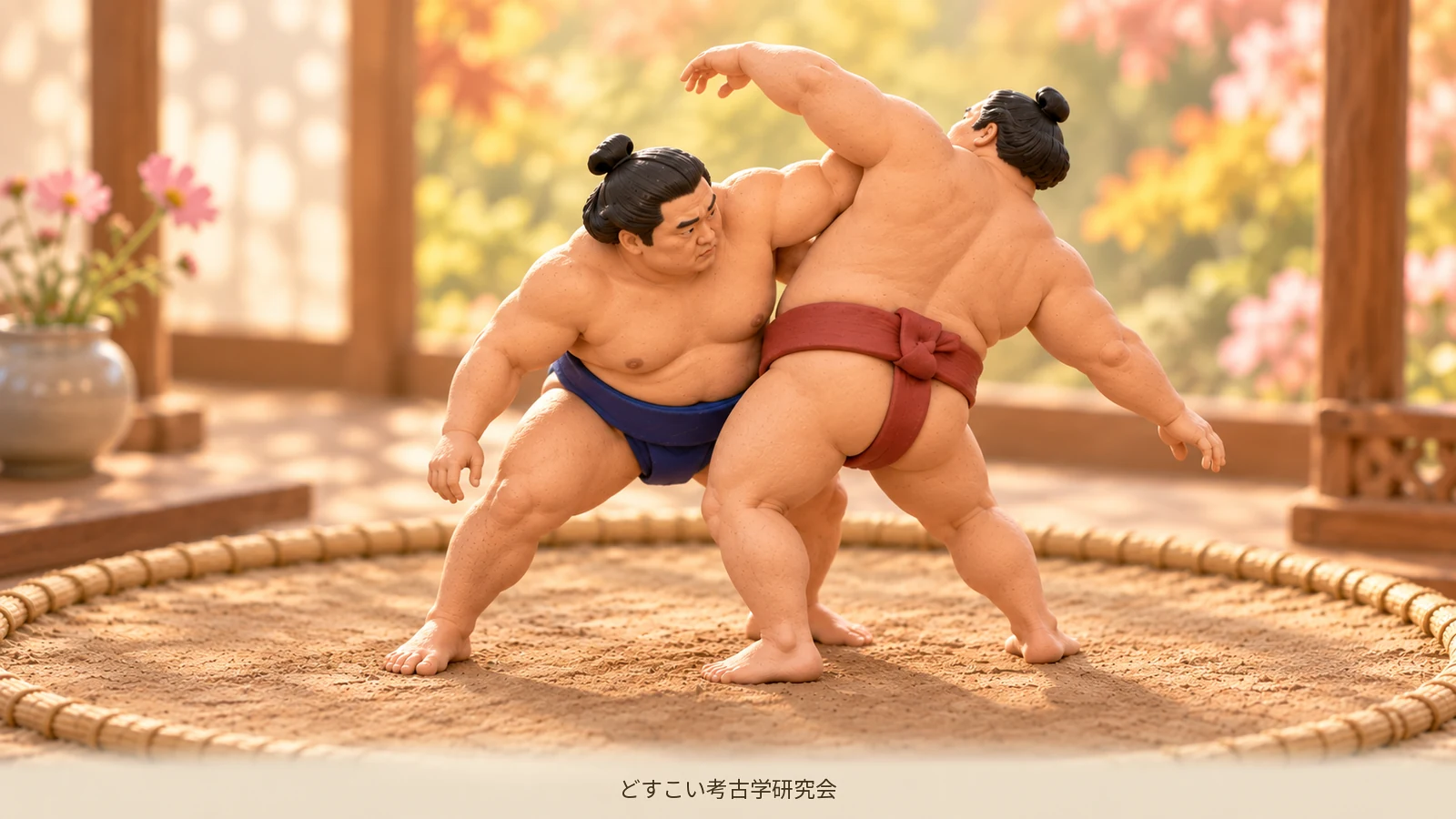
Sukuinage is a scoop throw made without taking the mawashi. The winner turns and works his own inserted arm from beneath the opponent’s armpit as if scooping the body upwards into the throw. Shitatenage can show an arm in the same inside corridor, but it throws from an inside belt grip. In the next bout, follow one inserted hand: did it secure the mawashi, or remain free of the belt and work beneath the armpit?
“Scoop” may suggest two cupped hands lifting water. On the dohyo, the useful picture is much narrower. One arm has entered beneath an armpit and stands close enough to search for cloth, yet it works on the body instead. That small choice—belt or no belt—can change the name of the whole fall.
Begin with the inserted arm
An inserted arm, often called *sashite* in sumo, travels inside beneath the opponent’s armpit. The Japan Sumo Association defines sukuinage as turning or returning that arm and throwing as if scooping from beneath the armpit, without taking a mawashi grip.
You may not see the exact angle of the hand from a distant seat. Use larger landmarks. Is the winner’s elbow inside the opponent’s arm? Does the hand remain free of the belt? Does that inside arm begin to raise and turn the opponent rather than settling as a fixed cloth grip?
Look before the bodies rotate. Once the throw begins, the belt and hands may disappear. If your angle never reveals the connection, preserve the uncertainty and let the official announcement settle the label.
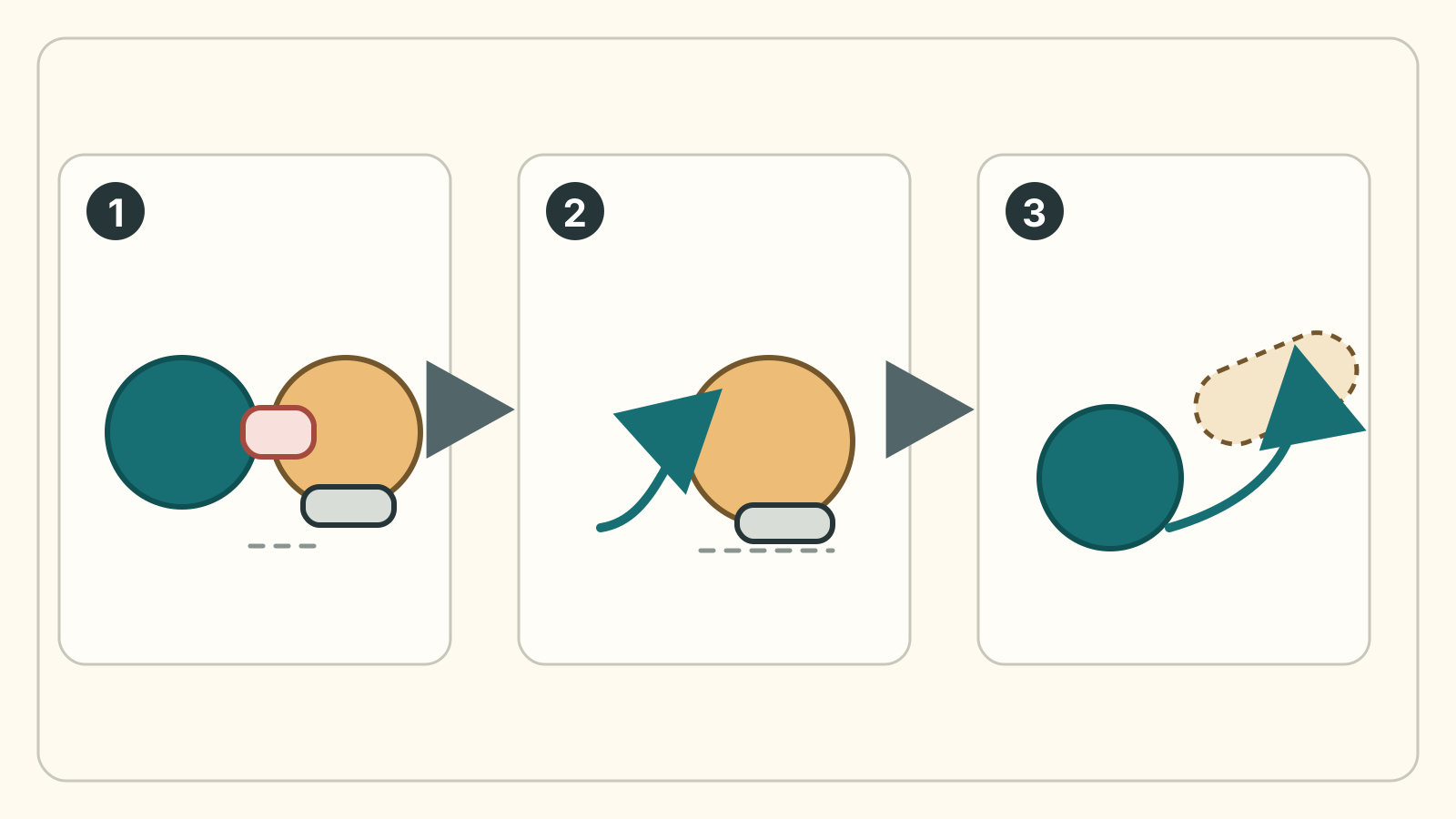
Detailed description of this diagram
Card 1 puts a contact band between blue and gold competitor tokens for the inserted-arm relation. A separate belt band and dashed cue mark that the belt is not gripped. Card 2 brings a blue curve under the gold opponent token to encode only the inserted arm turning up from below. Card 3 uses a horizontal gold token and upward-curving cue for the categorical scoop-throw state. Bands, gaps and curves encode no armpit, arm, hand, belt height, grip, lift, rotation, leverage, trajectory or execution method.
Graphic: SUMO ARCHAEOLOGY CLUB · Figure source 1 · Figure source 2 · Figure source 3
Sukuinage vs shitatenage: body or belt?
The Association defines shitatenage from a *shitate*, an inside mawashi grip taken beneath the opponent’s arm during a belt clinch. It also notes that if the throwing force sends the opponent outside while he remains upright, the kimarite can still be shitatenage.
Sukuinage uses the inserted arm without holding the mawashi and scoops beneath the armpit. Shitatenage uses a hand fixed to the belt. Both may place the winning elbow inside, so “inside arm” identifies only the family. Ask where the hand finishes: on cloth, or working against the body without cloth?
Do not rely only on the size or direction of the fall. The connection that generated it is the better clue.
Sukuinage vs kotenage: whose inserted arm is controlled?
Kotenage is also defined without a mawashi grip, but its map is reversed. The winner encloses the opponent’s inserted arm from outside and presses down over it into a throw.
For sukuinage, the winner’s own inserted arm works beneath the opponent’s armpit. For kotenage, the winner’s outside arm closes around the opponent’s inserted arm. If there is no belt grip, look at the winning elbow: inside the armpit and scooping, or outside and containing the arm that entered?
“No belt” is a useful filter, not the final answer.
Sukuinage vs katasukashi: what does the other hand do?
Katasukashi also employs an inserted arm. On its official page, that arm encloses the base of the opponent’s arm or catches at the armpit and pulls forwards. As the winner opens his body, the other hand works at the opponent’s shoulder and helps pull him down.
Sukuinage turns the inserted arm into a scoop beneath the armpit. Katasukashi assigns a second, visible role to the opposite hand at the shoulder. When the inside arm is partly hidden, that free hand can become the clue: did it join at the shoulder, or did the finish come from the scooping inside arm?
One thing to watch in the next bout
When the wrestlers clinch, choose a hand that has entered beneath an armpit. Do not chase the throw yet. Watch whether the fingers settle on the mawashi. If they do, keep shitatenage in mind. If no belt grip forms and the forearm turns beneath the armpit to scoop the body, store a sukuinage prediction.
The opponent may close his elbow, neutralise the inside arm and prevent any throw. That defence is part of the reward. A clinch that once looked like a single knot now contains a fork in the road: one hand can seek cloth, seek space beneath the body or be shut out entirely. Sukuinage gives the quiet hand beneath the armpit a story before the fall arrives.
Similar Motion Does Not Set the Official Technique
A hand action or fall may look similar while the recorded kimarite differs according to the decisive action, sequence of balance loss and whether a body part touched down or crossed the ring first. Do not settle the difference between a similar technique, non-technique or foul from one camera angle; use the official result for that bout. A schematic marks viewing cues, not a substitute judges’ decision.
Sources
- Japan Sumo Association, kimarite explanation for sukuinage (checked 2 September 2026)
- Japan Sumo Association, kimarite explanation for shitatenage (checked 2 September 2026)
- Japan Sumo Association, kimarite explanation for kotenage (checked 2 September 2026)
- Japan Sumo Association, kimarite explanation for katasukashi (checked 2 September 2026)
Source links used for verification
Each link was used for the corresponding claim in this article; inclusion is not a blanket endorsement of the whole page.
Article verified:
- Japan Sumo Association kimarite: sukuinagePrimary source (as checked for this article)
- Japan Sumo Association kimarite: shitatenagePrimary source (as checked for this article)
- Japan Sumo Association kimarite: kotenagePrimary source (as checked for this article)
- Japan Sumo Association kimarite: katasukashiPrimary source (as checked for this article)