After the decision, the losing wrestler bows and steps down from the dohyo. The winner stays to receive *kachinanori*: the gyoji calls the winner’s ring name and indicates that wrestler with the gunbai. If sponsorship money was attached to the bout, the winner also makes the formal hand-chop gesture before accepting the envelopes. Not every winner receives a prize. For your next bout, watch only the loser’s brief bow before the camera moves on.
The crowd reacts, the result graphic appears and a replay may start almost immediately. It is easy to treat the raised gunbai as the end. At the side of the frame, however, the losing wrestler gathers himself, bows and leaves. The Japan Sumo Association places that quiet action in its official account of the match flow. It belongs to the bout just as much as the collision.
The losing wrestler bows and leaves
The Association’s bilingual Match Flow guide says that the losing rikishi bows before exiting the ring. A broadcast will naturally give more attention to the winner, but the dohyo has a prescribed ending for the other competitor as well.
Do not use the depth of the bow or a momentary expression to diagnose the wrestler’s feelings. A lowered head does not give us permission to state that he is angry, ashamed, injured or dissatisfied. What we can observe is much simpler and more respectful: immediately after a violent contest, he returns to a formal posture, acknowledges the end and leaves by his side.
That small distinction matters across cultures. The bow is not a request for the audience to feel sorry for the loser, and it is not a scoring penalty. It is part of the bout’s closing etiquette.
Detailed description of this diagram
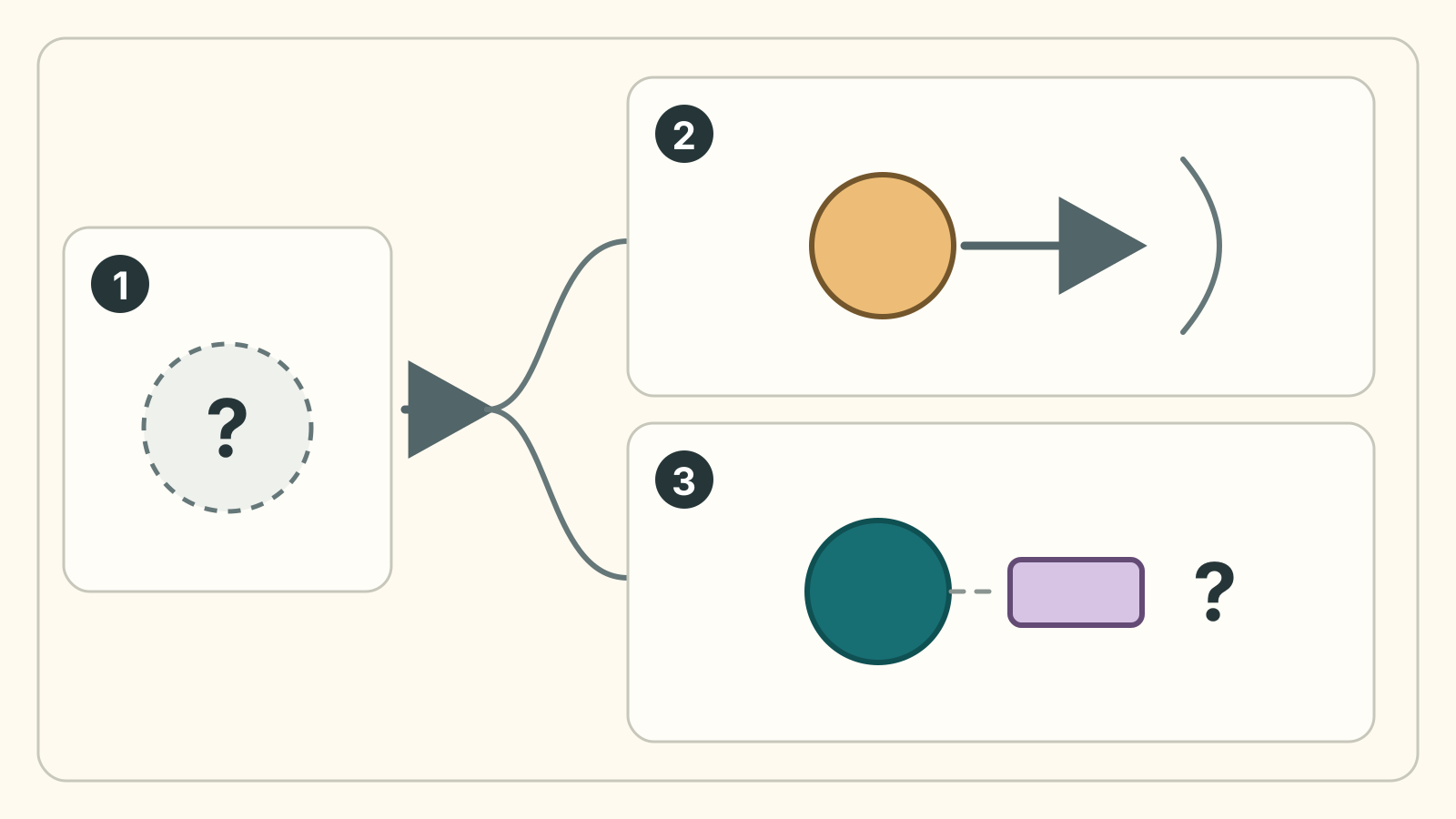
Left card 1 contains a question mark as a result-confirmation gate rather than treating every raised gunbai as final. The upper branch leads to card 2, where a gold loser token crosses a boundary and a curve records only that a bow occurs. Lower card 3 places a blue winner token beside a purple conditional-prize symbol and question mark after the winner announcement. The figure shows no body, bow depth, exit route, gyoji/gunbai pose, voice, hand-sword motion, envelope count/value, timing, eligibility rule or review outcome.
Graphic: SUMO ARCHAEOLOGY CLUB · Figure source 1 · Figure source 2 · Figure source 3
The winner receives kachinanori
The winner remains for the formal declaration. The Association defines *kachinanori* as the gyoji calling the victorious wrestler’s *shikona*, or ring name, and pointing to him with the gunbai. The visual decision and the spoken name are joined in one short ceremony.
Several voices can be heard around a professional sumo bout, so the timing helps. Before the match, the yobidashi calls the two ring names in a long, melodic style. During the contest, the gyoji speaks from the dohyo. After the decision, the same on-ring role gives kachinanori. A separate arena announcement later states the winning technique and winner, and a television or streaming commentator may speak over all of it.
You do not need to identify individual voices by tone. Put each one on the timeline and the soundscape becomes much easier to follow.
Prize envelopes appear only when kensho applies
In makuuchi, private organizations can sponsor eligible bouts with *kensho*. After the wrestlers complete their ritual hand-opening gesture, yobidashi carry the sponsors’ banners around the ring. The sponsor names are announced before the bout. If you saw those banners, there may be prize envelopes at the end.
The winning wrestler receives the envelopes from the gyoji’s gunbai during kachinanori and makes a formal hand-chop gesture, *tegatana*, before taking them. The official sequence links a commercial sponsorship to an established act of etiquette.
If no banners circled before the bout, the absence of envelopes afterwards is not a mistake. Do not learn tegatana as a pose every winner must perform. First watch for the banners; then connect them to the post-bout gesture. That cause-and-effect view is more accurate than assuming a prize is guaranteed at a particular rank or on a particular broadcast.
A raised gunbai may be followed by a review
On a close finish, a ringside judge may call a *mono-ii* after the gyoji has raised the gunbai. The judges confer and the chief judge announces whether the original call stands, is reversed, or the wrestlers must fight again. Kachinanori follows the resolved result rather than replacing that review.
This is also a useful publishing rule. Do not lock in a winner or send a result alert merely because the gunbai moved. When a conference occurs, wait for the official explanation and final winner’s call. Enjoying the ritual does not require sacrificing accuracy.
Follow one wrestler all the way back to the hanamichi
East- and west-side wrestlers enter and leave through their respective *hanamichi*, the passageways connecting the preparation areas with the arena. From the yobidashi’s first call to the final bow and departure, one wrestler’s appearance is far longer than the few seconds of wrestling.
Following the loser can be especially revealing over a 15-day tournament. A results table adds one black mark, but the next day that same wrestler returns to the waiting area and climbs the dohyo again. Remembering yesterday’s departing back turns separate clips into a continuing human story.
Watch one thing in the next bout
When the gunbai rises, resist the instant move to the replay. Find the wrestler who lost and stay until the brief bow before he steps down. Then return to the winner and listen for the ring name. If banners appeared beforehand, wait for tegatana and the envelopes as well.
The two competitors do not leave the instant of victory in identical ways. One is named; one bows and departs. Both may return tomorrow. Once you notice that one-second bow, the result stops being only a label and becomes one small part of a much longer tournament.
Evidence limits and event-day fallback
Confirmed fact: A 2016 Association flow guide shows the loser’s bow; current explainers define kachinanori as the gyoji calling the shikona and indicating the winner, and describe tegatana/prize receipt when kensho applies.
What remains unknown: The historical flow sheet does not guarantee every current case. Bow depth or expression cannot establish emotion, consent, pain or injury; during mono-ii, the raised gunbai alone is not the resolved result.
Reasoned inference: Separating gunbai, any review, resolved winner’s call, banners and receipt in sequence is likely to reduce false reporting. Confidence is high, but video does not replace the official record.
Editorial suggestion: Record the loser’s visible bow only and cross-check the result with the official bout record. This is not emotional/physical assessment or the only interpretation of etiquette.
Fallback: If mono-ii follows, audio is missing or kensho is not visible, hold the post and wait for the official explanation, winner’s call and bout result.
Sources
- Japan Sumo Association, *Match Flow*, and quizzes No.457 and No.1084 (verified 3 September 2026).
Source links used for verification
Each link was used for the corresponding claim in this article; inclusion is not a blanket endorsement of the whole page.
Article verified:
- Japan Sumo Association Match FlowHistorical primary source (record from that period)
- Japan Sumo Association quiz No.457: kachinanoriPrimary source (as checked for this article)
- Japan Sumo Association quiz No.1084: sponsorship banners and prize etiquettePrimary source (as checked for this article)