The *hanamichi* are the east and west passages used by wrestlers and officials to enter and leave the sumo arena. The Japan Sumo Association says east-side wrestlers and gyoji use the east hanamichi, while west-side wrestlers and the ringside judges use the west. Follow one wrestler along the passage and a five-second contest gains an entrance, an exit and a much longer human rhythm.
International visitors may already know *hanamichi* as the raised walkway used in kabuki theatre. Sumo has passages with the same name, but here they connect the waiting area and the dohyo. They are not merely backstage corridors. A wrestler’s first appearance and the walk away after the decision both pass through this narrow space between preparation and public contest.
East and west organise the movement
According to the Association, an east wrestler enters and leaves through the east hanamichi; a west wrestler uses the west passage. The gyoji use the east side, while the *shimpan*, the five judges seated around the ring, use the west.
Sumo’s east and west do not ask you to check the geographical compass on your phone. They are the two formal sides of the banzuke, bout sheet and arena. When the yobidashi announces “higashi,” meaning east, trace that wrestler’s arrival just once. An abstract label on a results page becomes a physical route.
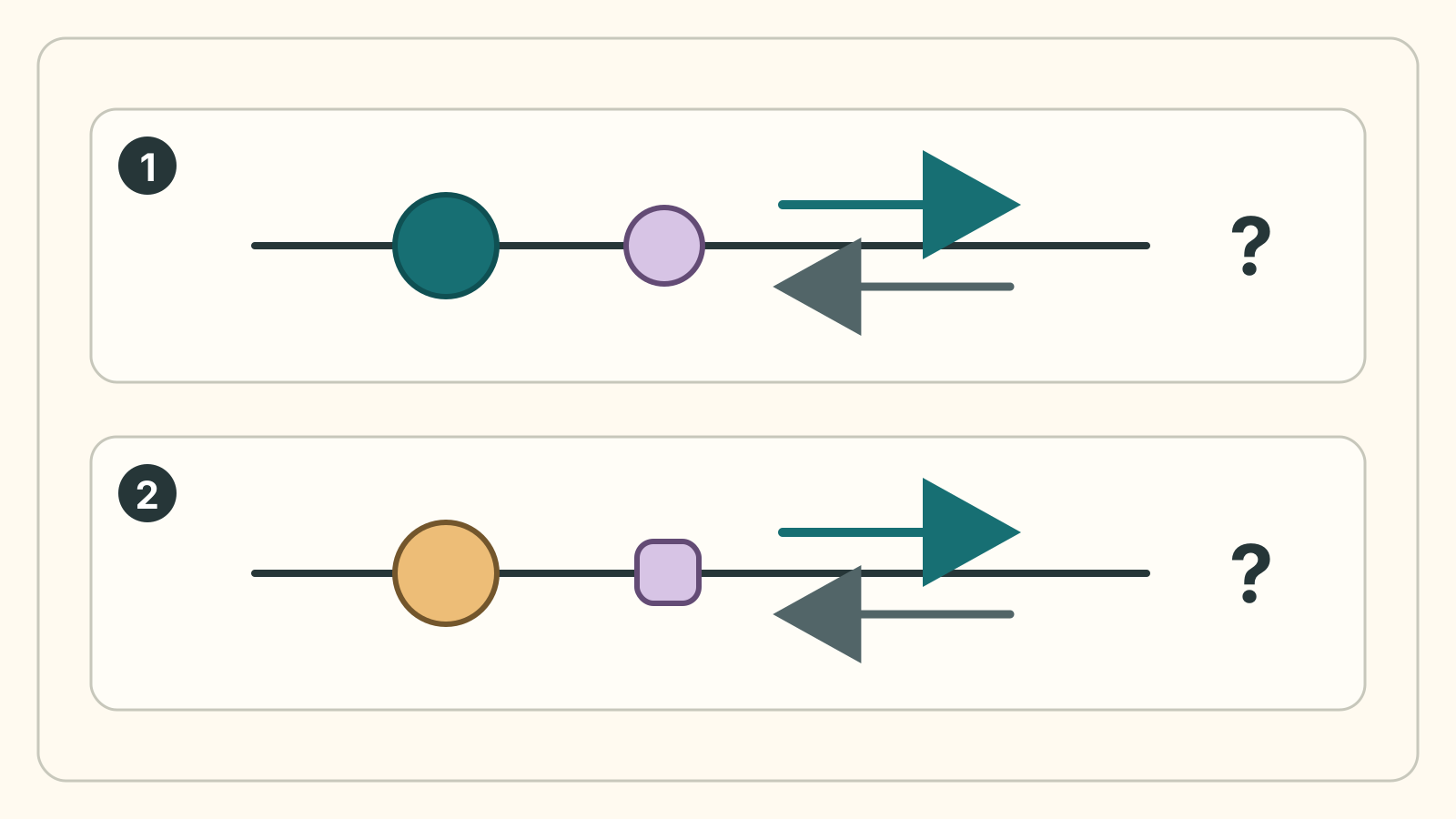
Detailed description of this diagram
Two stacked cards each contain a categorical lane and opposing entry/exit arrows. The upper tokens stand for east-side wrestler and gyoji roles; the lower tokens stand for west-side wrestler and judge roles, as mapped only by this caption. Page position, line length, arrows and tokens encode no compass direction, doorway, dressing room, dohyo, width, distance, slope, crowd condition, accessible route, person order or spectator permission.
Graphic: SUMO ARCHAEOLOGY CLUB · Figure source 1 · Figure source 2 · Figure source 3
A bout extends beyond the dohyo
A wrestler appears as his turn approaches, walks towards the ring, competes, bows and returns along his assigned side. Television coverage may cut away before the full walk, so you will not see it after every bout. When the passage remains in shot, however, it offers a quieter contrast to the collision on the dohyo.
Keep the observation modest. A downturned face does not prove disappointment, and an unusual step is not evidence of an injury. Unless the Association issues health information, do not diagnose a wrestler from the walk. You can safely notice pace, posture and the transition from the intense ring to the retreating back without claiming to know his private state.
Why is it called a “flower path”?
Japan Sumo Association explainers published in 2023 and 2024 connect the name to Heian-period *sumai-no-sechi*, where participants appeared with artificial flowers in their hair. The 2023 explainer identifies *aoi* on the left and *yugao* on the right. This is the Association’s reported origin, not evidence for modern venue geometry or operation.
You should not expect those flowers in a modern arena. The dated Association account offers one way to connect an older entrance story with the modern passage name; it does not establish today’s layout or the only possible historical interpretation.
Watch the same passage during ring-entering ceremonies
Makuuchi ring-entering ceremonies are also divided into east and west groups. Wrestlers emerge in a line, led according to the ceremony’s order, rather than appearing one at a time for an individual bout. Do not try to identify every face on your first viewing. Find the passage from which the first wrestler appears, then follow the procession towards the ring.
One wrestler before a contest and a whole line before dohyo-iri use the same route differently. The hanamichi becomes an anchor that helps separate the pieces of the arena programme without making them feel disconnected.
It is not a spectator shortcut
This article describes official movement by ring personnel. It does not establish that visitors may enter the hanamichi, approach wrestlers, wait beside it or claim a photography position. Venue barriers and staff instructions apply on the day. Never infer access from the historical name or from a camera angle.
Distance does not prevent good observation. From your authorised seat—or through the broadcast frame—connecting a called name to the side where the wrestler appears is already enough to make the arena legible.
One small discovery for the next bout
Choose either the east or west wrestler and follow his whole visible journey: the yobidashi’s call, the appearance in the passage, the steps onto the dohyo, the bow, the contest and the return.
If you watch only the winning technique, sumo may seem to end in seconds. Include the hanamichi and every bout has a before and an after. Once “east” and “west” become paths travelled by people rather than columns in a table, the arena begins to feel three-dimensional—even on a screen.
Evidence limits and event-day fallback
Confirmed fact: A 2024 Association explainer says east-side wrestlers and gyoji use the east hanamichi, while west-side wrestlers and judges use the west. Its 2023/2024 explainers connect the name to Heian-period sumai-no-sechi and artificial hair flowers.
What remains unknown: Those dated explainers do not settle every current venue’s doorway, width, slope, barrier, dressing-room route, exceptions, public access, photography, accessible route or live order. Expression does not establish emotion or injury.
Reasoned inference: Linking an official side label to one person’s outward and return movement may give a bout an entrance and exit. Confidence is medium; it is not a modern floor plan or an account of private condition.
Editorial suggestion: From the seat or official coverage, record only the called side and visible return. Follow staff restrictions and never treat the hanamichi as a shortcut, contact point or priority photography place.
Fallback: If it is hidden, current operation differs, or access/photography is unclear, do not approach; return to signs, staff and official coverage. The visible portion alone is enough for the observation.
Sources
- Japan Sumo Association quizzes No.846, No.848 and No.526 (verified 3 September 2026).
Source links used for verification
Each link was used for the corresponding claim in this article; inclusion is not a blanket endorsement of the whole page.
Article verified:
- Japan Sumo Association quiz No.846: users of the east and west hanamichiHistorical primary source (record from that period)
- Japan Sumo Association quiz No.848: origin of hanamichiHistorical primary source (record from that period)
- Japan Sumo Association quiz No.526: hanamichi etymologyHistorical primary source (record from that period)