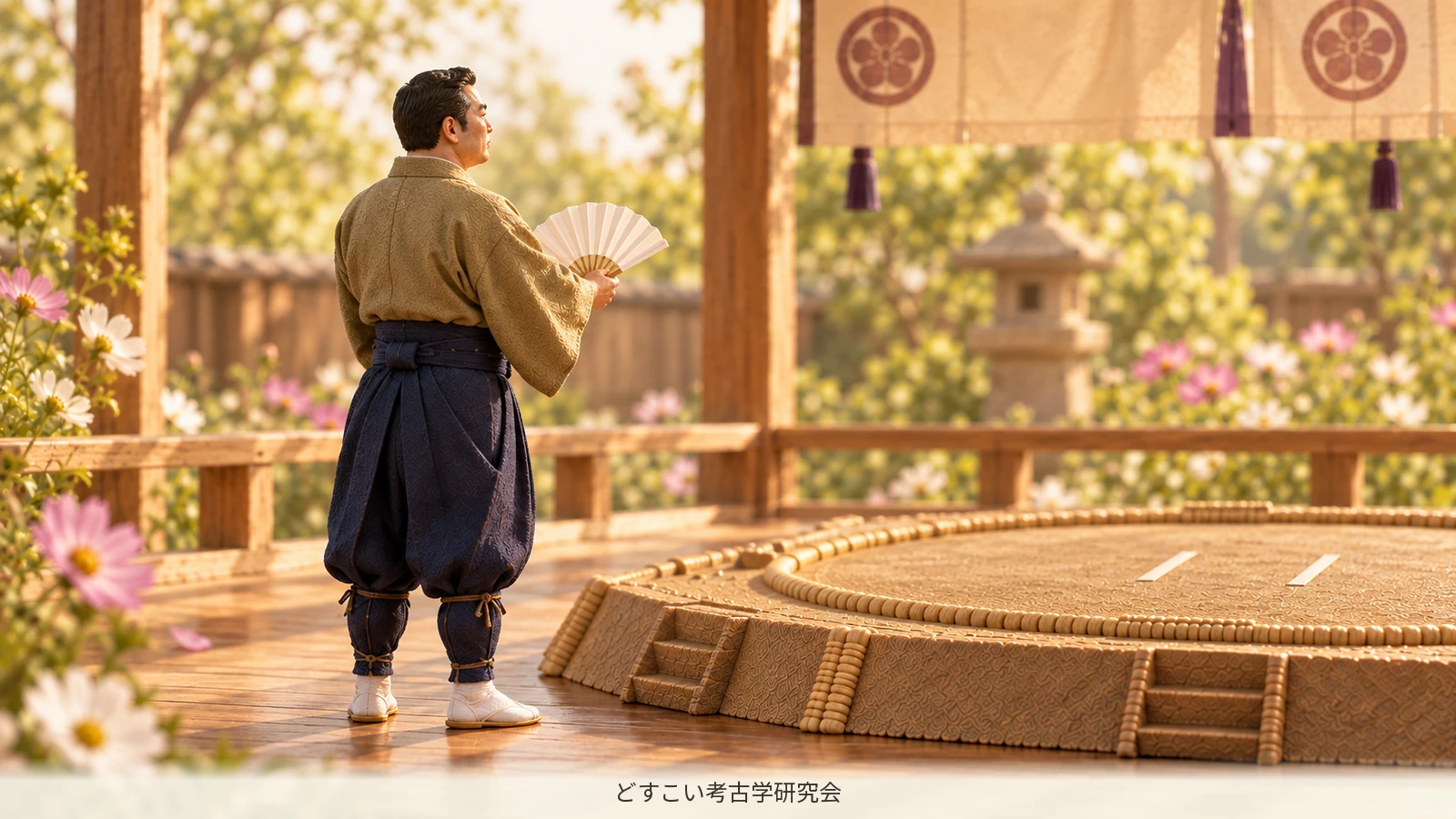
The yobidashi does not always introduce the East wrestler first. According to the Japan Sumo Association, East is called first on odd-numbered tournament days and West is called first on even-numbered days. The printed bout sheet handed out at the venue follows the same alternation: East occupies the upper line on odd days and West on even days. Being called first does not make that wrestler higher ranked or more favoured.
The yobidashi’s elongated melody can make even a familiar shikona difficult to catch. Then, on a second day of viewing, the order seems to reverse. Nothing has gone wrong with the banzuke. A very simple count—odd day or even day—is moving quietly underneath the ceremony.
East first on odd days, West first on even days
The Association’s official quiz No.1316 gives the rule directly:
- Day 1, 3, 5 and the other odd-numbered days: East is called first.
- Day 2, 4, 6 and the other even-numbered days: West is called first.
The order is not based on whether the tournament is in Tokyo or another host city. It is not awarded to the side with more wins on the previous day. Once you know the numbered day of the 15-day honbasho, you can predict which side the yobidashi will begin with.
The printed bout sheet flips too
The same official explanation says that the venue’s printed torikumi sheet places East on the upper line on odd days and West on the upper line on even days. A visitor comparing two sheets may therefore see the sides swap vertically. It is a feature, not automatically a printing error.
This fact should not be extended to every television graphic, streaming interface or website. The Association’s page specifically identifies the yobidashi’s calling order and the bout sheet distributed at the venue. A media service may design its own screen differently.
This is separate from East’s banzuke precedence
On a banzuke, East is placed above West when two wrestlers share the same rank and numbered position. The odd-even calling sequence serves a different purpose. When West is introduced first on an even day, the West wrestler has not suddenly moved above the East wrestler in rank.
Keep two ideas in separate boxes:
- Banzuke East and West: precedence within the same rank and number.
- Calling order: an alternating part of the day’s presentation.
That distinction prevents a small sound cue from becoming a large ranking misunderstanding.
Listen for only one introduction
Yobidashi do far more than call names; their work also supports the ring and the day’s progression. The introduction from the dohyo, however, is the easiest place for a first-time visitor to find them.
Before one bout, check whether it is an odd or even day and make a tiny prediction. On an odd day, listen for East first. You do not have to recognise the full shikona. Catching the side is enough. When the second name follows, the bout has moved from a printed pairing into the living arena.
If you watch on two consecutive days, the reversal is even more satisfying. The side that came first yesterday comes second today; the paper changes its upper line; the wrestlers’ actual ranks have not changed. Sumo marks the passing of a tournament day in a place many viewers never think to listen.
Sources
- Japan Sumo Association quiz No.1316 and official yobidashi roster (verified 3 September 2026).
Source links used for verification
Each link was used for the corresponding claim in this article; inclusion is not a blanket endorsement of the whole page.
Article verified:
- Japan Sumo Association quiz No.1316: East-West calling and bout-sheet orderHistorical primary source (record from that period)
- Japan Sumo Association yobidashi rosterPrimary source (as checked for this article)