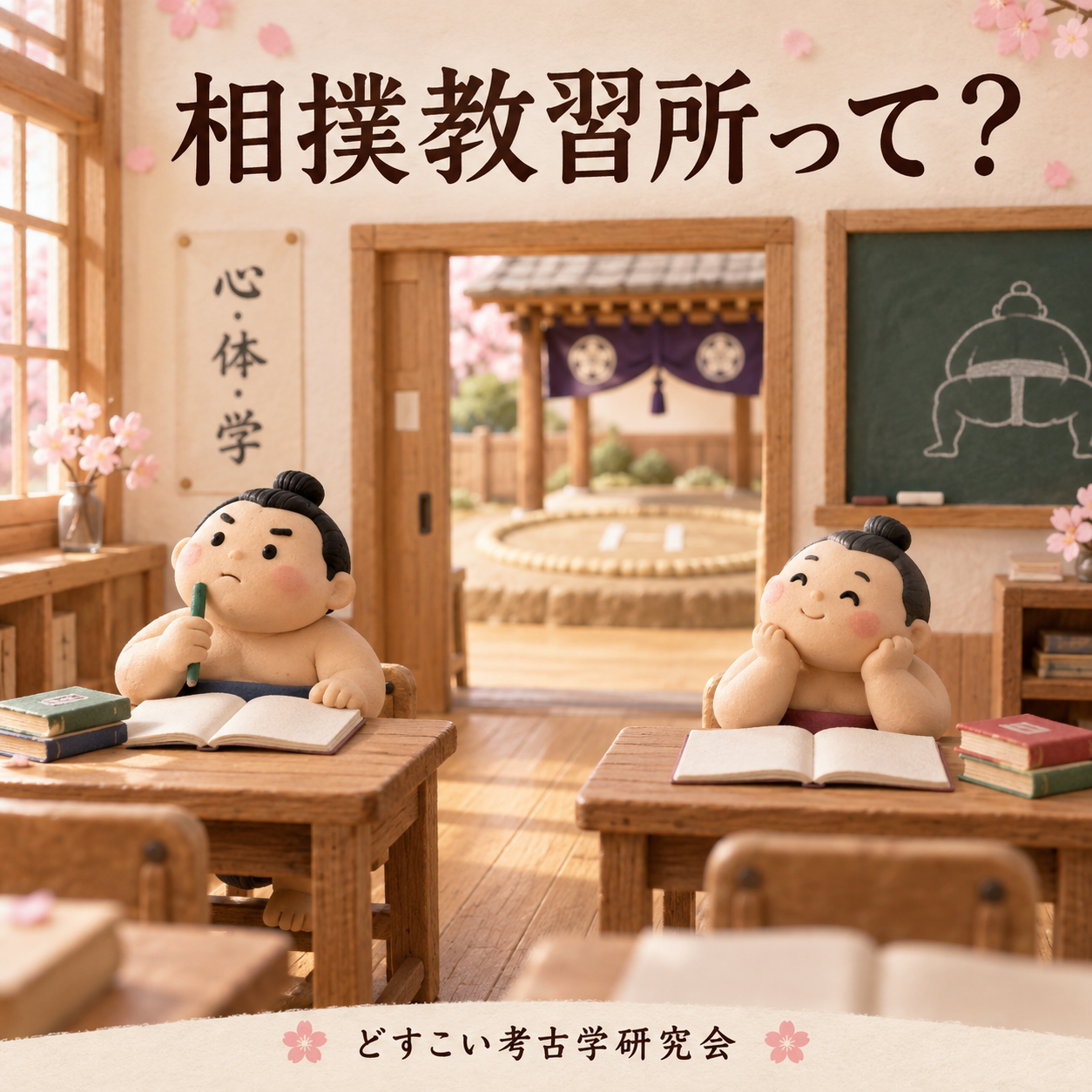
Newly registered wrestlers attend the Japan Sumo Association’s training school for six months, combining practical sumo instruction with classroom education. The Association’s 2026 plan lists sports medicine, Japanese and calligraphy, social studies, guidance on conduct and speaking, and sumo history. It is not a school devoted only to making bodies stronger.
Shiko and collision practice were the obvious subjects in my imagination. The surprise was calligraphy. Then the connections began to appear: the narrow writing of a banzuke, ceremonial language, and the words a wrestler chooses after a bout. A person entering sumo is learning how to inhabit a culture as well as how to win on its clay.
Who attends?
The Association’s 2026 business plan says that, at each of the six annual tournaments, wrestlers newly registered as recruits receive six months of instruction at the sumo training school. This is not an open course for tourists or applicants waiting to take the entry examination. It follows official registration.
The wrestler also belongs to a stable. School does not replace heya training and development; the shared curriculum runs alongside life within the stable system.
Practical and classroom subjects
For 2026, the listed classroom subjects include sports medicine, Japanese with calligraphy, social studies, guidance on conduct and speaking, and sumo history. An earlier official explainer also lists sumo folk singing among the subjects used at the time. Curricula can change, so the current annual plan is the anchor rather than a timeless promise of every class.
Practical teaching covers sumo fundamentals. The current plan says development includes manners and procedures on the dohyo, tachiai instruction and conduct in daily life. Technique is not separated from participation in a traditional professional institution.
Six months is a real course
An Association feature explains that inadequate attendance can result in failing the course. The six-month period is therefore more than a ceremonial clock that ends automatically because someone joined a stable.
That does not give outsiders permission to speculate about an individual wrestler’s attendance or classroom results. Injury or absence from a tournament is not evidence of a school record unless the Association or wrestler makes that connection public.
New specialists also share part of the education
The 2026 plan says newly hired gyoji, yobidashi and tokoyama also study sumo history. Their specialised practical instruction is handled by the professional groups for referees, ring attendants and hairdressers respectively.
People preparing for different jobs therefore receive a common historical foundation. It is a quiet explanation for why a single bout feels coordinated: the participants do not only learn separate movements; they are introduced to the same inherited world.
Add a classroom to the next jonokuchi bout
When you notice a new shikona in the smallest print near the bottom of the banzuke, imagine more than morning practice. That wrestler may also be in the middle of months involving handwriting, sports medicine, history and speaking.
There is a desk behind the dohyo. Knowing that changes a recruit from an unfinished version of a famous wrestler into someone actively receiving sumo with both body and mind. A very early bout can then feel like the public edge of a much wider education—and that is reason enough to arrive sooner.
Sources
- Japan Sumo Association, 2026 business plan (checked 2 September 2026)
- Japan Sumo Association, Sumo Quiz No. 796 (published 14 March 2024; checked 2 September 2026)
- Japan Sumo Association, Sumo Quiz No. 1195 (published 17 April 2025; checked 2 September 2026)
Source links used for verification
Each link was used for the corresponding claim in this article; inclusion is not a blanket endorsement of the whole page.
Article verified:
- Japan Sumo Association 2026 business planPrimary source (as checked for this article)
- Japan Sumo Association Sumo Quiz No. 796Historical primary source (record from that period)
- Japan Sumo Association Sumo Quiz No. 1195Historical primary source (record from that period)