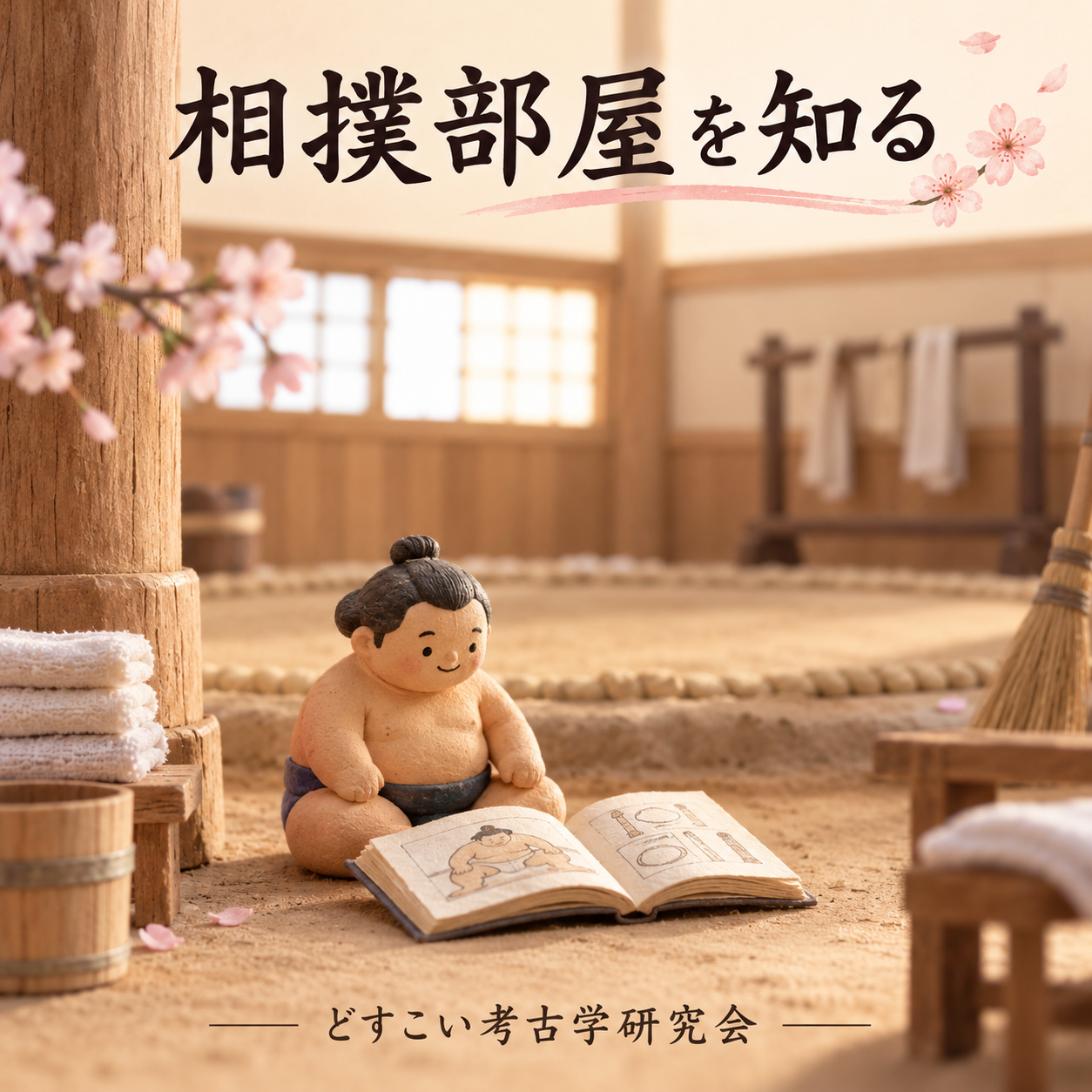
A sumo stable, or heya, is the basic unit to which a wrestler belongs under a stablemaster. It combines training, development and daily life; it is not the tournament venue, a public gym or a visitor attraction. If sumo first looks like a collection of one-on-one contests, the stable is the structure that reveals the team behind each person on the dohyo.
Only one wrestler crosses the boundary of the ring for a bout. Behind that entrance are people who train on the same clay, an elder responsible for instruction, and specialists such as the hairdressers who maintain wrestlers’ topknots. Learning about a heya does not take attention away from the individual. It gives that individual a place in a longer story.
A wrestler enters sumo through a stable
The Japan Sumo Association’s official entry guide says that an applicant submits the required wrestler examination documents through the elder who is the master of the stable he wishes to join. Passing the medical and entry examinations and being registered are what make him an official wrestler.
That detail matters. Joining professional sumo is not simply an athlete applying to a central league and then choosing a gym. The relationship with a stable and its master is present at the entry point.
The Association’s current stable directory provides an official route into this structure. Individual stable pages identify the stablemaster, other elders and wrestlers; some also list other affiliated Association members. Rosters can change, so a current directory is safer than a printed guide or travel post when you want to know where someone belongs now.
“Stable” means an organisation as well as a building
English can make heya sound like a barn or a training facility. A physical training ring and living space are important, but for a spectator the clearest meaning is an affiliation and coaching unit.
The stable name beside a wrestler’s official profile tells you who else shares that institutional home. Open the stable page and you may recognise another wrestler—or discover that a former wrestler you once watched is now the master. This is one of the easiest ways to turn the banzuke from a ranking list into a map of relationships.
Addresses, masters and rosters can change. We therefore do not freeze a head count into this evergreen explanation. Use the Association directory for current membership, especially before a visit or when an affiliation is central to a news story.
A heya is not the same as an ichimon
Two Japanese terms are often translated as groups. A heya is the everyday unit to which a wrestler belongs. An ichimon is a broader grouping of several stables. A beginner does not need to memorise the larger alliances in order to enjoy a tournament. Start with one stable and one wrestler.
That distinction also prevents a common mistake: wrestlers connected through a larger group do not thereby share the same daily stable. Keep the official affiliation attached to the individual profile.
A listed address is not permission to visit
The stable directory publishes locations, but an address is not an invitation. The directory does not establish whether a stable accepts visitors, and this guide does not assume a universal walk-in system. Check a current notice from the stable or an explicitly authorised organiser for reservations, dates, arrival instructions and rules on speech and photography.
A heya is a home and workplace. Waiting at an entrance because a map pin is public can interfere with the very environment a visitor hopes to see. The respectful route is the authorised route.
Watch one affiliation in your next bout
The next time one wrestler catches your attention, look up just one field: stable. Then open that stable’s official page and find one more name. There is no test and no need to memorise an entire roster.
When that wrestler next steps onto the dohyo, you can connect the individual to a verified stable affiliation. Do not invent the private morning the broadcast cannot show; the directory establishes membership, not a scene or a cause of victory. That small change in perspective is the best first reason to learn what a sumo stable is.
Sources
- Japan Sumo Association, stable directory (checked 2 September 2026)
- Japan Sumo Association, guide to becoming a wrestler (checked 2 September 2026)
- Japan Sumo Association, departmental assignments (checked 2 September 2026)
Source links used for verification
Each link was used for the corresponding claim in this article; inclusion is not a blanket endorsement of the whole page.
Article verified:
- Japan Sumo Association stable directoryPrimary source (as checked for this article)
- Japan Sumo Association guide to becoming a wrestlerPrimary source (as checked for this article)
- Japan Sumo Association departmental assignmentsPrimary source (as checked for this article)