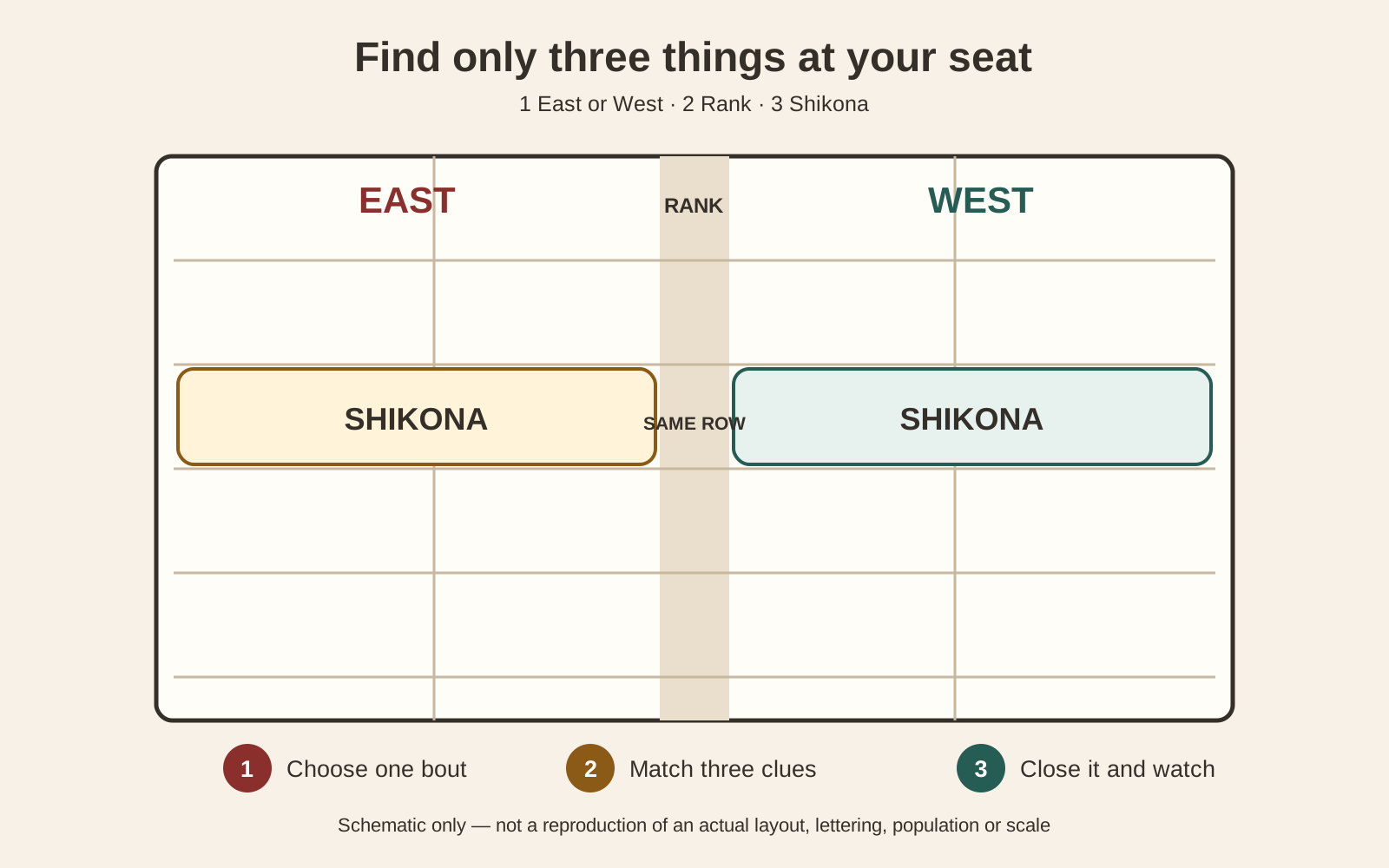
You do not need to decode an entire banzuke during your first tournament. Choose one wrestler from today’s bouts and find only three things on the ranking sheet: his east or west side, his rank and his shikona. Then close the paper and watch him.
A banzuke compresses the professional hierarchy onto one sheet. Position and letter size carry information, so an unfamiliar page can look more like a wall than a map. The goal at your seat is not an examination. One link between the page and the dohyo is enough to make it useful.
Detailed description of this diagram
An abstract page is divided into east, a narrow central rank column and west. One shikona position on each side is highlighted on the same row. Three steps below say to choose a bout, match the clues and close the sheet to watch. No actual calligraphy, wrestler name, population or tournament layout is copied.
Graphic: SUMO ARCHAEOLOGY CLUB · Figure source 1 · Figure source 2
Start with today’s bouts
The banzuke shows tournament ranks; the day’s bout list and official results show the pairings for that date. They are connected but not interchangeable. Begin with today’s list and select one name. If you cannot read the kanji, matching the visual shape is a valid first step.
The Japan Sumo Association’s current banzuke table and tournament results are the primary checks. A wrestler’s name on the banzuke does not by itself prove that he will compete that day. Keep ranking, scheduled pairing and any current absence information as separate facts.
East or west
The ranking is divided into east and west. When two wrestlers share the same named rank and number, east is treated as the higher position. A first-time visitor does not need to memorise every consequence. Simply find which side contains the person you chose.
Do not casually equate banzuke east and west with the physical direction of your arena seat. One is a ranking structure; the other is where you are sitting.
Rank
Near the name is the present rank: yokozuna, ozeki, sekiwake, komusubi or a numbered maegashira position in the top division, with further divisions below. Reading one line such as “maegashira five” is already useful. Rankings change from tournament to tournament, so use the banzuke for the event you are watching rather than an old image found in search.
Shikona
Trace the ring name with a finger. If the calligraphy is difficult, compare the first and last characters. Once you find it, write the date and one plain observation beside it: low, fast, moved right, recovered at the edge. Official terminology can wait.
Know when to close the paper
Finding every name while missing the bouts defeats the purpose. After locating one wrestler, close the banzuke and listen as the yobidashi stretches that name through the arena. A pattern of ink suddenly acquires a body, a voice and a wave of applause.
Open the sheet again afterwards. The same name may seem slightly larger—not because the printing changed, but because one space on the page now belongs to someone you have seen. Reading a banzuke can begin by making one familiar island at a time.
If You Cannot Find the Name at Your Seat
The method here is to compare two separate sources—the official banzuke for that tournament and the official bout list for that day—and match the shikona character by character. We do not infer an entrance, seat location or wrestler’s arrival direction from the east/west placement on the ranking sheet. If the calligraphy will not match, an absence marker is unclear, or paper and screen appear to disagree, show both to venue staff instead of guessing. You can still enjoy the bouts without solving the sheet: close it for the moment and choose one wrestler from the yobidashi’s call or the arena display.
Sources
- Japan Sumo Association official banzuke table and tournament bout results, checked September 3, 2026. Ranking and current participation are treated as separate facts.
Source links used for verification
Each link was used for the corresponding claim in this article; inclusion is not a blanket endorsement of the whole page.
Article verified:
- Japan Sumo Association official banzuke tablePrimary source (as checked for this article)
- Japan Sumo Association official bout resultsPrimary source (as checked for this article)