Choose the Hakata Machiya Folk Museum when you want one compact encounter with how Hakata people lived, worked and celebrated—not another checklist attraction. Put it on the day before or after your sumo ticket, or before a deliberately later arena arrival. If your aim is to see the lower divisions from the morning, keep the museum for another day. No official source gives a door-to-door time from Fukuoka Kokusai Center, so the trip is not sold here as a “quick walk.”
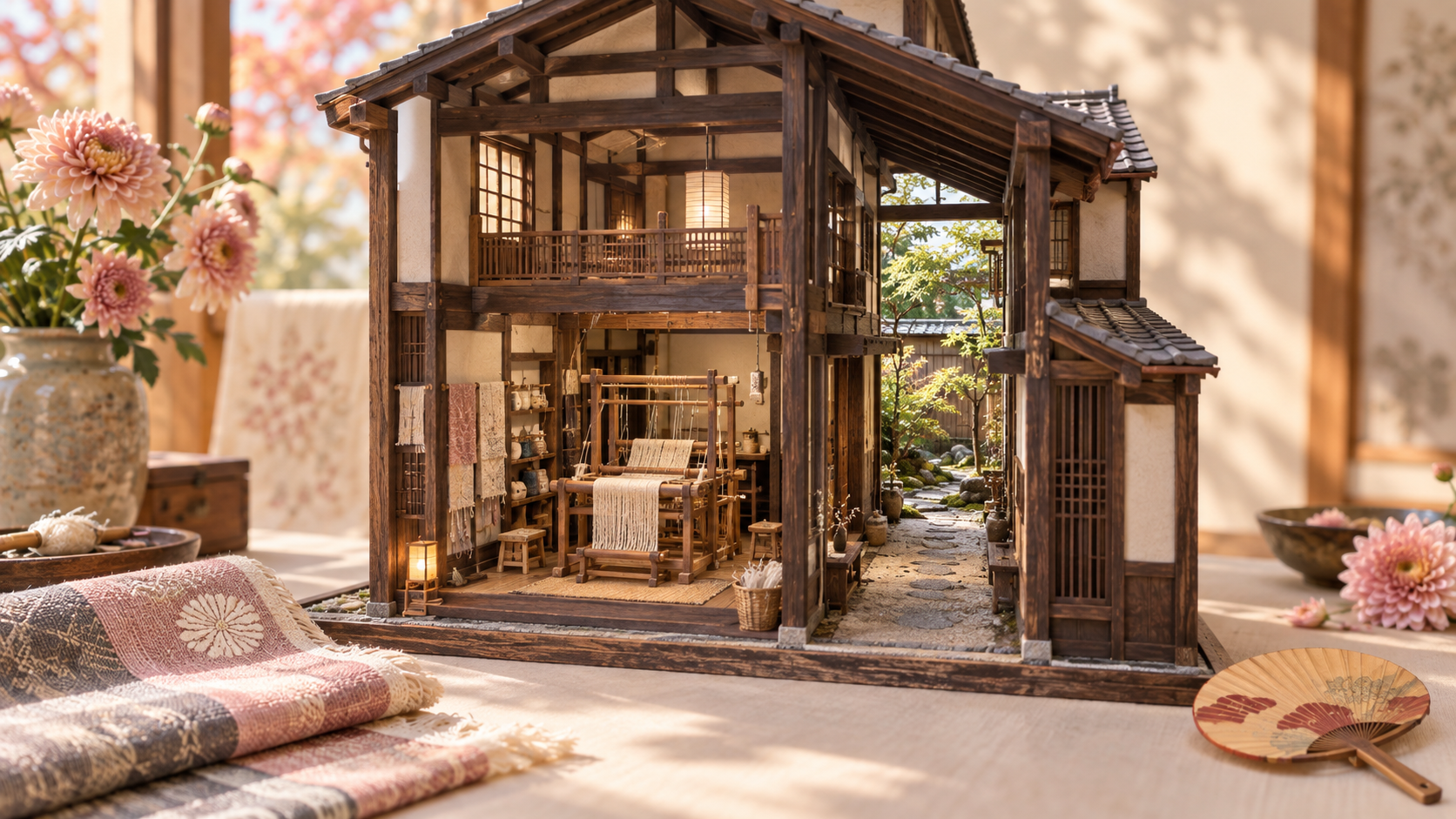
The museum’s own site describes three buildings centred on Hakata life in the Meiji and Taisho periods. Its machiya building was constructed in the mid-Meiji era as both the home and workshop of a Hakata-ori textile producer, then relocated and restored. It is a Fukuoka City cultural property. The exhibition building covers local history, town organisation, festivals, household objects and demonstrations of traditional crafts.
The November 2026 facts
Normal autumn hours are 10:00 a.m.–6:00 p.m., with final admission at 5:30 p.m. The museum’s published 2026–27 calendar lists Tuesday, November 24 as the November closing date. That falls just after the tournament, but it should still be rechecked on November 1 and the visit date in case of an exceptional closure.
Exhibition admission is currently ¥200 for an adult and free for elementary and junior-high school students. Group and resident-based concession rules require the specified proof. Hands-on craft sessions have their own schedules, capacity and possible fees; a museum ticket does not guarantee that a chosen activity is running.
Fukuoka City’s tourism listing gives a five-minute walk from Gion Station and three minutes from Kushida Shrine Station. Those are station approaches, not total times from the arena. Recalculate the complete journey with the day’s services, rain, luggage and your firm arena departure deadline.
Follow one tiny person
The most contagious detail may be the smallest. The museum’s official description points to a festival model filled with figures about the size of a fingertip, each made with a different expression. Instead of trying to decode the whole festival, choose one person and ask what they might be watching.
There is no need to invent a historical relationship between this museum and professional sumo. The visual lesson is enough. When you reach the arena, let your gaze leave the two wrestlers for a moment. Notice an announcer, referee, ringside judge or a single face in the crowd. A bout begins to feel like an event made by many people, not an isolated collision.
Look up once inside the house
The official museum guide highlights the contrast between a narrow street frontage and a tall interior void, plus a passage that runs through towards the garden. Pause where the outside width and inside height stop matching your expectation. That spatial surprise is more memorable than racing through every panel.
If time remains, compare Meiji- and Taisho-era street photographs with the modern views, listen to Hakata dialect, or watch whichever craft demonstration is actually scheduled. Treat these as optional layers, not obligations.
A realistic stop, not an endurance test
This visit does not fit well when the group is already tired, a child needs a predictable rest, airline luggage is still with you, or you are trying to protect an early arena arrival. An editorial allowance of 60–90 minutes gives room for the exhibition and decisions, but it is not an official average visit duration.
Kushida Shrine is nearby and has its own short-visit guide. You may pair them, but do not force both into one hour. The stronger itinerary is the one in which a single small detail survives all the way to the next bout.
If the visit no longer fits
If the museum is closed, an activity is full or the onward journey has lost its margin, do not search for an unofficial entrance or compress the exhibition into a sprint. The fallback is to keep the arena or hotel route you already verified and move the museum to a different day. If you are already passing through the neighbourhood, observe only what is visible from a signed public route; that is a walk, not a claim that you experienced the museum.
If a demonstration you hoped for is unavailable, choose one object or room that is actually open. The purpose is to follow curiosity honestly, not to force the exact scene imagined before arrival.
Sources
- Hakata Machiya Folk Museum, admission/access, 2026 opening calendar and facility guide; checked September 2, 2026.
- Fukuoka City official tourism, Hakata Machiya Folk Museum; checked September 2, 2026.
Source links used for verification
Each link was used for the corresponding claim in this article; inclusion is not a blanket endorsement of the whole page.
Article verified:
- Hakata Machiya Folk Museum admission and accessPrimary source (as checked for this article)
- Hakata Machiya Folk Museum 2026 opening calendarPrimary source (as checked for this article)
- Hakata Machiya Folk Museum facilities and exhibitionsPrimary source (as checked for this article)
- Fukuoka City official tourism page for Hakata Machiya Folk MuseumPrimary source (as checked for this article)