The current Fukuoka price sheet lists a ¥10,000 wheelchair ticket including one companion. It does not establish the sightline, exact route, place for an additional companion or transfer procedure. Before buying, give the organiser four facts together: wheelchair type, total party size, whether a seat transfer is possible, and any rest or equipment requirement. That single conversation can prevent several disconnected assumptions.
Fukuoka Kokusai Center’s FAQ says wheelchairs are available for use inside the facility and asks visitors to consult the event organiser. This is not a promise that one will be reservable on a sumo date, nor is a loan chair the same thing as a wheelchair-space ticket. Ask separately about bringing your own chair and borrowing mobility assistance inside.
Confirm four seat details
- Does the listed wheelchair space cover exactly one user and one companion for this sale?
- How should any additional companion buy a nearby seat?
- Is transfer to a standard seat an available option, and what happens to the chair afterward?
- What is the event-day route between entrance, seat, accessible toilet and exit?
The official price sheet confirms the price and included companion, not aisle width, steps or view. A powered chair, reclining chair or attached medical equipment may require dimensions and power information. Do not let a generic seating diagram answer an individual access question it was not designed to answer.
A correct bus number is not the whole answer
The Sumo Association directs visitors to Nishitetsu buses from Hakata and Tenjin. Nishitetsu says it is introducing ramp-equipped and low-floor vehicles, but vehicles and operating conditions vary. Its current guidance asks passengers who want a ramp-equipped bus on a known date to consult the operating office or customer centre by the previous day.
The company also specifies wheelchair brakes, a safety belt and securing the chair with onboard equipment. Certain mobility devices and coach-style vehicles have different conditions. Confirm both the route and the suitability of the scheduled vehicle. For the return, keep a second plan such as a checked subway route, suitable taxi arrangement or overnight stay; a large event can change waiting conditions.
If the subway is your fallback
Fukuoka City Subway says every station provides a sequence of lifts from street level to the platform, although some use a lift in an attached facility. That is useful, but the final section to the arena is outdoors. A lift at the station does not prove a step-free, weather-protected path all the way to the seat. Review surfaces, crossings, rain and visibility for the actual route.
For lodging, compare lift access, doorway and bathroom layout, bed height, luggage handling and cancellation terms before price. Any commercial listings should be disclosed and filtered by the traveller’s access requirements, never ranked by commission.
Give the bout your full attention
After all the planning, choose one tiny moment that needs no specialist vocabulary. Watch the instant a foot touches the tawara at the ring edge: one wrestler tries to preserve a few centimetres while the other removes them. When the logistics have demanded extra work, that clean burst of attention can feel especially rewarding.
We will recheck the ticket method, organiser contact, entry route and Nishitetsu consultation process on September 18 and the day before attendance. Individual instructions from the organiser and transport operator take priority over this general guide.
Connect the journey before and after the seat
Before buying, place wheelchair dimensions, weight, manual or powered operation, attached equipment, transfer ability and full party size on one page. Then check the chain from home and boarding through station lifts, outdoor surface, admission, restroom, viewing position, exit and hotel or home. The price sheet establishes the ticket and one included companion, not this complete route.
On the day, agree on the assistance the wheelchair user wants. A companion should not improvise by lifting the chair or leaving removed equipment in a circulation route. If extra companions sit elsewhere, set communication and a meeting point. If Japanese is difficult, carry the chair information, seat reference and required facility as showable text. Rain, battery reserve, essential luggage and the post-event crowd are separate stages of the trip.
If the planned vehicle cannot take the chair, a step-free route is closed or the seat arrangement differs from the confirmed answer, do not bridge the gap with unsafe lifting or transfer. Ask the operator or organiser for a current alternative. If none can be confirmed, waiting for another service, changing the itinerary or abandoning the visit remains valid. This is conservative editorial advice, not an inference that priority boarding or a nearby replacement seat must exist.
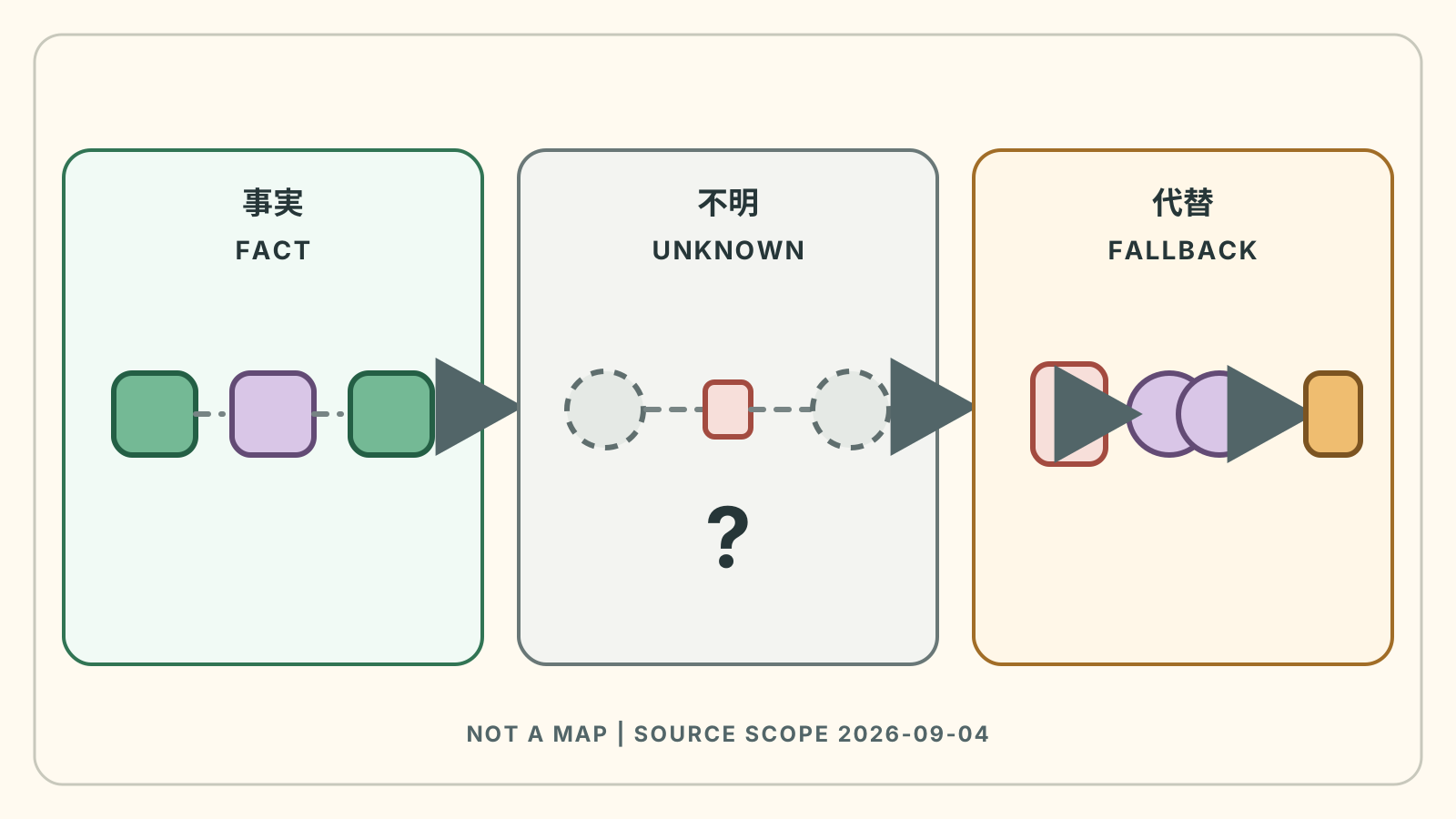
Detailed description of this diagram
The FACT card presents transport, venue and ticket as three separate check-domain boxes joined only by dashed lines. UNKNOWN puts a stop block and broken links between end tokens because vehicle, boarding, entrance, event operation, seat and companion continuity is not established by the sources. FALLBACK sequences a stop token, two companion-role rings and a confirmed-alternative box. It depicts no body, wheelchair pictogram, station, lift, gradient, kerb, gate, aisle, seat position, assistance entitlement or dimensions.
Graphic: SUMO ARCHAEOLOGY CLUB · Figure source 1 · Figure source 2 · Figure source 3 · Figure source 4
Evidence limits and event-day fallback
Confirmed fact: The current price sheet gives the Fukuoka wheelchair-ticket price and one included companion; venue, bus, subway and Association pages give ordinary facility/boarding/access conditions. Individual end-to-end fit is separate.
What remains unknown: Sightline/dimensions, extra companions, transfer, chair/attachments, loan stock, service-specific boarding, step-free route to seat, restroom and return help require individual confirmation.
Reasoned inference: Linking chair, person, companion, transport, seat, restroom and exit on one question sheet is likely to expose gaps between separate ‘accessible’ labels. Confidence is high; fit and priority boarding are not guaranteed.
Editorial suggestion: With the user, record dimensions, weight, powered/manual operation, attachments, transfer, wanted assistance and total party, then show the operator. This is not medical suitability or handling instruction.
Fallback: If vehicle, lift, surface or seat differs from the confirmed answer, do not fill the gap with unwanted lifting/transfer. Ask for a live alternative; if none is confirmed, change service, route or date, or stop.
Sources
- Japan Sumo Association, Fukuoka admission prices and November 2026 access; checked September 2, 2026.
- Fukuoka Kokusai Center FAQ; checked September 2, 2026.
- Nishitetsu wheelchair/bus guidance and Fukuoka City Subway accessibility information; checked September 2, 2026.
Source links used for verification
Each link was used for the corresponding claim in this article; inclusion is not a blanket endorsement of the whole page.
Article verified:
- Japan Sumo Association Fukuoka admission pricesPrimary source (as checked for this article)
- Fukuoka Kokusai Center FAQPrimary source (as checked for this article)
- Nishitetsu bus guidance for wheelchairs and strollersPrimary source (as checked for this article)
- Fukuoka City Subway accessibility facilitiesPrimary source (as checked for this article)
- November 2026 Fukuoka tournament accessPrimary source (as checked for this article)