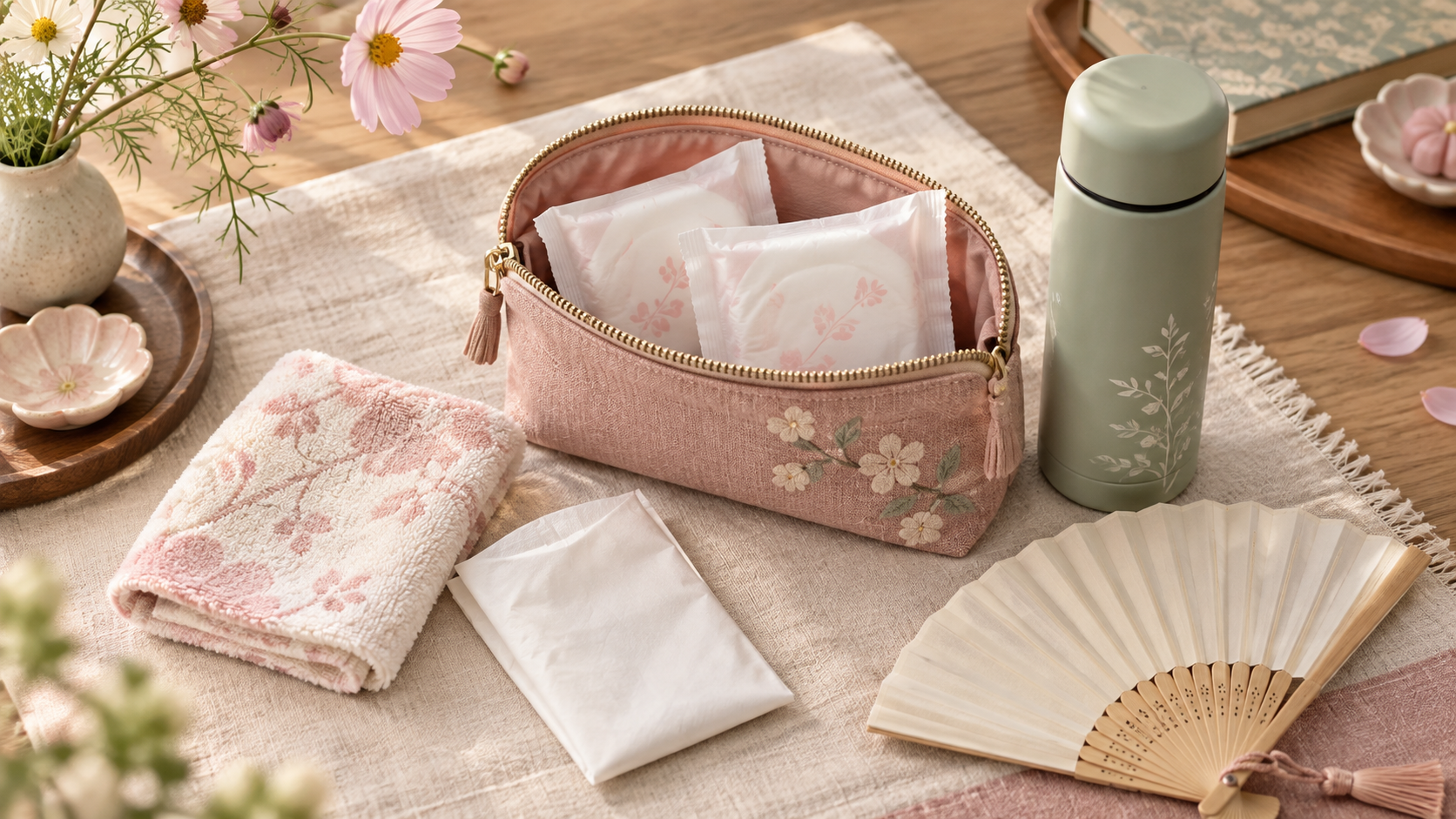
Bring the menstrual products you normally use with a modest reserve, identify the nearest restroom and a backup after entry, choose a change interval, and decide what would make you leave early. The September 2026 official information we retrieved does not confirm onsite menstrual-product sales, a dedicated rest area or the type of disposal facility available. Do not make “I can buy it inside” the only plan.
Periods and symptoms vary widely. This guide does not prescribe one product or medicine. It puts a potentially long spectator day around established personal care rather than asking personal care to fit the ticket.
Separate a mapped restroom from today’s route
The official Kokugikan floor plan includes symbols for men’s, women’s and accessible multipurpose restrooms. The file currently available is labelled for the May 2026 tournament, however. It does not confirm which September doors are open, how long a queue will be or what disposal equipment will be present.
After entry, show your seat number and ask for the nearest restroom plus another option if it is busy. Remember the arena side—shomen, mukojomen, east or west—and one landmark for returning. Choose a change point before the bout you most want to see instead of waiting until the need is urgent.
Use familiar supplies
Absorbency, skin comfort and suitable duration are personal. An event day is not an ideal time to test an unfamiliar product simply because it was advertised as “all day.” Pack what you know works and include an opaque disposal bag in case the available bin arrangement is unclear. Follow signs and staff directions for disposal.
We do not claim that an arena shop sells a certain brand or distributes free products. This article also carries no product affiliate links. Reliable preparation matters more than turning a private concern into a shopping list.
Do not let the ticket price decide whether pain is tolerable
A health-information service commissioned by Japan’s Ministry of Health says that premenstrual or menstrual symptoms can sometimes be associated with a medical condition. It advises early consultation with a gynaecology service when pain is severe or something feels abnormal.
A venue guide cannot determine the cause of pain or select medication. Follow the instructions for any prescribed or over-the-counter medicine and professional advice. Do not try a new medicine because an article recommends it. Unusual bleeding, pain, dizziness or another significant change belongs in a medical decision, not a calculation of how many bouts remain.
Preserve a route home
September rules permit one re-entry, so going outside repeatedly cannot be the default rest plan. Ask on arrival where to request a seated break or medical help if required, but this article does not promise a dedicated public rest area.
Plan the journey to the station and accommodation, not merely the arena exit. A solo visitor may choose to share an expected return time with a trusted person. With a companion, no detailed disclosure is required: “If I use this signal, we leave after the bout” can be enough.
A restroom break does not break the sumo day
Leaving the seat can feel like losing the programme. Yet a tournament day is full of small restarts: the ring is swept, salt is reset and the next names are called. When you return, watch the yobidashi’s broom for one cycle. You can re-enter the attention of the day there. A complete experience does not require remaining in one seat from beginning to end.
Personal checklist
- Familiar supplies plus a reserve
- Opaque disposal bag
- Nearest and backup restroom
- A planned change interval or programme marker
- A clear condition for leaving
- Personal medical instructions and an emergency contact
A small contingency line from entry to home
The night before, pack familiar products, a reserve and—if useful—a small bag for used items and a change of clothing, all within the assigned-space limit. Personal medicine and clinical decisions follow the person’s own plan; this article does not recommend a product or dose. After entry, confirm a restroom, second option, exit and route home, then use a personal interval for changing or posture adjustment before the body is struggling.
A solo visitor should be able to carry the ticket phone, money and essentials in one departure. With a companion, agree on a simple signal for “restroom” or “I am leaving” without requiring a detailed explanation. When childcare or assistance is also involved, decide who takes the child or bag so the menstruating person’s needs are not postponed.
Onsite product sales, disposal container, changing place and rest-room access remain unconfirmed. If a needed facility is absent, clothing is stained, or pain and health change, do not let embarrassment or ticket cost force endurance. Ask staff what is currently usable and leave early or go home when needed. This does not predict symptoms; it is an editorial fallback for protecting body and dignity under uncertainty.
Sources
- Japan Sumo Association, Kokugikan floor map, checked September 3, 2026. The retrieved PDF is labelled May 2026 and is not treated as a September operating guarantee.
- Japan Sumo Association, September 2026 Tokyo spectator notice, checked September 3, 2026, for re-entry and movement rules.
- Japan Ministry of Health commissioned women’s-health information on menstruation, checked September 3, 2026, for guidance on severe pain and unusual symptoms.
Source links used for verification
Each link was used for the corresponding claim in this article; inclusion is not a blanket endorsement of the whole page.
Article verified:
- Japan Sumo Association Kokugikan floor map labelled May 2026Historical primary source (record from that period)
- Japan Sumo Association September 2026 Tokyo spectator noticePrimary source (as checked for this article)
- Japan Ministry of Health commissioned information on menstruationPrimary source (as checked for this article)