
On a Japan Sumo Association wrestler profile, start with the current rank, stable and date of the data. Then read the shikona history and promotion milestones before comparing “preferred techniques” with the separate breakdown of winning techniques from the most recent six tournaments. You do not need to absorb every number at once.
An official profile can look like a wall of height, weight, dates, records and Japanese terms. That density is useful, but it is not an entrance exam. Four small stops turn the page into something better: a way to give one wrestler a past, a home and a recognisable movement before the next bout begins.
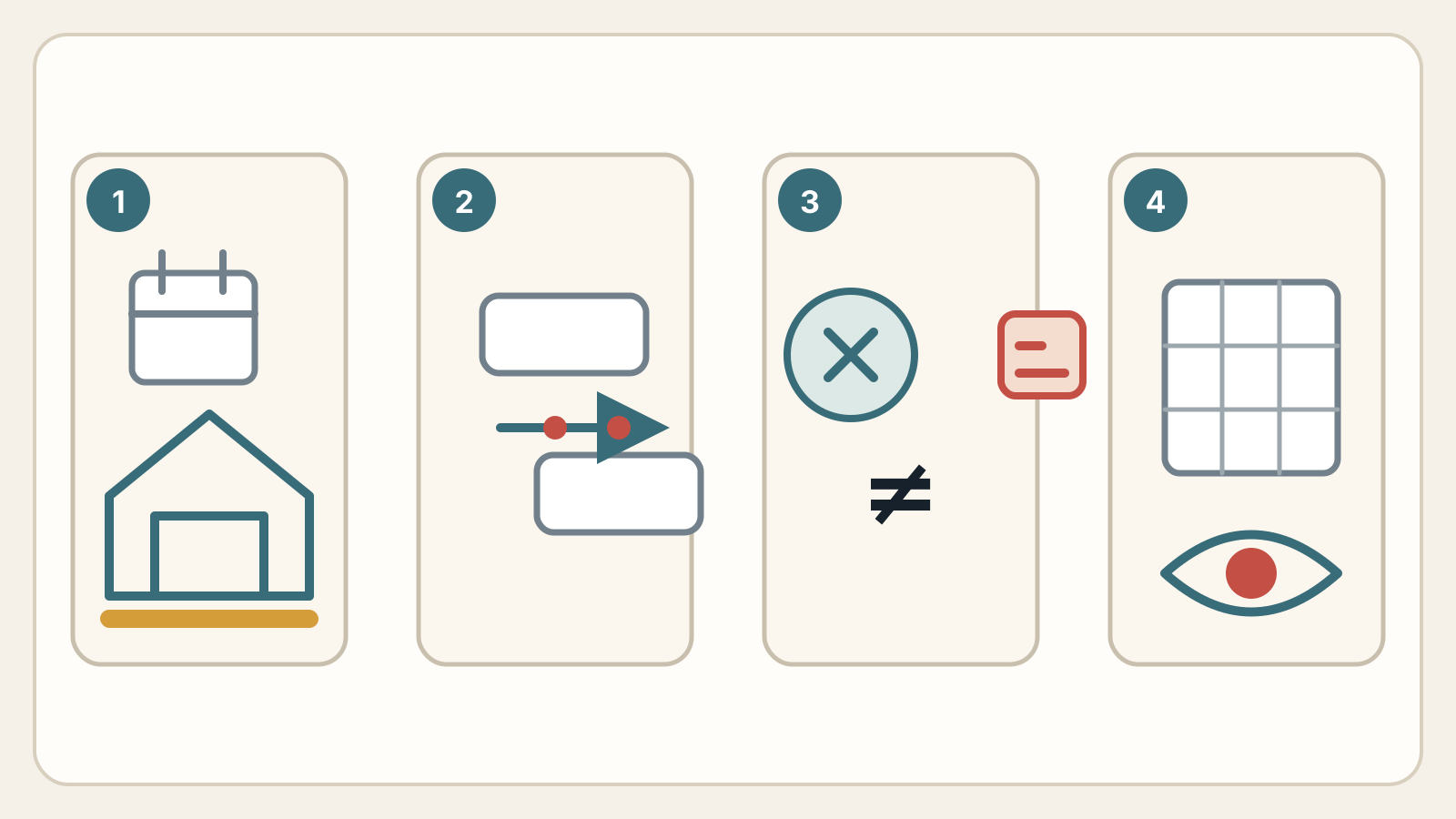
Detailed description of this diagram
Four cards form a reading order. Card one combines a calendar, generic rank tag and house for rank, stable and reference date. Card two uses blank name tags and a timeline for ring-name history and milestones. Card three places a not-equal sign between two unlike abstract marks to keep preferred technique separate from the recent-six-tournament winning-technique aggregation. Card four combines a blank mini-table and eye for tournament records. It copies no interface and contains no wrestler name, portrait, current rank, stable name, measurement, record, percentage or forecast.
Graphic: SUMO ARCHAEOLOGY CLUB · Figure source 1 · Figure source 2 · Figure source 3
1. Read rank, stable and date together
First locate the wrestler’s rank for the current tournament and the stable, or heya, to which he belongs. Rankings are issued for each tournament, while career totals can change as bouts are completed. If the profile identifies its data as current for a particular basho, keep that reference point attached to the numbers.
Search results can preserve an earlier rank even after a new banzuke has been issued. That does not necessarily make the older page false; it describes a different moment. For a present-rank question, use the newest dated official profile rather than an undated snippet.
Likewise, a pre-tournament record showing 0-0 is not by itself an absence announcement. Consequential information about participation should come from the Association’s current notices, not an inference from a statistical field.
The stable name adds more than a label. It points to the training and living organisation around the wrestler: a stablemaster, fellow wrestlers and specialist staff. It is the first path from an individual profile into sumo’s shared daily life.
2. Use shikona history and milestones to find the timeline
Profiles may include a wrestler’s legal name, present and former ring names, debut and divisional promotion dates, and highest rank. A wrestler can therefore appear under a different name in an older article or bout listing.
The Association’s search page helps with this problem. It allows searches using fields including current or former shikona, legal name and birthplace. If an old name seems to have vanished, checking the name history is more reliable than assuming that two records belong to different people.
Promotion dates reveal how the career unfolded, but speed should not be converted into a complete measure of ability. Injuries, timing and banzuke circumstances vary. The profile supplies the chronology; it does not justify invented explanations for every pause or leap.
3. Do not merge preferred style with recent winning techniques
This is the page’s most tempting section—and its easiest trap. A profile’s preferred techniques describe the wrestler’s characteristic approach. The separate kimarite tendency on the official page is calculated from results across the previous six tournaments.
A wrestler described as a pusher may recently have recorded several yorikiri wins. That is not an error. One field describes a recognised preference; the other counts how winning bouts actually ended in a limited recent window.
The percentages are descriptive, not predictive. A 30 percent share for oshidashi does not mean there is a 30 percent chance of oshidashi in the next bout. Opponent, condition and the opening collision all change what becomes possible. Use the chart as a viewing prompt, not a betting model.
4. Let the tournament-by-tournament record tell the story
The past-record section places rank and results across successive basho. Instead of beginning with the largest career total, scan a handful of recent tournaments. A promotion, a return after an absence or the tournament after a losing record can give today’s bout a visible before and after.
The official profile can also carry survey answers that reveal tastes and personality. Those details are delightful routes toward affection, but they serve a different purpose from rank and career records. Treat the survey as a human introduction and the results table as the record; neither needs to pretend to be the other.
Take only one clue into the next bout
There is no prize for memorising the whole profile. If recent winning techniques show frequent yorikiri, watch the feet after the belt grip. If the wrestler favours pushing, watch whether the hands reach the chest on the first step. One clue is enough.
That is when a directory becomes a viewing companion. You may notice that the expected grip never arrived, or that a wrestler lost only after creating the shape he wanted. The profile has not told you the result in advance. It has simply made a few seconds on the dohyo feel longer—and given curiosity somewhere to land.
What One Bout Cannot Tell Us
One bout shows a movement sequence and an official result. Do not infer personality, emotion, injury, fatigue or the next strategy from a single moment. Record the visible cue in plain language, compare multiple days, and wait for an official announcement. Inner feelings remain unknown without the person’s attributed words.
Sources
- Japan Sumo Association, wrestler search (checked 2 September 2026)
- Japan Sumo Association, wrestler profile for Aonishiki Arata (checked 2 September 2026)
- Japan Sumo Association, Sumo Quiz No. 1427 (checked 2 September 2026)
Source links used for verification
Each link was used for the corresponding claim in this article; inclusion is not a blanket endorsement of the whole page.
Article verified:
- Japan Sumo Association wrestler searchPrimary source (as checked for this article)
- Japan Sumo Association wrestler profile: Aonishiki ArataPrimary source (as checked for this article)
- Japan Sumo Association Sumo Quiz No. 1427Historical primary source (record from that period)