Start with the movements your body needs, not a generic seat label.
If you have a larger body, limited knee movement or difficulty standing from the floor, do not choose a masu box simply because it sounds spacious. The official page states that one box is 1.3 metres square, but does not identify that as an inner-clear or outer measurement; it is not a guaranteed personal width. The official pages we reviewed do not publish chair-seat width, armrest clearance or row pitch either. Start with the movements you need, not with an invented comfort score.
There is no universal height or weight at which a particular seat becomes correct. This guide uses a short decision process based on floor sitting, standing, party size and luggage without treating body shape as a problem to be fixed.
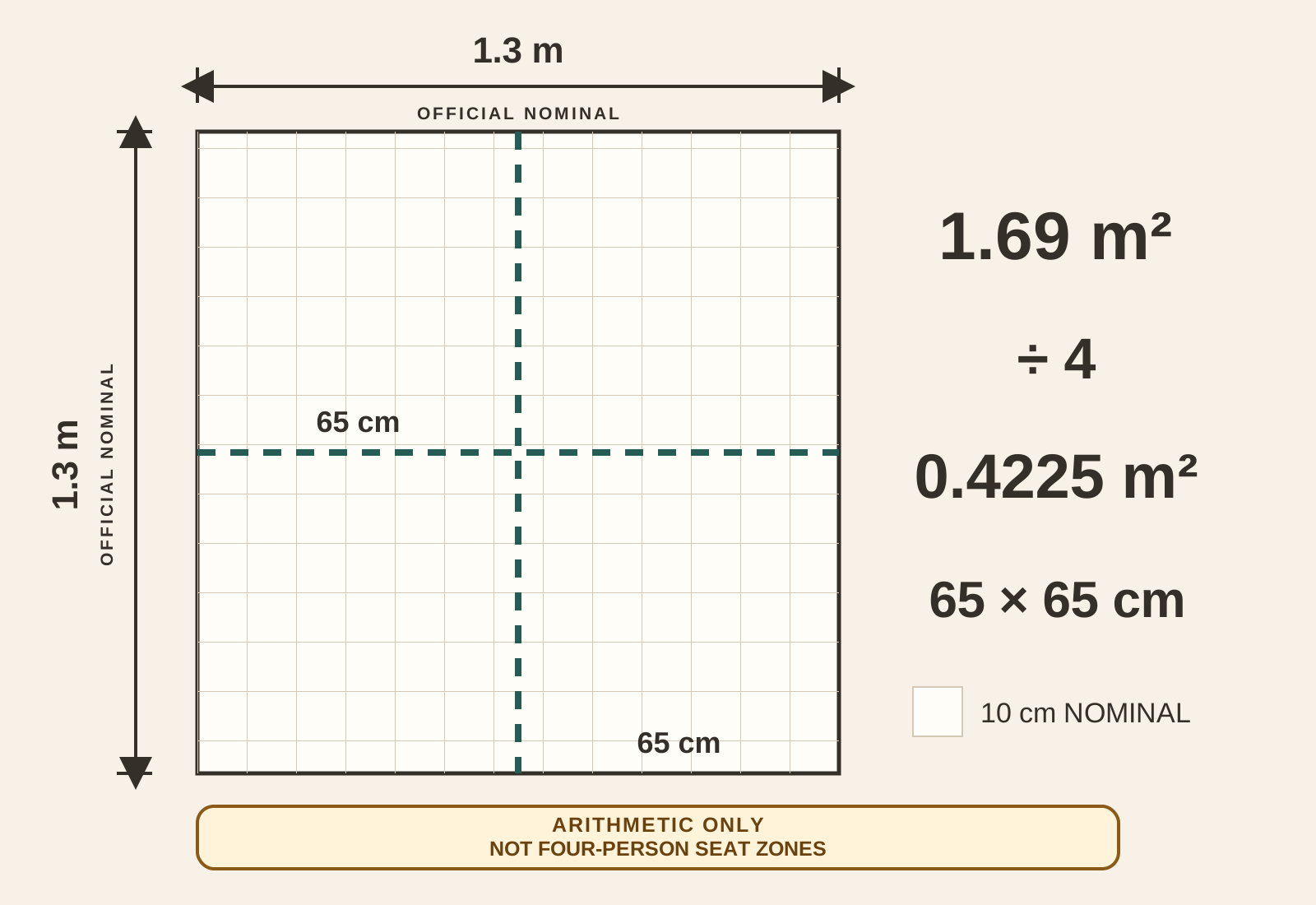
Detailed description of this diagram
The official page states that one masu is 1.3 metres square, but does not say whether that is an inner-clear or outer dimension or provide a construction tolerance. The graphic displays 1.3 metres on each side as the official nominal figure and calculates a nominal total area of 1.69 square metres. It uses thirteen nominal 10-centimetre grid units in each direction. Dividing the nominal square into four equal arithmetic quadrants gives 65 centimetres by 65 centimetres, or 0.4225 square metres, per quadrant. The outline is not a drawing of the rail or its thickness. The diagram does not show usable clearance after bodies, cushions, rails or belongings and does not assign personal spaces or promise that four adults will be comfortable.
Graphic: SUMO ARCHAEOLOGY CLUB · Measurement source
The 1.3-metre box is not one person’s allocation
What is verified: the Tokyo tournament page states that a typical masu is 1.3 metres by 1.3 metres, without saying whether this is an inner-clear or outer measurement. Sales configurations can accommodate different numbers of people, including designated single-person and multi-person options. Dividing 1.3 metres by a head count does not establish each visitor’s shoulder, hip or leg space.
What the conflicting pages do not settle: a masu means sitting on cushions at floor level, and the FAQ directs visitors to store shoes and umbrellas behind their own box. Two current official statements about portable floor chairs must be read together: the September masu FAQ says one may not be used when it obstructs the spectator behind, while the Association’s general prohibited-items page lists floor chairs and other objects that change a seat’s specification. Do not assume that a backrest is permitted. If it is essential, give the organiser its shape and dimensions and obtain a current answer before purchase.
The individual decision starts here: ask not only “Will I fit?” but “Can I change position, put my shoes back on and rise safely after sitting?” This is not an official fit assessment.
A chair seat removes one movement, not every uncertainty
A chair avoids getting down to and up from a floor cushion. It may be the clearer starting point when knees, hips or balance are the concern. It is not accurate to promise that every chair has generous width or legroom: we found no numerical seat dimensions in the current official information.
Use these questions instead:
- Is floor sitting or chair sitting easier to adjust?
- Do you need to extend a leg frequently?
- Is remaining in the same area as companions essential?
- Can the party reduce bags around the feet?
- Are stairs, aisles or a seat transfer part of the access requirement?
If an ordinary ticket may not meet a non-negotiable need, tell the organiser what movement is difficult and what movement must remain possible. A functional description is more useful than asking whether a seat is “good for large people.”
Try the floor sequence for sixty seconds at home
Before choosing a masu box, place a cushion on the floor while wearing clothes and shoes similar to the planned outfit. There is no need to kneel formally.
- Take your usual comfortable floor position.
- Change position once.
- Put on your shoes and stand.
- Sit down again.
Pain or strong uncertainty is useful information. Do not assume that excitement at the arena will make the sequence easier. This is not a medical assessment; it simply makes the required movements visible before purchase.
Wheelchair space is not a larger general seat
Official guidance says that a visitor cannot remain in a wheelchair inside a masu box. Dedicated wheelchair seating has separate reservation, user, companion and entry conditions. It should not be treated as extra general inventory for someone who only wants more room.
If walking, transfer or postural support is involved, review the current wheelchair conditions with the organiser. Keeping an access service distinct from a comfort upgrade protects the people who need that service.
Reducing luggage can create more usable space
You cannot alter the seat after arrival, but you can reduce hard cases, large bags and unnecessary equipment around it. The September notice asks visitors to remain at their own seats and avoid moving during a bout. A ticket does not promise that you can step into the aisle whenever you want.
Check the exact seat’s accessory rule before buying a special cushion. Tamariseki, for example, have a specific no-cushion rule. We do not carry one product recommendation across every seat category.
Nearness is not the only form of intensity
A first-floor view may be appealing, but an uncomfortable posture can take attention away from the ring. From a second-floor chair, the yobidashi, gyoji, judges, banners and two wrestlers form one visible system. Watch just before the tachiai: almost everyone outside the ring becomes still while the two wrestlers prepare to move. Distance can make that contrast especially clear.
A body-action sheet from purchase to home
Before buying, test or discuss seven actions: lower the body to chair or floor, place the legs, change posture, reach the aisle without climbing over someone, stand from the floor or chair, manage steps or level changes, and carry belongings home. This is not a method for estimating seat dimensions. It prevents unpublished chair width, foot space, armrest or aisle measurements being turned into “you will fit” from photographs or an average body.
A solo visitor must manage shoes, ticket, coat and essentials inside the assigned place. With companions, do not try to allocate limbs by drawing an imaginary box; agree on how to signal before changing posture. Heat, swelling, pain, restroom frequency and the return crowd can make departure different from arrival. Ask the organiser before purchase about any dimension or transfer condition that is essential.
If the choice still is not safe: do not make “probably fine” a purchase condition. If the day reveals “I can enter but cannot move,” difficulty standing or no workable aisle route, do not solve it by extending body or luggage into another place. Ask staff and keep early departure as an option. This article does not infer that an empty or replacement seat will exist. Protecting the body and nearby spectators outranks extracting full value from an expensive ticket.
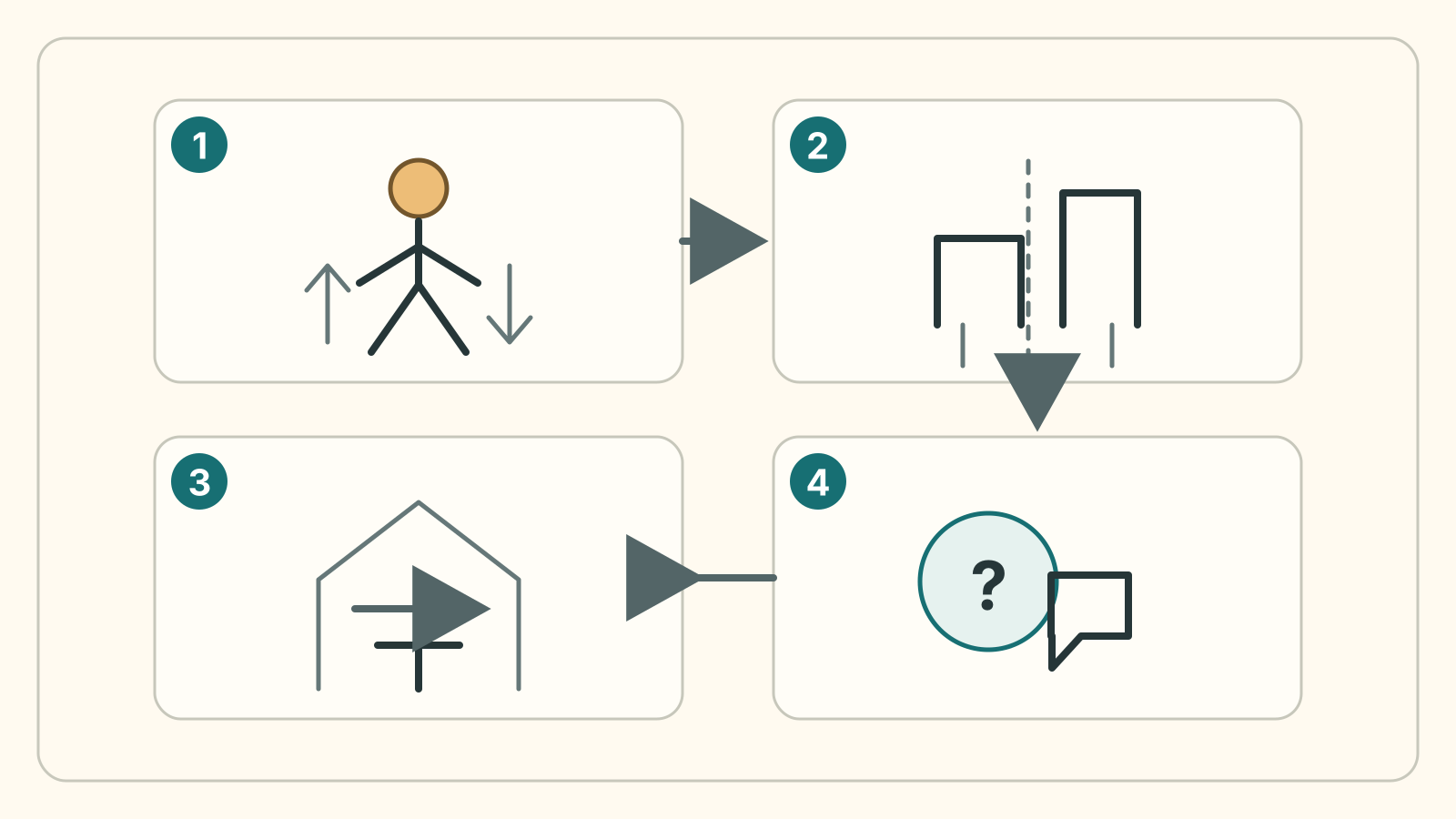
Detailed description of this diagram
A two-by-two set of cards. Card 1 uses an abstract joint line and vertical arrows for naming difficult movements such as lowering to the floor, prolonged sitting and standing; it depicts no body type. Card 2 compares two generic seat symbols, meaning use current official descriptions without inferring width, legroom, view or fit. Card 3 puts movement arrows inside an abstract home, meaning rehearse only a safe familiar movement; it is not a venue-fit test. Card 4 uses a question mark and contact symbol for asking the seller before purchase about any essential unresolved width, aisle, change or accommodation need. No body dimension, box occupancy, chair width, rail or step height, weight rating, wheelchair entitlement, comfort, view or on-day change is promised.
Graphic: SUMO ARCHAEOLOGY CLUB · Figure source 1 · Figure source 2 · Figure source 3
Sources
- Japan Sumo Association, September 2026 Tokyo seating information and general spectator requests, checked September 3, 2026, for the approximate box size, the conditional masu FAQ wording and the separate prohibited-items wording.
- Japan Sumo Association, September 2026 Tokyo spectator notice, checked September 3, 2026, for movement and seat-specific conduct.
- No chair-width or row-pitch guarantee is made because the official material reviewed did not provide those measurements.
Source links used for verification
Each link was used for the corresponding claim in this article; inclusion is not a blanket endorsement of the whole page.
Article verified:
- Japan Sumo Association September 2026 Tokyo seating informationPrimary source (conflicting details noted)
- Japan Sumo Association spectator requests and prohibited itemsPrimary source (conflicting details noted)
- Japan Sumo Association September 2026 Tokyo spectator noticePrimary source (as checked for this article)