A *mawashi-matta* occurs when a wrestler’s belt has loosened enough that it may come off and the gyoji, the referee in the ring, pauses the bout so it can be secured. The gyoji does not call it while a technique is being applied; he looks for a moment when the action has stopped. The wrestlers must preserve their grips and posture, then restart together on the gyoji’s voice and simultaneous signal.
Two wrestlers are straining against each other and then, without a winner, become almost perfectly still. If you do not know the procedure, the interruption can look like an injury, a foul or a lost broadcast. The official explanation is more specific: the gyoji chooses a still instant and the wrestlers preserve their grips and posture while the belt is adjusted. It does not let a viewer infer injury, a foul or every reason behind an individual pause.
The gyoji decides when the mawashi needs attention
The Japan Sumo Association calls the procedure *mawashi-matta*: literally, a pause connected to the mawashi. Its official explainer says the gyoji may stop a contest when a belt has loosened and is in danger of coming off. This is presented as the gyoji’s judgement, not a timeout requested by either wrestler.
A spectator may think a belt looks loose, but that does not create the official pause. From a seat or one camera angle, we may not see the fastening clearly. Wait for the gyoji’s action rather than turning an impression into a claim that the bout should already have been stopped.
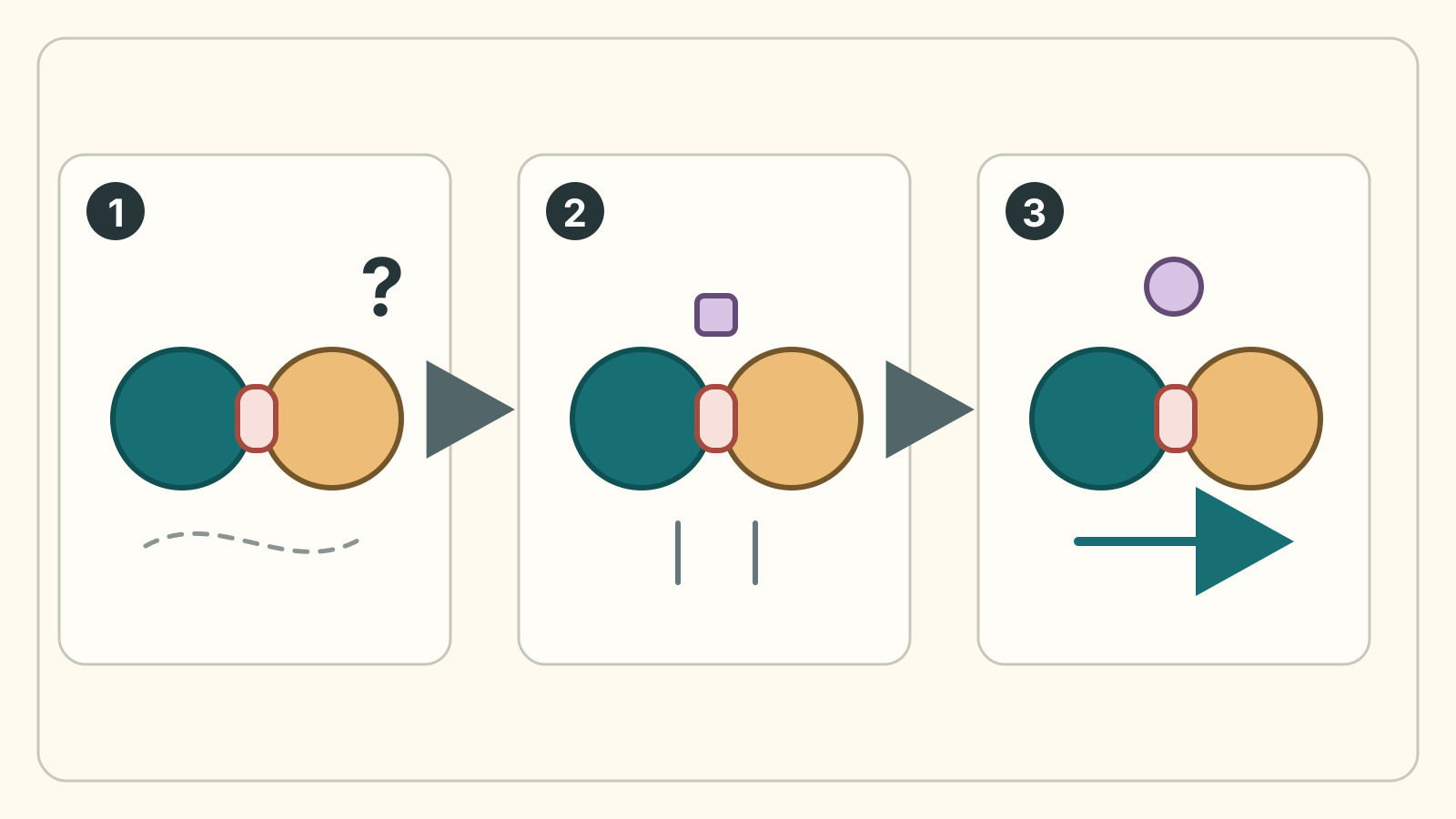
Detailed description of this diagram
Card 1 combines two touching competitor tokens, a dashed motion cue and a question mark because the diagram cannot decide whether a technique is active or movement has stopped. Card 2 preserves the contact relation, adds pause bars and a purple official token. Card 3 keeps the relation and adds one shared direction after an official cue. No belt construction, looseness threshold, body posture, hand/tap location, timing, sound or universal ruling is encoded, and mizu-iri is not treated as the same interruption.
Graphic: SUMO ARCHAEOLOGY CLUB · Figure source 1 · Figure source 2
The pause avoids an active technique
Stopping at the wrong instant could interrupt an attack. The Association therefore says the gyoji does not call mawashi-matta while a technique is being applied. He watches for a brief stop in the movement and speaks at that point.
If the procedure appears in a bout, try to remember one feature just before the call: which foot is forward, or which wrestler has an inside arm. You do not need to reconstruct the entire position. Seeing that the pause arrived during a moment of stillness is enough to reveal part of the gyoji’s job.
The wrestlers keep their grips and posture
During the adjustment, the wrestlers may not use the interruption to change grips. The Association says they must remain in the same posture while the gyoji attends to the mawashi. The contest has not reset to a new tachiai; its current state is being held.
That changes what is worth watching. The referee’s belt-adjusting work naturally draws attention, but the two wrestlers are also doing something difficult: staying connected without exploiting the pause. Their stationary arms and feet preserve the point from which the contest can continue.
“Iika, iika” leads to a simultaneous restart
When the adjustment is complete, the gyoji stands between the wrestlers and says *iika, iika*—roughly, “ready?” The official source says he then gives both wrestlers a simultaneous tap as the signal to resume. Neither side should choose an independent start.
The same voice and simultaneous physical signal also appear in the Association’s account of restarting after *mizu-iri*, the rest break that may be called during a long, deadlocked bout. The reasons are different. Mawashi-matta addresses a belt at risk of coming loose. Mizu-iri addresses a prolonged stalemate. A pre-bout *matta*, meanwhile, means the tachiai has not been validly established. Similar words do not make the three procedures interchangeable.
Watch the frozen position, then the shared first movement
The next time a gyoji unexpectedly stops a live bout, do not assume a result has been declared. Look at the arms and feet. Are the grips being held? After the adjustment, listen for *iika, iika*, then watch both bodies move on the same signal.
Sumo’s speed is usually measured by its collisions. Mawashi-matta reveals another kind of timing: the referee must avoid a developing technique, find a still instant, preserve the contest and return the same instant to both wrestlers. A pause that first looks outside the action is actually careful work to keep the action whole.
Evidence limits and event-day fallback
Confirmed fact: The Association says that when a mawashi risks coming loose, the gyoji avoids stopping during a technique, chooses a still instant, preserves grips/posture and restarts with voice and a simultaneous signal.
What remains unknown: A seat or camera may not reveal belt security, the gyoji’s reason, the adjustment or another consultation. A pause alone does not establish a foul, injury, pain, intent or advantage.
Reasoned inference: Comparing one arm or foot immediately before and after the pause can help a viewer follow the preservation procedure. Confidence is medium; it does not prove exact reconstruction.
Editorial suggestion: Prioritise the gyoji’s signal and official account; do not copy belt adjustment from footage. This is not technique, equipment or medical instruction.
Fallback: If the reason or signal is inaudible, do not label the pause mawashi-matta. Wait for arena/broadcast/official information, and prefer the case-specific explanation when it differs from the general procedure.
Sources
- Japan Sumo Association, Sumo Quiz Nos. 403 and 695 (accessed September 3, 2026)
Source links used for verification
Each link was used for the corresponding claim in this article; inclusion is not a blanket endorsement of the whole page.
Article verified:
- Japan Sumo Association Sumo Quiz No.403: stopping, holding and restarting after mawashi-mattaPrimary source (as checked for this article)
- Japan Sumo Association Sumo Quiz No.695: comparison with a mizu-iri restartPrimary source (as checked for this article)