You do not have to remain until the final bout to have a real sumo day. Treat the official 6 p.m. finish as an approximate programme guide, not a guaranteed train connection. Start with the time you must be outside the arena, subtract walking and crowd margin, and choose one sumo moment you definitely want to see before that point.
This matters especially for an overseas itinerary. A reserved Shinkansen, airport check-in, theatre booking or last practical route to a rural hotel will not wait because the bouts ran differently from your expectation. Families, people managing fatigue and visitors with caring responsibilities may have equally firm limits. Leaving on time is not disrespectful; creating a rushed exit through a live bout is the avoidable part.
“Finishes at 6 p.m.” is not a promise to your onward journey
The Association timetable gives approximate programme points for lower divisions, juryo and makuuchi ring entrances and an around-6 p.m. finish. However, when checked on September 4, 2026, the page still contained May-tournament wording, so we do not treat the whole page as clean date-specific September evidence. Use the September spectator notice for opening times and recheck the live programme. Sumo remains live competition: running time can move, and an individual bout is not assigned a theatre-style clock time.
Set a hard arena departure time first. Then allow for the route from your seat to the concourse, any queue or crowd direction, the walk to Ryogoku Station and navigation to the correct platform. Add more margin if you are carrying luggage, walking with a child, managing mobility limits or making an unfamiliar transfer. If a commercial booking is necessary, compare change and cancellation conditions before price. No affiliate offer can make a tight connection safe. This is an editorial planning method, not an official number of minutes.
We cannot give one honest seat-to-platform duration. When a connection cannot be missed, leave earlier instead of turning photographs or an average walking speed into false precision.
Extent of the inference: luggage, children, mobility constraints or an unfamiliar transfer are likely to require more margin than a simple walking estimate, but this article cannot turn that into a universal number of minutes.
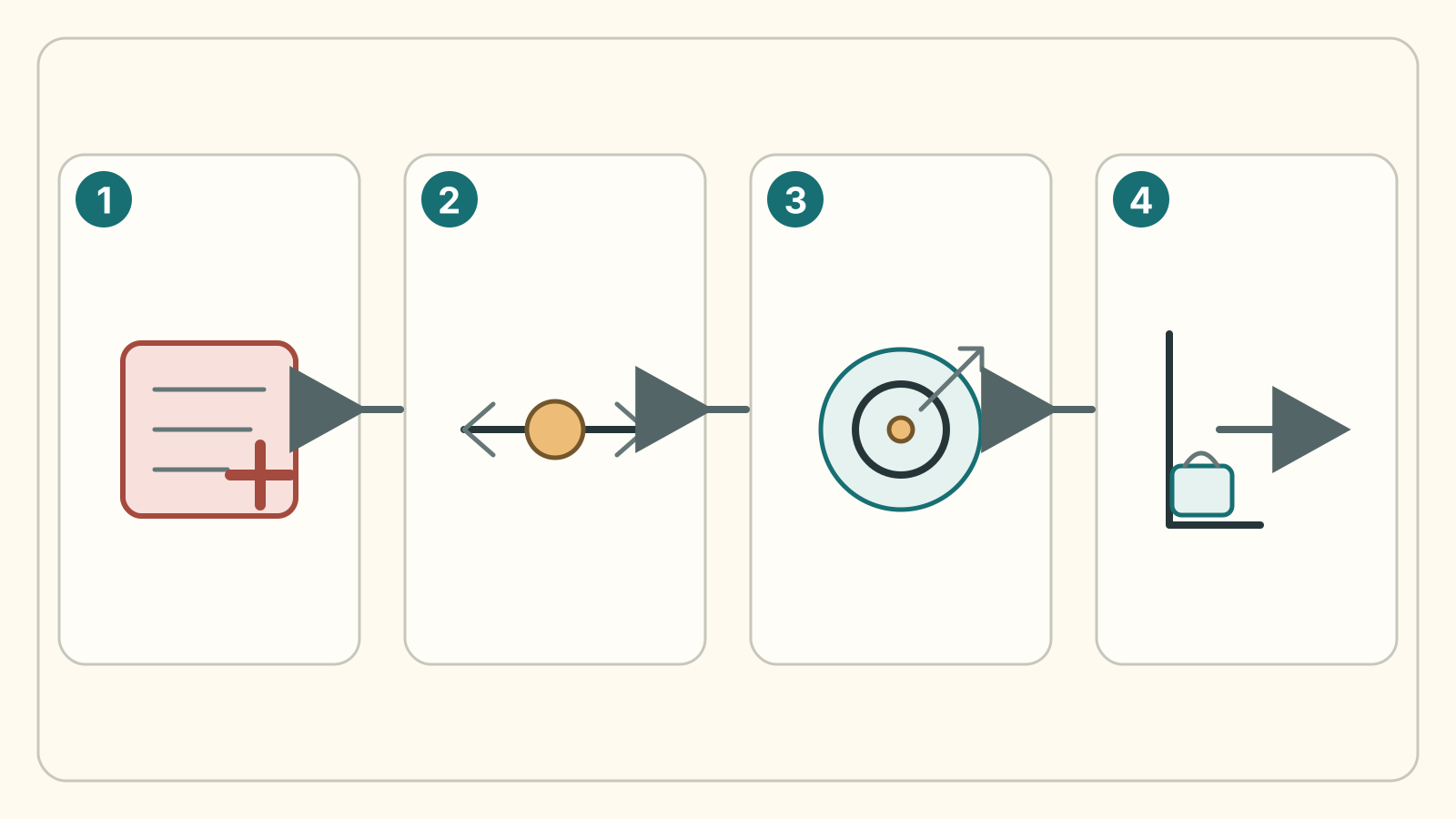
Detailed description of this diagram
This four-card diagram is read from right to left. Card 4 is an abstract appointment sheet for a non-negotiable train, flight, care, work or other onward deadline. Card 3 uses an expandable double arrow for a margin chosen around luggage, companions, mobility, an unfamiliar station and live transport conditions; it is not a number of minutes. Card 2 uses a target and star for one desired sumo moment placed earlier. Card 1 uses an open boundary and checked bag for leaving at the trigger, preferably between bouts after collecting belongings. It does not ask someone with an urgent health or safety need to wait. No programme finish, walking time, station, exit, crowd level, re-entry operation or successful connection is depicted.
Graphic: SUMO ARCHAEOLOGY CLUB · Figure source 1 · Figure source 2 · Figure source 3
Pick one non-negotiable sumo moment
A shorter day becomes satisfying when it has a centre. You might choose the makuuchi ring entrance, a yokozuna ring entrance, one favourite wrestler’s bout, or a sequence near the top of the card. Check the official order of bouts on the day and return to your seat several bouts before the wrestler you follow; do not convert an approximate timetable into an exact prediction.
Our guide from lower-division morning bouts to the bow ceremony explains how the atmosphere changes across a full day. A family can instead use the short visit plan with a child, while the chronic pain and fatigue plan treats an earlier finish as a valid outcome from the beginning.
Leave between bouts, not through the action
The September spectator notice asks visitors to avoid moving between their seats and the concourse during a bout. Decide one bout in advance that the next interval will be your exit. Put away loose items, check the floor and the rear of the seating area, and have your phone, ticket and wallet ready before standing.
Do not pause in an aisle, staircase, entrance, exit or evacuation route to catch “just one more” bout. The spectator contract prohibits watching from those non-seating spaces and requires compliance with staff instructions. An attendant may direct a different route according to the crowd; follow the live direction rather than an online shortcut.
In a masu box, remember the shoes and umbrella stored behind the seating area. In a chair seat, look below and beside the chair. A calm ten-second check protects the programme, binoculars or little souvenir that carries the day home.
Leaving for good and re-entry are different decisions
If you are ending your visit, follow the marked exit and current staff directions.
If you intend to leave temporarily and return, Tokyo’s September rule allows one re-entry per day and says visitors must carry the ticket stub for inspection.
The published notice does not explain every operational detail for a QR-ticket holder, so ask at the gate before crossing it.
If staff cannot confirm how your ticket will return, stay inside or treat that crossing as the final exit. Do not assume that a second trip outside will permit another return, and do not import Fukuoka or another venue’s rule into Tokyo. If the onward plan becomes unsafe, protect the journey rather than staying for the final bouts.
Give the last bout you see a proper ending
Before you leave, watch one detail after the result: the wrestler’s expression as he steps down, the gyoji turning towards the next side, or the yobidashi’s voice resetting the arena for another contest. On the train, you can check what happened after your departure and discover how your part of the day fitted the whole card.
That makes an early exit an opening rather than a loss. Perhaps next time you will arrive for the quiet lower divisions, or stay for the final bow. The First Visit hub lets you build that next version without pretending every visitor has the same amount of time.
Sources
- Japan Sumo Association, September 2026 Tokyo dohyo timetable (checked 3 September 2026)
- Japan Sumo Association, September 2026 Tokyo spectator notice (checked 3 September 2026)
- Japan Sumo Association, spectator contract (checked 3 September 2026)
Source links used for verification
Each link was used for the corresponding claim in this article; inclusion is not a blanket endorsement of the whole page.
Article verified:
- Japan Sumo Association Tokyo dohyo timetable (URL and tournament wording conflict)Primary source (conflicting details noted)
- Japan Sumo Association September 2026 Tokyo spectator noticePrimary source (as checked for this article)
- Japan Sumo Association spectator contractPrimary source (as checked for this article)