Planning a future visit? The September 2026 Tokyo conditions below are historical examples. Official pages may now describe a different tournament. Choose your event in the Japan Sumo Association’s ticket information and check its date, venue and conditions before booking. Link and QR guidance reviewed: 10 October 2026.
Do not define a child’s first sumo visit as staying from the opening bouts to the bow ceremony. Build it in 60- to 90-minute blocks around one event: a ring entrance, one favourite wrestler or a search for one ceremonial apron. The ticket-age and re-entry examples below describe September 2026. For your visit, check the current tournament conditions and the no-device QR procedure below. An early departure belongs in the success plan.
Age alone does not determine how long a child can sit or how noise, crowds and tiredness will feel. Begin with the duration that works in familiar activities, not a story about another child who watched the whole programme. This is a provisional starting point, not a comfort guarantee.
Choose one mission together
The official ring schedule includes several divisions, juryo and makuuchi ring entrances, a yokozuna entrance when scheduled, and the final bow ceremony. Running time can shift with the bouts. Recheck the official programme the night before, then choose one anchor.
The mission can be tiny: find one red kesho-mawashi, notice one very high salt throw, or hear the yobidashi call a name once. Everything after that is a bonus. There is no beginner exam requiring every wrestler’s name. The 60- to 90-minute block is an editorial planning unit, not a venue or medical recommendation.
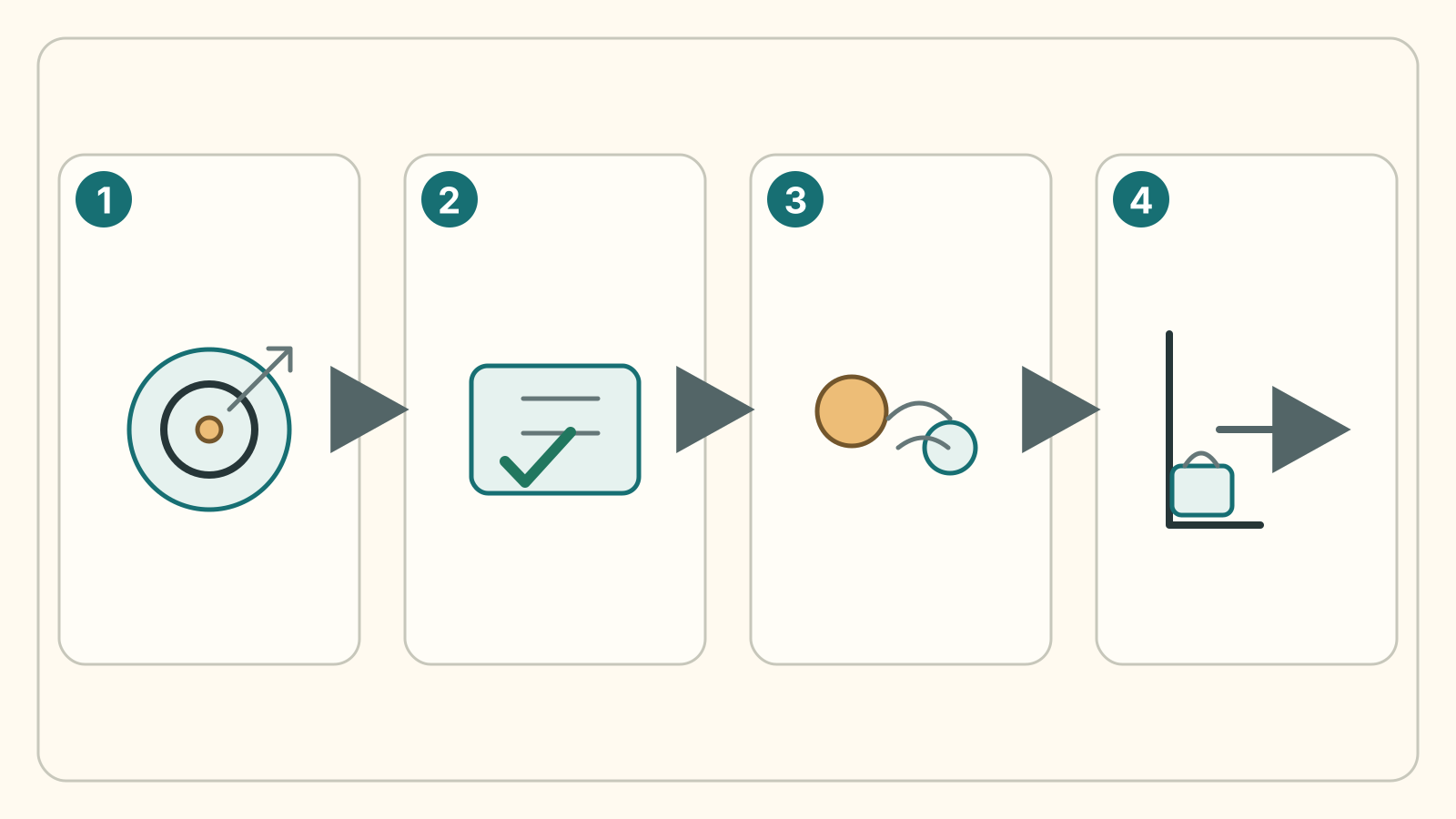
Detailed description of this diagram
Four cards run left to right. Card 1 uses a target and star for one optional highlight chosen with the child. Card 2 shows two abstract tickets and a check, meaning confirm each person's ticket and display or handoff method; it is not a real ticket or app. Card 3 uses two differently sized circles and a signal line for a shared leaving cue, not an age or ability claim. Card 4 uses an open boundary and outward sequence arrow to show that the visit may end when distress, sleepiness, pain, nausea, urgent toilet need or another stop signal appears. The arrow is not a real exit direction. The graphic promises no 60–90 minute tolerance, programme time, seat, rest facility, supervision result, re-entry or safe journey home.
Editorial planning diagram: SUMO ARCHAEOLOGY CLUB. The highlight, leaving signal and stopping plan are suggestions, not a venue programme or a guarantee of a child’s comfort. For the ticket check shown, use Ticket Oosumo’s distribution and no-device instructions and the conditions for your tournament.
Confirm every child’s ticket and QR route
The September notice and price list say that a spectator who will be four or older on the day requires a ticket. Child prices and family packages have their own age and eligibility conditions. Do not assume that a child is free or that an ineligible ticket can be converted by paying a difference at the entrance.
For Ticket Oosumo QR tickets, distribute tickets to companions who have a device before entry. Screenshots and printouts are not accepted. A child or other companion without a device should arrive with the purchaser who has one and speak to staff before entry. See the official distribution instructions (procedure checked 10 October 2026).
Give a clear promise about leaving the seat
The official notice asks visitors not to move during a bout. When health and safety allow, use the end of a contest as the expected transition: “After these two wrestlers finish, we will go out together.” That is easier to understand than a vague instruction to wait.
Do not make a child wait through nausea, urgent toileting or acute distress. Let nearby people know, ask for room and follow staff guidance. No article can guarantee that a particular seat will provide an easy aisle route under every crowd condition.
Do not depend on repeated exits
The September 2026 guidance checked for this article allowed one re-entry. For a future visit, confirm the current re-entry rule and procedure before leaving the building. On arrival, ask for the current restroom and stroller-parking route and whether a place to sit away from the seat is operating that day.
An earlier official map can show baby-changing and stroller symbols without proving the exact September location. We have not confirmed a general all-day nursing room for every ticket holder, so the family plan must not depend on one.
Release the adult version of “we came all this way”
Ticket cost and anticipation can make an adult want one more bout. Leaving while the child still has the capacity to say “again” may be more valuable than completing the schedule.
When the agreed stop condition appears, leave even if a hoped-for bout remains. On the way home, avoid a memory test about winners. Ask which colour or movement they noticed. Later, look for that apron or wrestler together. One visual clue can turn a short visit into the first chapter of following sumo.
Read the body before the clock
A small body is not automatically comfortable in a masu box, and a chair does not guarantee that a child can hold one posture for 90 minutes. Watch for a need to move the feet or knees, repeated posture changes, hands covering the ears, pain, nausea, toileting urgency or unusually quiet withdrawal. These signs are not a diagnosis and do not mean the same thing for every child; ask the child and use what caregivers already know about that body.
When possible, let the child change posture within the assigned seat without entering an aisle or another person’s space. For one adult and one child, decide who carries the ticket phone and who acts on the exit signal. With two adults, decide in advance whether one person leaves with the child while the other remains, and choose the meeting point. If the body says stop, the fallback is a restroom check, a quieter confirmed area if staff identifies one, or going home—not bargaining for “just one more bout.”
Family checklist
- Age eligibility and ticket type for every person
- QR transfer and presentation state
- One programme anchor
- Restroom and exit signal
- A condition for going home
- No dependence on an unconfirmed nursing or quiet room
Sources
- Japan Sumo Association, September 2026 Tokyo spectator notice, checked September 3, 2026, for the age, QR, re-entry and movement rules.
- Japan Sumo Association, Tokyo tournament ring schedule, checked September 3, 2026, for selecting a programme anchor.
- Japan Sumo Association, September 2026 Tokyo price list, checked September 3, 2026, for child-price and package eligibility.
Source links used for verification
These are the official links consulted for the September record. Their content may change for later tournaments; the historical check date below does not verify a new event. Use the tournament selector above when planning a visit.
Article verified: