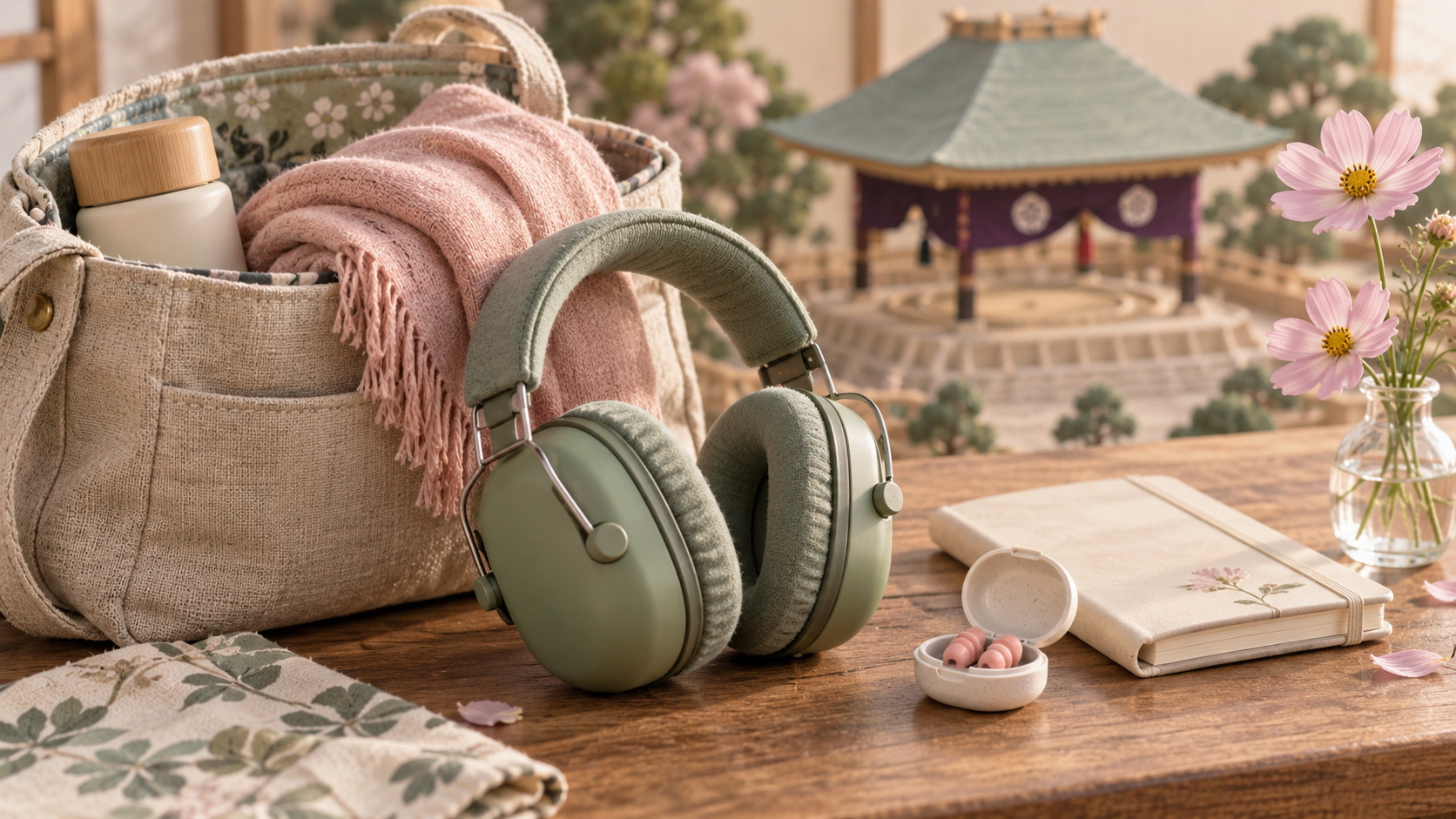
If noise, light or crowds can become overwhelming, do not make an all-day stay the test of a successful visit. Choose one part of the programme, identify the seat, exit direction and nearest staffed point after entry, and agree on a signal for reducing stimulation. The official September 2026 material we reviewed does not confirm a sensory room, quiet room or dedicated low-stimulation section. Ask the organiser before travel if such a facility is essential.
Sumo can be powerful because wooden clappers, the yobidashi, the charge, applause, announcements and vividly coloured ceremonial aprons arrive together. “A great deal of input” does not have to mean “no way to enjoy it.” The plan can deliberately narrow what you receive.
Select one moment worth keeping
A Tokyo tournament day contains lower-division bouts, juryo and makuuchi ring entrances, a yokozuna entrance when one is scheduled, and the bow ceremony at the end. The official ring schedule is a guide, not a guaranteed minute-by-minute clock, because bout length changes the running time.
Choose one anchor: see the full makuuchi ring entrance, stay for one wrestler, or watch three lower-division bouts in a calmer personal window. Preserve energy for that anchor and treat everything else as optional. Shortening the visit after arrival is an adjustment, not a failure.
Know what the official rules can and cannot control
The current spectator notice asks phones to be placed on silent, discourages calls in the seating area, prohibits banners or towels that obstruct another person’s view, and asks visitors not to move during a bout. Those rules reduce certain disruptions; they do not create a predictable sound or light level.
An official timetable cannot prove that a certain time will be quiet, and a seating diagram cannot establish that a certain row will feel dim. Crowd response and individual sensitivity vary. If a separate low-stimulation space is necessary, ask a precise question such as, “Is there a place where a ticket holder can temporarily leave the seating area and reduce sensory input?”
Reduce sound without losing every warning channel
If you already use earplugs, earmuffs or noise reduction, test the familiar setup before the event. This article does not certify a product or guarantee that every device is permitted; check current entry rules for essential equipment.
Lowering sound may also make announcements or staff calls harder to receive. Arrange a second route for emergency information: a companion can relay it, you can scan the surrounding movement at agreed intervals, or you can tell an attendant how best to get your attention. For a solo visit, save that request as a short sentence.
Leave between bouts when possible, but do not wait through danger
The official notice asks spectators to avoid moving while a bout is taking place. When it is safe and realistic, use the pause after a bout. This is not an instruction to remain seated when your health or safety requires immediate action. Signal the need and follow staff direction.
September rules permit re-entry once. Do not design a plan that depends on repeatedly stepping outside to reset. Ask what indoor option is operating that day, but do not arrive expecting an unconfirmed quiet room.
Use a one-word signal with a companion
Choose a word such as “pause,” “leave” or “sound” so that a long explanation is unnecessary during overload. Agree that the first response is to move toward the planned lower-stimulation place, not to debate whether three more bouts are possible. The signal belongs to the visitor; it is not permission for someone else to end the day without them.
Let one small signal open the sport
You do not have to process every sound. During one bout, watch only the moment when the gyoji turns the gunbai toward the two wrestlers. Or listen for the short gap after the yobidashi finishes the names. Choosing one drop from the full sensory field can reveal the rhythm that leads into the tachiai.
Check the night before
- Is there one programme moment you most want?
- Have you tested the sensory tool you normally use?
- Is there another way to receive emergency information?
- Does a companion know the stop signal?
- Has the organiser confirmed any facility that is essential?
Communicate stimulation in three levels
Use signs the person already recognises and define “still able to watch,” “reduce one input” and “leave.” Ear protection, looking away from a display, closing the eyes or changing posture may help different people differently; this article does not diagnose or invent a universal intervention. If sound is reduced, confirm with a companion or staff how emergency information will still reach the person.
Before purchase, consider the seat route, ease of exit, visit length and cancellation terms. The night before, prepare the ticket, route home, signal and familiar essentials. After entry, locate the seat, exit, restroom and staffed point. A solo visitor needs a short card to show if speech becomes difficult and an independent way home. A companion’s job is to act on the agreed signal, not persuade the person to remain.
A sensory room or low-stimulation section remains unconfirmed. When input rises, do not wander in search of an assumed room; ask staff what is currently usable. If none can be confirmed, leave the seating area or go home. This does not estimate stimulus or safe duration by seat. It is editorial advice that keeps the person’s limit ahead of ticket cost.
Sources
- Japan Sumo Association, September 2026 Tokyo spectator notice, checked September 3, 2026, for phone, visibility, movement and re-entry rules.
- Japan Sumo Association, Tokyo tournament ring schedule, checked September 3, 2026, for programme order.
- Japan Sumo Association spectator contract, checked September 3, 2026, for staff instructions and conduct affecting other spectators.
- No sensory or quiet room is promised because it was not confirmed in the official material reviewed.
Source links used for verification
Each link was used for the corresponding claim in this article; inclusion is not a blanket endorsement of the whole page.
Article verified:
- Japan Sumo Association September 2026 Tokyo spectator noticePrimary source (as checked for this article)
- Japan Sumo Association Tokyo tournament ring schedulePrimary source (as checked for this article)
- Japan Sumo Association spectator contractPrimary source (as checked for this article)