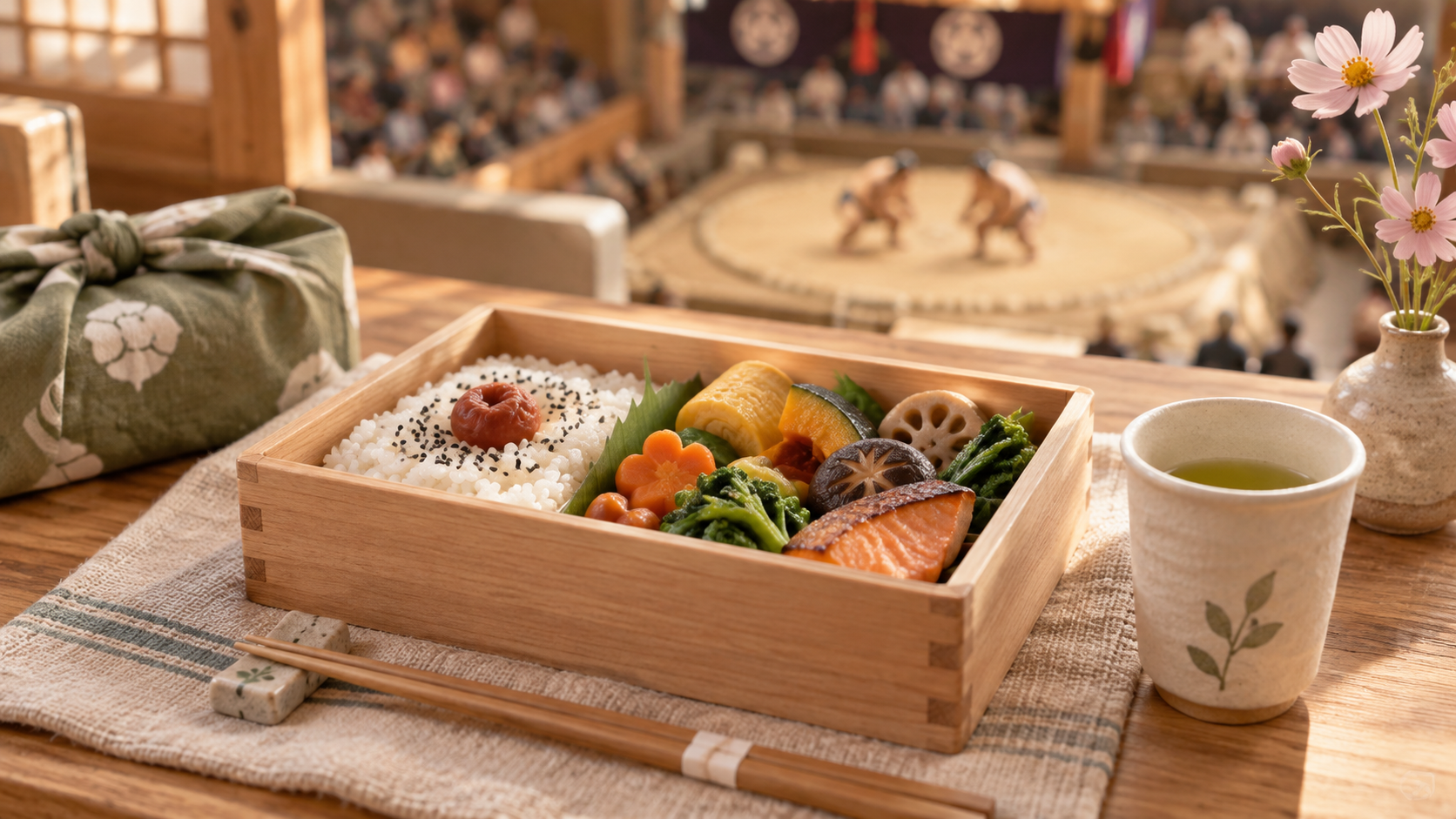
For the September 2026 tournament, the official guidance asks spectators to refrain from bringing food and drink. Eating is allowed at seats other than the ringside tamari section; food and drink are prohibited in tamari. Arena shops are scheduled to sell boxed meals, snacks and drinks, but a listed product is not a stock guarantee. Choose one food priority and check it early so the queue does not replace the bouts you came to see.
Kokugikan food can be a delightful part of a first visit. It becomes stressful only when every famous item turns into a compulsory quest. An overseas traveller has enough decisions already: tickets, two Ryogoku stations, seat directions and Japanese announcements. A short food plan should remove pressure, not add it.
Detailed description of this diagram
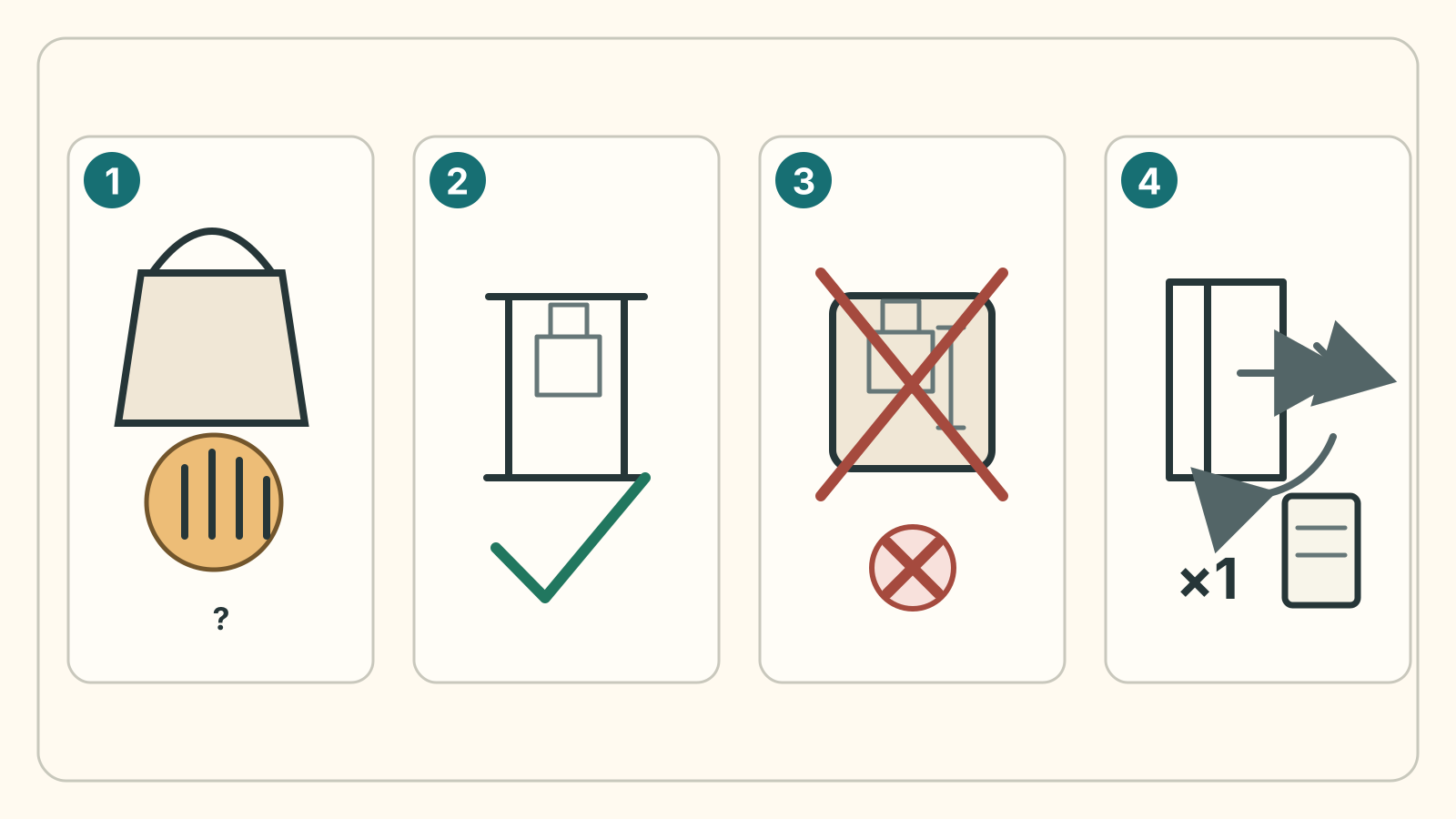
Four cards run from left to right. Card 1 shows a carry-in bag and a pause-and-check hand rather than a prohibition cross, preserving the official strength of the request to refrain from bringing food and drink. Card 2 shows an abstract seat and meal with a check, representing permission to eat at ticketed seats other than tamari. Card 3 crosses out abstract floor seating plus food and drink, representing the tamari prohibition. Card 4 combines a generic doorway, outward and return arrows, the number one and a paper stub, representing one re-entry per day with the ticket stub. The image does not establish an exception for medical, allergy or other needs and depicts no current product, availability, price, service hour, container, table or arena layout.
Graphic: SUMO ARCHAEOLOGY CLUB · Figure source
Start with your seat type
The current spectator guidance says that eating is permitted at seats except tamari. Tamari is the ringside floor section; eating and drinking are prohibited there, and cushions or portable floor chairs may not be brought in. Do not copy what a person in another section is doing. Check the ticket and the rule for your own seat.
The guidance also asks visitors to refrain from bringing food and drink into the venue. Do not assume that a small item, allergy-safe meal or religious accommodation is automatically exempt. If you have a medical, allergy or faith-related need, contact the organiser before the visit and retain the current answer.
Treat menus and prices as changeable
The official Kokugikan food page lists chanko, bento and other items. However, the page at the September 2026 address currently carries a note saying its information is from the May tournament while other text refers to the present tournament. This article therefore does not present any individual price, serving hour, flavour or stall as a confirmed September fact.
Check the official page and arena signs on your day. Popular items can sell out and menus can change. If a favourite wrestler’s bento has disappeared, switching to another lunch is better than losing the ring entrance and feeling that the whole trip failed.
Plan backwards from the sumo you want to see
The Association’s dohyo schedule describes the day moving from early lower-division bouts through juryo and makuuchi, while clearly labelling times as approximate. Choose the wrestler, ring entrance or division you most want to see. Avoid joining a food queue just before that point, and listen for arena announcements because the running order can shift.
On a first visit, locate your seat, toilets and exit before shopping. Then make one circuit, choose one realistic option and return to your seat. The spectator rules ask people not to move during a bout, so use the breaks between matches to stand or leave the row.
Give dietary needs their own safety check
A product name or photograph cannot confirm every ingredient, shared cooking surface or last-minute substitution. If you have an allergy, do not let the excitement of the arena pressure you into an uncertain meal. Vegetarian, religious, swallowing and medication-related requirements deserve the same respect.
Companions do not need identical food to share the day. Agree on a meeting time and let each person make the safe choice. The common experience is the sumo, not proving that everyone ate the same thing.
Return from the first bite to the next shikona
If you find chanko, notice one ingredient and how it carries the broth. If you choose a bento linked to a wrestler or region, read the official description without inventing a personal story that it does not state. Then put the container securely away and listen for the next shikona.
Food is not a distraction from the tournament. It is a small interval that helps a long day remain comfortable. The best plan leaves you fed, safe and still curious when your eyes return to the dohyo.
The Hand Sequence in a Tight Seat
Hold one food item at a time, place its lid under the container, keep a drink capped except while sipping, and put waste away before taking out the next item. This is our spill-reduction advice, not official arena etiquette. Do not open something that will not balance on your lap, and do not park a container in the aisle. Permission and location for a small portable table remain unknown, so do not plan a meal that depends on one. Ask event-day staff; if it is not allowed or no answer is available, switch to hand-held food or the eating area they identify.
Sources
- Japan Sumo Association, September 2026 spectator guidance, Kokugikan food guide and dohyo schedule (checked 3 September 2026). The conflicting tournament note on the food page is disclosed rather than silently resolved.
Source links used for verification
Each link was used for the corresponding claim in this article; inclusion is not a blanket endorsement of the whole page.
Article verified:
- Japan Sumo Association September 2026 spectator guidancePrimary source (as checked for this article)
- Japan Sumo Association September 2026 Kokugikan food guidePrimary source (conflicting details noted)
- Japan Sumo Association September 2026 dohyo schedulePrimary source (as checked for this article)