Do not spend the first hour trying to conquer every shop and photo spot. Find your assigned seat, the nearest suitable restroom, a staffed point and the exit for your journey home. Then watch one bout. This short order replaces the anxious feeling that you must already know what everybody else is doing.
For September 2026, the official notice lists 8:45 a.m. opening from Day 1 through Day 12, 10:30 a.m. on Days 13 and 14, and 10 a.m. on the final day. It also says information may change. Check the official page for your date rather than assuming that every tournament day opens at one fixed time.
Minutes 0–15: complete entry and create a home base
A QR ticket shown as a screenshot or printout is not accepted under the September notice. Members of a group using QR tickets must receive their tickets before entry. Prepare the official display method before reaching the gate. The same notice says a lost admission ticket is neither accepted nor reissued, so return it to a fixed pocket after the check.
If the original ticket will not load, do not keep blocking the queue while retrying. Move to where staff direct you and show the actual problem. This article cannot promise which purchase details will be requested, whether part of the group should enter first, or that admission will be granted.
Read the signs for the floor and direction of your assigned seat. If the numbering is unclear, ask staff instead of following a confident-looking crowd. An empty chair is not temporary free seating: the published manners require spectators to watch from their own seats.
Detailed description of this diagram
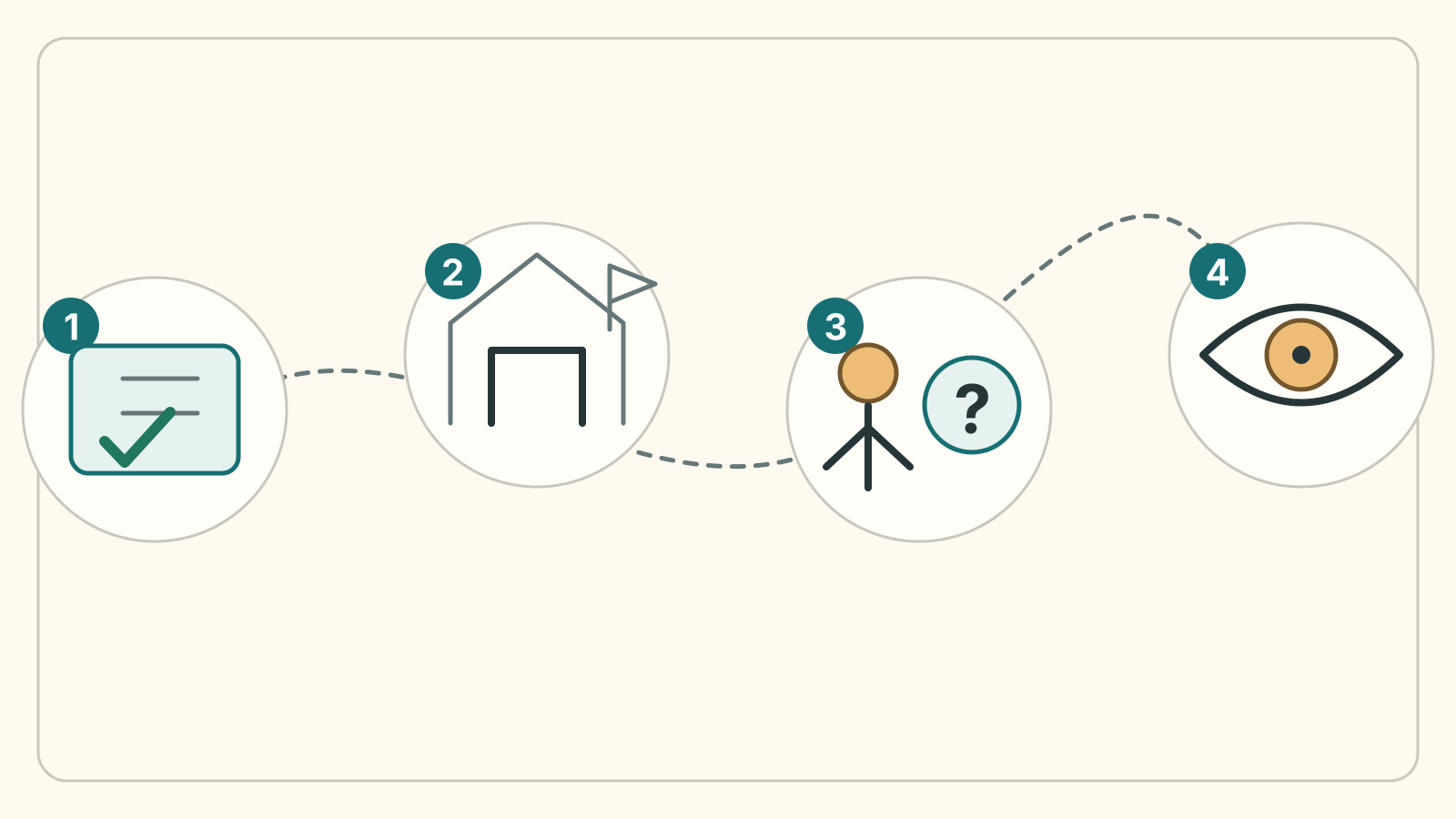
Four circular cards sit on a curved sequence line. Card 1 shows an abstract ticket and check for completing entry; it copies no ticket or app. Card 2 uses a flag and generic seat symbol for treating the assigned seat as a home reference, not for a seat shape or location. Card 3 combines a question mark, abstract attendant and two candidates, meaning to ask about a suitable toilet, staffed point and return decision on the day. Card 4 uses an eye and one dot for noticing one call, sound or movement. The article's 0–15 style blocks are not converted into facility promises: no entrance, route, distance, queue, open facility, step-free access, quiet condition, re-entry or completion within sixty minutes is depicted.
Graphic: SUMO ARCHAEOLOGY CLUB · Figure source 1 · Figure source 2
Minutes 15–30: reduce physical uncertainty
Locate the nearest suitable restroom and a backup, the route to your exit, and a place where staff can help. Availability and queues can change, so an old blog diagram is not a guarantee. A visitor who needs step-free movement, medication or a quieter pause should identify help before discomfort becomes urgent.
The tournament notice allows eating and drinking at seats other than tamari seating. Tamari spectators may not eat or drink there and may not bring a floor chair or cushion. Check the ticket type rather than copying what a different section is doing.
Minutes 30–60: watch one small thing
Once the practical map is set, look toward the dohyo before joining a retail queue. You do not need to recognise an early-division wrestler. Pick one detail: where the two wrestlers’ breathing seems to meet before the tachiai, or how the broom marks left by the yobidashi disappear under the next pair of feet.
Earlier hours may make individual sounds easier to notice, but this is not a promise of quiet. If sound is painful, a child cannot settle, or the body is already tired, do not complete a sixty-minute checklist for its own sake. Finding the seat, restroom, exit and staff point and then leaving early can still be the right first hour.
The sumo day is not only its late-afternoon top division. In a quieter morning arena, the referee’s voice and the contact between bare feet and clay can be surprisingly clear. One thought—“I never heard that on television”—is already a successful first discovery.
What can wait
- Comparing every souvenir
- Photographing the entire building immediately
- Memorising the ranking chart before watching
- Leaving the arena without a clear reason
September re-entry is limited to once. If you use it, set the purpose and return time. The goal of the first hour is not total completion. It is knowing how to return to your seat, protecting your energy and receiving one live bout without hurry.
Sources
- Japan Sumo Association, September 2026 spectator notice, checked September 3, 2026, for opening times, QR entry, re-entry, assigned-seat and food rules.
- Japan Sumo Association, September 2026 access guide, checked the same date for the venue and public-transport guidance.
Source links used for verification
Each link was used for the corresponding claim in this article; inclusion is not a blanket endorsement of the whole page.
Article verified:
- Japan Sumo Association September 2026 spectator noticePrimary source (as checked for this article)
- Japan Sumo Association September 2026 access guidePrimary source (as checked for this article)