Butsukari geiko gives the two wrestlers different roles: one drives forward and the other receives the force. Japan Sumo Association photo reports explicitly distinguish the participant doing the collision work from the active wrestler receiving it. For a first observation, look past the dramatic impact and follow the receiver’s stance, retreat and resistance.
The sequence can resemble one wrestler being pushed out repeatedly. It is not necessarily a series of ordinary competitive bouts in which both participants freely select techniques and a winner must be recorded. Calling every retreat a loss misses the assigned purpose of the drill.
The receiver is not a passive wall
Association photographs show a larger wrestler presenting the chest while the other participant drives. The receiver absorbs the contact, moves backward and maintains a form that lets the driving wrestler continue to produce forward force.
Watch the feet. In some photographs the receiver appears to change stance width or foot direction while giving ground. That may help expose how the driver is maintaining forward pressure, but a photograph does not reveal the force, speed or coaching intention. Keep the visible step separate from our interpretation of it.
If the receiving wrestler appears to release or redirect the trainee at the end, the purpose and safety judgement are not visible from that moment alone. Do not turn a clipped scene into a story about punishment or failure; leave the interpretation open.
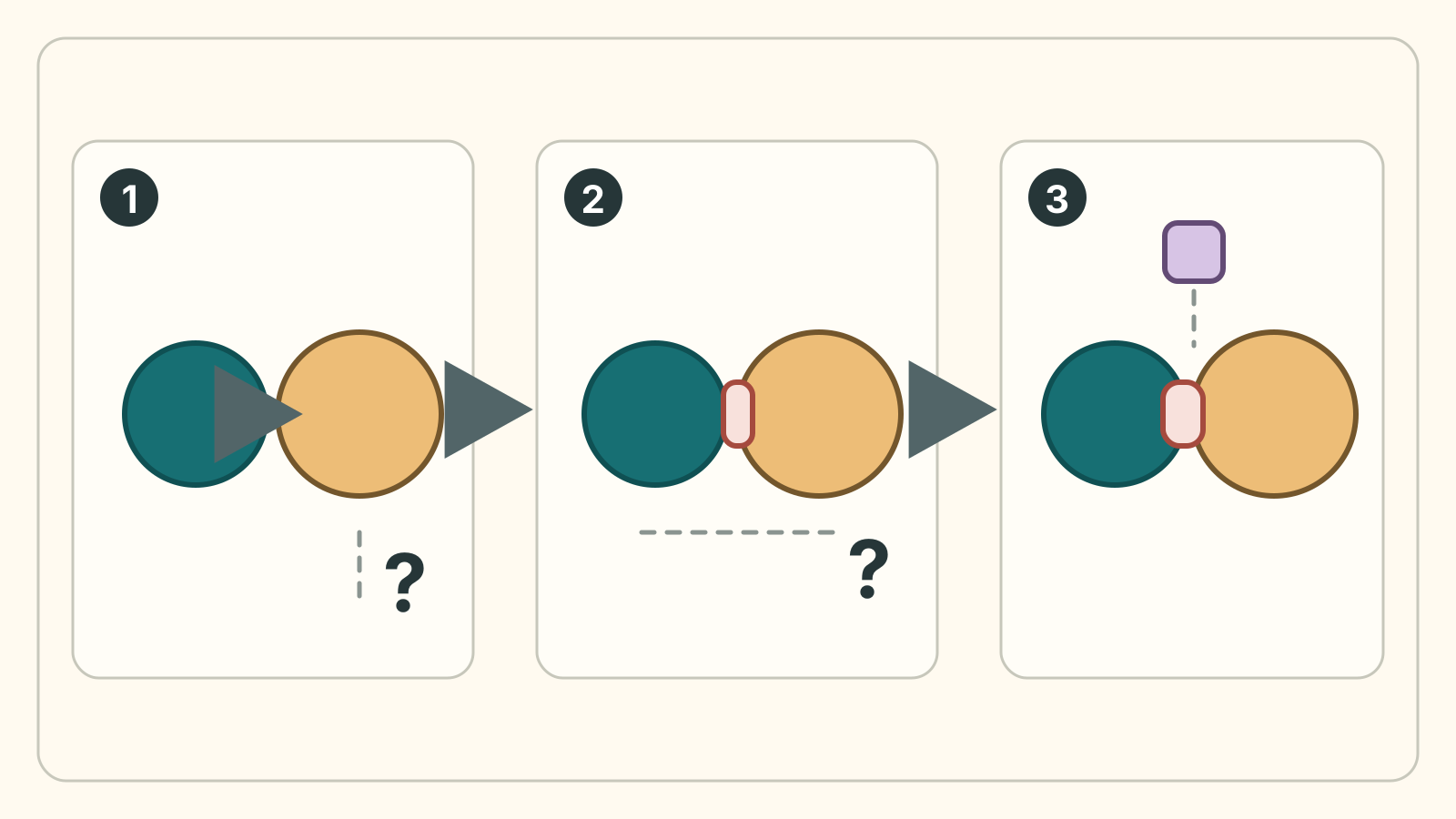
Detailed description of this diagram
Card 1 points a blue driver token towards a gold receiver token and leaves mechanics unresolved with a question mark. Card 2 adds a categorical contact block without calling it a chest or impact point. Card 3 adds a separate purple supervisor/observer token. Token placement and arrows encode no body, posture, stride, resistance, force, speed, fatigue, count, fall or practice instruction.
Graphic: SUMO ARCHAEOLOGY CLUB · Figure source 1 · Figure source 2
The driver’s following foot matters
The impact from the head, shoulder and chest attracts attention. The more revealing detail may be behind it: does the rear foot come forward so that pressure continues? When the upper body tips forward but the feet stop, force cannot be sustained in the same way.
A second Association report from an instructor seminar also shows a participant performing butsukari with an active instructor receiving and other instructors observing. The images support the role distinction; they do not prescribe a safe self-teaching routine.
Do not turn exhaustion into a punishment story
The number of repetitions, choice of receiver and end of the sequence belong to that training session. A short video does not prove punishment, hostility or stable hierarchy. Describe the visible movement, and leave coaching intent to people who were there.
Follow the viewing position, photography conditions and instructions given by the host that day, and do not lean into the practice area for a picture. This is a guide to watching, not permission to imitate the collision against a wall or another person.
Next time, follow only the receiver’s right foot. Does it brace, slide or change angle before the driver’s next step? That single detail can reveal a physical conversation that the loud collision hides. Butsukari becomes much more than a spectacle of endurance once the answering body is visible.
Observation note
- Separate driver and receiver roles
- Receiver’s stance and controlled retreat
- Driver’s rear foot following the body
- Do not score the drill as normal bouts
- Never imitate without qualified supervision
Sources
- Japan Sumo Association, youth stable open-day and instructor-seminar photo reports, checked September 3, 2026. Both distinguish the driving and receiving roles.
Source links used for verification
Each link was used for the corresponding claim in this article; inclusion is not a blanket endorsement of the whole page.
Article verified:
- Japan Sumo Association youth stable open-day photo reportHistorical primary source (record from that period)
- Japan Sumo Association instructor seminar photo reportHistorical primary source (record from that period)