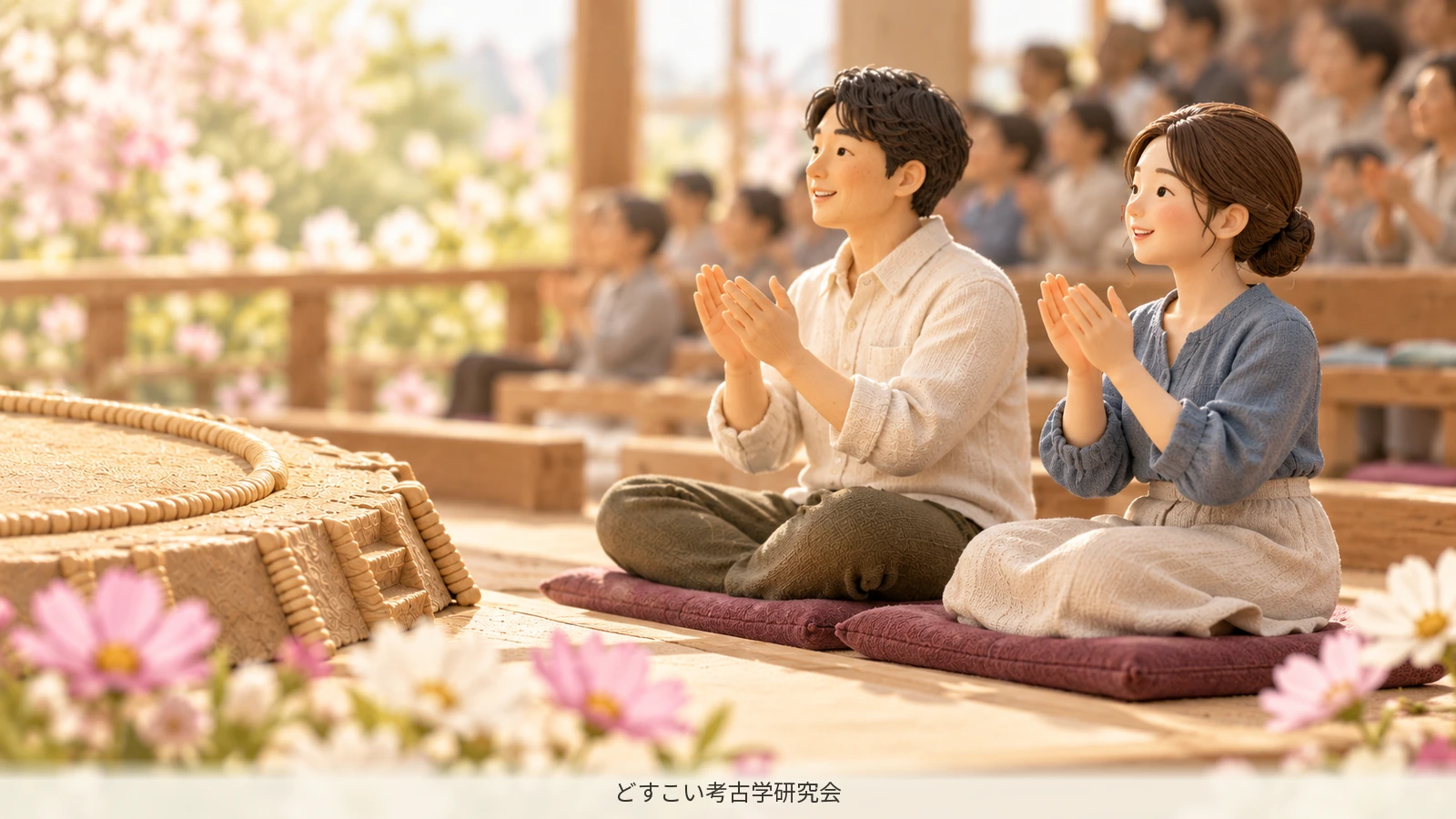
No. The Japan Sumo Association explicitly prohibits throwing seat cushions or any other object. Old broadcasts may show cushions flying after a yokozuna loses, but that image is not an invitation to recreate the scene. Leave the cushion where it belongs and send your excitement towards the dohyo as applause instead.
For a visitor who first met sumo through a highlight reel, airborne cushions can look like a charming piece of audience choreography. They are not paper confetti. A cushion has weight, an uncertain flight path and people at its destination—including children, older spectators, wrestlers, referees and ringside judges. Once you notice that, the crowd that celebrates without throwing anything starts to look much more impressive.
The current Tokyo guidance says not to throw them
The Association’s spectator notice for the September 2026 Tokyo tournament tells visitors not to throw cushions. Treat this as a safety rule, not an optional point of etiquette. If people around you ignore it after a shock result, their actions do not change the rule.
The easiest response requires no knowledge of Japanese customs: keep your belongings down, remain aware of people around you and applaud. This also lets you watch the winning wrestler’s bow and the referee’s announcement rather than losing the end of the bout while reaching for something to throw.
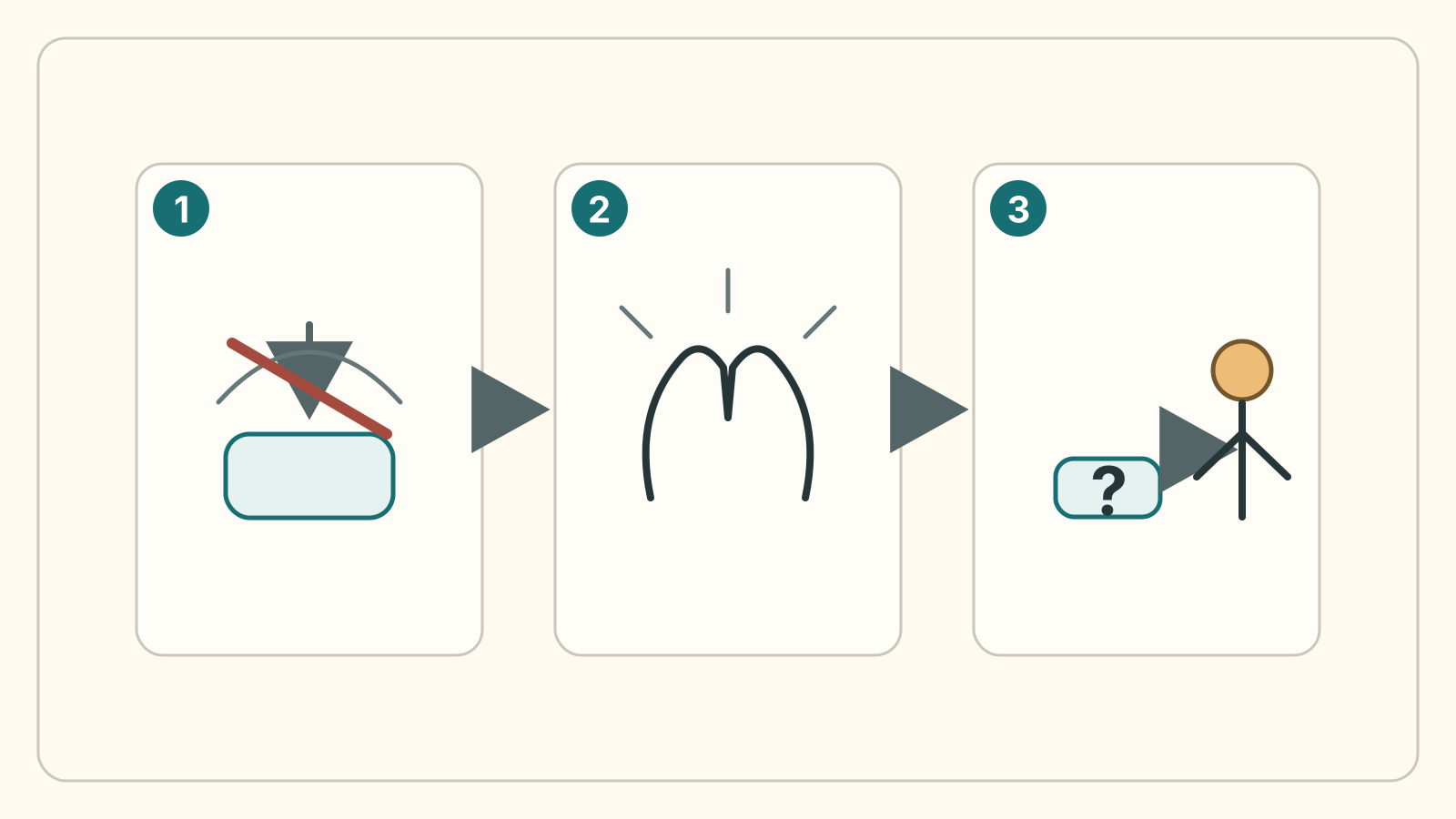
Detailed description of this diagram
Three cards run left to right. Card 1 keeps an abstract cushion down at the seat with a downward arrow and crosses out an upward throwing arc. Its form copies no Tokyo, Fukuoka or other real cushion. Card 2 uses two abstract hands and radiating lines for applause as an object-free response to a dramatic bout. Card 3 moves from a question mark beside a displaced cushion to an attendant symbol, meaning not to throw it back or chase it into circulation. It depicts no real cushion shape, size, joining method, quantity, seat layout, historical nage-hana or broadcast throwing scene, crowd forecast, staff response time or guaranteed prevention of injury.
Graphic: SUMO ARCHAEOLOGY CLUB · Figure source 1 · Figure source 2 · Figure source 3
The historical custom does not authorise the modern act
The Association links the familiar image to an older custom called *nage-hana*, literally the throwing of a gratuity. In the Edo period, a spectator impressed by a bout might throw an item of clothing onto the dohyo. When the item was returned to its owner, the wrestler received a reward. The practice was prohibited in 1909.
That context changes a common assumption. The old gesture was described as a reward for the winner, not simply as booing a defeated yokozuna. Yet a historical origin is not a current permission slip. Ways of honouring wrestlers have changed; applause and the formal prize system now carry the admiration without sending an object through a crowd.
Fukuoka uses a different cushion arrangement
The physical object is not identical at every venue. According to the Association, the Fukuoka tournament changed its four-person box-seat cushions in 2008. Four separate square cushions became two long cushions for two people each, and the pair was joined together. In effect, the box has one large linked cushion that is difficult to throw.
This does not make throwing acceptable in Fukuoka. The same official explanation warns spectators at other venues not to throw square cushions or any object, particularly because children and older people may be nearby. It also shows why venue details should stay venue-specific: do not assume a Tokyo box and a Fukuoka box contain the same seating equipment.
Spectator cushions and wrestlers’ waiting cushions are different
You may also see a wrestler sitting on a cushion at ringside while waiting for an upcoming bout. That is a *hikae-zabuton*, a waiting cushion, and it belongs to the working area around the dohyo. It is not a spectator seat and not an object for fans to move. This article does not claim a complete specification for those ringside cushions.
Keeping the two settings separate prevents a surprisingly common confusion. A cushion in a *masu* box helps a ticket holder sit on the floor. A cushion beside the dohyo marks a wrestler’s waiting place and can even reflect rank. Neither one is a projectile.
What to do when a huge upset happens
If a yokozuna is defeated, watch the winner complete the bow. Then take one quick look around. You may see hundreds of people visibly astonished, clapping with the same energy while every cushion remains on the floor. That is not a less authentic reaction; it is a crowd protecting one another without flattening the emotion.
Sumo does not need a dangerous souvenir of an old custom to prove that an upset mattered. A roar can fill the arena, fade, and leave everyone ready for the next bout. When you understand why the cushion stays down, a safety notice becomes part of how spectators help hold the tournament together.
If a cushion is displaced anyway
Do not throw it back, chase it into an aisle or reach into the working area around the dohyo. Keep children and your own belongings close, and ask staff what to do with a cushion that is no longer in its proper place. If other people are throwing objects, the safe fallback is to protect your group, remain aware of the exit route and follow staff directions rather than joining in or confronting the crowd.
This advice does not predict how a particular incident will unfold. It simply preserves the current rule: no object becomes safe to throw because someone else moved first.
Sources
- Japan Sumo Association, spectator notices for the September 2026 Tokyo tournament (checked 3 September 2026)
- Japan Sumo Association, Sumo Quiz No. 1230 on *nage-hana* and the prohibition on throwing cushions (published 22 May 2025; checked 3 September 2026)
- Japan Sumo Association, Sumo Quiz No. 1404 on Fukuoka’s linked box-seat cushions (published 12 November 2025; checked 3 September 2026)
Source links used for verification
Each link was used for the corresponding claim in this article; inclusion is not a blanket endorsement of the whole page.
Article verified:
- Japan Sumo Association: September 2026 Tokyo tournament spectator noticesPrimary source (as checked for this article)
- Japan Sumo Association Sumo Quiz No. 1230: cushion throwing and nage-hanaHistorical primary source (record from that period)
- Japan Sumo Association Sumo Quiz No. 1404: linked cushions in FukuokaHistorical primary source (record from that period)