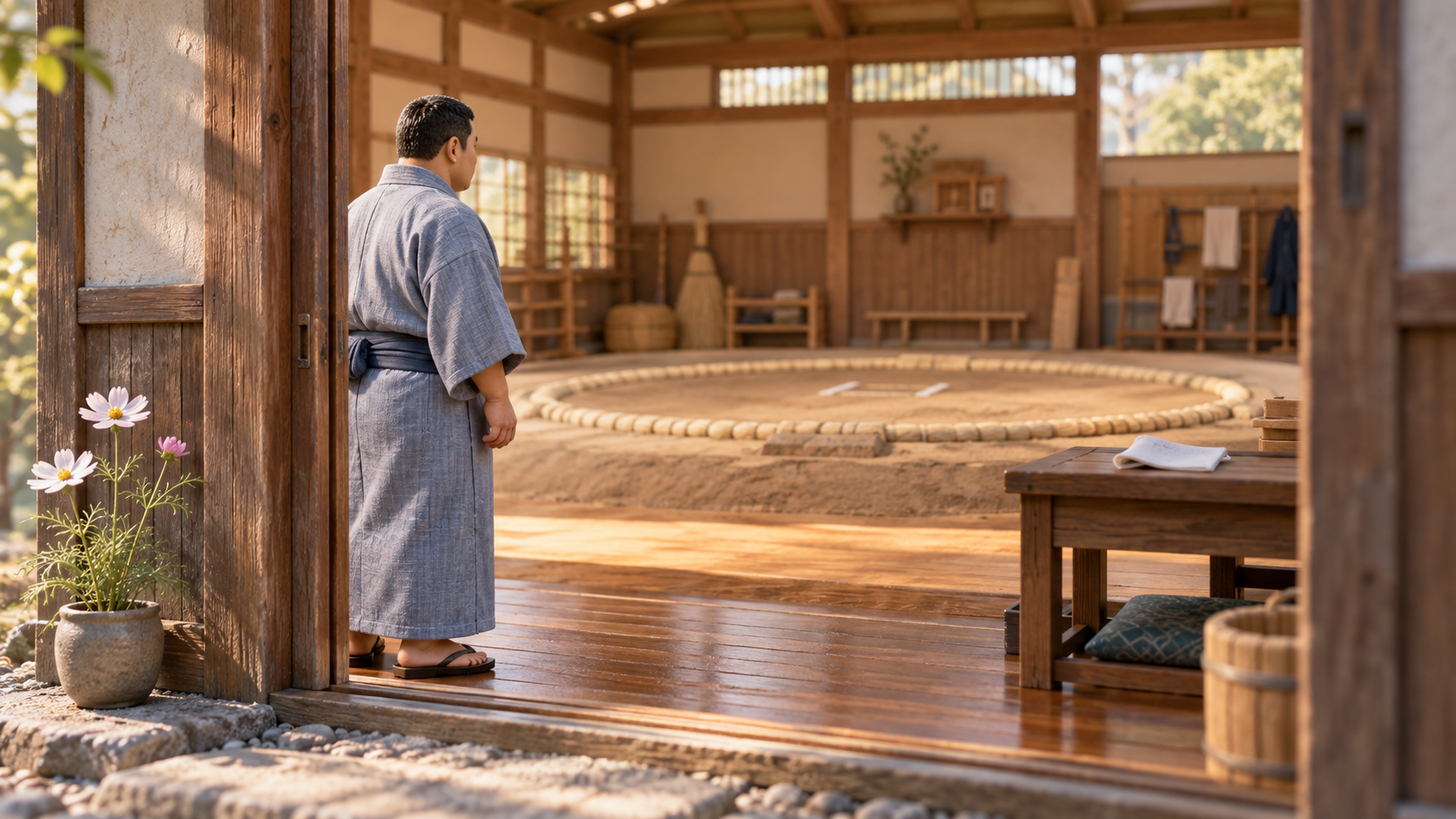
The ordinary route for a new recruit runs through stable-led application, examination and registration procedures, then maezumo bouts. After meeting the prescribed conditions, the recruit takes part in the shinjo promotion presentation and appears in the jonokuchi division on the next tournament’s banzuke. Maezumo is not a hidden rank below jonokuchi; it happens before the wrestler is ranked.
Find the tiniest shikona near the bottom of a banzuke and a question appears: where was this wrestler one tournament ago? The answer may be that his name had not yet been printed at all. Before the first line on the ranking sheet came bouts without a rank and a ceremony that introduced a new name to the crowd.
Entry begins through a stable and official procedures
The Japan Sumo Association’s current recruitment guide directs a prospective wrestler to a sumo stable, with the stablemaster involved in the formal process. Eligibility, documents and a new-recruit examination form part of entry, followed by official registration for those who complete the requirements.
Requirements and schedules can change. Historic Association material is useful for understanding the shape of the route, but old height, weight or examination figures should not be treated as today’s application rules. A real applicant should always use the latest Association guidance and confirm details with the accepting stable. This article explains the spectator’s map; it does not replace recruitment instructions.
Maezumo means bouts before the banzuke
In maezumo, new recruits have bouts on the tournament dohyo. They are not yet listed as jonokuchi wrestlers on that tournament’s official rankings.
Association explainers describe recruits reaching shinjo status after achieving the prescribed performance by the set point in the maezumo schedule. There is little value in memorising one supposedly permanent formula for days and wins. Numbers of recruits and tournament arrangements can affect the programme, so spectators should consult information for the basho they will attend.
A wakaimonogashira is involved in directing maezumo and guiding the new wrestlers. Look beyond the two bodies on the clay and an organisational layer emerges: someone is helping the newest participants enter the competitive system correctly.
The shinjo presentation is a threshold, not a top-division promotion
Recruits who have fulfilled the maezumo conditions are introduced in the shinjo shusse hiro, often rendered in English as the new-recruit promotion presentation. Wearing borrowed ceremonial aprons creates a striking scene, but this is not the same kind of banzuke promotion as moving from juryo into makuuchi.
The Association explains that after this presentation, a new wrestler’s shikona is placed in the jonokuchi division on the following tournament’s banzuke. A face and name seen today become tiny printed characters one basho later. That change across a single ranking cycle is the pleasure of paying attention early.
Jonokuchi begins the ranked record
Jonokuchi is the lowest division printed on the banzuke. Treating maezumo and jonokuchi as synonyms blurs several different moments: entering professional sumo, taking the first preliminary bouts and competing for the first time with a printed rank.
This sequence also explains why an official profile’s debut date and first jonokuchi listing need not look identical. The recruit must cross the pre-ranking stage before his name can arrive at the bottom of the next sheet.
Six months of school run alongside the early career
The Association’s 2026 business plan provides six months of training school for newly registered wrestlers. Practical sumo is joined by subjects including sports medicine, Japanese and calligraphy, social studies, guidance on conduct and speaking, and sumo history.
A wrestler can therefore complete maezumo and reach the jonokuchi banzuke while still learning through stable life and the shared school programme. A printed rank is not a finished product. It is the visible beginning of a much longer education.
Find one new name at the bottom next time
If you can arrive early, watch a single jonokuchi bout. When the next banzuke is issued, search the narrow type at the bottom for one of those names.
The largest calligraphy naturally pulls the eye toward the yokozuna. Finding a newcomer asks for a different kind of attention, almost like uncovering a small artefact. Once the name is found, an anonymous early bout becomes the first chapter of a wrestler you have followed from the edge. Years later, if that shikona has travelled upward, the little line at the bottom may be the part you remember most vividly.
Sources
- Japan Sumo Association, guide for prospective recruits (checked 2 September 2026)
- Japan Sumo Association, 2026 business plan (checked 2 September 2026)
- Japan Sumo Association, Sumo Quiz No. 456 (checked 2 September 2026)
- Japan Sumo Association, Sumo Quiz No. 712 (checked 2 September 2026)
Source links used for verification
Each link was used for the corresponding claim in this article; inclusion is not a blanket endorsement of the whole page.
Article verified:
- Japan Sumo Association guide for prospective recruitsPrimary source (as checked for this article)
- Japan Sumo Association 2026 business planPrimary source (as checked for this article)
- Japan Sumo Association Sumo Quiz No. 456Historical primary source (record from that period)
- Japan Sumo Association Sumo Quiz No. 712Historical primary source (record from that period)