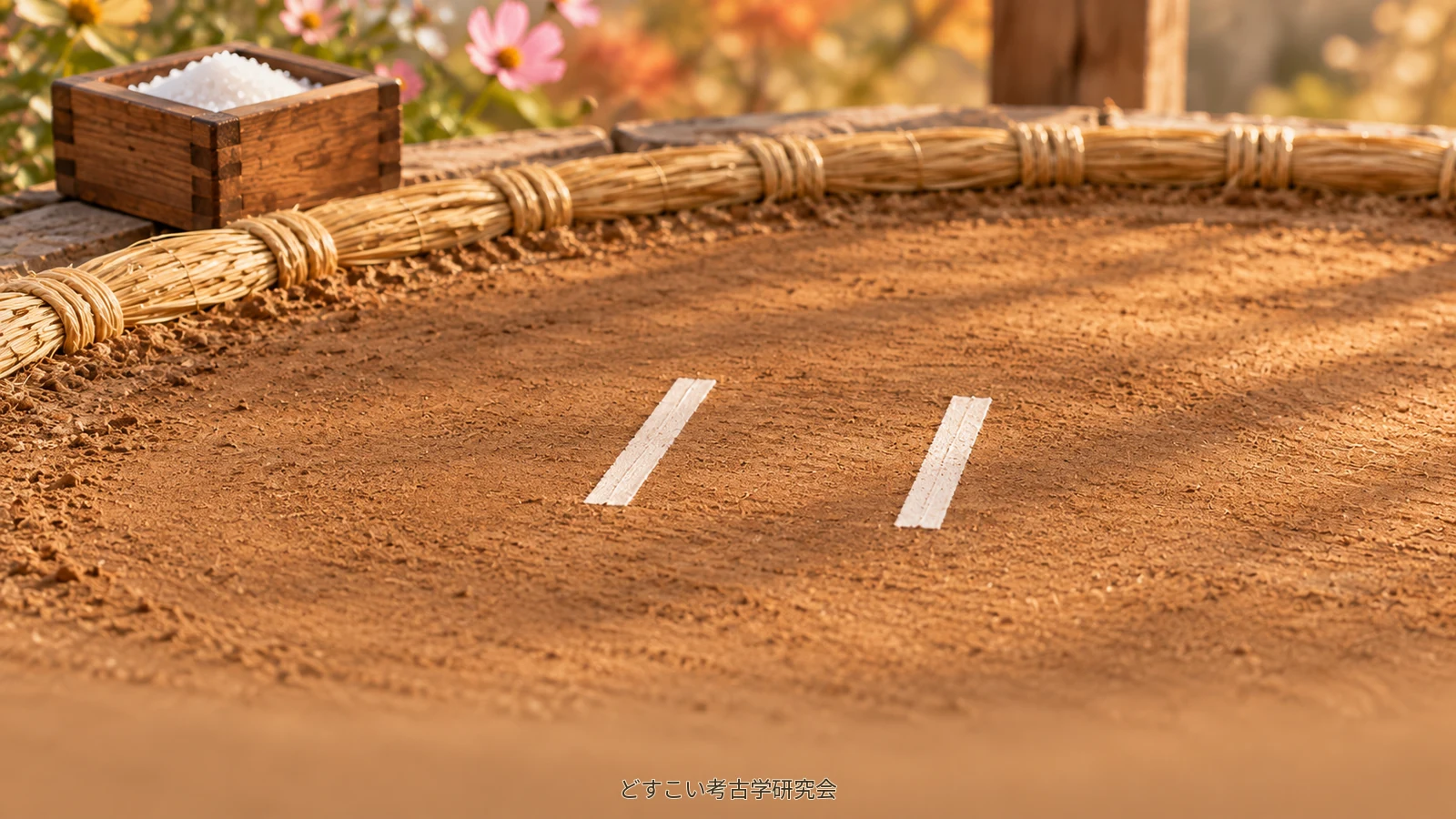
Shikiri is the pre-bout preparation in which the two wrestlers return to the starting lines and work towards a mutually timed tachiai. It can look as if they are repeating the same pose or delaying the action. They are not waiting for a starter’s gun. For a first viewing, stop trying to guess which crouch will be the last one and watch how their return to the centre changes when time is up.
Salt rises into the light. The wrestlers stamp, rinse their mouths, approach the lines, lower their hands and stand again. A newcomer can reasonably wonder, “Has it started? Did I miss something?” That uncertainty is not a failure to understand sumo. It is the entrance to one of its most unusual forms of tension.
The official time limit depends on the division
The Japan Sumo Association gives the shikiri limits as four minutes in makuuchi, three minutes in juryo and two minutes in makushita and the divisions below. A ringside judge acting as timekeeper manages the limit with the progress of the day in mind. The judge raises a right hand to tell the gyoji when time is up.
Four minutes does not mean that every makuuchi pair must wait for exactly four minutes. The official explanation says the wrestlers can begin within the limit if their timing is together. Shikiri is therefore not dead time before a whistle. It is the process of building a start that belongs to both competitors.
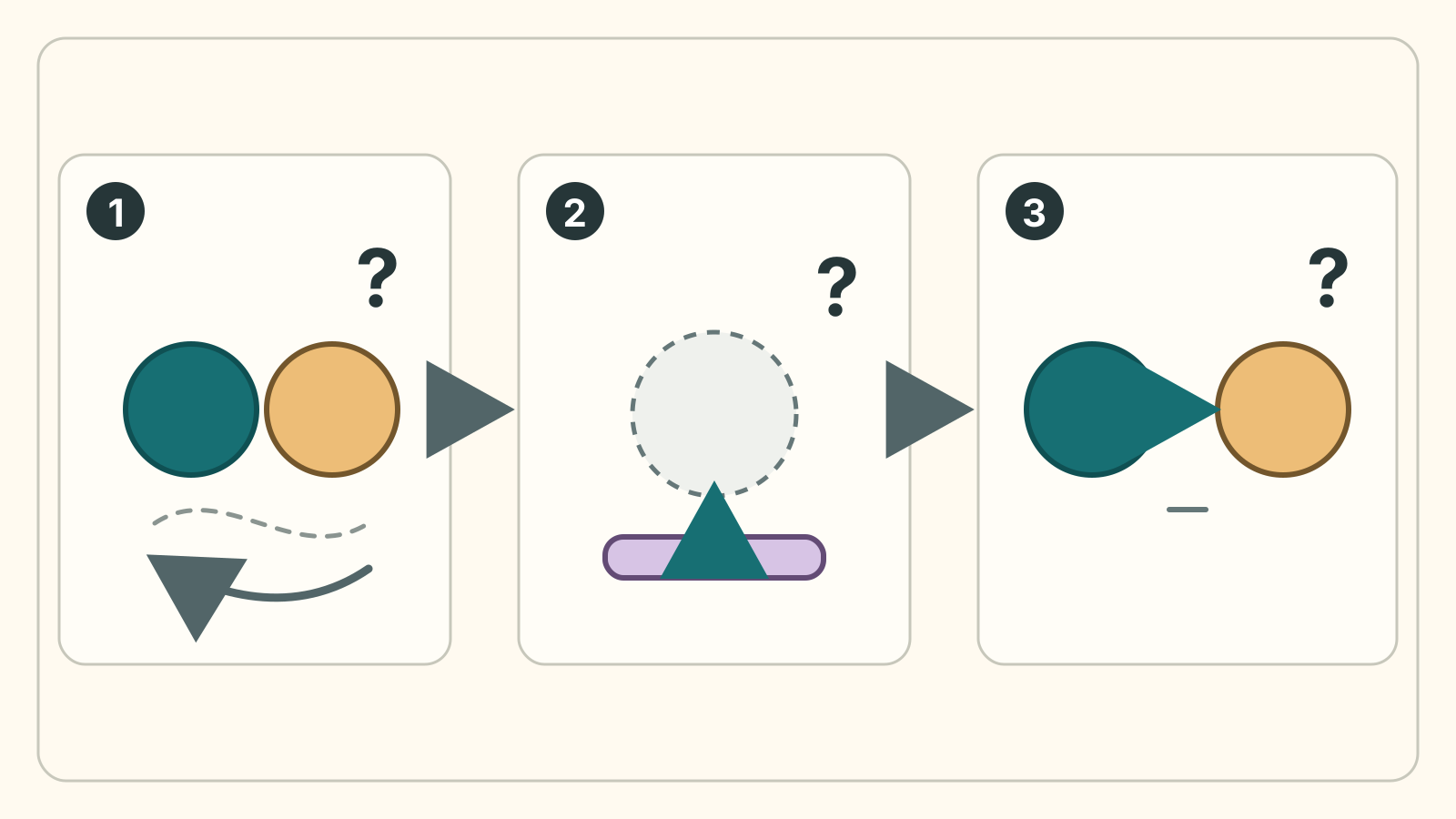
Detailed description of this diagram
Card 1 uses two tokens and a loop for normal repeated preparation. Card 2 is an abstract time boundary with a question mark, retaining only the timekeeper's control of progression. Card 3 directs both competitor roles toward one shared start. It does not measure the four-, three- or two-minute limits, elapsed seconds, salt routine, breathing, gaze, hands, posture, shikiri-line position, judge seat, gyoji words, impact or start validity.
Graphic: SUMO ARCHAEOLOGY CLUB · Figure source 1 · Figure source 2 · Figure source 3
*Miiatte* does not simply mean “stare harder”
The gyoji may call *miiatte*. It is tempting to translate the scene as an order to glare at the opponent. The Association explains the call differently: it encourages the two wrestlers to match their breathing so that the instantaneous start can be made cleanly. Looking fierce is not the point by itself.
That small correction changes what you notice. Instead of watching only the faces, compare one physical detail between returns: the width of a stance, the depth of the crouch, or the order in which the hands approach the clay. You do not have to identify a strategy. Simply ask whether the second approach resembles the first.
Listen for the room to narrow
In juryo and makuuchi, salt throwing appears between the repeated approaches. Once time is up, the return from the salt is the decisive approach towards a valid tachiai. The broad noise of the arena often feels narrower because everyone now knows that the start must be made.
Do not let the largest salt throw steal every shikiri from you. Watch how the two bodies settle near the lines. Which wrestler lowers first? Where does motion pause? There is no examination afterwards. Pick the same detail in the next bout, and individual rhythms begin to emerge without a page of terminology.
A reset is part of establishing the start
The Association says the wrestlers return to shikiri if their breathing is not matched or the hand contact is insufficient. That means a reset should not automatically be read as a scored loss or a dramatic offence. The valid bout has not yet been established.
A sumo contest can end in seconds, but shikiri reveals a longer shape. Two wrestlers compress several minutes of preparation into one shared instant. When nothing has officially begun and you still cannot look away, you have found the appeal of shikiri.
What One Bout Cannot Tell Us
One bout shows a movement sequence and an official result. Do not infer personality, emotion, injury, fatigue or the next strategy from a single moment. Record the visible cue in plain language, compare multiple days, and wait for an official announcement. Inner feelings remain unknown without the person’s attributed words.
Sources
- Japan Sumo Association quizzes No.38, No.320 and No.1016 (verified 2 September 2026).
Source links used for verification
Each link was used for the corresponding claim in this article; inclusion is not a blanket endorsement of the whole page.
Article verified:
- Japan Sumo Association quiz No.38: shikiri and time limitsHistorical primary source (record from that period)
- Japan Sumo Association quiz No.320: the timekeeping judgeHistorical primary source (record from that period)
- Japan Sumo Association quiz No.1016: the call miiatteHistorical primary source (record from that period)