Confirmed: shomen, mukojomen, east and west are shown in the official seat guide and floor map as the four sides around the dohyo.
Before entering, identify four parts of your ticket: floor, seat type, arena side, and row, box or seat number. Once inside, use current signs and show the complete ticket to an attendant if uncertain. Do not navigate only by the compass on your phone.
A first sumo ticket can feel as if it has handed you a small Japanese code. Theatre instincts are not quite enough because there is no single stage with every spectator facing the same way. Ryogoku Kokugikan wraps the audience around a square ring. The unfamiliar direction on the ticket is not a test. It is simply the address of your view.
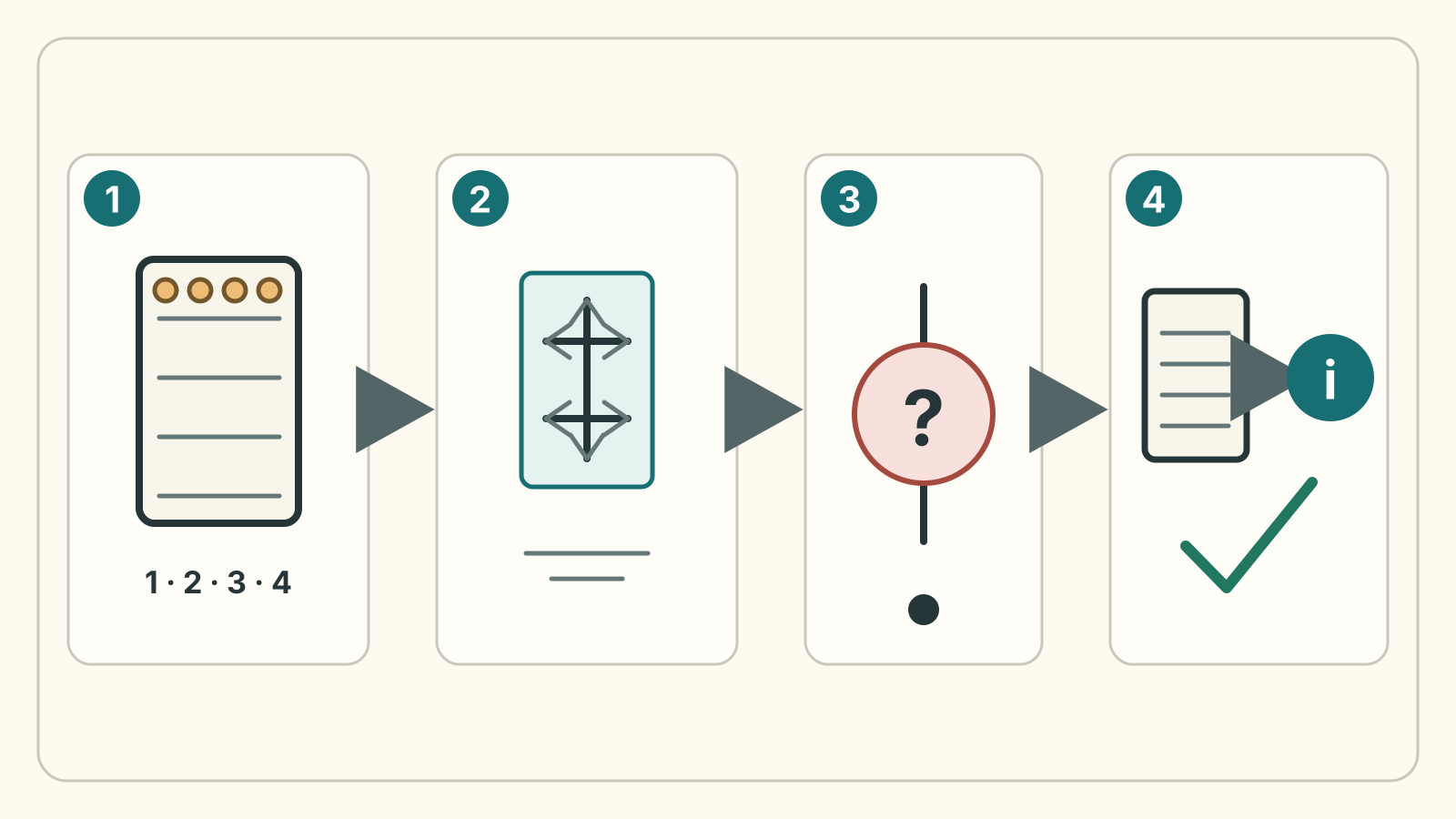
Detailed description of this diagram
Four cards run from left to right. Card 1 is an abstract sheet with four fields, not a reproduction of an actual ticket. The fields stand for floor, seat type, arena side, and row, masu box or seat number. Card 2 shows a generic four-way sign, meaning to compare the current arena signs; it does not map shomen, mukojomen, east or west to geographic coordinates. Card 3 uses a question mark and stop point to mean that the visitor should not infer the route once information stops matching. Card 4 shows the complete sheet being presented to a generic information symbol. The diagram contains no Kokugikan entrance, staircase, lift, aisle, step, distance, width or real sign layout.
Graphic: SUMO ARCHAEOLOGY CLUB · Figure source 1 · Figure source 2 · Figure source 3 · Figure source 4
Break the ticket into four questions
Before the group separates, answer these:
- Which floor? Usually the distinction that prevents the longest wrong turn.
- Which seat type? Tamari, masu and chair seating lead to different areas and physical arrangements.
- Which side? Shomen, mukojomen, east or west.
- Which position? Use the row, masu box and number exactly as shown on the actual ticket.
Still unknown: The display can vary by product and sales screen, and these sources do not establish one universal official layout. We do not publish a made-up sample. Keep the actual ticket and full seat line visible for staff; separately arriving companions should each be able to open their own ticket and seat details.
What do shomen and mukojomen mean?
The Association’s seat guide and Kokugikan map divide the arena into shomen, mukojomen, east and west. Shomen is the principal or front side; mukojomen is the side opposite it. The east and west labels complete the four sides around the dohyo.
Do not rely on the compass orientation of the street or on which way you happened to enter. Follow arena signage. A route described online can also become unhelpful if temporary barriers or crowd controls change. If the direction is not obvious, show the attendant the floor, seat type, side and number together. That is more efficient than asking only, “Where is west?”
This article does not promise that one named entrance, lift or staircase will be available for every September day. Current signs and staff directions are the operational source.
Do not confuse a masu box with a chair row
A masu seat on the first floor is a roughly 1.3-metre-square box with cushions inside a metal boundary. Visitors remove their shoes and share its area according to the ticket product. The masu size, shoes and luggage guide explains the physical reality before you reach the box.
Chair seats have different rows and sightlines. The solo seat guide explains why a single visitor need not buy a group masu product. Neither guide grants permission to use an empty-looking place. The spectator contract prohibits occupying a seat other than the one specified on the ticket and watching from aisles, staircases, entrances, exits or evacuation passages.
If somebody is sitting in your ticketed place, compare the complete ticket information calmly and ask an attendant. Do not turn a direction mistake into a dispute with another visitor.
Wait for the bout to finish before crossing a row
The September spectator notice asks visitors not to move between a seat and the concourse during a bout. If the tachiai is imminent while you are at the section entrance, follow the attendant’s direction and wait where you do not block another person’s view or a passage. Seeing your empty seat is not a reason to step across people during the contest.
A visitor who uses a wheelchair, cane, or has difficulty with stairs should not infer an accessible route from a static PDF. Ask on arrival for the route operating that day. The accessible restroom pre-check uses the same reliable pattern: read the sign, ask staff, and agree on the return landmark.
Your side becomes a way to watch
Once you sit down, the side name stops being a navigation problem. Notice where east- and west-side wrestlers appear and how the hanamichi carries them towards and away from the dohyo. Our hanamichi entry and exit guide suggests following one wrestler beyond the few seconds of the result.
Shomen and mukojomen also reveal different faces, backs and ritual angles. A different side is not automatically a worse side. The view assigned on the ticket can show the tightening of a mawashi knot, a gyoji resetting his stance, or an expression hidden from the opposite audience. One word that looked like a code becomes the coordinates of your own discovery.
Return to the First Visit hub for the rest of the sequence: entry, restroom, food, timing and departure.
A seating sequence that includes luggage and bodies
Before entry, save “floor / seat type / side / row or box / number” in large text. If Japanese is difficult, add この席はどこですか (“Where is this seat?”). Inside, match the floor and side first, seat type next and number last. Stop where the information stops matching, move out of the main circulation flow, and show the complete ticket to staff.
On the day before the visit, prepare that large-text seat note offline, charge the admission phone, and send the full reference to companions rather than only a cropped QR image. Save the official floor map as orientation evidence, but do not draw an accessible route that the current organiser has not confirmed.
With a wheelchair, cane, pain, sensory sensitivity, child or substantial luggage, do not automatically take the staircase or narrow row that looks shortest. Ask for a route with fewer barriers, whether a pause is possible and when to enter the row. Do not leave luggage in the aisle while searching. The ticket does not reveal the entry side, step height or aisle width, so this article does not draw an inferred route.
If a bout is in progress, the number is missing or another person occupies the place, do not squeeze through or resolve the ticket dispute by taking someone’s phone. Ask staff and start with the next bout you can watch calmly. This is an editorial action order, not new evidence about seat location.
Sources
- Japan Sumo Association, September 2026 Tokyo seat guide (checked 3 September 2026)
- Japan Sumo Association, Ryogoku Kokugikan floor map (checked 3 September 2026)
- Japan Sumo Association, September 2026 Tokyo spectator notice (checked 3 September 2026)
- Japan Sumo Association, spectator contract (checked 3 September 2026)
Source links used for verification
Each link was used for the corresponding claim in this article; inclusion is not a blanket endorsement of the whole page.
Article verified:
- Japan Sumo Association September 2026 Tokyo seat guidePrimary source (as checked for this article)
- Japan Sumo Association Ryogoku Kokugikan floor mapPrimary source (as checked for this article)
- Japan Sumo Association September 2026 Tokyo spectator noticePrimary source (as checked for this article)
- Japan Sumo Association spectator contractPrimary source (as checked for this article)