The ceremonial aprons used in a yokozuna ring entrance form a set of three. One is worn by the yokozuna, one by the *tachimochi* or sword bearer, and one by the *tsuyuharai* or dew sweeper. The two attendants already wear pieces from this set when they appear in the group top-division ring entrance immediately beforehand. Remember that two pieces from the set are already in use during that colourful circle. They need not look alike, so do not identify the set from appearance alone.
A makuuchi ring entrance can overwhelm a first-time visitor. Dozens of embroidered animals, landscapes, characters and sponsor marks move around the dohyo at once. Trying to photograph every apron is a reliable way to remember none of them. A gentler task is to remember the documented two-plus-one relationship and wait for an official caption or broadcast identification rather than guessing from motifs.
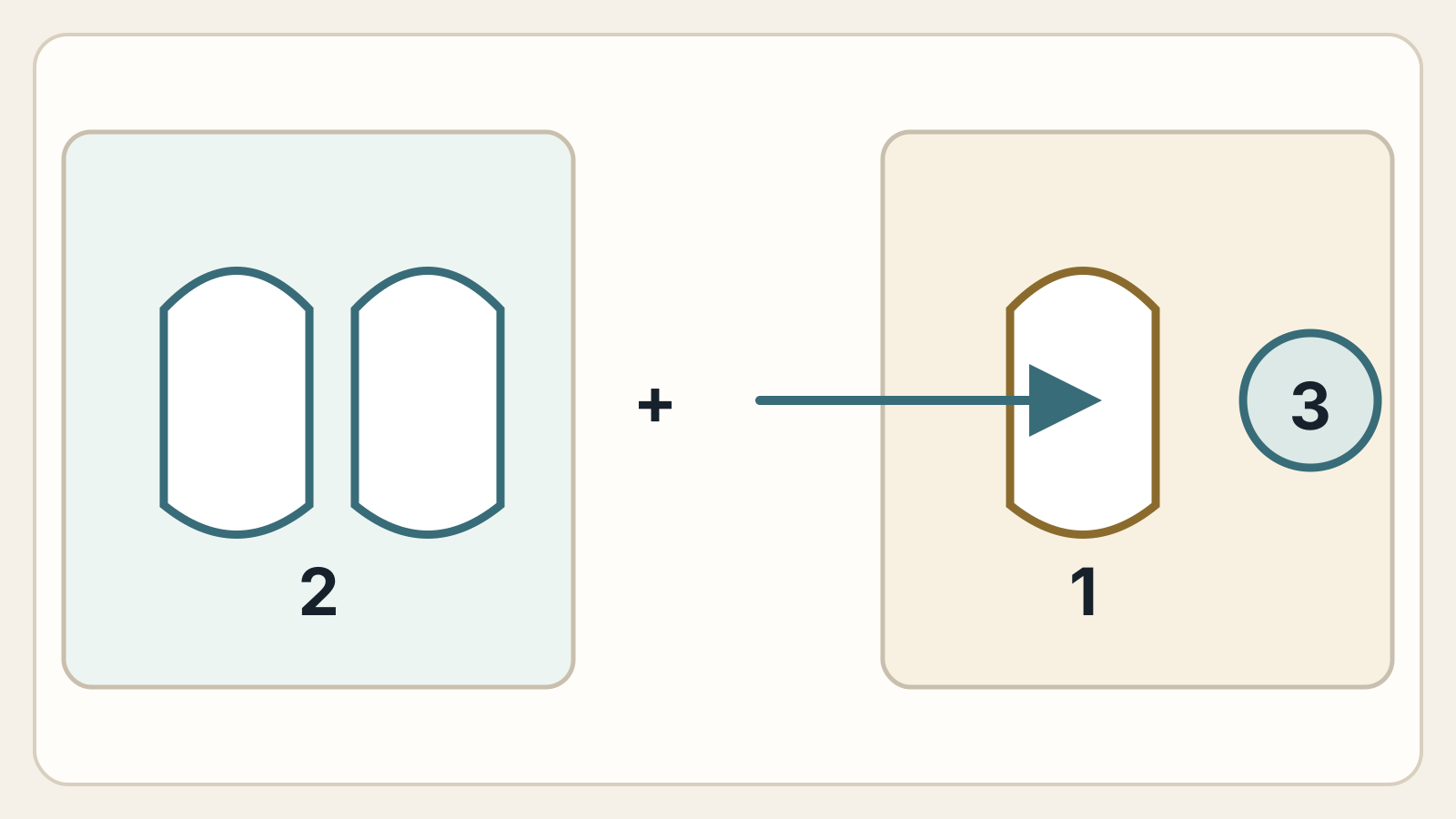
Detailed description of this diagram
Two blank panel tokens on the left represent the observation clue that the sword bearer and dew sweeper already wear two pieces from the set in the preceding makuuchi ring entrance. A third blank token joins to make the three-role relationship. The panels are not kesho-mawashi facsimiles, and their order or spacing is not a ring layout. No embroidery, sponsor, artist design, colour, weight, construction, body fit, attendant side, exact timing, identical-design rule or universal triptych claim is encoded.
Graphic: SUMO ARCHAEOLOGY CLUB · Figure source 1 · Figure source 2 · Figure source 3
Three aprons make one ceremonial group
The Japan Sumo Association states that a yokozuna’s ceremonial *kesho-mawashi* are produced as a group of three, including those for his sword bearer and dew sweeper. This is a different viewing unit from the single apron through which a salaried wrestler introduces himself during the juryo or makuuchi ring entrance.
The secure point is structural: the three pieces belong to the yokozuna, sword bearer and dew sweeper as a set. The selected sources do not establish that all sets share colours, divide one picture or use one theme. Read any design relationship only from evidence for that particular set.
For an overseas viewer, even the word “matching” can overstate the evidence. The three-role relationship is documented; visual similarity is not guaranteed. If the connection is not identified by an official caption or broadcast, leave it unresolved.
Two pieces appear before the yokozuna does
The most delightful official detail comes from a 2025 Association quiz. The wrestlers serving as tachimochi and tsuyuharai take part in the preceding makuuchi ring entrance. They wear the yokozuna’s three-piece kesho-mawashi from that earlier appearance; they do not change into them only after leaving the ring.
This turns the group entrance into a prologue. Two pieces from the set are already being worn in the circle, while the yokozuna’s piece has not yet appeared. Colour and pattern may be observation clues, but use a broadcast or official identification before attaching names or roles.
It also prevents them from becoming anonymous ceremonial furniture. Both are top-division wrestlers with their own rankings, bouts and careers. Following an apron from one procession to the next lets you discover a person through a supporting role.
The apron is heavier and more physical than the screen suggests
A general Association explanation describes a kesho-mawashi as a continuous long belt and decorated front panel. It gives an approximate length of seven metres and a weight of six to eight kilograms depending on the wrestler. The fringe hanging below the panel is called *baren*.
Those measurements matter here because a television image flattens each apron into a bright rectangle. Three wrestlers are not merely holding illustrated signs. Each garment wraps around a large body; all three men walk, turn and settle into position while carrying it. The guide figures make each garment more physical than a flat screen image, but they do not establish identical weight, movement or coordination for every set.
The information does not mean that every surviving or historical apron has an identical weight. It is the governing body’s general description, and we should preserve its approximate language.
One famous set is an example, not a template
An Association feature identifies a set made for the 72nd yokozuna Kisenosato. The aprons were presented by a company at his promotion celebration in 2017. They incorporated characters from a manga he liked, with the background representing the fifteen possible wins of a full tournament.
That is a wonderful key to one design. It is not evidence that all yokozuna sets depict three fictional characters, count tournament days or originate at promotion parties. Treat it as an invitation to research a particular set through museum captions, the Association or the wrestler’s own official material. Designs can carry relationships with donors, places, stories and milestones, but we should not invent those relationships from an image alone.
A two-stage viewing plan
During the makuuchi ring entrance, do not try to name every wrestler. Remember that two set pieces appear in the earlier group entrance. If the broadcast identifies the wearers, note their names; otherwise leave them unidentified. During the yokozuna entrance, compare only what the official view confirms and do not infer a fixed left-right position from this article.
If you cannot find the match, nothing has been lost. Camera cuts, distance and a subtle design can make the set hard to recognise. An official caption or identified image may later establish the connection. The point is to give your eye one question, not to pass an examination in textile history.
Begin with one beautiful apron and you may end up learning two attendants’ names. Begin with the documented fact that two pieces appear earlier, and the next ceremony stops feeling isolated from the previous one. The three-piece set turns embroidery into casting, and two separate ring entrances into consecutive chapters. It is a small discovery with a useful side effect: once the yokozuna arrives, you are already looking beyond him.
Keep More Than One Interpretation Open
We separate what the official or collection source establishes from our observation. A ritual, object or posture may have another interpretation or theory across periods, regions and explainers. When primary evidence does not establish a single origin or meaning, we leave it unknown or contested rather than turn visual resemblance into historical fact.
Sources
- Japan Sumo Association, Sumo Quiz No.45, published 22 February 2022 (checked 3 September 2026)
- Japan Sumo Association, Sumo Quiz No.1403, published 11 November 2025 (checked 3 September 2026)
- Japan Sumo Association, Sumo Quiz No.352, published 26 December 2022 (checked 3 September 2026)
Source links used for verification
Each link was used for the corresponding claim in this article; inclusion is not a blanket endorsement of the whole page.
Article verified:
- Japan Sumo Association Sumo Quiz No.45: a yokozuna's three-piece setHistorical primary source (record from that period)
- Japan Sumo Association Sumo Quiz No.1403: the set during the makuuchi ring entrancePrimary source (as checked for this article)
- Japan Sumo Association Sumo Quiz No.352: kesho-mawashi construction and barenPrimary source (as checked for this article)