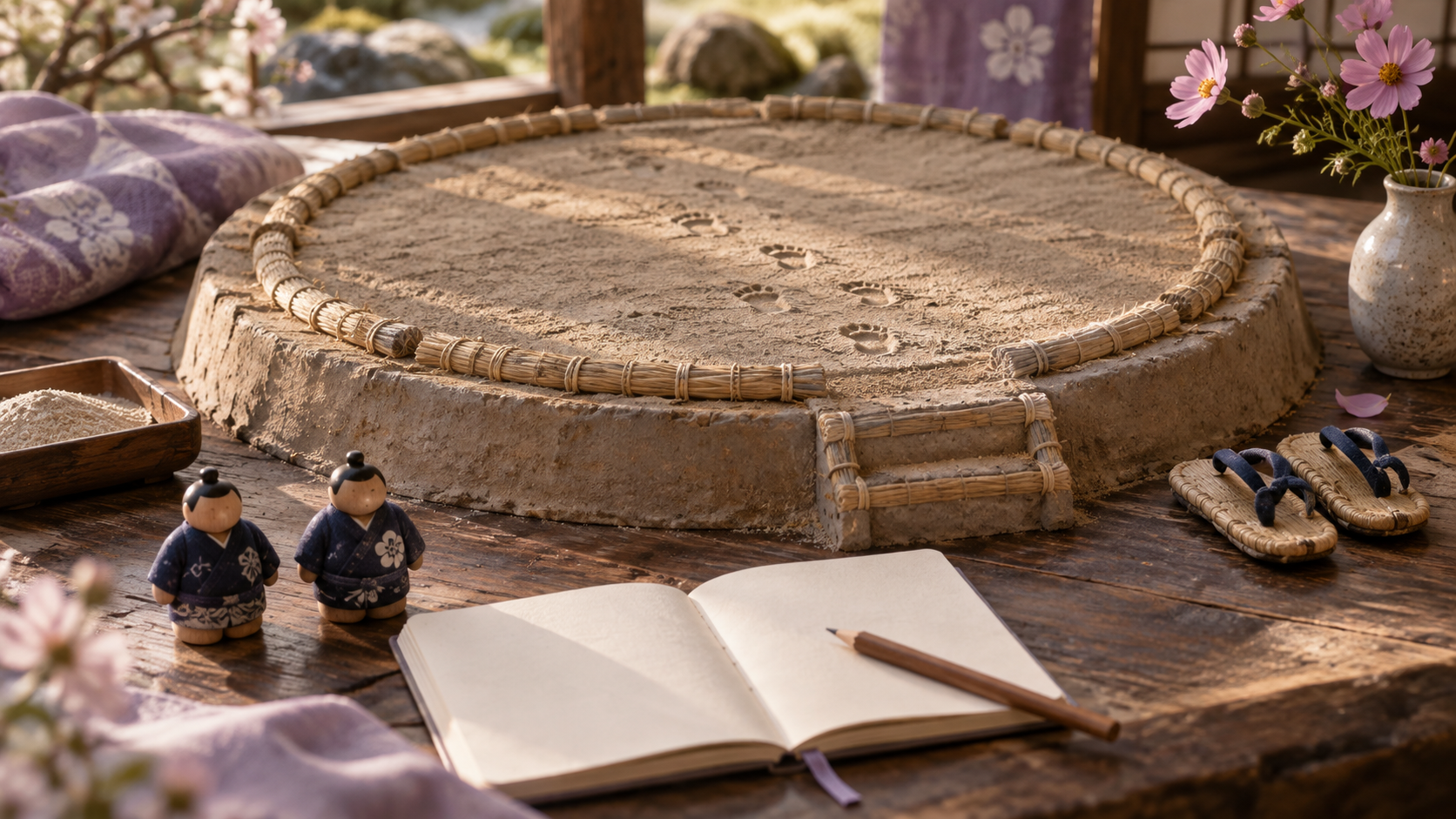
To follow a wrestler associated with pushing sumo, watch his feet before counting his hands. Note the first two steps after the tachiai, the distance he creates, and what he chooses when forward pressure stops. One small observation per day reveals decisions hidden inside the broad label “pusher.”
A winning technique is an ending, not an identity
The official result may say oshidashi, tsukidashi or hatakikomi. That name records how one bout ended; it does not permanently define everything the wrestler can do. Confirm the wrestler through the official profile, record the opponent and kimarite from the daily result, and place your own visual note in a separate column.
On day one, “known for pushing” can simply be a question. From day two, move your attention from hand speed to footwork and from a technique label to working distance. Do not discard a bout because it ends by yorikiri or because the wrestler succeeds after reaching for a belt. A bout that contradicts your expectation is useful evidence against a rigid label.
Three things to watch each day
- First two steps: did the feet continue forward after contact, pause, or come together?
- Distance: was there room to extend the arms, or did the chests and belts become close?
- Choice after resistance: did he push again, change angle, pull, or reach for the mawashi?
“Feet came together” is a description, not a diagnosis of failure. If the camera or your seat does not show the detail, leave the box blank. Keep the official outcome beside, but not inside, your observation. This makes the notebook easy to correct later.
Record the opponent too
Distance is made by two wrestlers. An opponent may advance, absorb the impact or seek a belt immediately. Avoid assigning the entire bout to one person with a line such as “his pushing was weak.” Write one ordinary sentence about the opponent’s opening movement as well. Every three days, look for the distance at which the tracked wrestler’s feet kept moving.
I often become more interested in two modest steps after the first surge has been stopped than in one spectacular blast. Does the wrestler rebuild the push, change the angle, or accept a closer contest? Across fifteen days, pushing sumo stops looking like a simple straight line. It becomes repeated work to create space. In the next bout, try watching the clay under the feet once before following the hands.
Review after day fifteen
Count the official techniques, then write three different conclusions: the opening where the feet continued best, the most common choice after resistance, and one step to watch next tournament. Technique totals alone do not prove a fixed style or predict the wrestler’s future.
What One Bout Cannot Tell Us
One bout shows a movement sequence and an official result. Do not infer personality, emotion, injury, fatigue or the next strategy from a single moment. Record the visible cue in plain language, compare multiple days, and wait for an official announcement. Inner feelings remain unknown without the person’s attributed words.
Sources
- Japan Sumo Association, official winning techniques, daily bouts and results, and wrestler search, checked September 3, 2026. They serve separate roles for definition, official outcome and identity.
Source links used for verification
Each link was used for the corresponding claim in this article; inclusion is not a blanket endorsement of the whole page.
Article verified:
- Japan Sumo Association official winning techniquesPrimary source (as checked for this article)
- Japan Sumo Association daily bouts and resultsPrimary source (as checked for this article)
- Japan Sumo Association wrestler searchPrimary source (as checked for this article)