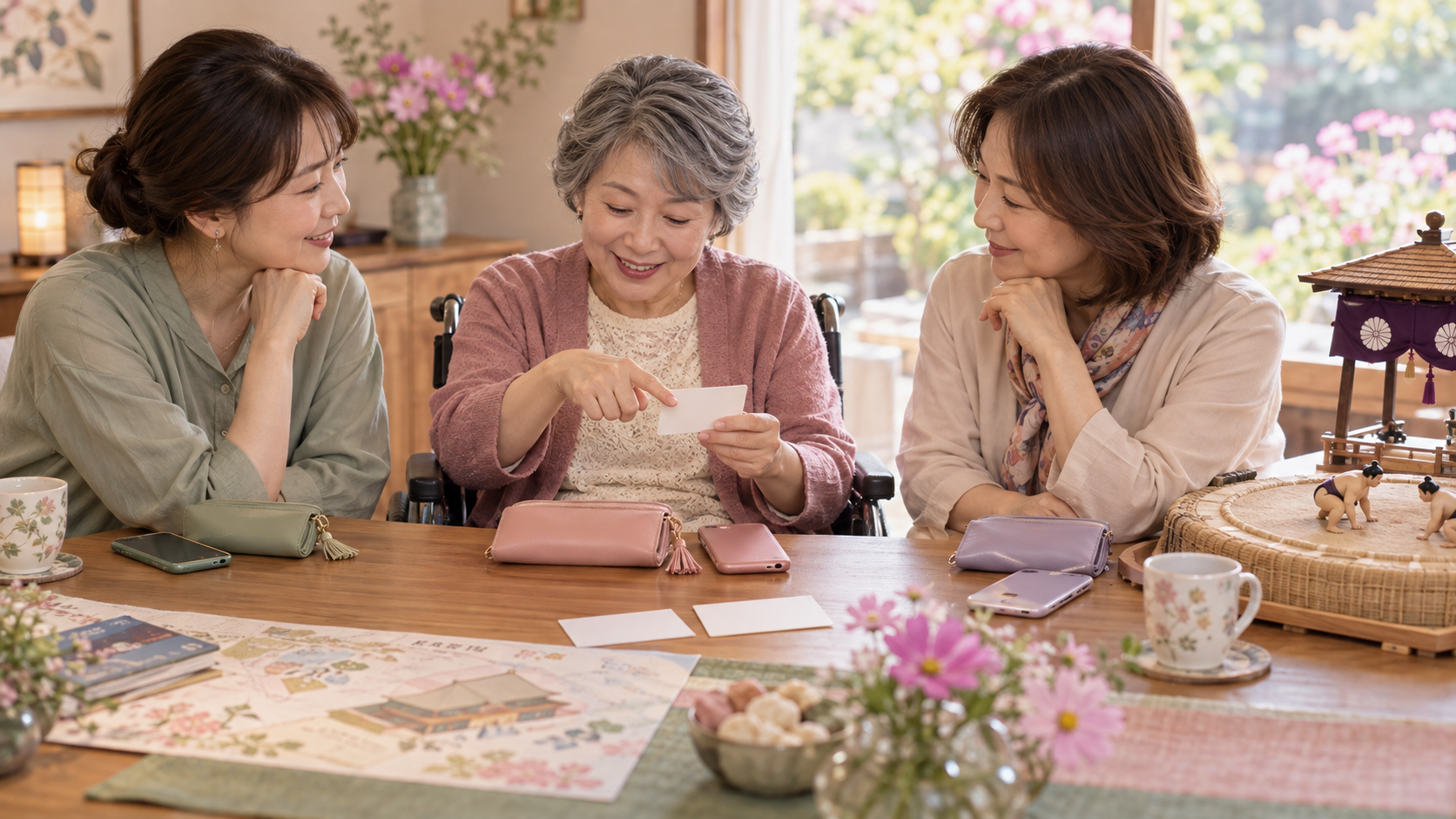
A wheelchair-seat price that includes one companion does not automatically mean one supporter may leave and another may take that place later. The official September 2026 wheelchair and ticket information we reviewed does not explain a mid-session companion change. If a change is essential, ask the organiser before purchase or travel. Without a confirmed procedure, do not plan to circulate one admission credential, QR image or assigned place among several people.
Our support-person day plan covers the roles shared by one spectator and one companion. This guide addresses a different question: what if a relative, friend or professional supporter can cover only part of a long tournament day?
Separate three different arrangements
“We will change over” can mean three things:
- One person helps with the journey to Kokugikan and another meets the spectator after the event.
- Every supporter has a valid ticket and assigned place, and only practical roles change inside.
- A new person enters later using the companion admission or place used by someone else earlier.
The first two can be planned around each person’s own admission and meeting point. The third requires an answer from the organiser. The official wheelchair page says the user’s and companion’s full names are collected at reservation, a booking cannot be made while the visitors are undecided, and the companion cannot enter without the wheelchair user. It also describes the pair sitting one behind the other, while the price list says the wheelchair-seat price covers one user and one companion. None of this is a published mid-day transfer procedure. Our Tokyo wheelchair-seat guide keeps those seat-specific conditions separate from general accessibility planning.
QR distribution is not a handover method
For September 2026, groups using QR tickets must distribute them to each visitor before arrival. Undistributed tickets, screenshots and printed QR images are not accepted for admission. Sending a picture from the morning supporter’s phone to an afternoon supporter is therefore not a safe workaround.
Write down who enters on which ticket, which assigned place belongs to that person, and when each visitor expects to arrive or leave. The once-per-day re-entry rule is also not evidence that an entirely different person may enter under the same credential. Ask the organiser about identity, admission and any changeover procedure rather than extrapolating from re-entry.
A safe fallback when no change is confirmed
If no official process can be established, redesign the day:
- Keep one support person inside; a different person handles the journey before entry or after final exit.
- If several supporters attend, obtain valid admission and an assigned place for every person.
- Do not assume a separately purchased seat will be adjacent to the wheelchair place.
- Do not use an apparently empty seat, aisle, staircase or doorway as a handover point or viewing space.
The spectator contract ties admission to a valid ticket and viewing to the assigned seat or area. A support need does not silently create an additional viewing place. If proximity or a particular arrangement is necessary, discuss it with the organiser before committing to the booking.
Keep the person—not the care task—at the centre
When people are changing roles rather than admission credentials, a five-line handover is enough:
- the one part of sumo the spectator most wants to see;
- the seat, exit and any route or facility confirmed after entry;
- the spectator’s own signals for pause, leave and seek help;
- the most accessible way to relay an urgent announcement;
- the final meeting point and journey-home lead.
Share personal or medical information only with the spectator’s agreement and only to the extent needed. Do not let supporters’ notes replace the person’s own preferred communication. Our offline meeting plan handles failed phone service, while the hearing and visual information guide suggests two routes for essential updates.
Hand over the fascination as well
A clinical checklist can accidentally turn a fan into a care assignment. Put their chosen detail at the top: “I want to see the blue kesho-mawashi again,” or “I am listening for the yobidashi’s long call.”
Then the arriving supporter can ask something better than “Have you taken a break?” They can also ask, “Has the blue apron appeared yet?” The helping hands may change; the person whose curiosity leads the day does not. That small distinction is what makes the handover belong to a sumo visit rather than merely an appointment.
Rehearse both a permitted and an impossible changeover
Before purchase, ask the organiser one complete question covering the spectator, morning supporter, afternoon supporter, admission credentials, entry and exit times, and assigned place. On the day before the visit, separate each person’s valid ticket, phone, travel money and keys. Put the spectator’s medication, equipment, transfer, restroom and deterioration preferences on a five-line handover card rather than trusting an oral summary.
On the day, avoid a plan in which the first supporter leaves before the replacement has entered and met the spectator. Even when a change is authorised, hand over entrance, seat, belongings and return route, then confirm the person’s understanding and wishes. Give a supporter with limited Japanese the seat reference and required assistance as showable text. Decide what happens if weather or transport prevents the replacement arriving.
If a changeover is not confirmed, the replacement is late or the person’s physical needs change, do not fill the gap by circulating a credential or leaving the person alone. Move to the pre-agreed fallback: the first supporter remains, everyone leaves early, or the visit is shortened. This editorial sequence does not infer admission permission; it keeps the person’s safety ahead of the ticket.
Sources
- Japan Sumo Association, September 2026 Tokyo wheelchair-seat information and price list, checked September 3, 2026, for named visitors at reservation, no companion-only entry, the user-plus-one-companion arrangement and seating description.
- Japan Sumo Association, September 2026 Tokyo spectator notice, checked the same day for QR distribution and one-time re-entry.
- Japan Sumo Association spectator contract, checked the same day for valid admission, assigned seating and circulation areas.
- No mid-session companion change procedure is stated in the official material reviewed, so this article does not represent it as available.
Source links used for verification
Each link was used for the corresponding claim in this article; inclusion is not a blanket endorsement of the whole page.
Article verified:
- Japan Sumo Association September 2026 Tokyo wheelchair-seat informationPrimary source (as checked for this article)
- Japan Sumo Association September 2026 Tokyo price listPrimary source (as checked for this article)
- Japan Sumo Association September 2026 Tokyo spectator noticePrimary source (as checked for this article)
- Japan Sumo Association spectator contractPrimary source (as checked for this article)