Osaka Prefecture records writing support, a Braille information board, tactile guidance blocks and an audible entrance signal at Edion Arena Osaka. The page dates from 2009 and does not guarantee where or how those services operate during the March tournament. If access support matters, describe the exact task—entry, finding the seat, restroom directions or emergency information—rather than relying on the broad word “accessible.”
A sumo arena combines the yobidashi’s call, applause, public announcements and a large moving crowd. If spoken information is difficult to hear or distant signs difficult to read, keep the official bout order and your seat details in a usable format. Then ask for support at the points where it changes your safety or enjoyment.
What has actually been recorded
The Osaka Prefecture facility page lists an information point, Braille board, tactile paving, audible guidance, writing materials and an intercom beside the entrance. This establishes that those types of feature were in the public facility record.
The same source does not establish sign-language interpretation, an induction loop, live captions, a tactile arena map, audio description or a sumo-specific commentary service. An accessibility label is not evidence for every possible accommodation.
Make a request staff can act on
A visitor who wants written communication could send or show:
“I am attending the March sumo tournament on [date]. Spoken announcements are difficult for me to follow. Please tell me where I can receive entry and seat directions in writing, and how emergency information will be communicated.”
Keep the Japanese phrase 筆談をお願いします, meaning “Please communicate in writing,” on the same screen. If visual access is the concern, specify preferred text size, phone magnification, lighting or guided assistance. If hearing access is the concern, explain whether writing, lip visibility, sign language or compatibility with a personal hearing device is useful. The access need is individual; the article should not assign one solution to everyone.
Build a second channel for the bout order
Save the wrestler’s name in Japanese, division and position in the official daily order. A timetable can shift with the live programme, so avoid an exact minute-by-minute promise. The note simply helps you recover if one call or display is missed.
For emergencies, ordinary bout notes are secondary. Follow staff and the venue’s current safety communication. With a companion, decide who will relay urgent information and choose a meeting point that does not obstruct an aisle.
Preparation does not mean following every sensory cue. Look for one signal that works for you: the gyoji turning the gunbai, the yobidashi sweeping the ring, or the precise moment applause fades before the charge. Sumo has a rhythm carried by movement as well as sound, and finding your own cue can make the next bout feel unexpectedly close.
Confirmation note
- Where writing support is available
- Preferred text size and communication method
- Entry-to-seat guidance
- Restroom and return landmarks
- Method for emergency information
- Official bout order and Japanese wrestler name
Evidence limits and event-day fallback
Confirmed fact: Osaka Prefecture’s facility record, updated in 2009, lists writing materials, a Braille board and tactile guidance. It is a historical facility record, not evidence of March-tournament placement, working condition or staff service.
What remains unknown: Current desks, signing, captions, induction loop, tactile information, guided seating and the emergency-information channel require a specific organiser answer.
Reasoned inference: Separating the task and usable communication format is likely to reduce misunderstandings compared with depending on speech alone. Confidence is medium; it does not guarantee support.
Editorial suggestion: Keep “writing / seat / emergency information” and a personally usable second channel on both paper and the phone. This is not an official procedure.
Fallback: Stop away from the crowd flow and show staff the prepared request. If no accessible safety-information channel can be agreed, do not continue to the seat alone; decide another arrangement with a companion or organiser.
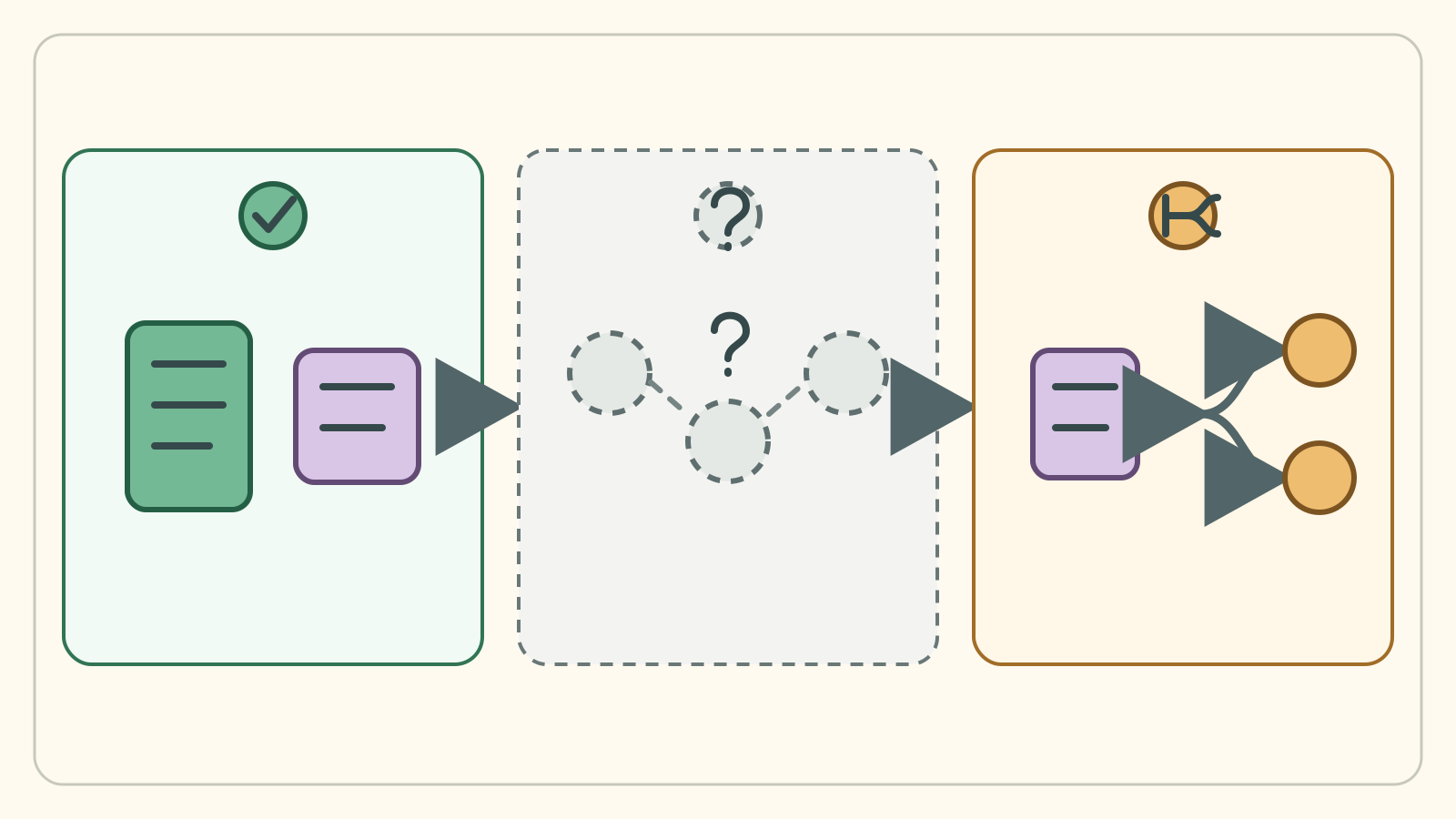
Detailed description of this diagram
The left card uses two differently ruled document tokens for a dated building record and a separate current event context. Three unknown tokens and broken links reserve staffing, language, method and response. The right card branches from a written-note token to two contact options. It depicts no real desk, entrance, staff member, person, disability, official symbol, path, place or response time.
Graphic: SUMO ARCHAEOLOGY CLUB · Figure source 1 · Figure source 2
Sources
- Osaka Prefecture, accessibility information for Osaka Prefectural Gymnasium, checked September 3, 2026. Because the page was updated in 2009, current facilities and event service require confirmation.
- Japan Sumo Association, March 2027 Osaka spectator guide, checked September 3, 2026.
Source links used for verification
Each link was used for the corresponding claim in this article; inclusion is not a blanket endorsement of the whole page.
Article verified:
- Osaka Prefecture accessibility record for Osaka Prefectural GymnasiumHistorical primary source (record from that period)
- Japan Sumo Association March 2027 Osaka spectator guidePrimary source (as checked for this article)