If you use a wheelchair or walking aid, plan one continuous route: the exact railway operator, a lift to street level, the arena entrance, the internal lift and the viewing position. Osaka Prefecture records a step-free approach, wheelchair-compatible lifts and accessible facilities at Edion Arena Osaka. The page was last updated in 2009, however, so it is a useful question sheet—not proof of March 2027 event operations.
The March tournament venue is Edion Arena Osaka, also called Osaka Prefectural Gymnasium. Several stations use the name Namba or 難波. They connect different operators and place a visitor at different points below or around the district. An overseas itinerary that says only “Namba Station” is incomplete.
What the prefectural route records
The Osaka Prefecture page describes a route from Exit 1 of Osaka Metro Namba Station: head toward Takashimaya, follow the outside of the building for about 200 metres, turn right at the Nambanaka intersection and continue about 150 metres to the main entrance. It also records a level route to the building, tactile paving and audible guidance.
Do not assume that your platform’s lift delivers you directly to Exit 1. Construction, street crossings and temporary crowd controls may alter the practical journey. Select a step-free route in the relevant operator’s current station information, and keep “エディオンアリーナ大阪(大阪府立体育会館)” on your phone so staff can recognise the destination.
Turn building features into event-day questions
The prefectural record describes the main entrance as a manual hinged door and says an intercom beside the entrance can call staff. It lists wheelchair-compatible lifts, wheelchair- and ostomate-accessible toilets, and wheelchair loans.
Those facts do not establish the March tournament seating layout or controlled spectator route. Ask the organiser or venue:
- Which entrance applies to the ticket you hold?
- Is there a step-free route from that entrance to the actual viewing position?
- How are a wheelchair place and companion place sold and checked?
- Which lift remains available during post-event crowd control?
A recorded wheelchair-loan service is not a promise of stock, advance reservation, outdoor use or availability during sumo. Do not make the journey depend on a loan until it is confirmed.
Plan the return before the crowd moves
At entry, identify the lift and street direction you will use after the final bouts. If a taxi is part of the plan, ask about the current pickup point instead of treating the map pin as an accessible vehicle lane. Event traffic controls can change how close a car can approach.
This preparation is meant to return your attention to the ring. Once the route feels settled, watch the yobidashi turn toward the east and west sides as the next wrestlers are announced. A small change of body direction helps the whole arena make more sense—and it is a satisfying landmark of its own.
Save before travel
- Railway operator, station and lift exit
- Japanese venue name and address
- Step-free path from the entrance to the viewing position
- Wheelchair and companion ticket conditions
- Available lift and accessible-restroom route
- Return meeting point
Break “Namba” into the route from front door to seat
Before purchase, place the exact operator and station alongside wheelchair dimensions, weight, manual or powered operation, attachments, party size, transfer, viewing place, restroom and return. Do not treat the several Namba stations and exits as one point; confirm the route from the chosen operator’s lift exit to the arena entrance. A 2009 building record cannot guarantee current pavement, works or ticket-specific admission.
On the day before the visit, check battery, weather, essentials, contact and a second return plan for the crowd. On the day, verify every connection: alight, reach street level, reach the arena, enter, move inside and reach the seat. A companion should not improvise lifting or transfer the person did not request. Extra companions seated elsewhere need communication and a meeting point. Carry chair information and seat details as text if Japanese is difficult.
If a lift is out, surface impassable, entrance changed or seat condition differs, do not guess a shortcut across a barrier. Ask the operator or staff for a current alternative. If none is confirmed, change time or route, leave early or abandon the visit. This does not promise replacement transport or seating; it prevents an evidence gap being filled with unsafe assistance.
Evidence limits and event-day fallback
Confirmed fact: Osaka Prefecture’s facility record was updated in 2009 and describes the then-recorded level approach, entrance, lifts and toilets. It is not current station-to-seat operation for March 2027.
What remains unknown: Operator-specific lift exit, surface/works, ticket entrance, wheelchair/companion dimensions and sale, loan stock, restroom route, controlled exit and pickup remain unconfirmed.
Reasoned inference: Using the old record as a question sheet rather than proof of current operation is likely to reduce the error of treating one facility label as end-to-end access. Confidence is high, not a route-fit guarantee.
Editorial suggestion: Put chair dimensions/weight/attachments, posture/transfer, wanted assistance and party size on one route from station through seat to return. This is not medical, handling or official venue instruction.
Fallback: If a lift, surface, entrance or seat differs, do not improvise across a barrier; ask for a live alternative. If none is confirmed, change time, route or date, leave early or stop.
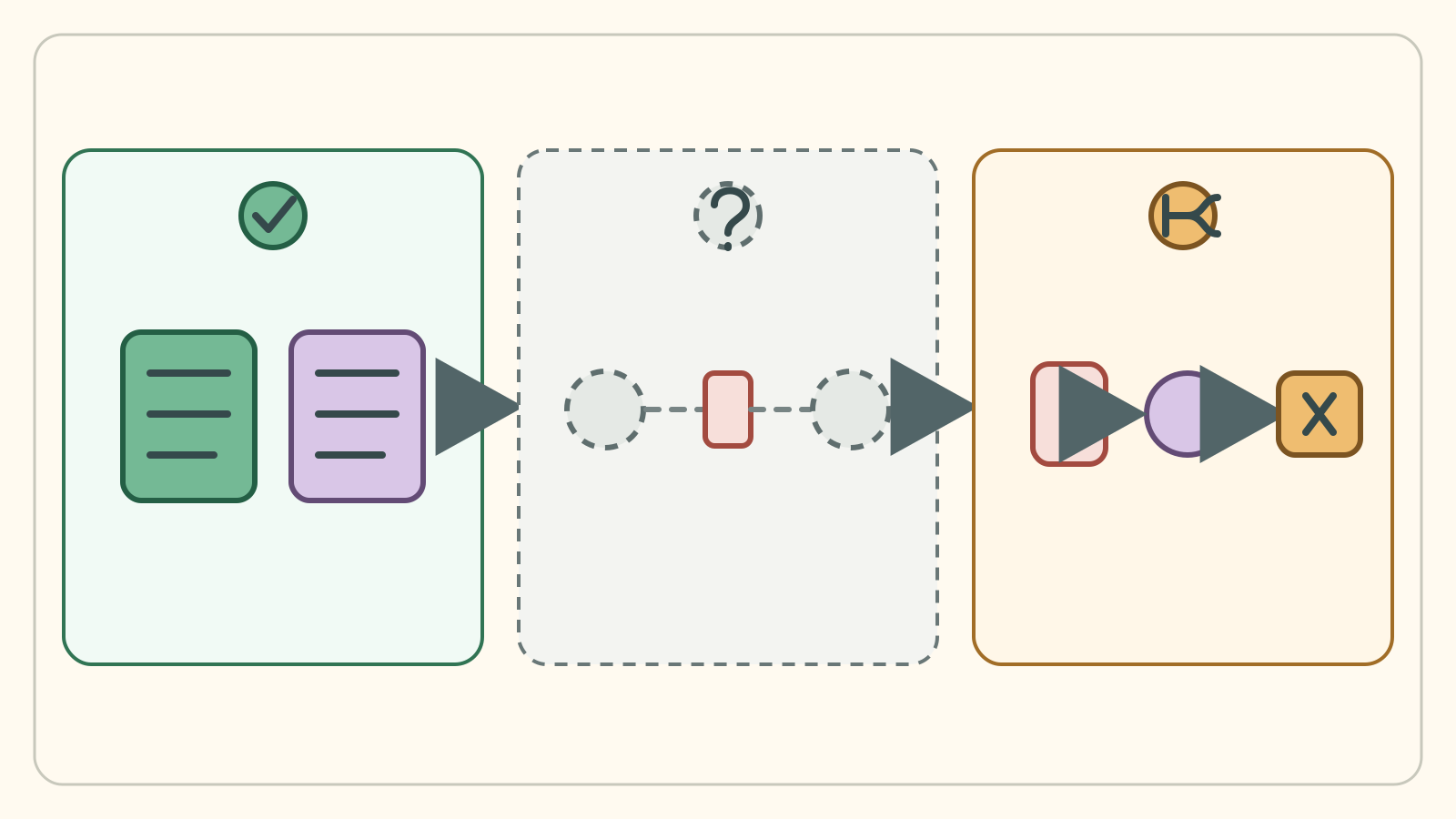
Detailed description of this diagram
The left card separates a dated building/access document from the event document. The middle card interrupts two unknown endpoints with a stop block because transport, outdoor travel, entrance, event interior, seat and return are not proven continuous. The right card sequences stop, responsible-party confirmation and a confirmed alternative. It depicts no person, wheelchair symbol, station, street, gate, lift, gradient, kerb, aisle, seat, companion position or dimension.
Graphic: SUMO ARCHAEOLOGY CLUB · Figure source 1 · Figure source 2
Sources
- Osaka Prefecture, accessibility information for Osaka Prefectural Gymnasium, checked September 3, 2026. Because the page is dated October 27, 2009, current facilities and March tournament operations require reconfirmation.
- Japan Sumo Association, March 2027 Osaka spectator guide, checked September 3, 2026.
Source links used for verification
Each link was used for the corresponding claim in this article; inclusion is not a blanket endorsement of the whole page.
Article verified:
- Osaka Prefecture accessibility record for Osaka Prefectural GymnasiumHistorical primary source (record from that period)
- Japan Sumo Association March 2027 Osaka spectator guidePrimary source (as checked for this article)