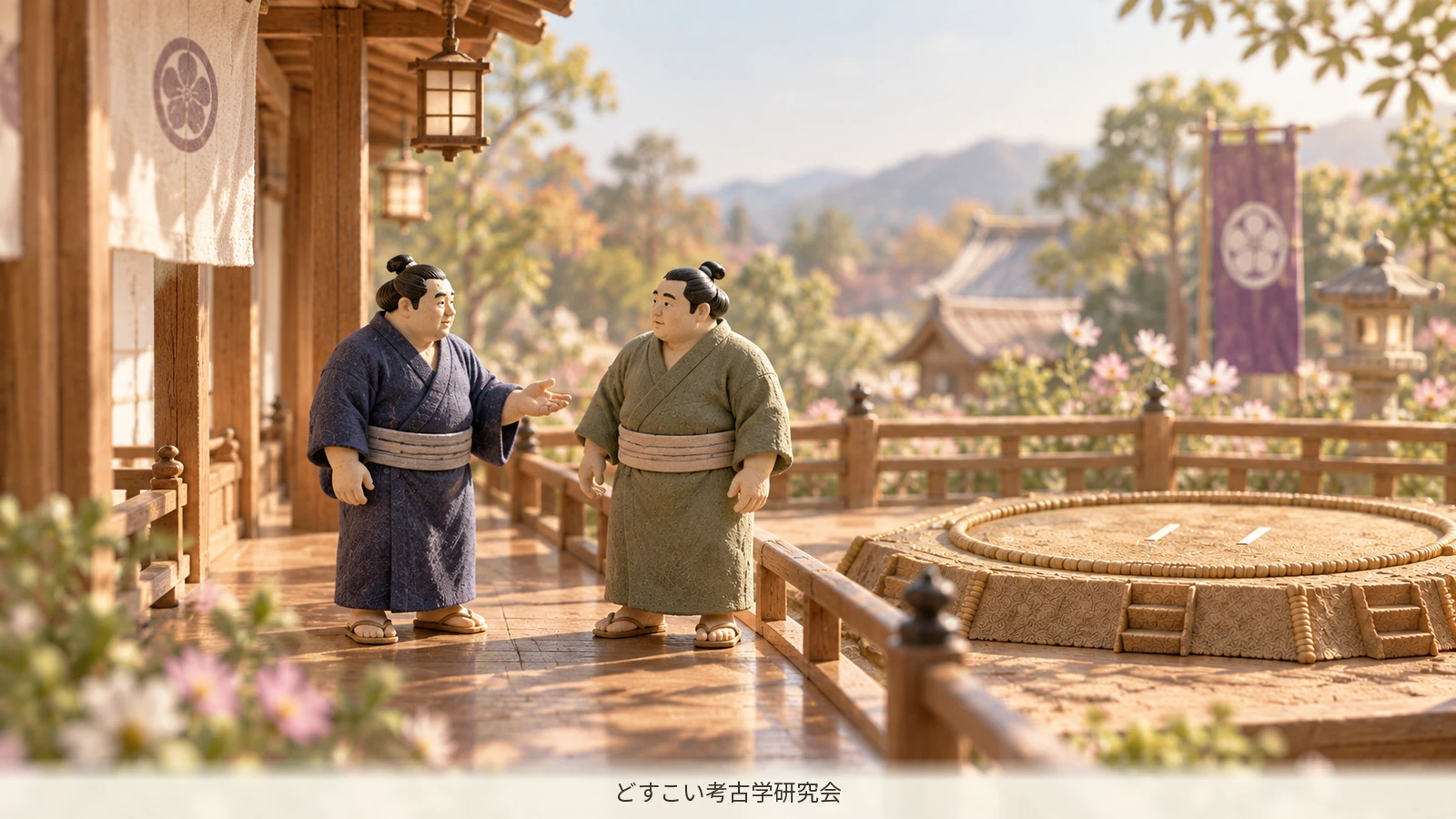
A tsukebito is generally a wrestler ranked in makushita or below who assists a sekitori. The role is also an apprenticeship: while supporting the higher-ranked wrestler, the attendant learns sumo customs, conduct and the sport itself. The Japan Sumo Association says the sekitori has a corresponding duty to teach and help that wrestler grow stronger.
Reducing the relationship to “star and servant” removes the most important half of the official explanation. A tsukebito is an active wrestler with his own training, bouts and banzuke record; an individual’s ambition is not supplied without attributed words. Support creates proximity to experience; status gives the sekitori responsibility for someone else’s development.
Who becomes a tsukebito?
An Association explainer says tsukebito are also called wakai-mono, literally “young ones.” As a general rule they are wrestlers in makushita or a lower division from the same stable as the sekitori. When a stable is small, personnel may be borrowed from a larger stable in the same ichimon grouping.
Those qualifications require care in translation. “Young” does not guarantee that the attendant is younger in age, and “same stable” has an officially described exception. The useful definition is based on sumo status and the relationship, not a stereotype about age.
Assistance and learning are both central
The firm official description is that a tsukebito cares for a sekitori while learning sumo’s conventions, etiquette and wrestling. Memoirs and interviews may list particular tasks involving bags, clothing or travel, but practices can differ by wrestler, stable and situation.
We therefore do not publish a universal hour-by-hour job sheet or promise that every sekitori has the same number of attendants. Those details need a source scoped to the person and period. The stable core is enough: practical support occurs alongside close-range learning.
The sekitori is responsible for teaching
The Association’s explanation does not present learning as something the attendant must extract alone. It explicitly says the sekitori has a duty and responsibility to teach customs, etiquette and sumo, and to develop the attendant into a stronger wrestler.
This makes the relationship more demanding for both people. The rank difference is real, but it is not a licence to understand a lower-ranked wrestler as private property. Both are active wrestlers. Whether an individual attendant will reach juryo, and what his private relationship is like, remain unknown.
A tsukebito is not an arena specialist
Several other roles operate around the dohyo. Yobidashi call names and prepare the ring; gyoji referee; tokoyama style wrestlers’ hair. A tsukebito is none of those professions. He is a wrestler.
Nor should a spectator identify someone from a single glimpse of a bag being carried. Arena movements have many reasons, and backstage areas are not invitations to investigate. Knowing the role should increase respect for boundaries, not turn private working routes into a scavenger hunt.
Imagine the time behind the next sekitori bout
In the next juryo or makuuchi bout, let the spotlight remain on the two wrestlers—but imagine the hours that brought each one to the dohyo. Someone offering support may also have trained and competed earlier that day.
Whether an attendant will earn promotion, who he will assist, or whom he may later teach is not established in advance. Record a change only after an official promotion or assignment is confirmed. Only an officially confirmed change of rank or role should be described as a changed relationship. Once you see that cycle, an early makushita bout can carry the outline of a future teacher.
One Concrete Target for Next Time
Rather than invent an inner motive, watch who performs which task, at what moment, and with what object or signal. Clothing and location alone do not prove a role; compare the action with the official role description. If the person is not visible, keep “outside this view” open instead of writing “absent.”
Sources
- Japan Sumo Association, Sumo Quiz No. 1240 (published 1 June 2025; checked 2 September 2026)
- Japan Sumo Association, Sumo Quiz No. 17 (published 25 January 2022; checked 2 September 2026)
Source links used for verification
Each link was used for the corresponding claim in this article; inclusion is not a blanket endorsement of the whole page.
Article verified:
- Japan Sumo Association Sumo Quiz No. 1240Historical primary source (record from that period)
- Japan Sumo Association Sumo Quiz No. 17Historical primary source (record from that period)